Ice Cream Headache: Causes, Symptoms, and Relief
Understanding brain freeze: Why cold treats cause sudden head pain and how to prevent it.
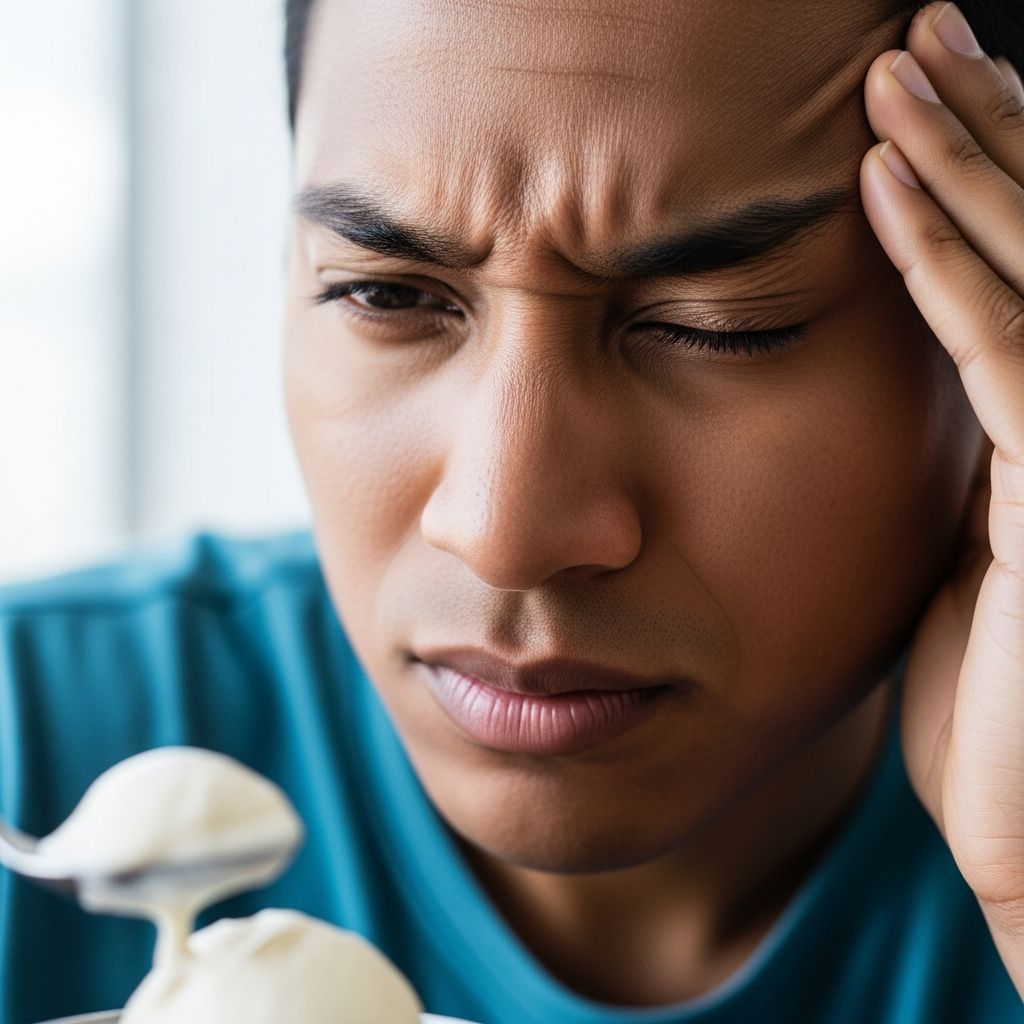
Understanding Ice Cream Headaches: What Is Brain Freeze?
An ice cream headache, commonly referred to as brain freeze or cold-stimulus headache, is a sudden, sharp pain that typically occurs in the forehead or temples when consuming very cold foods or beverages. The medical term for this condition is sphenopalatine ganglioneuralgia, which describes pain related to the nerves in the head and face region. This familiar sensation affects most people at some point in their lives, striking unexpectedly after biting into ice cream, drinking a frozen slushie, or consuming other cold treats too quickly.
While brain freeze is generally harmless and temporary, affecting virtually anyone who consumes cold foods rapidly, the experience can be quite uncomfortable and disruptive to enjoying frozen treats. The sharp, shooting pain typically lasts only seconds to a few minutes, making it one of the briefest forms of headache people experience.
What Causes Ice Cream Headaches?
The exact mechanism behind ice cream headaches remains somewhat mysterious to scientists, but current research suggests that sudden changes in blood flow play a crucial role. When you consume something extremely cold, the temperature in your mouth and throat drops rapidly, triggering your body’s protective survival response.
The Blood Flow Theory
According to the leading explanation, when cold food or beverage contacts the roof of your mouth and back of your throat, your body interprets this temperature drop as a potential threat. In response, your body quickly increases blood flow to your head to try to warm the affected area. During this process, blood vessels in your head expand rapidly to accommodate the increased circulation.
Research has provided compelling evidence for this theory. A 2012 study examining people who sipped ice-cold water found that those experiencing cold-stimulus headaches had an enlarged anterior cerebral artery, which is a blood vessel located behind the eyes. When the headache subsided, the artery constricted and blood flow decreased, supporting the hypothesis that increased pressure and blood flow in the skull cause the painful sensation.
Who Gets Ice Cream Headaches?
Ice cream headaches are remarkably common and can affect virtually anyone who consumes cold foods or beverages too quickly. However, certain groups appear more susceptible to experiencing brain freeze than others.
Age and Susceptibility
Research has revealed that children are more likely to develop cold-stimulus headaches compared to adults. This increased prevalence in younger people may suggest that children have greater sensitivity to the temperature-related blood vessel changes, and that humans develop resistance to these headaches as they mature into adulthood.
Connection to Migraines
People who suffer from migraine headaches appear to have a heightened predisposition to experiencing brain freeze. One study found that 55% of teenagers with a history of migraine attacks experienced brain freeze, compared to only 37% of those without a migraine history. Additional research demonstrated that women with migraine were twice as likely to develop a brain freeze headache after drinking ice water compared to those who had never experienced migraine.
Related Stories



The connection between migraines and ice cream headaches likely stems from the shared underlying mechanism of blood vessel changes and altered blood flow, which plays a role in both conditions.
Symptoms of Ice Cream Headaches
The primary symptom of an ice cream headache is a sudden, sharp pain that typically appears in the forehead or temples. The pain comes on suddenly and intensely but is characteristically brief in duration. Additional characteristics include:
- Sudden onset following consumption of cold foods or beverages
- Sharp, shooting sensation in the head
- Pain concentrated in the forehead or temple areas
- Duration typically ranging from seconds to several minutes
- Complete resolution without lingering effects
- No associated symptoms like nausea or sensitivity to light
When to Seek Medical Attention
While most ice cream headaches are harmless and resolve quickly, certain situations warrant consultation with a healthcare provider. You should contact your doctor if:
- The headache persists for more than a few minutes
- You experience ice cream headaches without exposure to cold foods or beverages
- The pain is accompanied by an irregular heartbeat or other concerning symptoms
- You develop persistent nerve pain and headaches suggesting trigeminal neuralgia
- The frequency or intensity of ice cream headaches increases significantly
These warning signs may indicate an underlying medical condition that requires professional evaluation and treatment.
Prevention Strategies for Ice Cream Headaches
Behavioral Modifications
The most straightforward prevention method is to avoid consuming cold foods and beverages too quickly. Taking smaller bites, eating more slowly, and allowing frozen treats to warm slightly in your mouth before swallowing can significantly reduce your risk of developing brain freeze.
Dietary Approaches
Some people find success by:
- Consuming room-temperature beverages alongside frozen treats
- Limiting the quantity of cold foods consumed in a single sitting
- Choosing foods that are slightly less cold or partially thawed
- Avoiding extremely cold foods during times when you’re particularly susceptible
Treatment and Relief Techniques
Immediate Relief Methods
The best way to stop brain freeze is to warm up your mouth, which signals your body to normalize blood flow and constrict the expanded blood vessels. Several effective techniques include:
Press Your Tongue to the Roof of Your Mouth
One of the most practical and immediately effective solutions is to press your tongue firmly against the roof of your mouth. This action transfers body heat to the cold area, warming the palate and throat and interrupting the vascular response causing pain. Hold your tongue in this position for several seconds until the discomfort subsides.
Use Your Thumb
If using your tongue feels awkward, you can alternatively press your thumb against the roof of your mouth to achieve the same warming effect. This technique works particularly well when eating in social situations where using your tongue might feel self-conscious.
Drink Warm Beverages
Consuming a room-temperature or warm beverage can rapidly halt an ice cream headache by warming your throat and mouth. Warm water, tea, or coffee works effectively to trigger blood vessel dilation and calm the vascular response. This method provides both immediate relief and a pleasant way to address the problem.
Breathe Warm Air
Cupping your hands over your mouth and nose, then breathing the warmer air that accumulates in your hands, can provide relief by gradually warming the affected area. This technique works best as a complementary approach alongside other methods.
Over-the-Counter Pain Medication
While aspirin or acetaminophen might seem like logical solutions, these pain relievers typically don’t help with ice cream headaches because the pain resolves before the medication begins working. Since brain freeze disappears within a few minutes without intervention, pain medication rarely provides benefit.
Advanced Treatment Options
For individuals who experience frequent, severe ice cream headaches or those suffering from related chronic conditions like trigeminal neuralgia, more advanced medical interventions exist.
Sphenopalatine Ganglion Block
For severe cases, physicians may recommend a sphenopalatine ganglion block, a minimally invasive procedure that can be performed using functional endoscopic sinus surgery. This treatment works by isolating painful nerves and preventing them from transmitting pain signals. Once blocked, patients no longer experience pain when consuming cold foods or beverages because the nerve pathway responsible for the sensation is effectively disabled.
This surgical intervention proves particularly useful for individuals who suffer regularly from ice cream headaches every time they consume anything cold and wish to eliminate the problem permanently.
Surgical Consultation
For those with persistent nerve pain and ice cream headaches associated with more serious conditions,Consulting with a healthcare provider about surgical interventions may enable relief from the problem. Specialists can evaluate whether you would benefit from procedures designed to address underlying nerve issues.
When Ice Cream Headaches Indicate Serious Conditions
While ice cream headaches are typically benign, they can occasionally signal more serious medical concerns. The condition may be associated with:
- Trigeminal neuralgia: A chronic pain condition affecting the trigeminal nerve, which can cause intense facial pain and may increase susceptibility to ice cream headaches
- Migraine headaches: People prone to migraines show increased likelihood of experiencing brain freeze
- Atrial fibrillation: If ice cream headaches occur alongside an irregular heartbeat, medical consultation is warranted
Understanding your personal risk factors and monitoring for warning signs helps distinguish between harmless brain freeze and symptoms requiring medical attention.
Key Takeaways About Ice Cream Headaches
For most people, ice cream headaches represent a minor, temporary inconvenience rather than a serious health concern. These headaches are:
- Non-chronic and easily avoidable through behavioral modifications
- Manageable through simple warming techniques
- Typically short-lived, resolving within seconds to minutes
- Harmless when occurring in response to consuming cold foods
However, persistent cases or headaches occurring without cold exposure warrant professional medical evaluation to rule out underlying neurological conditions.
Frequently Asked Questions About Ice Cream Headaches
Q: How long does a typical ice cream headache last?
A: Most ice cream headaches last only seconds to a few minutes before resolving completely, even without intervention. The pain usually disappears within 2-3 minutes as your body adjusts blood flow back to normal.
Q: Can ice cream headaches cause lasting damage?
A: No, ice cream headaches do not cause any lasting damage or long-term effects. They are entirely temporary and harmless for most people.
Q: Why do ice cream headaches happen so quickly?
A: The sudden temperature change in your mouth triggers an immediate vascular response as your body attempts to protect itself by increasing blood flow to your head, causing the rapid onset of pain.
Q: Is there a medication that prevents ice cream headaches?
A: No standard medication prevents ice cream headaches. The most effective prevention is consuming cold foods slowly and in moderation.
Q: Do people with migraine always get ice cream headaches?
A: No, though people with migraine are more likely to experience brain freeze. Not all migraine sufferers experience ice cream headaches, and not everyone who gets brain freeze has a migraine history.
Q: Should I be concerned if I get an ice cream headache?
A: Generally, no. However, seek medical attention if the headache persists beyond a few minutes, occurs without cold exposure, or is accompanied by other concerning symptoms.
Conclusion
Ice cream headaches, despite their uncomfortable nature, represent a normal physiological response to sudden temperature changes rather than a serious medical condition. Understanding the mechanisms behind brain freeze, recognizing your personal susceptibility patterns, and implementing simple prevention and relief techniques enables you to continue enjoying cold treats with minimal discomfort. For the overwhelming majority of people, ice cream headaches remain a brief, manageable nuisance easily addressed through warming methods. However, those experiencing persistent, severe, or unusual ice cream headaches should consult healthcare providers to ensure no underlying neurological conditions require attention.
References
- How An ‘Ice Cream Headache’ Can Be Treated Effectively — Queen Square. https://queen-square.com/news/how-an-ice-cream-headache-can-be-treated-effectively/
- Brain Freeze (Ice Cream Headache) — WebMD. https://www.webmd.com/migraines-headaches/ice-cream-headache
- Cold-stimulus headache — Wikipedia. https://en.wikipedia.org/wiki/Cold-stimulus_headache
- What to know about that dreaded ice cream headache — Novant Health. https://www.novanthealth.org/healthy-headlines/what-to-know-about-that-dreaded-ice-cream-headache
- Cold-stimulus headache — EBSCO Research Starters. https://www.ebsco.com/research-starters/health-and-medicine/cold-stimulus-headache
Similar Articles








Read full bio of medha deb