Ichthyosis: 5 Essential Treatments For Dry, Scaly Skin
Comprehensive guide to ichthyosis: symptoms, types, causes, diagnosis, and management strategies for this genetic skin disorder.
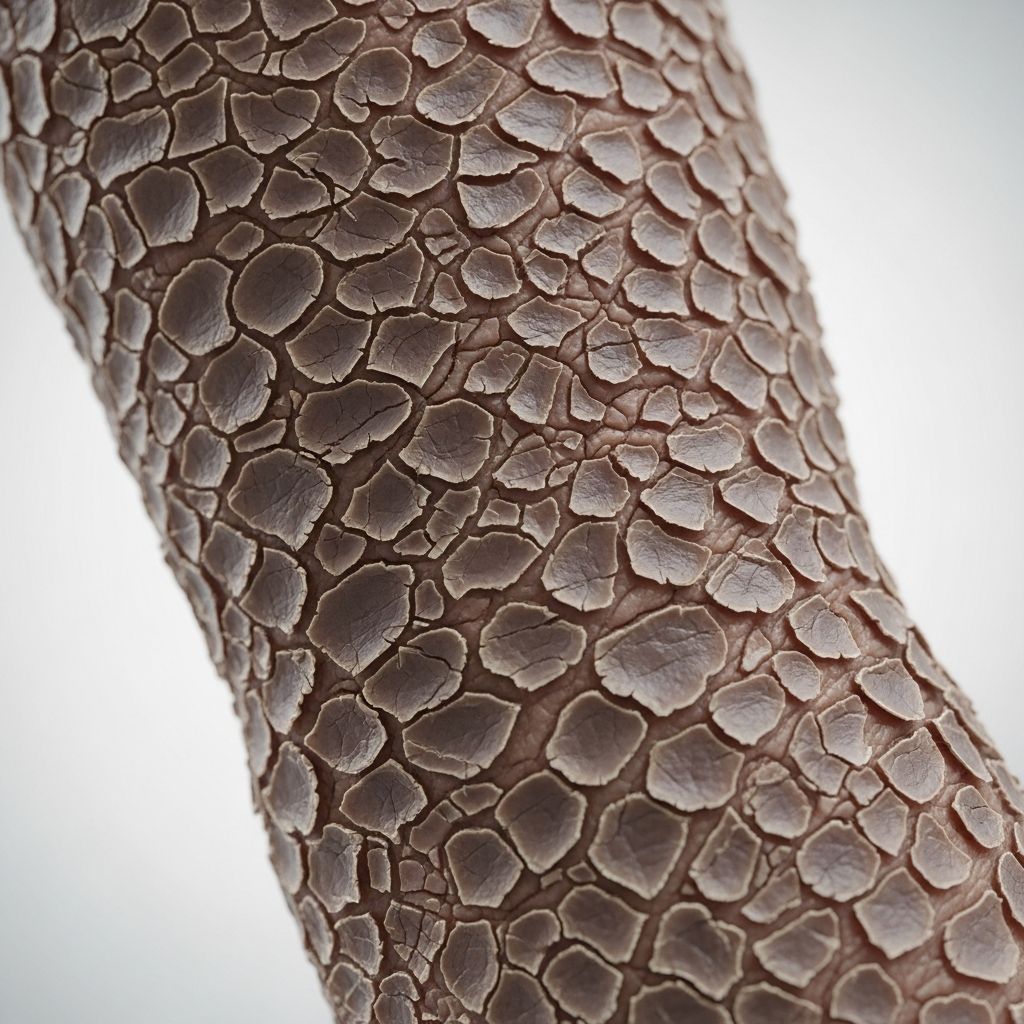
Ichthyosis refers to a group of rare genetic skin disorders characterized by dry, thickened, scaling skin that resembles fish scales, deriving its name from the Greek word for fish. These conditions arise from defects in the skin’s barrier function, leading to impaired shedding of dead skin cells and excessive scaling. While most forms are congenital and inherited, some can be acquired later in life due to underlying diseases.
What is ichthyosis?
Ichthyosis encompasses over 20 distinct types, primarily genetic, where the skin fails to properly desquamate (shed outer layers), resulting in persistent dryness, roughness, and scales. The most common form, ichthyosis vulgaris, affects up to 1 in 250 people and typically presents mildly with fine white scales on the extremities. Rarer, severe variants like harlequin ichthyosis can be life-threatening at birth due to thick, armor-like plates restricting movement and respiration. Symptoms often worsen in low humidity environments, such as winter, and improve with warmth and moisture.
Who gets ichthyosis?
Ichthyosis predominantly affects individuals with genetic predispositions. Inherited forms are present from birth or early infancy, with X-linked ichthyosis almost exclusively impacting males due to mutations on the X chromosome. Autosomal recessive types, like lamellar ichthyosis, occur in both sexes but require inheritance from both parents. Acquired ichthyosis, less common, develops in adulthood secondary to malignancies (e.g., lymphoma), endocrine disorders (e.g., hypothyroidism), or infections.[10] Prevalence varies: ichthyosis vulgaris is common (up to 1% globally), while harlequin type is extremely rare (1 in 300,000-1,000,000 births).
What causes ichthyosis?
Genetic ichthyoses stem from mutations disrupting keratinocyte differentiation, lipid production, or enzymes essential for skin barrier integrity. For instance, ichthyosis vulgaris results from filaggrin gene mutations, impairing skin hydration and desquamation. X-linked ichthyosis arises from steroid sulfatase deficiency, leading to cholesterol sulfate accumulation and dark scales. Harlequin ichthyosis involves ABCA12 gene defects, causing defective lipid transport and thick scaling. Acquired forms link to systemic diseases disrupting epidermal turnover, such as sarcoidosis or HIV.
What are the clinical features of ichthyosis?
The hallmark is dry, hyperkeratotic skin with scales varying from fine and white (vulgaris) to large, dark plates (lamellar). Common features include:
- Intense pruritus (itching), exacerbated by dryness.
- Skin cracking, fissuring, and potential secondary infections.
- Reduced sweating (anhidrosis), risking overheating.
- Erythema (redness) in erythrodermic forms.
- Associated ectropion (everted eyelids), alopecia, or nail dystrophy in severe cases.
In neonates, collodion membrane—a shiny, tight sheath—signals congenital types, shedding to reveal underlying scales.
How is ichthyosis diagnosed?
Diagnosis relies on clinical examination, family history, and histopathology showing orthokeratotic hyperkeratosis. Genetic testing confirms specific mutations, aiding classification. Skin biopsy reveals compact stratum corneum without inflammation. Differential diagnoses include psoriasis, eczema, or pityriasis rubra pilaris. In ambiguous cases, immunofluorescence or enzyme assays (e.g., for steroid sulfatase) are employed.
Related Stories



What is the treatment for ichthyosis?
No cure exists; management focuses on symptom relief and hydration. Key strategies include:
- Emollients: Apply petroleum-based ointments (e.g., Vaseline) multiple times daily to lock in moisture.
- Keratolytics: Urea (10-40%), lactic acid, or salicylic acid creams exfoliate scales.
- Baths: Daily soaks with bleach (to prevent infection) followed by emollient application.
- Topicals: Topical retinoids or corticosteroids for inflammation.
- Systemic: Retinoids (e.g., acitretin) for severe cases; monitor for side effects.
Humidifiers, loose clothing, and avoiding irritants are essential. Neonatal care for collodion babies involves specialized NICU support.
Table: Comparison of Common Ichthyosis Types
| Type | Inheritance | Onset | Key Features | Severity |
|---|---|---|---|---|
| Ichthyosis Vulgaris | Autosomal Dominant | Childhood | Fine white scales on limbs; spares flexures | Mild |
| X-linked Ichthyosis | X-linked Recessive | Infancy (males) | Dark scales on neck, trunk, legs | Moderate |
| Lamellar Ichthyosis | Autosomal Recessive | Birth (collodion) | Plate-like brown scales whole body | Severe |
| Harlequin Ichthyosis | Autosomal Recessive | Birth | Thick armor-like plates; ectropion | Very Severe |
Clinical variants of ichthyosis
Beyond major types, variants include:
- Autosomal Recessive Congenital Ichthyosis (ARC I): Encompasses lamellar and congenital ichthyosiform erythroderma (CIE); features erythroderma and fine scales.
- Syndromic Ichthyosis: E.g., Netherton syndrome (bamboo hair), Sjogren-Larsson (spasticity).
- Acquired Ichthyosis: Paraneoplastic or drug-induced.
Complications of ichthyosis
Chronic scaling predisposes to bacterial superinfections (e.g., Staphylococcus), cellulitis, and malodor from trapped debris. Heat intolerance from anhidrosis increases hyperthermia risk. Ocular complications include keratitis; auditory issues in some syndromes. Psychosocial impacts include stigma and reduced quality of life.
Ichthyosis in infants born with collodion membrane
Collodion babies present encased in a taut, translucent membrane that cracks and peels over weeks, revealing ichthyosis underneath. Immediate care involves humidified incubators, topical emollients, and infection vigilance. Mortality has declined with multidisciplinary management, though long-term scaling persists.
What is the prognosis for ichthyosis?
Mild forms like vulgaris often improve with age or seasonally. Severe congenital types require lifelong management but survival has improved dramatically (e.g., harlequin ichthyosis post-1990s). Early intervention prevents complications; genetic counseling aids family planning.
Patient support for ichthyosis
Organizations like the Foundation for Ichthyosis & Related Skin Types (FIRST) offer resources, forums, and advocacy. Multidisciplinary teams (dermatologists, geneticists, psychologists) optimize care.
Frequently Asked Questions
Is ichthyosis contagious?
No, ichthyosis is genetic or acquired, not infectious.
Can ichthyosis be cured?
No cure, but symptoms are manageable with consistent skincare.
Does ichthyosis improve with age?
In mild types like vulgaris, yes; severe forms persist lifelong.
What daily care is needed for ichthyosis?
Daily bathing, emollient application, humidification, and avoiding harsh soaps.
Can ichthyosis affect internal organs?
Rarely in syndromic forms; most are skin-limited.
References
- Ichthyosis Symptoms, Types, Causes, & Risk Factors — NIAMS. 2023-10-01. https://www.niams.nih.gov/health-topics/ichthyosis
- Ichthyosis: Types, Symptoms, & Treatment — WebMD. 2024-05-15. https://www.webmd.com/skin-problems-and-treatments/what-is-ichthyosis
- Ichthyosis — NHS. 2023-11-20. https://www.nhs.uk/conditions/ichthyosis/
- Ichthyosis — Great Ormond Street Hospital. 2024-02-10. https://www.gosh.nhs.uk/conditions-and-treatments/conditions-we-treat/ichthyosis/
- All about ichthyosis: causes, symptoms and treatments — Dexeryl. 2023-08-05. https://www.dexeryl.com/en/your-skin/ichthyosis
- Ichthyosis — NORD (National Organization for Rare Disorders). 2024-01-12. https://rarediseases.org/rare-diseases/ichthyosis/
- Ichthyosis Vulgaris: Causes, Symptoms, Treatment & Recovery — Cleveland Clinic. 2023-09-18. https://my.clevelandclinic.org/health/diseases/21069-ichthyosis-vulgaris
- Ichthyosis — Merck Manuals. 2024-03-22. https://www.merckmanuals.com/home/skin-disorders/cornification-disorders/ichthyosis
Similar Articles








Read full bio of medha deb