Idiopathic Facial Aseptic Granuloma: Expert Guide For Parents
Understanding idiopathic facial aseptic granuloma: a benign pediatric skin condition with nodule-like lesions on the face, self-resolving without treatment.
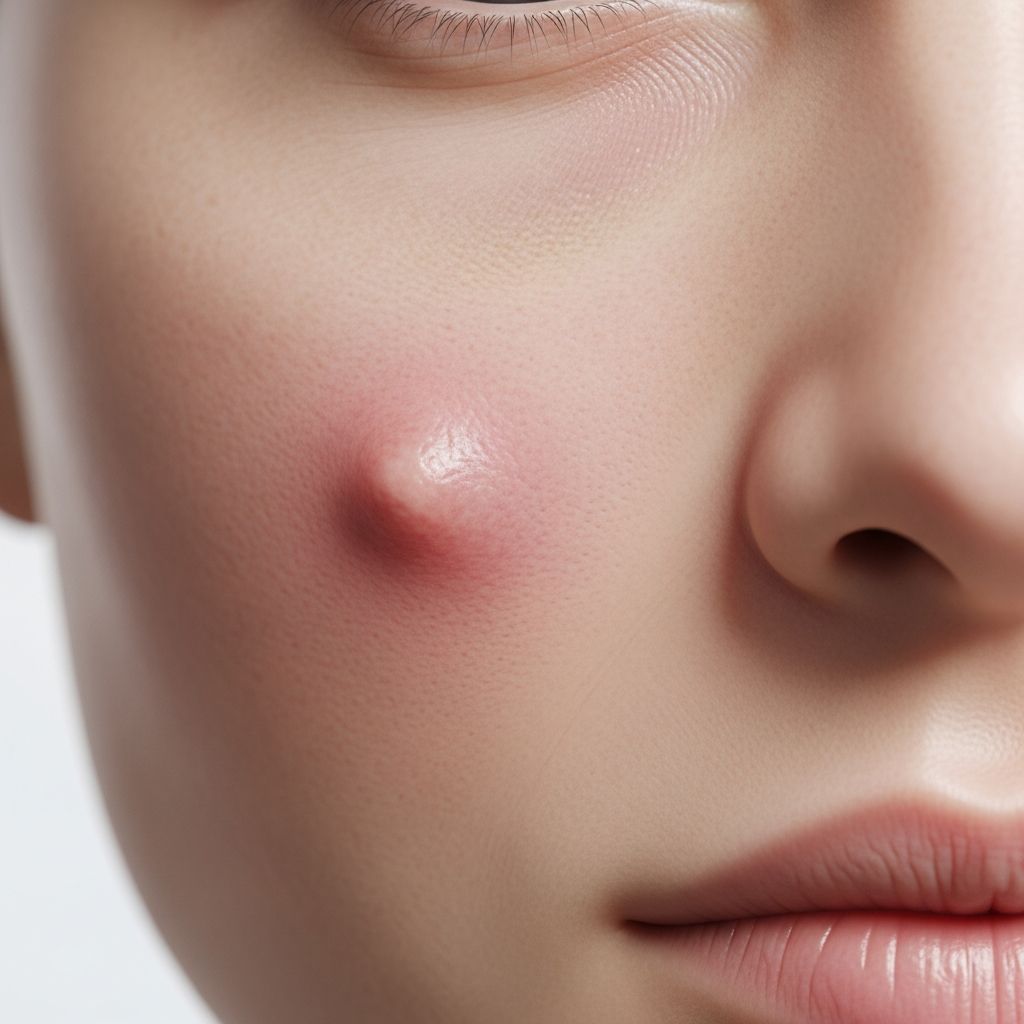
Idiopathic facial aseptic granuloma (IFAG) is a rare, benign, self-limiting skin condition primarily affecting children. It manifests as solitary or multiple asymptomatic nodules on the face, often resembling a foreign body or infected lesion but without evidence of infection or malignancy. First described in the literature as a distinct entity, IFAG is characterized by its aseptic nature—no bacteria, fungi, or other pathogens are involved—and its tendency to resolve without intervention over months to years.
What is idiopathic facial aseptic granuloma?
Idiopathic facial aseptic granuloma, abbreviated as
IFAG
, represents a unique dermatological phenomenon predominantly observed in pediatric populations. The term “idiopathic” underscores the unknown etiology, “facial” specifies its localization, “aseptic” confirms the absence of infectious agents, and “granuloma” refers to the histological granulomatous inflammation without caseation or necrosis typical of infectious granulomas.Clinically, IFAG presents as firm, reddish-purple nodules measuring 5–20 mm in diameter, often with a central dell or umbilication, mimicking pyogenic granuloma or granuloma annulare. Unlike granuloma faciale, which affects adults and is chronic, IFAG is self-resolving and exclusive to children aged 8 months to 13 years. The condition’s rarity is highlighted by sporadic case reports, with no large-scale epidemiological data available.
Histopathologically, IFAG shows a dense dermal infiltrate of lymphocytes, histiocytes, and multinucleated giant cells forming granulomas, surrounded by a zone of normal collagen (Grenz zone), without vasculitis or significant eosinophils distinguishing it from adult granuloma faciale. This differentiates it from infectious granulomas like tuberculosis or fungal infections.
Who gets idiopathic facial aseptic granuloma?
IFAG exclusively affects
children
, with onset typically between 8 months and 13 years of age, showing no strong gender predilection. It is rare, with incidence unknown due to underreporting and spontaneous resolution leading to missed diagnoses.- Age group: Predominantly toddlers and school-aged children; rare in neonates or adolescents.
- Sex: Equal distribution between boys and girls.
- Risk factors: None definitively identified; possible minor trauma or insect bites hypothesized as triggers, though unproven.
- Geography: Reported worldwide, no ethnic or regional bias noted in literature.
Unlike granuloma faciale in adults, which may link to sun exposure, IFAG shows no such association, occurring on covered facial areas as well.
What causes idiopathic facial aseptic granuloma?
The etiology of
IFAG remains idiopathic
—truly unknown. Several hypotheses exist based on clinical observations and histopathology:- Traumatic origin: Nodules often appear at sites of minor injury, such as scratches or insect bites, suggesting a reactive granulomatous response.
- Foreign body reaction: Despite negative special stains, subtle non-visible foreign material might initiate granuloma formation.
- Vascular or pilosebaceous origin: Some lesions show follicular involvement, akin to acne or rosacea-like reactions.
- Immune dysregulation: Pediatric immune systems may overreact to trivial stimuli, forming aseptic granulomas.
No infectious agents are cultured or detected via PCR, confirming “aseptic” status. Genetic or autoimmune links are unexplored due to rarity.
Related Stories



What are the clinical features of idiopathic facial aseptic granuloma?
Patients present with
one or few asymptomatic nodules
on the face, evolving over weeks.- Appearance: Solitary or multiple (up to 3–5), 5–15 mm, dome-shaped, red to violaceous, with central crust, dell, or hyperkeratosis.
- Location: Cheeks (most common), eyelids, nose, lips; rarely ear or scalp.
- Symptoms: Painless, non-pruritic; no systemic signs like fever.
- Evolution: Stable for months, then gradual flattening and resolution over 6–24 months without scarring.
Dermoscopy reveals white/yellow rail-line vessels, red lacunae, and central white area, aiding non-invasive diagnosis.
Diagnosis of idiopathic facial aseptic granuloma
Diagnosis is
clinical
, supported by histopathology if atypical.- Clinical suspicion: Child with facial nodule, classic morphology.
- Dermoscopy: Specific patterns differentiate from hemangioma or basal cell carcinoma.
- Biopsy (if needed): Grenz zone, mixed granulomatous infiltrate, no organisms on special stains (PAS, AFB, Gram).
- Labs: Normal; rule out eosinophilia if granuloma faciale suspected.
Differential includes pyogenic granuloma (bleeds easily), granuloma annulare (annular), Langerhans cell histiocytosis (systemic), or lymphoma (rare).
Differential diagnosis of facial nodules in children
| Condition | Key Features | Distinguishing from IFAG |
|---|---|---|
| Pyogenic granuloma | Pedunculated, friable, bleeds | IFAG non-bleeding, stable |
| Granuloma annulare | Annular, hypopigmented border | IFAG nodular, no ring |
| Hemangioma | Soft, compressible, grows rapidly | IFAG firm, involutes |
| Foreign body granuloma | History of trauma/embedded material | IFAG no identifiable FB |
| Molluscum contagiosum | Umbilicated, pearly | IFAG larger, redder |
What is the treatment for idiopathic facial aseptic granuloma?
**Observation is primary**—most resolve spontaneously without scarring. Treatment is cosmetic or for parental reassurance.
- Conservative: Reassure family; monitor every 3–6 months.
- Topical: Corticosteroids (potent, short-term) or tacrolimus for inflammation.
- Intralesional steroids: Triamcinolone 10–20 mg/mL, 0.1 mL per lesion.
- Cryotherapy: Liquid nitrogen for superficial lesions.
- Laser/surgery: Pulsed dye laser or excision for persistent cases; risk of scarring.
Avoid antibiotics—sterile. Recurrence post-treatment is low.
What is the outcome for idiopathic facial aseptic granuloma?
**Excellent prognosis**. 90–100% resolve within 1–2 years without intervention. No systemic involvement or malignant potential. Rare persistence into adulthood reported anecdotally.
Frequently Asked Questions (FAQs)
Q: Is idiopathic facial aseptic granuloma cancerous?
A: No, IFAG is entirely benign with no risk of malignancy.
Q: Does it hurt or itch?
A: Typically asymptomatic; mild tenderness if traumatized.
Q: Can it spread to other body parts?
A: Almost always confined to the face; extrafacial rare.
Q: When should we see a dermatologist?
A: At presentation for confirmation; biopsy if atypical or non-resolving.
Q: Is treatment always necessary?
A: No, watchful waiting is standard; treat for cosmetics if desired.
Related topics
- Granuloma faciale
- Granuloma annulare
- Pyogenic granuloma
- Pediatric dermatoses
References
- Granuloma faciale – DermNet — DermNet NZ. 2023. https://dermnetnz.org/topics/granuloma-faciale
- Granuloma Faciale Treatment: A Systematic Review — Acta Dermato-Venereologica. 2020-01-15. https://www.medicaljournals.se/acta/content/html/10.2340/00015555-2784
- Granuloma Faciale – MD Searchlight — MD Searchlight. 2024. https://mdsearchlight.com/skin-problems-and-treatments/granuloma-faciale/
- Granuloma annulare – Diagnosis and treatment – Mayo Clinic — Mayo Clinic. 2023-05-12. https://www.mayoclinic.org/diseases-conditions/granuloma-annulare/diagnosis-treatment/drc-20351323
- Granuloma Faciale – StatPearls — NCBI Bookshelf. 2023-07-17. https://www.ncbi.nlm.nih.gov/books/NBK539832/
- Idiopathic Facial Aseptic Granuloma — Consultant360. 2022. https://www.consultant360.com/article/consultant360/dermatology/idiopathic-facial-aseptic-granuloma
Similar Articles








Read full bio of medha deb