Idiopathic Guttate Hypomelanosis: 3 Lesion Types And Treatment
Understanding the common skin condition causing small white spots on sun-exposed areas, its causes, diagnosis, and management options.
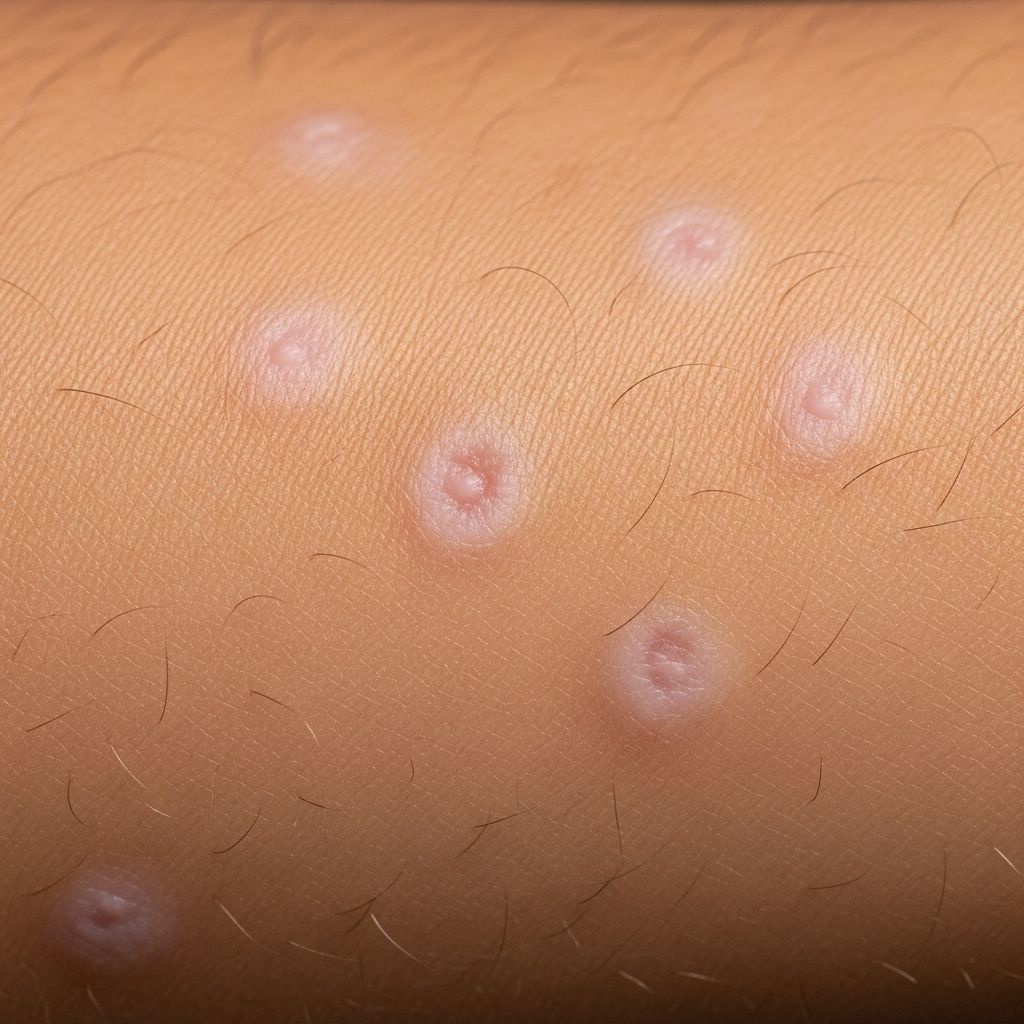
Idiopathic guttate hypomelanosis (IGH) is a benign, common, acquired form of leukoderma that presents as small flat pale or white spots on sun-exposed limbs, typically measuring 2 6 mm in diameter. It affects both sexes, all races, and all skin phototypes, though women and those with skin of colour often seek medical attention due to cosmetic concerns.
Introduction
IGH represents a prevalent dermatological condition characterized by hypopigmented or depigmented macules primarily on the extensor surfaces of the forearms, shins, and the V-area of the chest. These lesions are smooth, asymptomatic, and increase in number and prominence with age, becoming a notable cosmetic issue rather than a medical one. The term ‘idiopathic’ underscores the unclear exact etiology, while ‘guttate’ describes the drop-like appearance, and ‘hypomelanosis’ refers to reduced melanin pigmentation.
Prevalence rises sharply with advancing age: less than 50% in the 31 640 age group, 50 80% over 40 years, and over 90% in those aged 81 90. It is rarely reported in children or teenagers, but familial clustering suggests a genetic predisposition.
Demographics
IGH manifests across all demographics but shows patterns in presentation. It is equally common in men and women, yet females are more likely to consult dermatologists owing to aesthetic impact, particularly on visible areas. Individuals with darker skin phototypes (Fitzpatrick types IV 6VI) notice lesions more prominently against their baseline pigmentation, prompting higher consultation rates.
No racial exclusivity exists; however, chronic sun exposure in fair-skinned populations accelerates onset. Familial cases are frequently observed, hinting at heritable factors. Globally, it is underreported in younger cohorts but ubiquitous in the elderly.
Causes
The aetiopathogenesis of IGH is multifactorial and not fully elucidated. Key contributors include:
- Skin ageing: Natural degenerative changes in melanocytes and keratinocytes lead to diminished melanin production and transfer.
- Chronic sun exposure: Ultraviolet radiation damages melanocytes, reducing their number and function, a primary risk factor.
- Genetic factors: Familial patterns and associations with HLA-DQ3 suggest hereditary susceptibility.
- Other factors: Trauma, autoimmune mechanisms, phototherapy, and abnormal keratinocyte phagocytosis impairing melanin transfer from melanocytes to surrounding cells.
Histologically, lesions show flattened rete ridges, reduced melanin granules in basal layers, basket-weave hyperkeratosis, and fewer DOPA-positive melanocytes, confirming pigment loss without inflammation.
Clinical Features
IGH presents as multiple smooth, hypopigmented (pale) or depigmented (white) macules, 2 6 mm in size (up to 1.5 cm rarely), symmetrically distributed on sun-exposed sites: forearms (extensor aspects), shins, and chest V-area. Lesions are asymptomatic—no itch, pain, or scaling typically—and remain stable in size once formed.
Three morphological variants are described:
- Classic round/oval macules.
- Comet-tail shaped lesions.
- Linear or irregular forms.
The number of spots increases with age, sometimes exceeding 100. Skin surface remains smooth without atrophy, distinguishing it from scarring conditions.
Related Stories



Variation in Skin Types
IGH visibility varies by skin phototype. In lighter skin (Fitzpatrick I 6III), spots blend subtly, often overlooked until numerous. In skin of colour (IV 6VI), stark contrast heightens cosmetic distress, leading to more frequent presentations. Wood’s lamp examination accentuates hypopigmentation across types by highlighting melanin absence.
Darker skin may show more pronounced depigmentation due to inherently higher baseline melanin, amplifying psychological impact on quality of life.
Dermoscopy
Dermoscopy reveals hallmark features aiding diagnosis: absent or reduced pigment network, variably shaped vacuoles (round, tubular, or ‘amoeboid’), and translucent macules with sharp borders. These findings correlate with histological pigment loss and are specific for IGH, enhancing non-invasive identification.
For detailed images and descriptions, dermoscopy distinguishes IGH from mimics like vitiligo or post-inflammatory hypopigmentation by lacking perifollicular pigment or edge hyperpigmentation.
Complications
IGH is benign with no physical complications—no malignancy risk, scarring, or systemic associations. The sole issue is cosmetic, potentially affecting self-esteem, especially in visible areas or darker skin tones. Emotional distress may arise from perceived ageing or skin imperfection, though it poses no health threat.
Diagnosis
Diagnosis is clinical, based on characteristic lesions in sun-exposed areas of middle-aged or older patients. Dermoscopy confirms typical vacuolar structures and pigment absence. Wood’s lamp shows hypofluorescence. Biopsy is rarely needed but reveals epidermal flattening and melanin reduction if performed.
No lab tests are required unless differentials like fungal infections or vitiligo are suspected.
Differential Diagnoses
IGH must be differentiated from:
| Condition | Key Distinguishing Features |
|---|---|
| Vitiligo | Larger, progressive patches; total depigmentation; perilesional hyperpigmentation; positive Wood’s lamp fluorescence. |
| Tinea versicolor | Scaly; trunk involvement; KOH prep shows fungal elements; responds to antifungals. |
| Post-inflammatory hypopigmentation | History of inflammation/trauma; resolves over time; edge hyperpigmentation. |
| Achromic verruca plana | Subtle scaling; HPV-related; koebnerization; histo shows koilocytes. |
| Hypopigmented mycosis fungoides | Larger patches; poikiloderma; biopsy confirms lymphoma cells. |
IGH’s small size, stability, and sun-exposed distribution on extremities without scaling or progression aid differentiation.
Treatment
No curative treatment exists; management targets camouflage or repigmentation for cosmesis. Options include:
- Topical therapies: Corticosteroids, calcineurin inhibitors (e.g., tacrolimus), or retinoids to stimulate melanogenesis—limited efficacy, risk of irritation.
- Procedural: Cryotherapy, topical belfosulone acetate, or 308-nm excimer laser for targeted repigmentation; variable results (30 70% improvement).
- Camouflage: Self-tanners, makeup—safe, effective for mild cases.
- Prevention: Sunscreen, sun avoidance to halt progression.
Treatments are off-label; patient selection favors those with few lesions and high cosmetic concern. Evidence is anecdotal or small-series based.
Outcome
IGH is permanent; lesions persist without spontaneous resolution. Progression slows with age and sun protection. Excellent prognosis—no malignancy or complications. Cosmetic adaptation or intervention improves quality of life.
Frequently Asked Questions (FAQs)
Q: Is idiopathic guttate hypomelanosis dangerous?
A: No, IGH is entirely benign, causing only cosmetic concerns without health risks.
Q: Can IGH be prevented?
A: Strict sun protection from youth (sunscreen, clothing) may delay onset, but genetic and ageing factors limit prevention.
Q: Does IGH affect children?
A: Rare in children/teens; typically emerges post-40 years.
Q: Is treatment always necessary?
A: No, only if cosmetically distressing; many opt for camouflage.
Q: How does IGH look under dermoscopy?
A: Features smooth white areas with variably shaped vacuoles and absent pigment network.
References
- Idiopathic guttate hypomelanosis – DermNet 6 DermNet NZ. 2023-10-15. https://dermnetnz.org/topics/idiopathic-guttate-hypomelanosis
- Idiopathic Guttate Hypomelanosis (IGH) – Cleveland Clinic 6 Cleveland Clinic. 2024-05-20. https://my.clevelandclinic.org/health/diseases/idiopathic-guttate-hypomelanosis
- Idiopathic Guttate Hypomelanosis (Leukopathia symmetrica progressiva) 6 Dermatology Advisor. 2023-11-01. https://www.dermatologyadvisor.com/home/decision-support-in-medicine/dermatology/idiopathic-guttate-hypomelanosis-leukopathia-symmetrica-progressiva/
- Idiopathic Guttate Hypomelanosis 6 MD Searchlight. 2024-02-10. https://mdsearchlight.com/skin-problems-and-treatments/idiopathic-guttate-hypomelanosis/
Similar Articles








Read full bio of medha deb