IgA Nephropathy Vs IgA Vasculitis: Key Clinical Differences
Understanding the key differences between IgA nephropathy and IgA vasculitis, from symptoms to treatment and prognosis.
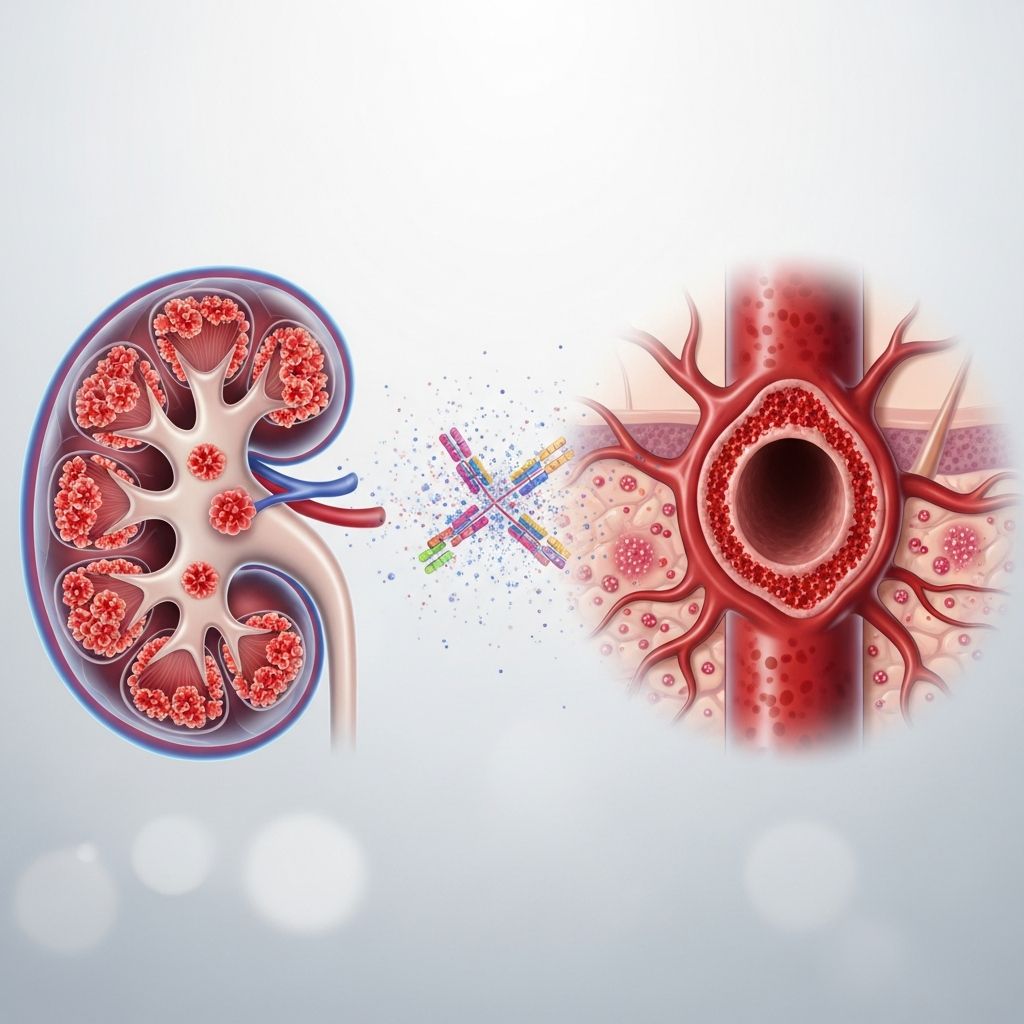
Immunoglobulin A (IgA) nephropathy, also known as Berger’s disease, and IgA vasculitis (formerly Henoch-Schönlein purpura) are two conditions characterized by IgA deposits in the kidneys, but they present distinct clinical profiles, histological features, and prognoses. While both can lead to kidney damage, IgA vasculitis often involves systemic symptoms beyond the kidneys, whereas IgA nephropathy primarily affects the glomeruli. This article breaks down their differences based on clinical studies and histopathological analyses.
What Is IgA Nephropathy?
IgA nephropathy (IgAN) is the most common form of primary glomerulonephritis worldwide, featuring mesangial IgA deposits in the glomeruli. It typically manifests in young adults with recurrent hematuria, often following upper respiratory infections. Patients frequently present with proteinuria, hypertension, and progressive renal decline, with up to 20-40% progressing to end-stage renal disease (ESRD) over 20 years.
Diagnosis requires a kidney biopsy showing dominant IgA deposits in the mesangium. The Oxford classification (MEST-C score) assesses mesangial hypercellularity (M), endocapillary hypercellularity (E), segmental glomerulosclerosis (S), tubular atrophy/interstitial fibrosis (T), and crescents (C), predicting prognosis. IgAN biopsies often show more glomerulosclerosis and tubular atrophy compared to IgAV.
What Is IgA Vasculitis?
IgA vasculitis (IgAV) is a small-vessel vasculitis mediated by IgA immune complexes, affecting skin, joints, gut, and kidneys. It is most common in children but can occur in adults. Classic tetrad includes palpable purpura (non-thrombocytopenic), arthralgia/arthritis, abdominal pain, and renal involvement (IgAV nephritis in 20-60% of cases).
In adults, IgAV tends to be more severe with higher risks of renal impairment. Kidney biopsies reveal IgA deposits similar to IgAN but with more endocapillary proliferation and crescents. Systemic symptoms distinguish it: purpuric rash on lower extremities, gastrointestinal bleeding, and arthritis.
Similarities Between IgA Nephropathy and IgA Vasculitis
Both conditions share a core pathogenesis: aberrant glycosylation of IgA1 leading to galactose-deficient IgA1 (Gd-IgA1), formation of immune complexes, and mesangial deposition causing inflammation. Renal biopsies in both show mesangial IgA-dominant deposits on immunofluorescence.
- Common renal features: microscopic hematuria, proteinuria, and potential progression to chronic kidney disease.
- Triggers: Often preceded by mucosal infections (e.g., upper respiratory tract).
- Genetic predisposition: Associations with HLA alleles and familial clustering.
- Treatment overlap: Supportive care with renin-angiotensin-aldosterone system (RAAS) inhibitors for proteinuria and hypertension.
Debate persists on whether they represent a spectrum of the same disease, as IgAV patients are diagnosed earlier due to rash, while IgAN is often found at later stages via biopsy.
Key Differences: Clinical Presentation
IgAN primarily presents with isolated renal symptoms: gross hematuria (synpharyngitic), proteinuria (>1g/day in 20-40%), and hypertension. Systemic symptoms are absent.
IgAV features multisystem involvement:
- Skin: Palpable purpura on legs/buttocks (mandatory for diagnosis).
- Joints: Arthralgia (60-84%).
- GI: Colicky pain, bloody stools (50-75%).
- Renal: Hematuria (more microhematuria and nephritic sediment), less proteinuria than IgAN.
| Feature | IgA Nephropathy | IgA Vasculitis |
|---|---|---|
| Age of Onset | Young adults (20-40 years) | Children > Adults |
| Systemic Symptoms | Rare | Common (purpura, arthritis, GI) |
| Hematuria | Gross, episodic | Microscopic, persistent |
| Proteinuria | Higher risk of nephrotic range | Lower |
| Hypertension | More common at diagnosis | Less frequent initially |
Related Stories



Adult IgAV patients are older (mean 53 years vs. 45 for IgAN) with more comorbidities.
Histological Differences
Kidney biopsies differentiate the two:
- IgAN: More mesangial proliferation, segmental sclerosis, tubular atrophy (T1/T2), higher Oxford MEST-C scores for chronicity.
- IgAV: Endocapillary hypercellularity (E1), crescents (C1/C2), less sclerosis. Uses NIH lupus nephritis indices: higher activity index in IgAV.
A study of 223 biopsies found IgAV with systemic symptoms had more acute lesions, while IgAN showed chronic changes. Pediatric IgAV biopsies have more endothelial proliferation (65.6% vs. 29% in IgAN).
Diagnosis
Both require kidney biopsy for confirmation (light microscopy, immunofluorescence, electron microscopy showing mesangial deposits).
- IgAN: Clinical hematuria/proteinuria prompts biopsy; exclude secondary causes (liver disease, etc.).
- IgAV: EULAR/PRINTO/PRES criteria: purpura +1 of (abdominal pain, arthritis, renal involvement, biopsy IgA deposits).
- Differentiate via systemic signs; IgAV suspected with purpura, etc..
Monitor eGFR, proteinuria; risk calculators like International IgAN Prediction Tool aid prognosis.
Treatment Approaches
Supportive care is cornerstone for both: blood pressure control (<130/80 mmHg), RAAS blockade (ACEi/ARB), lifestyle (low salt, smoking cessation).
- IgAN: High-risk (proteinuria >1g/d despite support, eGFR decline): corticosteroids (STOP-IgAN regimen), SGLT2 inhibitors (DAPA-CKD trial), endothelin antagonists. Immunosuppression controversial.
- IgAV: Mild: supportive. Nephrotic/severe: glucocorticoids ± cyclophosphamide, especially in adults. More immunosuppressants used in IgAV (steroids vs. RAAS in IgAN).
Treatment trials for IgAN exclude vasculitis, highlighting differences.
Prognosis and Outcomes
IgAN has variable prognosis: 50% stable, 20-40% ESRD in 20 years. Predictors: proteinuria, eGFR, histology.
IgAV: Excellent in children (90% resolve); adults worse with persistent renal disease (14-25% ESRD). Adult IgAV may progress faster to dialysis, shorter survival (5.5 vs. 7 years, non-significant).
- Pediatric: IgAV better (dialysis 2.9% vs. 43.5% IgAN).
- Adult: IgAV more acute inflammation but potentially better chronic prognosis if treated early.
Overall, IgAN linked to higher ESRD risk due to chronic presentation.
Frequently Asked Questions (FAQs)
Q: Are IgA nephropathy and IgA vasculitis the same disease?
A: No, though related by IgA deposits. IgAV is systemic vasculitis; IgAN is primary glomerulonephritis without extrarenal symptoms.
Q: Which is more common in children?
A: IgA vasculitis, often self-limiting; IgAN more in adults.
Q: Can IgA vasculitis lead to kidney failure?
A: Yes, especially in adults (up to 25% chronic kidney disease).
Q: How are they diagnosed?
A: Kidney biopsy essential; clinical criteria for IgAV.
Q: What is the best treatment?
A: Supportive care first; immunosuppression for high-risk cases, differing by condition.
Prevention and Monitoring
No specific prevention; early infection management may help. Regular monitoring of urine protein/creatinine, eGFR crucial for both to detect progression.
In summary, while sharing pathogenic roots, clinical vigilance for systemic signs distinguishes IgAV from isolated IgAN, guiding tailored management.
References
- Clinical and histological comparison of IgA nephritis and renal IgA vasculitis — Nephrology Dialysis Transplantation. 2024-10-01. https://academic.oup.com/ndt/article/40/1/182/7697571
- IgA Vasculitis and IgA Nephropathy: Same Disease? — PMC / Frontiers in Immunology. 2021-06-10. https://pmc.ncbi.nlm.nih.gov/articles/PMC8197792/
- Comparison of Clinical Characteristics, Outcomes in IgA Vasculitis vs IgA Nephropathy — HCPLive. 2023-01-15. https://www.hcplive.com/view/comparison-clinical-characteristics-outcomes-iga-vasculitis-iga-nephropathy
- IgA Vasculitis Nephritis: A Case Series and Comparison — Wiley Online Library. 2020-10-15. https://onlinelibrary.wiley.com/doi/10.1155/2020/8863858
- IgA Vasculitis and IgA Nephropathy: Same Disease? — PubMed. 2021-06-10. https://pubmed.ncbi.nlm.nih.gov/34070665/
Similar Articles








Read full bio of Sneha Tete