IgG Subclass Deficiency: Symptoms, Diagnosis And Treatment
Understanding IgG subclass deficiency: causes, symptoms, diagnosis, and management of this primary immunodeficiency disorder.
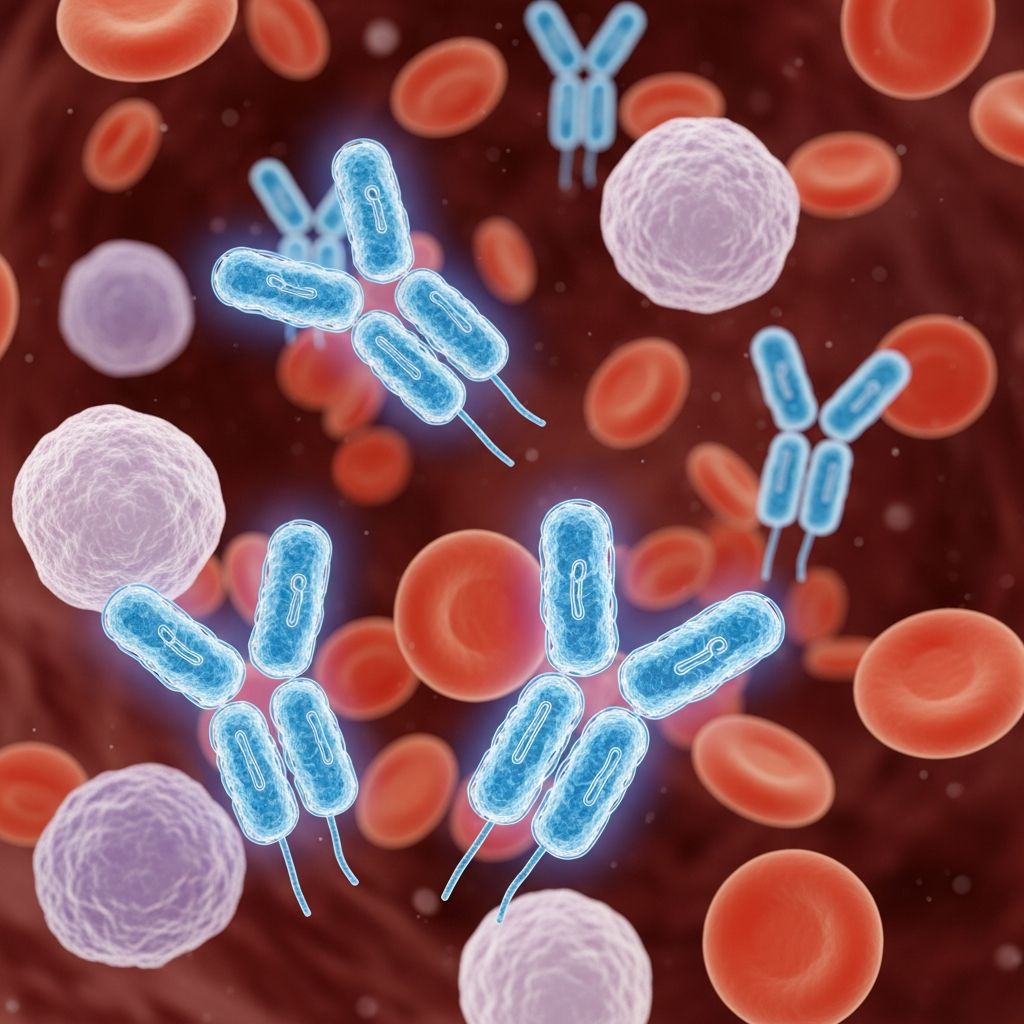
IgG subclass deficiency is a primary immunodeficiency disorder characterized by normal total immunoglobulin G (IgG) levels but reduced concentrations of one or more IgG subclasses (IgG1, IgG2, IgG3, or IgG4). This condition predisposes individuals to recurrent infections, particularly sinopulmonary ones, and may associate with autoimmune phenomena, distinguishing it from more severe disorders like common variable immunodeficiency (CVID).
What is IgG subclass deficiency?
IgG is the most abundant antibody in human serum, comprising about 75-80% of total immunoglobulins. It exists in four subclasses—I**gG1, IgG2, IgG3, and IgG4**—each with distinct roles in immune defense. IgG1 (60-70% of total IgG) targets protein antigens and viruses; IgG2 (20-30%) responds to polysaccharide capsules of bacteria like Streptococcus pneumoniae; IgG3 (5-8%) activates complement effectively against toxins; IgG4 (<5%) handles chronic antigen exposure.
In IgG subclass deficiency (IgGSD), total IgG remains normal, but at least one subclass is persistently below age-adjusted reference ranges. Other immunoglobulins (IgA, IgM) and immune components are typically normal, though associations with IgA deficiency occur. Prevalence is estimated at 1:10,000 to 1:50,000, often underdiagnosed due to controversy over clinical significance.
Who gets IgG subclass deficiency (epidemiology)?
IgGSD affects both males and females equally, with onset commonly in childhood or early adulthood, though adult diagnoses occur. It may be inherited, potentially via partial gene deletions similar to selective IgA deficiency, but inheritance patterns (autosomal dominant/recessive) remain unclear.
Associated conditions include Wiskott-Aldrich syndrome, ataxia-telangiectasia, and specific antibody deficiency (SAD). IgG2/IgG4 deficiencies often co-occur with IgA deficiency. Children may outgrow isolated deficiencies, but adult persistence is common. A retrospective study of 96 IgGSD patients showed 64.6% with recurrent upper respiratory tract infections (URTIs) and 43.8% with lower respiratory tract infections (LRTIs).
What causes IgG subclass deficiency?
The etiology involves genetic defects impairing subclass-specific production, possibly cytokine dysregulation (e.g., IL-4 for IgG4, IFN-γ for IgG1/IgG3). Partial deletions in constant region genes on chromosome 14q32.33 are implicated.
- Isolated IgGSD: Single subclass low (most common: IgG2 > IgG3).
- Combined: IgG2+4SD (resembles CVID with LRTIs, splenomegaly); IgG1+3SD (arthritis-prone).
- Secondary: Linked to malignancies, drugs, or infections.
Immunophenotypically, IgGSD patients have higher class-switched memory B cells than CVID patients.
What are the clinical features of IgG subclass deficiency?
Manifestations vary by deficient subclass but center on infections and immune dysregulation.
Infections
- Recurrent sinopulmonary: URTIs (otitis media, sinusitis; 64.6%), LRTIs (pneumonia, bronchiectasis; 43.8%). IgG2+4SD shows higher bronchiectasis risk.
- Viral: Herpes simplex (HSV) reactivations (mucocutaneous, perioral/genital; more common than CVID, p=0.0019); herpes zoster prominent in IgG3SD (26.7%). Rare: herpes keratitis, encephalitis.
- Encapsulated bacteria: Poor IgG2 response to polysaccharides (e.g., pneumococcus).
Autoimmunity and inflammation
- Thyroiditis (24%), arthritis (22.9%; higher in IgG1+3SD).
- Less common than CVID: autoimmune cytopenias (ITP, AIHA), splenomegaly, lymphadenopathy.
Dermatological features
Skin involvement is limited but includes recurrent HSV lesions (perioral, nasal, genital). Chronic mucocutaneous candidiasis or eczema may occur in overlaps with other immunodeficiencies. Bronchiectasis-related skin changes (clubbing) are rare.
Related Stories



| Phenotype | IgGSD Prevalence | CVID Comparison |
|---|---|---|
| URTIs | 64.6% | Similar |
| LRTIs/Bronchiectasis | 43.8% (IgG2+4 higher) | Rarer (p<0.05) |
| HSV Reactivations | 17.7% | More common (p=0.0019) |
| Arthritis | 22.9% | Higher |
| ITP/AIHA | Low | More frequent |
How is IgG subclass deficiency diagnosed?
Diagnosis requires:
- Clinical suspicion: Recurrent infections despite antibiotics (≥2 serious/year or ≥4 mild).
- Laboratory: Normal total IgG/IgM/IgA; low ≥1 subclass (confirmed twice, 3+ months apart). Age-specific norms essential (IgG2 matures late in children).
- Functional tests: Poor vaccine responses (e.g., pneumococcal polysaccharides, tetanus/diphtheria). Critical for clinical significance.
- Exclude others: Rule out CVID (low total IgG + poor vaccines), SAD, HIV.
Flow cytometry may show preserved memory B cells vs. CVID. Genetic testing for overlaps.
What is the treatment for IgG subclass deficiency?
Prophylaxis
- Antibiotics: Prophylactic (e.g., azithromycin) for frequent infections.
- Vaccines: Conjugate (PCV13) over polysaccharide; avoid live if severe.
Immunoglobulin replacement
IVIG/SCIG for severe cases with documented poor vaccine responses failing prophylaxis. Not routine due to controversy; many improve spontaneously. Dosing: 400-600 mg/kg/month. Monitor troughs.
Specific management
- Infections: Prompt antivirals for HSV/zoster.
- Autoimmunity: Immunosuppressants (steroids for arthritis).
- Monitor: Pulmonary function, Ig levels yearly; reassess children off therapy after 4-6 months.
Prognosis: Good with management; lower complication risk than CVID.
What is the outcome for IgG subclass deficiency?
Most achieve infection control. Children often outgrow (reevaluate off IgG). Adults: Persistent but milder than CVID. Complications: Bronchiectasis (IgG2+4), autoimmunity. Early diagnosis improves quality of life.
FAQs
Is IgG subclass deficiency the same as CVID?
No. IgGSD has normal total IgG and milder infections; CVID features low total IgG, more lymphoproliferation/cytopenias.
Do all patients need IVIG?
No. Only those with poor vaccine responses and recurrent infections failing antibiotics.
Can children outgrow it?
Yes, especially isolated IgG2; reassess after discontinuing therapy.
What vaccines are recommended?
Pneumococcal conjugate, influenza; test responses.
Is it hereditary?
Likely, but pattern unclear; family screening advised.
References
- Reappraisal of IgG subclass deficiencies: a retrospective study — Lucas M et al. Frontiers in Immunology. 2024. https://pmc.ncbi.nlm.nih.gov/articles/PMC12043879/
- IgG Subclass Immune Deficiency — National Allergy & ENT. Accessed 2026. https://nationalallergyandent.com/igg-subclass-immune-deficiency/
- IgG subclass deficiency — DermNet NZ. Accessed 2026. https://dermnetnz.org/topics/igg-subclass-deficiency
- IgG subclass deficiency — Immune Deficiency Foundation. Accessed 2026. https://primaryimmune.org/understanding-primary-immunodeficiency/types-of-pi/igg-subclass-deficiency
- IgG subclass deficiencies — Immunodeficiency UK. 2022. https://www.immunodeficiencyuk.org/wp-content/uploads/2022/02/ImmunodeficiencyUKIgGEdition2.pdf
Similar Articles








Read full bio of medha deb