IgG4-Related Disease: Comprehensive Clinical Overview
Understanding IgG4-related disease: pathology, clinical features, diagnosis, and treatment approaches.
IgG4-Related Disease: An Overview
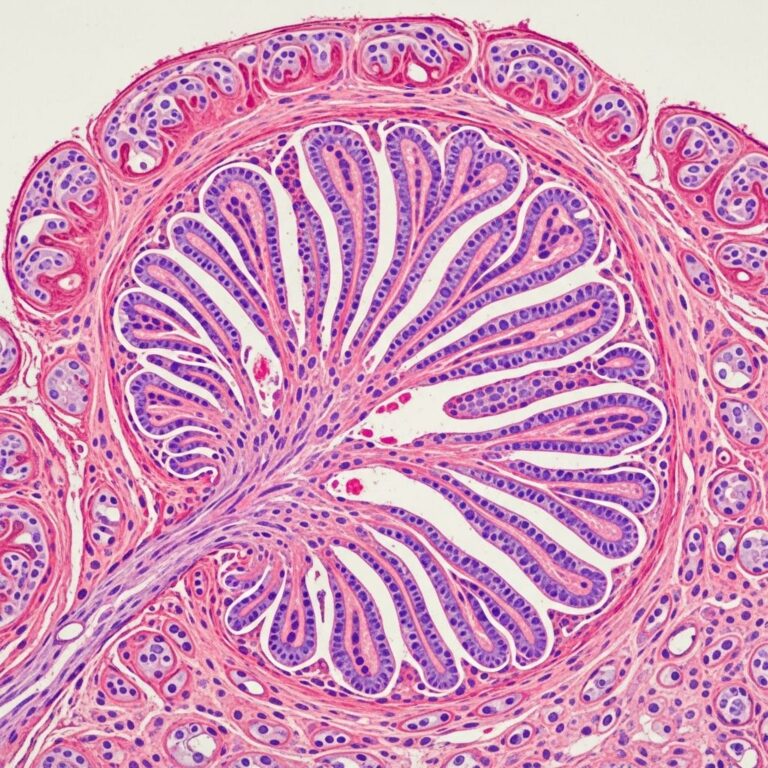
IgG4-related disease (IgG4-RD) is a chronic, immune-mediated, fibroinflammatory condition characterized by tumefactive lesions and multiorgan involvement of unknown etiology. First described in 2001 in patients with sclerosing cholangitis who had elevated serum IgG4 levels, this disease has since been recognized as a distinct clinical entity affecting nearly any organ system in the body. The condition presents with dense lymphoplasmacytic infiltration enriched with IgG4-positive plasma cells, accompanied by characteristic storiform fibrosis and obliterative phlebitis.
What distinguishes IgG4-RD from other fibro-inflammatory conditions is its propensity for multiorgan involvement combined with its responsiveness to immunosuppressive therapy in early stages. However, delayed recognition and diagnosis can lead to irreversible fibrotic complications and organ dysfunction. Understanding the clinical presentation, diagnostic criteria, and therapeutic approaches is essential for timely intervention and optimal patient outcomes.
Pathophysiology and Histopathological Features
The pathophysiology of IgG4-RD centers on an aberrant immune response characterized by lymphoplasmacytic infiltration and fibrosis. The clinical manifestations typically result from dense tissue infiltration by immune cells and expansion of the extracellular matrix, leading to tumor-like masses or organ enlargement.
The three classical histopathological hallmarks of IgG4-RD are:
- Dense lymphoplasmacytic infiltrate: Characterized by polyclonal lymphoid aggregates with germinal center formation, enriched with IgG4-positive plasma cells (IgG4/IgG ratio >40%)
- Storiform fibrosis: A distinctive pattern of fibrosis with whorled or pinwheel appearance of fibroblasts and collagen deposition
- Obliterative phlebitis: Inflammation of small to medium-sized veins with progressive narrowing or obliteration
The number of IgG4-positive plasma cells required for diagnosis varies by tissue site, ranging from greater than 10 per high-power field in meninges to greater than 100 per high-power field in skin. Importantly, bone marrow and lymph nodes typically lack the latter two features, making these sites suboptimal for histological confirmation.
Organ Involvement and Clinical Presentations
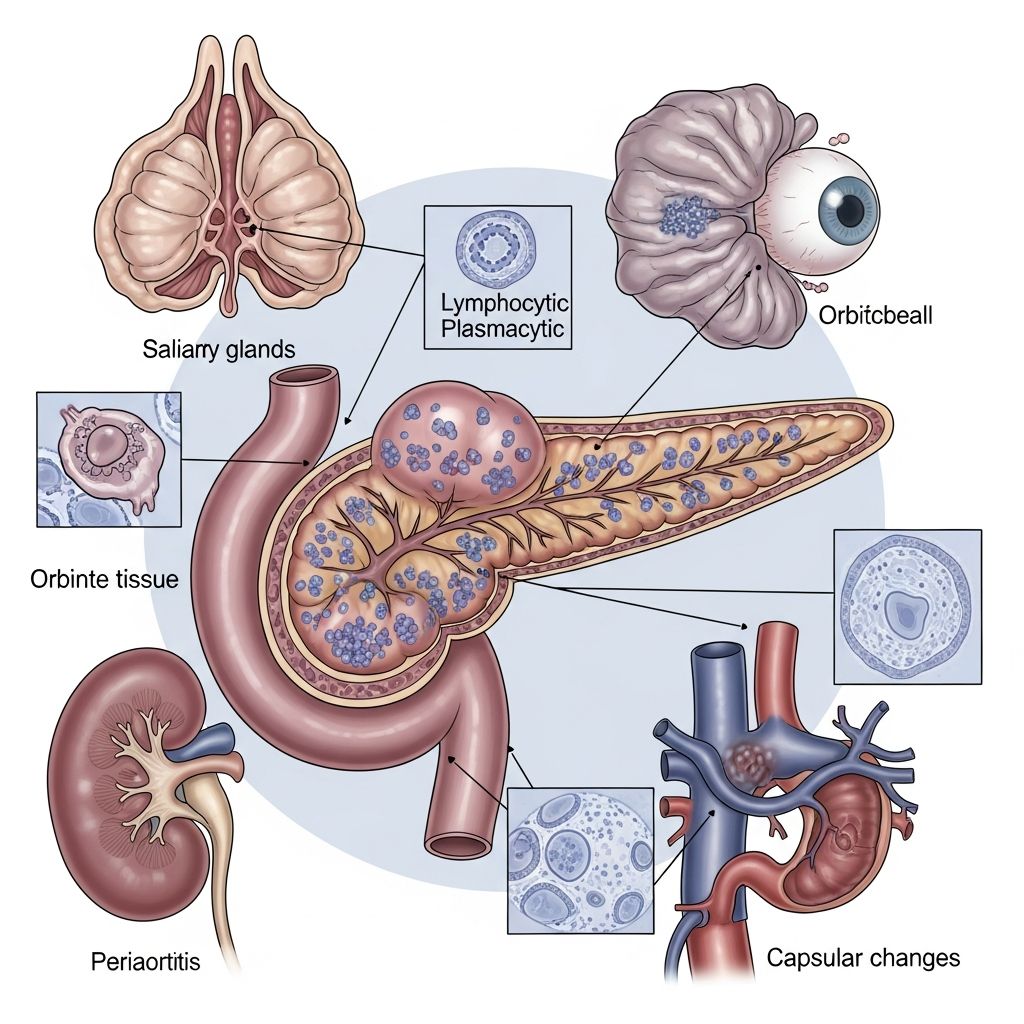
IgG4-RD demonstrates a remarkable propensity for multiorgan involvement, affecting 58–88% of patients with multiple organs involved simultaneously or in a metachronous fashion. The disease can affect virtually any organ system, though certain organs are more commonly involved than others.
Most Commonly Affected Organs
The organs most frequently involved in IgG4-RD include:
- Pancreas (autoimmune pancreatitis)
- Kidneys (tubulointerstitial nephritis)
- Orbital adnexal structures and lacrimal glands
- Major salivary glands (parotid and submandibular)
- Retroperitoneum
- Bile ducts (sclerosing cholangitis)
- Lungs
- Aorta (large vessel vasculitis)
- Meninges
- Thyroid gland
Head and Neck Manifestations
Head and neck involvement represents one of the most characteristic presentations of IgG4-RD. Major salivary glands (parotid and submandibular) and lacrimal glands demonstrate painless bilateral enlargement, a condition historically referred to as Mikulicz disease. Unlike Sjögren syndrome, sicca symptoms (dry eyes and dry mouth) are typically not prominent despite gland enlargement. Lymphadenopathy affects 30–60% of patients and may present as generalized or localized disease, with five morphological subtypes identified including multicentric Castleman disease-like and reactive follicular hyperplasia patterns.
Related Stories



Pancreatic Involvement
Autoimmune pancreatitis represents a major manifestation of IgG4-RD, typically presenting with abdominal pain, weight loss, and varying degrees of pancreatic dysfunction. Patients may experience jaundice secondary to edema of the pancreatic and bile ducts, along with exocrine or endocrine pancreatic insufficiency. Radiological studies often reveal mass-like lesions that can mimic pancreatic malignancy.
Renal Involvement
IgG4-RD-related tubulointerstitial nephritis presents with varied manifestations, including mass-like lesions on imaging, acute or chronic renal failure, and hematuria of varying degrees. The disease can present with bilateral kidney enlargement and may progress to chronic kidney disease if not recognized and treated promptly.
Orbital and Ocular Manifestations
Orbital disease in IgG4-RD typically presents as orbital pseudotumor with bulging of one or both eyes, vision changes, and eye discomfort. The disease may mimic orbital lymphoma or other space-occupying lesions on imaging studies.
Clinical Presentation and Symptoms
The presentation of IgG4-RD varies considerably depending on which organs are involved and the severity of disease. Most patients present with subacute symptoms related to organ enlargement, while others have findings discovered incidentally during diagnostic imaging or laboratory evaluation.
Common clinical manifestations include:
- Tumor-like masses in various regions that may mimic malignancy
- Organ swelling and enlargement
- Fatigue and brain fog
- Unexplained weight loss
- Headaches and cranial nerve dysfunction
- Facial swelling or bulges on the sides of the face or below the chin
- Shortness of breath and pulmonary symptoms
- Abdominal pain
- Painless jaundice
- Sinus complications, sneezing, and rhinorrhea
- Difficulty with urine flow or blockage
Associated conditions are frequently observed, with allergy history very common in approximately 40% of cases, including atopy, bronchial asthma, and sinusitis. Hematologic manifestations include lymphadenopathy, eosinophilia, and polyclonal hypergammaglobulinemia, which should prompt hematologists to include IgG4-RD in their differential diagnosis.
Diagnostic Criteria and Investigations
Early recognition and accurate diagnosis are essential for IgG4-RD, as patients typically respond well to steroids or rituximab in early disease stages, while fibrotic disease and late complications such as chronic pancreatitis are often irreversible.
Diagnostic Approach
The 2015 international consensus guidelines and 2020 revised comprehensive diagnostic (RCD) criteria recommend a systematic diagnostic approach involving:
- Detailed clinical medical history and comprehensive physical examination
- Selected laboratory studies including serum IgG4 levels and comprehensive metabolic panel
- Imaging studies (CT, MRI, ultrasound) to assess organ involvement
- Histopathological examination with immunohistochemistry
Histopathological Confirmation
A firm diagnosis requires histological confirmation based on the International Consensus Criteria, which must demonstrate:
- Dense lymphoplasmacytic infiltrate with storiform fibrosis and obliterative phlebitis
- Increased number of IgG4-positive plasma cells
- IgG4:IgG plasma cell ratio greater than 40%
- Tissue-specific diagnostic thresholds for IgG4-positive plasma cells per high-power field
Differential Diagnosis
IgG4-RD must be distinguished from several other conditions that may present with similar clinical and radiological features:
| Condition | Key Differentiating Features |
|---|---|
| Sjögren Syndrome | Prominent sicca symptoms, different histology, negative IgG4 plasma cells |
| Sarcoidosis | Noncaseating granulomas, different organ involvement pattern |
| Pancreatic Cancer | Elevated IgG4 levels, characteristic histopathology, response to steroids |
| Multicentric Castleman Disease | Elevated inflammatory markers, different plasma cell composition |
| Lymphoma | Monoclonal B or T cell infiltrate versus polyclonal in IgG4-RD |
Treatment and Management
The recognition of IgG4-RD as a distinct clinical entity has enabled the development of targeted therapeutic approaches. Early-stage disease typically demonstrates excellent response to immunosuppressive therapy, making prompt diagnosis crucial.
First-Line Therapy
Corticosteroids remain the first-line treatment for IgG4-RD, with most patients demonstrating significant clinical and radiological improvement with glucocorticoid therapy. Early intervention with steroids can prevent progression to fibrotic complications and organ dysfunction.
Steroid-Sparing Options
Rituximab, a B-cell depleting monoclonal antibody, has emerged as an effective alternative or adjunctive therapy, particularly for patients with steroid-refractory disease or those unable to tolerate prolonged corticosteroid exposure. Other immunosuppressive agents may be considered depending on disease manifestations and patient tolerance.
Management of Organ-Specific Complications
Organ-specific complications require targeted management. Patients with pancreatic involvement may require endoscopic or surgical intervention for biliary obstruction. Renal involvement necessitates monitoring of renal function and blood pressure control. Regular surveillance and close follow-up are essential as single or multiorgan presentations may progress to include additional organs.
Prognosis and Long-Term Outcomes
The prognosis of IgG4-RD depends significantly on the stage of disease at diagnosis and organ involvement. Early recognition and treatment result in excellent clinical responses with reversal of many features. However, advanced fibrotic disease may result in permanent organ dysfunction and irreversible complications. Some patients may develop isolated lesions in single organs with stable disease, while others experience progressive multiorgan involvement requiring long-term management and surveillance.
Frequently Asked Questions
Q: What percentage of patients with IgG4-RD have multiorgan involvement?
A: Approximately 58–88% of patients demonstrate multiple organ involvement either simultaneously or in a metachronous fashion, with the remainder having isolated lesions.
Q: How is IgG4-RD definitively diagnosed?
A: Diagnosis requires histopathological confirmation demonstrating dense lymphoplasmacytic infiltrate, storiform fibrosis, obliterative phlebitis, and an IgG4:IgG plasma cell ratio greater than 40%, supported by clinical and radiological findings.
Q: Can IgG4-RD mimic malignancy?
A: Yes, IgG4-RD frequently appears as a mass that mimics cancer on imaging studies, making accurate diagnosis essential to avoid unnecessary surgical interventions.
Q: What is the standard initial treatment for IgG4-RD?
A: Corticosteroids are the first-line treatment, with most patients responding well in early disease stages. Rituximab is an effective alternative for steroid-refractory cases or as adjunctive therapy.
Q: Is IgG4-RD reversible if treated early?
A: Early recognition and treatment can reverse many features of IgG4-RD; however, advanced fibrotic disease and chronic complications such as chronic pancreatitis are often irreversible.
Q: What organs are most commonly affected by IgG4-RD?
A: The pancreas, salivary glands, kidneys, orbital structures, and retroperitoneum are the most frequently involved organs, though virtually any organ can be affected.
References
- IgG4-Related Disease – StatPearls — National Center for Biotechnology Information (NCBI), U.S. National Library of Medicine. Updated 2024. https://www.ncbi.nlm.nih.gov/books/NBK499825/
- IgG4-related disease: what a hematologist needs to know — Haematologica, European School of Haematology. 2021. https://haematologica.org/article/view/8802
- IgG4-Related Disease (IgG4-RD) — American College of Rheumatology (ACR). 2024. https://rheumatology.org/patients/igg4-related-disease-igg4-rd
- 2020 revised comprehensive diagnostic (RCD) criteria for IgG4-RD — Modern Rheumatology, Oxford University Press. 2020. https://academic.oup.com/mr/article/31/3/529/6300281
- IgG4-Related Disease — Merck Manuals Professional Edition. 2024. https://www.merckmanuals.com/professional/musculoskeletal-and-connective-tissue-disorders/igg4-related-disease/igg4-related-disease
- IgG4-related Disease: A Concise Review of the Current Literature — Reumatología Clínica. 2017. https://www.reumatologiaclinica.org/en-igg4-related-disease-a-concise-review-articulo-S217357431730045X
Similar Articles








Read full bio of Sneha Tete