Iliotibial Band Syndrome: Causes, Symptoms & Treatment
Comprehensive guide to understanding IT band syndrome, its causes, symptoms, and effective treatment options for athletes and active individuals.
Understanding Iliotibial Band Syndrome
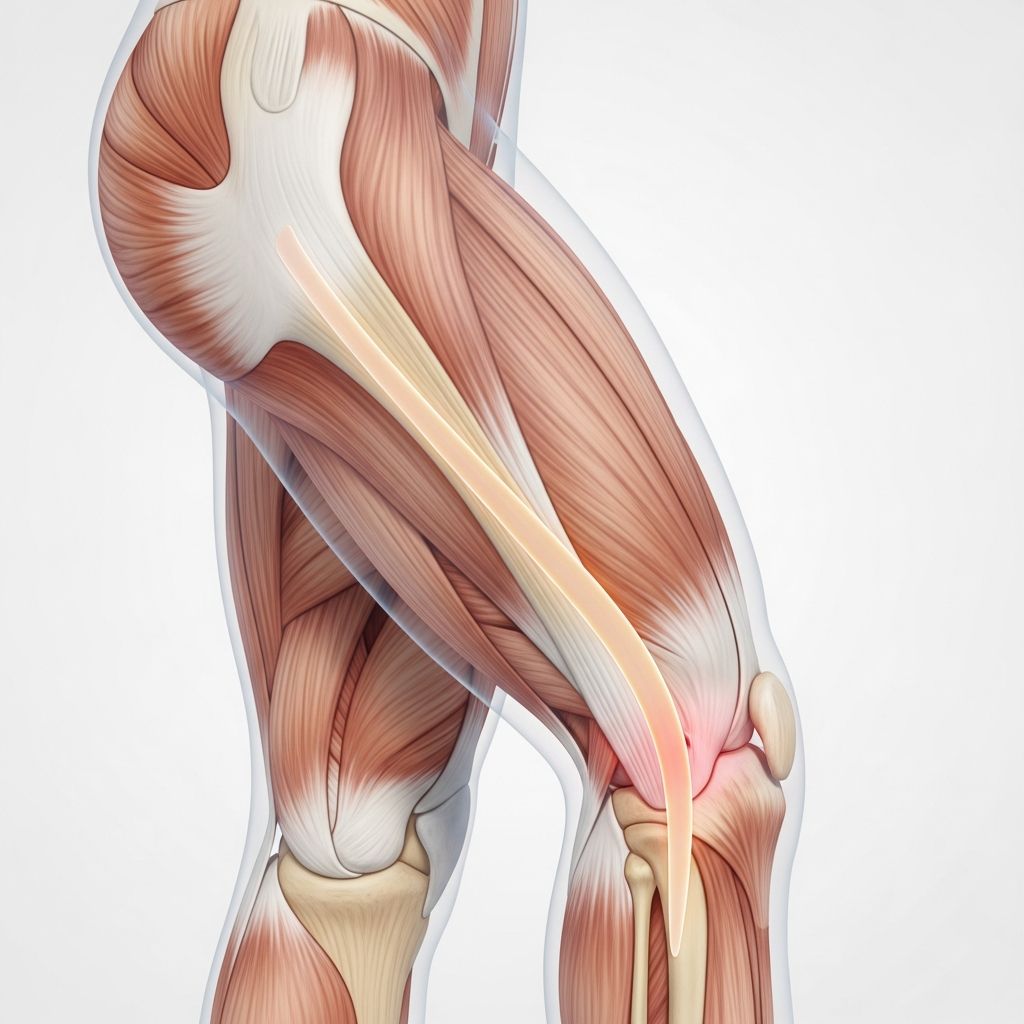
Iliotibial band syndrome, commonly referred to as ITBS or IT band syndrome, is a condition where the iliotibial band—a thick tendon running along the outside of your thigh—becomes irritated or swollen. This tendon can rub against your hip or knee bones, causing sharp pain and discomfort. IT band syndrome is particularly prevalent among runners, cyclists, and individuals who engage in repetitive knee-bending activities. Understanding this condition is essential for athletes and active individuals seeking to manage pain and maintain their training regimen.
What Is the Iliotibial Band?
The iliotibial band is a long, thick band of connective tissue that extends from your hip, running down the outside of your thigh, to attach just below your knee. This structure plays a crucial role in stabilizing your knee and hip during movement, particularly during activities that involve bending and straightening your leg. When functioning properly, the IT band glides smoothly over a fluid-filled sac called a bursa, which acts as a cushion and reduces friction between the band and the underlying bone.
How IT Band Syndrome Develops
IT band syndrome occurs when excessive friction develops between the IT band and the bones of your knee and hip. The primary cause of this friction is a tight iliotibial band. When the IT band becomes too tight, it cannot glide smoothly over the knee structures, instead rubbing directly against the bone. This repetitive friction causes the bursa beneath the IT band to become inflamed and swollen. Over time, this inflammation leads to the characteristic pain associated with IT band syndrome, typically felt on the outside of the knee and along the lateral thigh.
Causes and Risk Factors
IT band syndrome develops primarily from overuse and repetitive stress on the knee joint. Athletes, particularly distance runners, are at significantly higher risk for developing this condition. Several factors contribute to the development of IT band syndrome:
Common Causes
- Overtraining and excessive repetitive activities
- Training mistakes, such as sudden increases in mileage or intensity
- Poor biomechanics and improper running form
- Muscle imbalances, particularly weak hip abductors and glute muscles
- Tight hip flexors and IT band tissue
- Worn-out running shoes or improper footwear
- Training on uneven surfaces or cambered roads
- Natural skeletal misalignment or anatomical variations
- Pronation of the foot during running
Additionally, IT band syndrome can sometimes result from natural physical conditions that create skeletal misalignment. Individuals with leg length discrepancies, knee valgus (knock-knee), or hip weakness are at increased risk for developing this condition.
Recognizing IT Band Syndrome Symptoms
IT band syndrome typically presents with activity-related knee pain that improves after rest. Recognizing the symptoms early allows for prompt intervention and faster recovery. Common symptoms include:
Primary Symptoms
- Stiffness, aching, and burning sensation on the outside of the knee
- Pain on the outer portion of the hip
- Sharp pain that worsens during running or cycling
- Clicking and popping sensations on the outside of the knee joint
- Clicking and popping at the outside of the hip joint
- Pain that radiates up and down the entire length of the leg
- Tenderness when pressing on the outside of the knee
- Increased pain when running downhill or on uneven surfaces
Related Stories



Many individuals report that their pain typically appears after they have been running for a certain distance or duration. The pain may subside when activity ceases, but it often returns when the triggering activity resumes. This pattern is characteristic of overuse injuries and helps distinguish IT band syndrome from other knee conditions.
Diagnosing IT Band Syndrome
A healthcare provider diagnoses IT band syndrome through a combination of clinical evaluation and physical examination. During your appointment, your doctor will review your medical history, discuss your symptoms, and inquire about your activity level and training routines. The physical examination typically includes:
Diagnostic Assessment Methods
- Palpation of the iliotibial band to identify areas of tenderness
- Range of motion testing of the hip and knee
- The Ober test, a specific maneuver that assesses IT band tightness
- Observation of your standing posture and gait pattern
- Assessment for foot pronation and biomechanical abnormalities
- Evaluation of hip muscle strength and flexibility
- Imaging studies such as X-rays or MRI, though often unnecessary for diagnosis
In most cases, imaging studies are not required to diagnose IT band syndrome. However, your healthcare provider may order imaging if the diagnosis is unclear or if other conditions need to be ruled out. A thorough clinical evaluation is typically sufficient for diagnosis and treatment planning.
Treatment Options for IT Band Syndrome
There are numerous treatments for IT band syndrome that range from home-based interventions to medical procedures. Most cases respond well to conservative, nonsurgical treatment approaches. About 50 to 90 percent of people with IT band syndrome improve after about four to eight weeks with appropriate treatment, with some studies showing recovery within two to six weeks.
Nonsurgical Treatment Approaches
Rest and Activity Modification
The foundation of IT band syndrome treatment is rest from the activity causing pain. Resting allows inflammation to decrease and tissues to heal. You should avoid or significantly reduce activities that trigger your symptoms, particularly running and high-impact sports. However, this does not mean complete immobilization; maintaining gentle movement and low-impact activities promotes healing without further irritation.
Ice Therapy
Applying ice to the affected area helps reduce inflammation and pain. Ice should be applied for 15 to 20 minutes at a time, several times daily, especially after activities that aggravate your symptoms. This simple intervention can provide significant relief and should be part of your initial treatment strategy.
Non-Steroidal Anti-Inflammatory Drugs (NSAIDs)
Over-the-counter pain relievers such as ibuprofen help alleviate pain and reduce inflammation. Your healthcare provider may recommend specific NSAIDs and appropriate dosing based on your individual circumstances. These medications can be particularly helpful when combined with rest and physical therapy.
Corticosteroid Injections
If rest, ice, and NSAIDs do not provide adequate relief, your doctor may recommend a corticosteroid injection into the affected bursa. This injection delivers anti-inflammatory medication directly to the site of inflammation, providing targeted relief. These injections can be particularly effective for persistent inflammation that does not respond to conservative measures.
Physical Therapy
Physical therapy is one of the most effective treatments for IT band syndrome and is frequently used both to treat the condition and prevent its progression. A structured physical therapy program focuses on several key areas:
- Stretching exercises for the IT band, hip flexors, and surrounding muscles
- Strengthening exercises for hip abductors and gluteal muscles
- Correction of movement patterns and running biomechanics
- Manual therapy techniques such as myofascial release and deep tissue massage
- Progressive return to activity as symptoms improve
Manual Therapy and Massage
Hands-on techniques, including myofascial release and deep tissue massage, help reduce tension in the IT band and surrounding muscles. These approaches improve circulation, decrease inflammation, and promote faster healing. Many physical therapists incorporate manual therapy as part of a comprehensive treatment program.
Therapeutic Modalities
Healthcare providers may use supplemental modalities such as ultrasound therapy, cold laser therapy, and electrical stimulation to reduce inflammation and promote tissue healing. These non-invasive treatments complement other therapeutic approaches and can help accelerate recovery.
Prevention and Long-Term Management
For athletes and runners, preventing IT band syndrome recurrence is essential. Key prevention strategies include:
- Maintaining gradual increases in training intensity and mileage
- Cross-training with low-impact activities like swimming and cycling
- Regular stretching and strengthening exercises
- Replacing running shoes every 300 to 500 miles
- Strengthening hip muscles, particularly abductors and external rotators
- Varying running surfaces and avoiding excessive downhill running
- Maintaining proper running form and biomechanics
- Allowing adequate recovery time between intense training sessions
When Surgery Is Necessary
IT band syndrome very rarely requires surgical intervention. Surgery is typically considered only when conservative management has failed after an extended period, usually at least six to nine months of appropriate nonsurgical treatment. When surgery becomes necessary, it may involve arthroscopic or open procedures designed to address the underlying pathology. The specific surgical approach depends on the cause of IT band syndrome and may include excision or release of the pathologic distal portion of the iliotibial band or removal of the inflamed bursa.
Prognosis and Recovery Timeline
The outlook for IT band syndrome is generally favorable with appropriate treatment. Most individuals achieve significant improvement through nonsurgical approaches. Recovery timelines vary based on severity and adherence to treatment recommendations. Studies indicate that conservative management produces a complete cure rate of approximately 44 percent with return to sport at 8 weeks, and a 91.7 percent cure rate when recovery extends to 6 months post-injury.
It is important to note that IT band syndrome can worsen without treatment. The pain may increase, and the condition may lead to other problems such as patellofemoral pain syndrome, characterized by pain around and under the kneecap in addition to knee and hip pain. Early intervention and consistent treatment adherence significantly improve outcomes and reduce the risk of complications.
Complications and Associated Conditions
While IT band syndrome is not life-threatening, it can lead to other complications if left untreated. One notable complication is the development of patellofemoral pain syndrome (PFPS), which causes pain around and under the kneecap. If you experience additional symptoms beyond typical IT band syndrome pain, inform your healthcare provider promptly, as treatment may need to be adjusted to address multiple conditions.
Frequently Asked Questions
Q: How long does IT band syndrome typically take to heal?
A: With appropriate nonsurgical treatment, most people improve within 4 to 8 weeks. Some cases resolve in 2 to 6 weeks, while more severe cases may require several months for complete recovery. Approximately 91.7 percent of individuals achieve full recovery within 6 months post-injury when consistently following treatment recommendations.
Q: Can I continue running while treating IT band syndrome?
A: You should avoid or significantly reduce running that triggers pain. However, you can often continue low-impact cross-training activities like swimming or cycling as tolerated. As symptoms improve with treatment, you can gradually return to running under guidance from your healthcare provider or physical therapist.
Q: What is the difference between IT band syndrome and other knee pain?
A: IT band syndrome specifically causes pain on the outside of the knee and hip, often radiating along the outer thigh. The pain is typically activity-related and improves with rest. Other knee conditions may present with different pain locations, such as behind the kneecap or on the inner knee.
Q: Will IT band syndrome come back after recovery?
A: While recovery is possible, there is a risk of recurrence, particularly if you return to previous training patterns without addressing underlying biomechanical issues. Following prevention strategies, including proper strengthening exercises, gradual training progression, and regular stretching, significantly reduces recurrence risk.
Q: Do I need imaging tests to diagnose IT band syndrome?
A: In most cases, a clinical evaluation and physical examination are sufficient for diagnosis. Imaging studies such as X-rays or MRI are typically not necessary but may be ordered if the diagnosis is unclear or other conditions need to be ruled out.
Q: Is IT band syndrome more common in specific sports?
A: Yes, IT band syndrome is particularly common among distance runners and cyclists due to the repetitive knee-bending motions these activities involve. However, anyone engaging in repetitive knee flexion and extension activities is at risk for developing this condition.
References
- Iliotibial Band (IT Band) Syndrome — American Academy of Orthopaedic Surgeons (AAOS). 2024. https://orthoinfo.aaos.org/en/diseases–conditions/iliotibial-band-it-band-syndrome/
- A Review of Treatments for Iliotibial Band Syndrome in the Athletic Population — PubMed Central, National Center for Biotechnology Information. 2014. https://pmc.ncbi.nlm.nih.gov/articles/PMC4590904/
- Iliotibial Band Syndrome (ITBS): Causes, Symptoms & Treatment — Cleveland Clinic. 2024. https://my.clevelandclinic.org/health/diseases/21967-iliotibial-band-syndrome
- Iliotibial (IT) Band Syndrome: Treatment, Symptoms, and Exercises — Medical News Today. 2024. https://www.medicalnewstoday.com/articles/320757
- IT Band Syndrome: Symptoms, Causes, and Care — UPMC Orthopaedics. 2024. https://www.upmc.com/services/orthopaedics/conditions/it-band-syndrome
Similar Articles








Read full bio of medha deb