Imaging And Nerve Tests For Arthritis: Complete Guide
Essential imaging and nerve tests that help diagnose, monitor, and manage arthritis symptoms effectively.
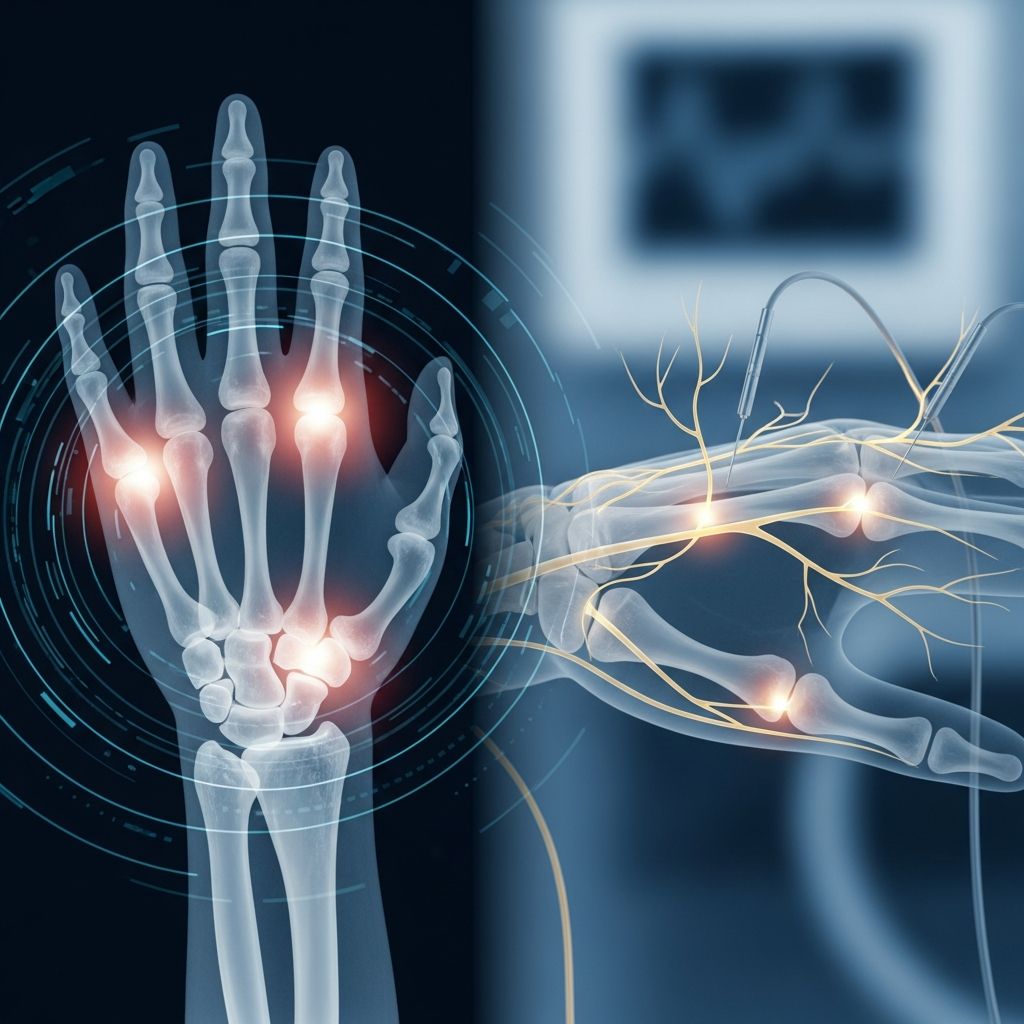
Imaging and nerve tests play a crucial role in diagnosing and monitoring arthritis, helping healthcare providers assess joint damage, inflammation, and nerve involvement. These non-invasive or minimally invasive procedures provide detailed views of bones, cartilage, soft tissues, and nerve function, guiding treatment decisions for conditions like osteoarthritis, rheumatoid arthritis, and fibromyalgia.
Why Imaging and Nerve Tests Are Used
Arthritis encompasses over 100 conditions affecting joints, causing pain, stiffness, and swelling. Imaging tests visualize structural changes such as joint space narrowing, bone spurs (osteophytes), and cartilage loss, while nerve tests evaluate related neuropathies like carpal tunnel syndrome common in inflammatory arthritis. Routine X-rays are first-line for detecting degenerative changes, but advanced modalities like MRI and ultrasound offer superior soft tissue detail for early detection.
These tests monitor disease progression, evaluate treatment efficacy, and rule out other conditions. For instance, in osteoarthritis (OA), radiographs show joint space width (JSW) reduction and osteophytes, hallmarks graded by the Kellgren-Lawrence (KL) system: KL2 indicates definite osteophytes with possible JSN, progressing to KL4 with severe sclerosis and deformity.
Imaging Tests
Imaging modalities range from simple X-rays to sophisticated MRI, each excelling in specific aspects of arthritis evaluation.
X-rays (Radiographs)
X-rays are the most common initial test, using low-dose radiation to image bones and joints. They reveal joint space narrowing from cartilage loss, osteophytes, subchondral sclerosis, and cysts—key OA features. In rheumatoid arthritis, X-rays detect erosions and periarticular osteopenia.
- Advantages: Quick, inexpensive, widely available; excellent for bone changes and alignment.
- Limitations: Poor soft tissue visualization; changes may appear late in disease.
- Common uses: Knee, hip, hand OA; RA joint damage tracking.
In early OA, symptoms may precede radiographic findings, prompting advanced imaging.
Magnetic Resonance Imaging (MRI)
MRI uses magnetic fields and radio waves for high-resolution soft tissue images without radiation. It detects early cartilage degeneration, bone marrow edema, synovitis, meniscal tears, and ligament damage—superior for inflammatory arthritis and pre-radiographic OA.
Protocols like T1-weighted, proton density, and T2-weighted sequences assess cartilage defects via scales like Outerbridge or whole-organ MRI scores (WORMS, KOSS, BLOKS). 3D sequences (DESS, DEFT) enhance cartilage-synovial fluid contrast.
- Strengths: Multi-tissue evaluation; early disease detection.
- Considerations: Costly, time-intensive; claustrophobia risk; contraindications (pacemakers).
HSS employs sensitive MRI for reactive bone edema and soft tissue inflammation, enabling early intervention.
Ultrasound
Ultrasound employs sound waves for real-time, radiation-free imaging of soft tissues, synovium, tendons, ligaments, and effusions. It’s highly sensitive for synovial cysts, erosions in RA, and power Doppler detects active inflammation.
- Benefits: Dynamic assessment; bedside use; guides injections.
- Drawbacks: Operator-dependent; limited by obesity or gas.
Ideal for hand/wrist RA and knee OA evaluation.
Computed Tomography (CT) Scans
CT provides cross-sectional bone images via X-rays, excelling in osteophytes, fractures, and pre-surgical planning. 3D reconstructions aid complex anatomy.
Related Stories



- Pros: Detailed bone visualization; procedural guidance.
- Cons: Radiation exposure; less soft tissue detail.
Bone Scans
Nuclear medicine bone scans use radioactive tracers to highlight metabolically active areas like inflammation or fractures. Useful for multifocal arthritis or malignancy exclusion.
Dual-Energy X-ray Absorptiometry (DEXA)
DEXA measures bone mineral density, assessing osteoporosis risk heightened in RA from steroids.
| Test | Best For | Radiation | Cost | Soft Tissue View |
|---|---|---|---|---|
| X-ray | Bone, JSN, osteophytes | Yes | Low | Poor |
| MRI | Cartilage, synovium, early OA | No | High | Excellent |
| Ultrasound | Synovitis, effusions, dynamic | No | Moderate | Good |
| CT | Bone detail, 3D | Yes | High | Fair |
Nerve Tests
Nerve tests identify compression or damage contributing to arthritis pain, like sciatica or carpal tunnel.
Muscle Strength Evaluation
Manual testing of muscle groups (e.g., lower extremities) detects weakness indicating nerve issues. Weak quadriceps may signal L4 nerve root problems.
Sciatic Nerve Stretch Test
Patient lies supine; leg raised straight (straight-leg raise) reproduces sciatic pain if positive, suggesting disc herniation or spinal stenosis impinging nerve roots.
Nerve Conduction Studies (NCS) / Electromyography (EMG)
NCS measures nerve signal speed via electrodes and mild shocks; EMG inserts needles to assess muscle electrical activity. Diagnoses carpal tunnel (median nerve), radiculopathy.
- Procedure: Electrodes on skin; shocks to forearm/wrist/fingers.
- Uses: Fibromyalgia, RA neuropathies.
When Are These Tests Ordered?
Primary care starts with X-rays; rheumatologists add MRI/ultrasound for unclear cases or monitoring biologics. Nerve tests follow persistent neuropathic symptoms.
Preparing for Tests
- X-ray/CT: Remove metal; inform of pregnancy.
- MRI: Screening questionnaire; contrast allergy check.
- Ultrasound: No prep.
- NCS/EMG: Avoid lotions; medications reviewed.
Frequently Asked Questions (FAQs)
Which imaging test is best for early arthritis detection?
MRI and ultrasound excel at early soft tissue changes before X-ray abnormalities appear.
Do arthritis imaging tests use radiation?
X-rays and CT do; MRI, ultrasound do not.
How do nerve tests help arthritis patients?
They identify nerve compression mimicking or complicating joint pain, like carpal tunnel in RA.
Can imaging track arthritis treatment progress?
Yes, serial X-rays/MRI assess joint space, erosions, and inflammation reduction.
Is MRI safe for everyone?
No; avoid with pacemakers, metal implants, or severe claustrophobia.
References
- Osteoarthritis Imaging: X-rays, CT scans, MRI and Ultrasound — Hospital for Special Surgery (HSS). 2023. https://www.hss.edu/health-library/conditions-and-treatments/osteoarthritis-imaging
- Diagnosis of Osteoarthritis: Imaging — National Center for Biotechnology Information (PMC). 2012-03-15. https://pmc.ncbi.nlm.nih.gov/articles/PMC3306456/
- Arthritis Diagnosis — UMass Memorial Health. 2024. https://www.ummhealth.org/health-library/arthritis-diagnosis
- Imaging tests for diagnosing arthritis — Envision Radiology. 2023. https://www.envrad.com/imaging-tests-for-diagnosing-arthritis/
- Nerve and Imaging Tests to Monitor Arthritis — Arthritis Foundation. 2024. https://www.arthritis.org/health-wellness/about-arthritis/understanding-arthritis/imaging-and-nerve-tests-for-arthritis
- Rheumatoid arthritis – Diagnosis and treatment — Mayo Clinic. 2025-01-10. https://www.mayoclinic.org/diseases-conditions/rheumatoid-arthritis/diagnosis-treatment/drc-20353653
Similar Articles








Read full bio of Sneha Tete