How Immune System Dysfunction Drives Psoriasis
Explore the immune mechanisms behind psoriasis and how inflammation develops in the body.
The Overactive Immune Response at the Heart of Psoriasis
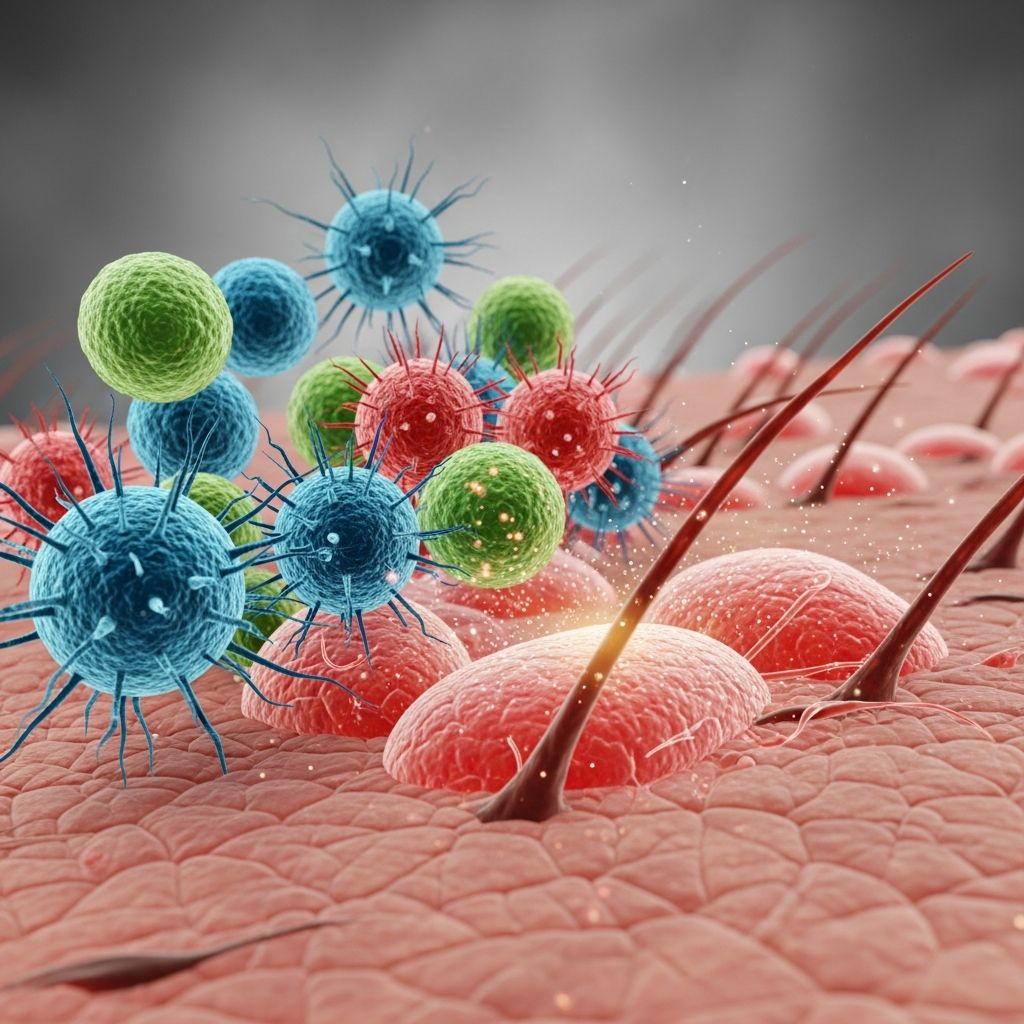
Psoriasis represents a fundamental breakdown in immune system regulation, where protective mechanisms meant to defend against pathogens and injury instead attack the body’s own healthy tissue. Rather than functioning as a barrier against external threats, the immune system in individuals with psoriasis becomes hyperactive, triggering a cascade of inflammatory events that manifest as the characteristic thick, scaly plaques on the skin. This chronic inflammatory state does not arise from a single malfunction but rather from a complex interplay of genetic susceptibility, immune cell dysregulation, and molecular signaling pathways that amplify inflammation.
The condition emerges when the delicate balance between immune tolerance and immune activation tilts dramatically toward inflammation. This imbalance involves multiple layers of the immune system simultaneously misfiring—from the initial recognition of self-antigens to the recruitment and activation of inflammatory cells in the skin. Understanding these mechanisms provides crucial insight into why psoriasis persists and why certain treatments targeting specific immune components prove effective.
Genetic Predisposition and Environmental Triggers
While genetic factors create the foundation for psoriasis susceptibility, the disease typically requires an environmental or physical trigger to initiate the inflammatory cascade. Individuals may carry genetic variations that increase their risk, yet never develop psoriasis without exposure to specific triggering events. This two-factor model—genetic vulnerability combined with environmental triggers—explains why psoriasis appears inconsistently within families and why the disease can develop at various points in life.
Common triggers that activate the immune system and initiate psoriatic inflammation include:
- Physical skin trauma or injury, including cuts, scratches, and surgical wounds
- Severe psychological stress and emotional strain
- Systemic infections, particularly streptococcal throat infections
- Certain medications, including beta-blockers and lithium compounds
- Sudden changes in environmental conditions or seasonal variations
The trigger mechanism appears to activate dormant genetic predispositions by causing localized tissue stress or immune system activation. When keratinocytes—the primary cells of the skin’s outer layer—experience stress from physical injury or other insults, they release antimicrobial peptides that normally serve protective functions. However, in genetically susceptible individuals, these peptides overstimulate the immune system, initiating a self-perpetuating inflammatory cycle.
The Central Role of Antimicrobial Peptides in Disease Initiation
A pivotal mechanism in psoriasis pathogenesis involves the overexpression and dysregulation of antimicrobial peptides—naturally occurring proteins that typically protect against bacterial and viral infections. In psoriasis, these protective molecules become pathogenic, spurring excessive immune activation rather than providing beneficial defense.
The primary antimicrobial peptides implicated in psoriasis include:
- LL-37: A cathelicidin peptide that accumulates in psoriatic lesions and acts as a potent immune stimulator
- β-defensins: Peptides with antimicrobial properties that also trigger inflammatory pathways in skin tissue
- S100 proteins: Calcium-binding proteins that promote inflammatory cell recruitment and activation
The pathogenic cycle begins when stress—whether physical injury, infection, or other insults—causes keratinocytes to release elevated levels of LL-37. This peptide then forms complexes with cellular DNA released from damaged cells. These LL-37-DNA complexes activate toll-like receptor 9 (TLR9) on specialized immune cells called plasmacytoid dendritic cells. This activation triggers the production of type I interferons, which intensify immune responses and promote the differentiation of naïve T cells into inflammatory Th1 and Th17 subtypes that perpetuate skin inflammation.
Related Stories



The IL-23/Th17 Axis: A Crucial Inflammatory Pathway
Among the most significant discoveries in psoriasis research has been the identification of the IL-23/Th17 immune axis as a primary driver of disease. This pathway represents a critical point where innate immune responses—the body’s first-line defenses—connect to adaptive immune responses that establish chronic inflammation.
The IL-23/Th17 pathway functions through the following sequence:
- Dendritic cells and other antigen-presenting cells produce the cytokine IL-23
- IL-23 stimulates CD4+ T cells, particularly driving their differentiation into Th17 cells
- Th17 cells produce IL-17, a potent pro-inflammatory cytokine that acts on multiple cell types
- IL-17 binds to receptors on keratinocytes, inducing their abnormal proliferation and activation
- Activated keratinocytes release additional cytokines including IL-6 and TNF-α, amplifying inflammation
- These secondary cytokines further stimulate dendritic cells and T cells, creating a feedforward loop
This amplification loop explains why psoriasis becomes chronic and difficult to treat without intervention. The pathway creates a self-sustaining inflammatory state where each component reinforces the others. The accumulating evidence supporting this mechanism has made IL-23 and IL-17 primary targets for modern psoriasis therapeutics.
Interferon Responses and Alternative Inflammatory Circuits
While the IL-23/Th17 axis dominates in established plaque psoriasis, interferon responses play a more prominent role in early-stage disease development. Interferon-gamma (IFN-γ), primarily produced by T cells, acts as a key inflammatory mediator that exacerbates psoriasis through multiple mechanisms:
- Enhancement of antigen processing within immune cells, making self-antigens more visible to the immune system
- Increased expression of MHC class II molecules on antigen-presenting cells, facilitating immune recognition
- Production of chemokines CXCL9 and CXCL10 that recruit additional inflammatory T cells to psoriatic lesions
- Synergistic amplification of IL-23 and Th17 responses, connecting interferon circuits to the IL-23/Th17 axis
The type I interferons, similar to IFN-γ in their pro-inflammatory effects, arise from the LL-37/TLR9 pathway previously described. This connection demonstrates how antimicrobial peptide dysregulation directly initiates interferon responses that become prominent in early psoriasis development.
TNF-Alpha: A Master Regulator of Inflammation
Tumor necrosis factor-alpha (TNF-α) serves as a powerful pro-inflammatory cytokine that operates at multiple levels within the psoriatic inflammatory cascade. Unlike IL-17 or IL-23, which work through more specific pathways, TNF-α broadly enhances inflammation throughout both innate and adaptive immune systems.
TNF-α contributes to psoriasis pathogenesis by:
- Directly activating keratinocytes, causing their proliferation and inflammatory cytokine release
- Enhancing endothelial cell permeability, allowing immune cells easier access to skin tissue
- Promoting the maturation and activation of dendritic cells and other antigen-presenting cells
- Amplifying the recruitment and activation of neutrophils and other inflammatory cells
- Facilitating the dysregulation of regulatory T cells, which normally suppress excessive immune responses
The central role of TNF-α in psoriasis pathogenesis became evident through the dramatic clinical success of TNF-inhibiting biologic medications. These drugs, which block TNF-α signaling, produce rapid improvements in psoriatic symptoms, confirming TNF-α’s significance as a disease-driving cytokine.
Tissue-Resident Memory T Cells and Disease Localization
A crucial characteristic of psoriasis involves the recurrent involvement of the same skin sites and the formation of distinct lesion borders. Recent immunological research has identified tissue-resident memory T cells (TRM cells) as the likely explanation for this phenomenon. Unlike circulating memory T cells that patrol the bloodstream, TRM cells permanently reside within skin tissue, positioning them to rapidly respond to antigens they have previously encountered.
TRM cells in psoriasis are abnormally activated by presentation of specific antigens, particularly those associated with the HLA-C*06:02 genetic variant. Once activated, these cells release inflammatory cytokines that recruit additional immune cells and activate keratinocytes. The persistence of TRM cells in previously affected skin areas explains why psoriatic lesions tend to recur in the same locations and why lesions demonstrate sharp, well-demarcated borders despite the systemic nature of the inflammatory response.
Keratinocyte Dysregulation: From Barrier to Amplifier
Traditionally viewed as passive victims of immune system attack, keratinocytes have emerged as active participants in perpetuating psoriatic inflammation. Rather than simply responding to immune signals, abnormal keratinocytes actively amplify inflammation by producing excessive amounts of cytokines, chemokines, and antimicrobial peptides.
Keratinocytes in psoriatic lesions demonstrate several abnormalities:
- Accelerated proliferation rates far exceeding normal epidermal turnover
- Overproduction of IL-6, IL-8, and TNF-α, amplifying local inflammation
- Release of additional LL-37 and other antimicrobial peptides that stimulate immune cells
- Expression of adhesion molecules that facilitate immune cell recruitment to lesional skin
- Dysregulation of signaling proteins like Smad7 and Plexin-B2 that further drive proliferation
This keratinocyte dysfunction appears driven by the convergence of multiple inflammatory signals, particularly IL-17 and TNF-α. Once activated, keratinocytes form a crucial component of the self-perpetuating inflammatory cycle, producing the signals necessary to maintain immune system activation and continuous epidermal hyperplasia.
From Skin Inflammation to Systemic Disease
While psoriasis initially manifests as skin disease, the inflammatory state it produces becomes systemic in nature. Inflammatory mediators and cytokines circulate throughout the body, establishing a chronic inflammatory environment that extends far beyond the skin. This systemic inflammation explains the association of psoriasis with various systemic conditions including cardiovascular disease, metabolic dysfunction, and psoriatic arthritis.
Psoriatic arthritis develops through a distinct but related mechanism involving the migration of pro-inflammatory immune cells from affected skin to joint tissues. Pro-inflammatory myeloid precursor cells originating in inflamed skin migrate to joints where they encounter the local joint environment. Under normal conditions, resident fibroblasts in joints provide protective barriers against inflammatory cell activation. However, when this protective barrier fails, myeloid cells propagate inflammatory responses in synovial tissue, leading to joint inflammation, synovial cell proliferation, and pannus formation characteristic of psoriatic arthritis.
Molecular Signaling Pathways: The JAK/STAT Connection
At the molecular level, multiple intracellular signaling pathways orchestrate the inflammatory cascade in psoriasis. The JAK/STAT pathway represents one critical regulatory system controlling immune cell activation and keratinocyte proliferation.
In this pathway, the enzyme JAK (Janus Kinase) normally activates STAT proteins to regulate genes involved in immune responses and cell growth. However, dysregulation of JAK/STAT signaling promotes excessive activation of pro-inflammatory genes, contributing to both immune cell differentiation into inflammatory subtypes and keratinocyte proliferation. The prominence of this pathway has led to the development of JAK inhibitors as targeted psoriasis treatments.
Another crucial molecular regulator involves phosphodiesterase 4 (PDE4), an enzyme controlling inflammatory molecule signaling. PDE4 normally degrades cyclic adenosine monophosphate (cAMP), a molecule that suppresses inflammation. Excessive PDE4 activity in psoriasis leads to reduced cAMP levels and increased production of pro-inflammatory cytokines including TNF-α and IL-23.
Distinguishing Psoriasis Subtypes Through Distinct Immune Mechanisms
While plaque psoriasis accounts for approximately 90% of cases, other psoriasis variants demonstrate distinct pathogenic mechanisms, indicating that no single inflammatory pathway causes all forms of the disease.
Plaque Psoriasis predominantly involves the IL-23/Th17 axis and TNF-α, with significant contributions from innate immune responses. The condition features characteristic thick, scaly plaques with inflammatory cell infiltration throughout the dermis and epidermis.
Pustular Psoriasis exhibits fundamentally different pathology, relying predominantly on keratinocytes, neutrophils, and monocytes rather than the Th17 responses central to plaque disease. Genetic mutations in the IL36RN gene increase expression of IL-36 cytokines, directly recruiting and activating neutrophils. Elevated levels of neutrophil-attracting chemokines including CXCL1, CXCL2, and CXCL8 support neutrophil accumulation in the epidermis, producing characteristic pustular lesions rather than plaques.
The Complex Interplay of Multiple Inflammatory Circuits
Modern understanding of psoriasis pathogenesis recognizes that no single cytokine or immune pathway operates in isolation. Rather, multiple inflammatory circuits—IL-23/Th17, interferon responses, and IL-36 systems—interact and influence each other in complex patterns.
The relationship between these pathways creates bidirectional amplification:
- IFN-γ enhances IL-23 production and Th17 differentiation, connecting interferon and Th17 circuits
- IL-17 stimulates IL-36 expression in keratinocytes, linking Th17 and IL-36 systems
- IL-36 amplifies both Th17 responses and interferon production, creating additional reinforcement
- All three circuit components converge on keratinocyte activation and proliferation
This network architecture explains why targeting single cytokines often proves therapeutically effective—disrupting one pathway reduces signaling through connected circuits. However, it also highlights why treatment resistance sometimes develops, as the inflammatory system can shift emphasis between pathways when one is blocked.
Conclusion: Toward Targeted Inflammation Control
Psoriasis fundamentally results from dysregulation of immune system mechanisms that normally protect the body. The disease involves a complex interplay of genetic predisposition, environmental triggers, antimicrobial peptide dysregulation, T-cell abnormalities, keratinocyte proliferation, and multiple interconnected inflammatory cytokine pathways. From initial immune activation through the establishment of chronic inflammation and systemic effects, each component of the inflammatory cascade reinforces others, creating the persistent inflammation that characterizes the disease.
Recognition of these distinct pathogenic mechanisms has revolutionized psoriasis treatment, enabling targeted approaches that interrupt specific inflammatory pathways rather than applying broad immunosuppression. Continued research into the molecular details of immune dysregulation promises even more precise therapeutic options that can control inflammation while preserving protective immune function.
References
- Psoriasis: Unraveling Disease Mechanisms and Advancing Pharmacological Approaches — Dove Press. 2024. https://www.dovepress.com/psoriasis-unraveling-disease-mechanisms-and-advancing-pharmacological–peer-reviewed-fulltext-article-JIR
- Causes & Pathophysiology of Psoriasis — UC Davis Medical Center. 2024. https://www.ucbmedhub.com/education/psoriasis/causes-and-pathophysiology-of-psoriasis
- Researchers Discover the Mechanism by Which Psoriasis in the Skin Reaches the Joints — Clinic Barcelona. 2023. https://www.clinicbarcelona.org/en/news/researchers-discover-the-mechanism-by-which-psoriasis-in-the-skin-reaches-the-joints
- New Research Explains Mechanisms Behind Psoriatic Arthritis — UC Davis Health. 2024. https://health.ucdavis.edu/news/headlines/new-research-explains-mechanisms-behind-psoriatic-arthritis/2024/01
- Inflammation and Psoriasis: A Comprehensive Review — National Center for Biotechnology Information. 2023. https://pmc.ncbi.nlm.nih.gov/articles/PMC10671208/
- Causes & Triggers — National Psoriasis Foundation. 2024. https://www.psoriasis.org/causes/
Similar Articles








Read full bio of medha deb