Immune Thrombocytopenia: Causes, Symptoms & Treatment
Comprehensive guide to immune thrombocytopenia: understanding ITP, its symptoms, diagnosis, and evidence-based treatment options.
What is Immune Thrombocytopenia?
Immune thrombocytopenia (ITP), formerly known as immune thrombocytopenic purpura, is an acquired autoimmune blood disorder characterized by a significantly reduced number of platelets in the bloodstream. Platelets are essential blood cells responsible for forming blood clots and stopping bleeding. In ITP, the body’s immune system mistakenly attacks and destroys these platelets, leading to thrombocytopenia, or abnormally low platelet counts.
This condition presents in two primary forms: primary ITP, which occurs independently without an underlying disease, and secondary ITP, which develops as a complication of another medical condition such as systemic lupus erythematosus, hepatitis C, or HIV infection. ITP can develop suddenly or gradually and may be acute or chronic in nature.
Understanding the Incidence and Prevalence
Immune thrombocytopenia affects individuals across all age groups, though it shows distinct peaks during childhood and in elderly populations. The estimated incidence of ITP in the general population ranges from 2 to 5 per 100,000 people. This relatively uncommon disorder can significantly impact quality of life when left untreated, making early recognition and appropriate management crucial for optimal patient outcomes.
How Does ITP Develop?
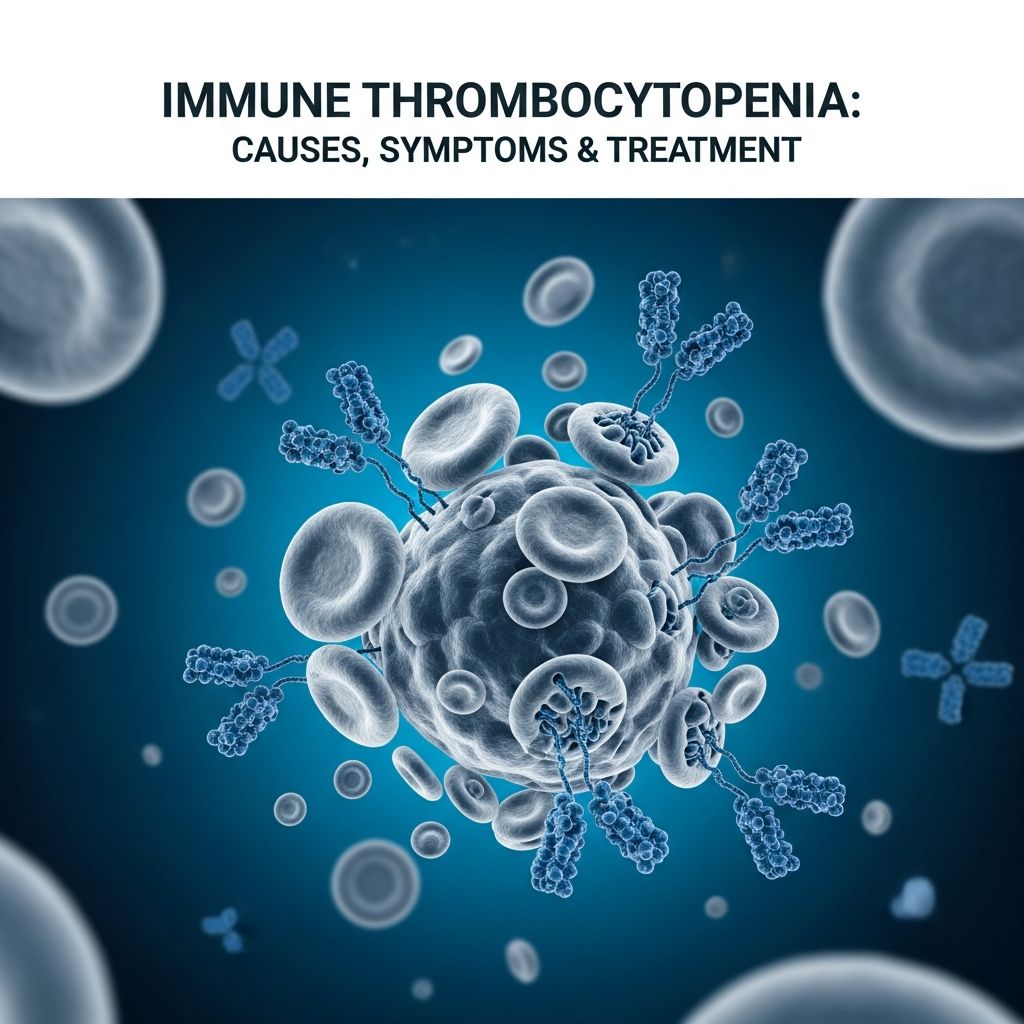
The pathogenesis of ITP is complex and multifaceted, involving alterations in both humoral and cellular immunity. In ITP, the immune system malfunctions by producing autoantibodies against platelet antigens. These antibodies bind to platelets and mark them for destruction by immune cells, particularly macrophages in the spleen. This abnormal immune response leads to the hallmark feature of ITP: increased platelet destruction.
Additionally, ITP involves impaired platelet production, meaning the bone marrow cannot generate new platelets quickly enough to replace those being destroyed. The combination of accelerated destruction and diminished production results in the characteristic severe thrombocytopenia seen in this disorder.
Recognizing the Symptoms of ITP
The clinical manifestations of ITP vary depending on the severity of thrombocytopenia and individual patient factors. Bleeding represents the most common clinical presentation of ITP.
Common Symptoms Include:
– Easy bruising, often appearing without apparent trauma or injury- Petechiae, which are small red or purple spots on the skin caused by bleeding under the surface- Spontaneous nosebleeds or prolonged bleeding after minor nasal trauma- Gum bleeding, particularly during tooth brushing or flossing- Unusually heavy menstrual bleeding in women- Blood in urine or stool- Excessive bleeding from minor cuts or wounds- Fatigue and weakness due to anemia from chronic bleeding
Some patients may experience no symptoms at all, particularly in the early stages or when platelet counts remain above certain thresholds. These asymptomatic cases are often discovered incidentally during routine blood work.
Diagnosis of Immune Thrombocytopenia
Diagnosing ITP requires a systematic clinical approach, as ITP is fundamentally a diagnosis of exclusion. Healthcare providers must rule out other causes of thrombocytopenia before confirming an ITP diagnosis.
Diagnostic Process Includes:
– Complete blood count (CBC) to measure platelet levels and evaluate other blood cell counts- Blood smear examination to assess platelet morphology and exclude other hematologic abnormalities- Comprehensive metabolic panel to evaluate organ function- Tests to exclude secondary causes such as antinuclear antibodies (ANA) for lupus or hepatitis screening- Bone marrow biopsy may be performed in selected cases to rule out other bone marrow disorders- Additional testing based on clinical suspicion for underlying conditions
Related Stories



The diagnosis is typically confirmed when a patient presents with isolated thrombocytopenia (platelet count typically below 150,000/microliter) without other obvious causes or underlying systemic disease.
Understanding ITP Classification
ITP is classified into three categories based on disease duration and response to therapy:
Newly Diagnosed ITP
This refers to ITP diagnosed within the first three months of symptom onset. Patients in this category may require immediate intervention, particularly if platelet counts are severely depressed or bleeding symptoms are present.
Persistent ITP
ITP lasting between three and twelve months is classified as persistent. During this period, treatment responses may evolve, and management strategies may need adjustment based on patient response.
Chronic ITP
Chronic ITP persists beyond twelve months. This form represents the majority of adult ITP cases and requires long-term management strategies tailored to individual patient needs and disease responses.
Management Strategies for ITP
Modern ITP management focuses on preventing bleeding complications while minimizing treatment side effects. The approach is individualized based on platelet count, bleeding symptoms, patient age, comorbidities, and personal preferences.
Observation
For asymptomatic patients with platelet counts above critical thresholds, close monitoring without active treatment may be appropriate. Regular follow-up appointments and blood work help track disease progression.
First-Line Therapy
Corticosteroids remain the most common first-line treatment for ITP. These medications suppress immune system activity and reduce platelet destruction. Corticosteroid therapy should be considered for newly diagnosed patients with platelet counts below 30 × 10⁹/L who are asymptomatic or have minor bleeding symptoms.
Intravenous Immunoglobulins (IVIG)
IVIG provides rapid platelet count elevation in acute situations. This treatment works by temporarily blocking the destruction of platelets and is particularly useful in severe bleeding scenarios or as bridge therapy.
Anti-D Immunoglobulin
This treatment option works similarly to IVIG and may be considered in specific patient populations, particularly Rh-positive individuals without asplenia.
Second-Line Treatment Options
For patients who are corticosteroid-dependent or unresponsive to initial therapy, second-line treatment options become necessary. Corticosteroid dependence is defined as an ongoing need for continuous prednisone at more than 5 mg/day or requiring frequent steroid courses to maintain adequate platelet counts.
Splenectomy
Surgical removal of the spleen can result in durable remission in appropriate candidates. Pre- and post-splenectomy vaccination care is essential to prevent infection-related complications.
Thrombopoietin Receptor Agonists (TPO-RAs)
These medications stimulate bone marrow production of platelets. TPO-RAs offer a non-surgical alternative for patients refractory to first-line therapy, with options including avatrombopag and other agents approved for chronic ITP management.
Rituximab
This monoclonal antibody targets B cells involved in autoimmune platelet destruction. The updated guidelines suggest using corticosteroids alone for initial treatment rather than in combination with rituximab as first-line therapy.
Treatment Decision-Making
The 2019 American Society of Hematology (ASH) guidelines emphasize shared decision-making when selecting treatment approaches. Practitioners and patients should collaboratively review risks, benefits, potential side effects, and treatment duration when choosing between TPO-RAs, splenectomy, rituximab, or other second-line therapies.
Inpatient Versus Outpatient Management
Treatment setting selection depends on platelet count severity and symptom presentation.
| Management Setting | Platelet Count | Symptom Status |
|---|---|---|
| Inpatient Management | Below 20 × 10⁹/L | Asymptomatic or minor symptoms (wet purpura, gum bleeding, epistaxis requiring intervention, menorrhagia, or bruises ≥3 cm) |
| Outpatient Management | At least 20 × 10⁹/L or below 20 × 10⁹/L with established ITP | Asymptomatic or minor mucocutaneous bleeding (few petechiae, bruises <3 cm, epistaxis on nose-blowing) |
Monitoring and Follow-Up Care
Appropriate monitoring is essential for successful ITP management. Healthcare providers must track platelet counts regularly, assess bleeding symptoms, and monitor for treatment side effects, particularly with glucocorticoid therapy. Patients should maintain regular follow-up appointments and report any new or worsening symptoms promptly.
Living with Chronic ITP
Understanding that chronic ITP is not a blood cancer can help alleviate patient anxiety. While ITP involves low platelets, it does not result from bone marrow dysfunction in the way blood cancers do. With appropriate management and monitoring, many patients with ITP maintain good quality of life and achieve symptom control.
Frequently Asked Questions About ITP
Q: Is immune thrombocytopenia the same as a blood cancer?
A: No, ITP is not a blood cancer. While ITP involves low platelet counts, it occurs because the immune system destroys platelets rather than because of bone marrow dysfunction as seen in blood cancers. The bone marrow’s ability to produce blood cells remains intact in ITP.
Q: Can ITP go away on its own?
A: Some children with acute ITP experience spontaneous remission. However, in adults, particularly those with chronic ITP lasting more than three months, the condition typically requires ongoing management and monitoring, though complete remissions can occur with appropriate treatment.
Q: What is the typical treatment approach for newly diagnosed ITP?
A: Treatment depends on platelet count and bleeding symptoms. Corticosteroids represent the most common first-line therapy for newly diagnosed patients. Observation alone may be appropriate for asymptomatic patients with higher platelet counts, while more aggressive treatment combining steroids with IVIG or other agents may be needed for severe thrombocytopenia.
Q: How often should ITP patients have blood tests?
A: Monitoring frequency depends on disease stability and treatment. Newly diagnosed or unstable patients may require weekly or biweekly testing, while stable chronic ITP patients may need testing monthly or quarterly. Your healthcare provider will determine the appropriate monitoring schedule based on your individual situation.
Q: Are there lifestyle modifications that help manage ITP?
A: Yes. Patients should avoid activities with high injury risk, use caution with medications that affect bleeding, maintain regular follow-up appointments, and report symptoms promptly. Discussing alcohol use and blood-thinning medications with your healthcare provider is important, as these can affect bleeding risk.
Q: What should I do if I experience severe bleeding with ITP?
A: Seek immediate medical attention if you experience severe bleeding, including persistent nosebleeds not responding to pressure, blood in urine or stool, vomiting blood, severe headaches, vision changes, or confusion, as these may indicate serious bleeding complications requiring urgent intervention.
References
- Updated Guidelines for Immune Thrombocytopenic Purpura Focus on Treating Patients Without Bleeding — Cleveland Clinic Consult QD. 2021. https://consultqd.clevelandclinic.org/updated-guidelines-for-immune-thrombocytopenic-purpura-focus-on-treating-patients-without-bleeding
- Updated Guidelines for Immune Thrombocytopenic Purpura — Cleveland Clinic Journal of Medicine, Vol. 88, No. 12. 2021. https://www.ccjm.org/content/88/12/664
- Immune Thrombocytopenia — PubMed/NIH National Center for Biotechnology Information. 2013. https://pubmed.ncbi.nlm.nih.gov/23714309/
- Myths vs Facts About Chronic ITP — Cleveland Clinic. 2024. https://my.clevelandclinic.org/watch/myth-vs-fact-about-chronic-itp
- Immune Thrombocytopenia in Adults: An Update — Cleveland Clinic Journal of Medicine, Vol. 79, No. 9. 2012. https://www.ccjm.org/content/79/9/641
- Thrombocytopenia: Symptoms, Stages & Treatment — Cleveland Clinic. 2024. https://my.clevelandclinic.org/health/diseases/14430-thrombocytopenia
Similar Articles








Read full bio of Sneha Tete