Immunodeficiency: Skin Signs, Diagnosis, Treatment Guide
Comprehensive overview of immunodeficiency causes, skin manifestations, infections, and management strategies in dermatological practice.
Immunodeficiency refers to a state where the immune system is compromised, increasing susceptibility to infections, particularly those affecting the skin. It can stem from primary genetic defects, secondary causes like infections or drugs, and manifests with recurrent, severe, or unusual cutaneous conditions.
What is immunodeficiency?
Immunodeficiency encompasses defects in innate or adaptive immunity, leading to heightened infection risk, autoimmunity, inflammation, malignancy, and allergies. Primary immunodeficiencies (PIDs) are inherited disorders, while secondary forms arise from external factors. Skin manifestations often serve as the initial clue, with up to 69% of PID patients showing skin infections and 29% eczema.
The immune system’s failure allows normally harmless organisms to proliferate on the skin, resulting in extensive warts, crusted scabies, and opportunistic infections. Severe CD4+ T-lymphocyte depletion below 50 cells/μL, often from HIV, exemplifies this vulnerability.
Who gets immunodeficiency?
Immunodeficiency affects diverse groups:
- Primary (genetic): Rare individually but collectively impact 1 in 10,000, including severe combined immunodeficiency (SCID), hyper-IgE syndromes, Wiskott-Aldrich syndrome, and ataxia-telangiectasia.
- Secondary causes: HIV/AIDS, chemotherapy, corticosteroids, organ transplants, malignancies, autoimmune diseases, malnutrition, pregnancy, and ageing.
PIDs often present in childhood with recurrent skin issues, while secondary forms occur across ages, exacerbated by immunosuppression.
Causes
Immunodeficiency arises from multiple etiologies:
| Type | Examples | Skin Impact |
|---|---|---|
| Primary (PIDs) | SCID, Hyper-IgE (STAT3/DOCK8), APECED, IL-17 defects | Recurrent bacterial abscesses, eczema, warts, candidiasis |
| Infections | HIV (CD4<50), measles, varicella | Opportunistic: Molluscum, herpes zoster, crusted scabies |
| Drugs | Chemotherapy, biologics, steroids | Folliculitis, cellulitis, Kaposi sarcoma |
| Medical conditions | Cancer, diabetes, renal failure | Impetigo, necrotizing fasciitis |
| Other | Ageing, pregnancy, splenectomy | Increased viral warts, herpes |
Hyper-IgE syndromes feature staphylococcal abscesses in 87-100% of cases; DOCK8 deficiency adds severe allergies and malignancies.
Clinical features of skin disease in immunodeficiency
Skin signs are prominent, often preceding systemic diagnosis. Categories include:
Infections
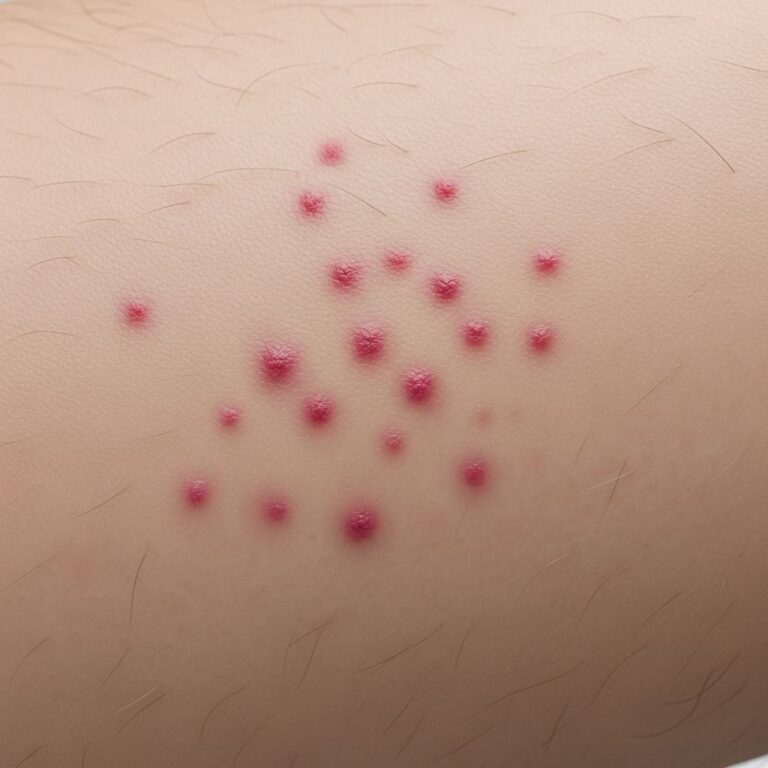
- Bacterial: Impetigo, folliculitis, cellulitis, abscesses (esp. Staphylococcus aureus in PIDs).
- Viral: Extensive warts (HPV), molluscum contagiosum, herpes simplex/zoster, oral hairy leukoplakia in HIV.
- Fungal: Chronic mucocutaneous candidiasis (CMC) in IL-17 defects, tinea.
- Parasitic: Crusted (Norwegian) scabies with thousands of mites.
In PIDs, infections are recurrent, unusual, or prolonged; e.g., 30% prevalence in studies.
Non-infectious manifestations
- Eczema/Erythroderma: In 19-100% of hyper-IgE, SCID, Omenn, IPEX; often infected, atypical patterns.
- Granulomas, urticaria, vasculitis: Due to dysregulation.
- Autoimmune: Vitiligo, alopecia in APECED; alopecia universalis.
- Specific signs: Telangiectasia (6%), silvery hair in ataxia-telangiectasia; nail dystrophy.
Skin cancers rise: basal/squamous cell carcinomas, HPV-linked.
Diagnosis of immunodeficiency-associated skin disease
Suspect based on:
- Recurrent/severe skin infections despite treatment.
- Unusual organisms or sites (e.g., extensive warts).
- CD4 count <50 in suspected HIV.
- Family history, failure to thrive in children.
Investigations:
- Immunology: Full blood count, Ig levels, lymphocyte subsets, HIV test, vaccine responses.
- Skin: Swabs, biopsy for PCR/PCR, mycology.
- Genetic: For PIDs (e.g., STAT3, DOCK8 sequencing).
Warning signs: ≥8 infections/year, opportunistic pathogens.
What is the treatment for skin disease in immunodeficiency?
Treatment targets underlying cause and symptoms:
General measures
- Prophylactic antibiotics (trimethoprim-sulfamethoxazole for Pneumocystis).
- Immunoglobulin replacement for hypogammaglobulinaemia.
- HPV vaccination, even in PI.
- Emollients, topical steroids for eczema.
Related Stories



Specific
- Infections: Culture-guided antibiotics (e.g., flucloxacillin for Staph), antivirals (acyclovir), antifungals (fluconazole for CMC).
- Scabies: Ivermectin + permethrin, contacts treated.
- PIDs: HSCT for SCID; JAK inhibitors for hyper-IgE.
- Skin cancer: Surgery, radiotherapy; annual dermatology screening.
Multidisciplinary: immunologist, dermatologist, infectious disease specialist.
Prevention of skin disease in immunodeficiency
- Daily skin inspection, hygiene.
- Vaccinations (avoid live in severe cases).
- Sun protection to prevent SCC.
- Prophylaxis: itraconazole for CMC, aciclovir for HSV.
- Annual dermatologist visits for PI patients.
Immunodeficiency in pregnancy
Pregnancy induces mild immunodeficiency, increasing infections like candidiasis, herpes. HIV+ women require antiretrovirals; monitor for PUPPP or polymorphic eruption.
Immunodeficiency due to ageing
Immunosenescence reduces T-cell function, leading to zoster (1/3 over 50), bacterial cellulitis, onychomycosis. Vaccination (shingles) advised.
Related topics
- HIV dermatology
- Primary immunodeficiencies
- Hyper-IgE syndrome
- Ataxia-telangiectasia
- Chronic mucocutaneous candidiasis
Frequently Asked Questions (FAQs)
What causes immunodeficiency?
Genetic PIDs, HIV, drugs like chemotherapy, cancers, ageing.
Are skin problems common in immunodeficiency?
Yes, 30-69% have infections, eczema; often first sign.
How to diagnose?
Recurrent infections + low CD4/immunoglobulins; genetic tests.
Can skin cancer occur?
Increased risk of BCC, SCC, HPV-related; screen annually.
Is HPV vaccine safe for PI patients?
Yes, recommended for all.
References
- Cutaneous manifestations in primary immunodeficiency diseases — J Skin Sex Transm Dis. 2023. https://jsstd.org/cutaneous-manifestations-in-primary-immunodeficiency-diseases/
- Skin disorders are prominent features in primary immunodeficiency — PubMed. 2018-11-26. https://pubmed.ncbi.nlm.nih.gov/30480813/
- Skin disorders are prominent features in primary immunodeficiency — Allergy. 2019. https://onlinelibrary.wiley.com/doi/10.1111/all.13681
- Immunodeficiency – DermNet — DermNet NZ. Recent. https://dermnetnz.org/topics/immunodeficiency
- Conference session explores susceptibility to skin conditions in PI — Immune Deficiency Foundation. 2024. https://primaryimmune.org/resources/news-articles/conference-session-explores-susceptibility-skin-conditions-pi
Similar Articles








Read full bio of Sneha Tete