Impetigo: 3 Types, Symptoms, And Fast Treatment Guide
Comprehensive guide to impetigo: symptoms, causes, treatments, and prevention for this common bacterial skin infection.
Impetigo is a highly contagious bacterial skin infection that primarily affects the superficial layers of the skin, most commonly in young children aged 2 to 5 years, though it can occur in anyone.
What Is Impetigo?
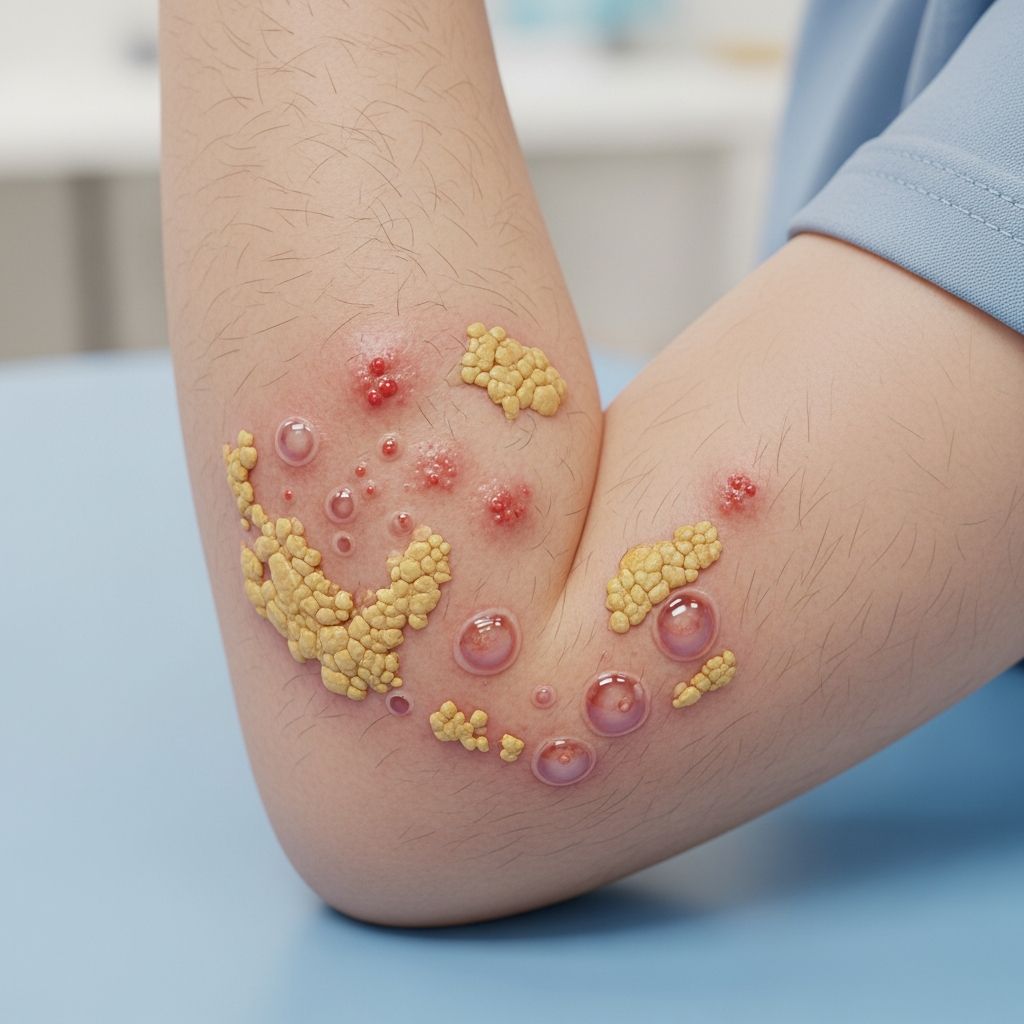
Impetigo, pronounced im-puh-TIE-go, represents one of the most frequent skin infections worldwide, particularly among children. It manifests as reddish sores that rapidly rupture, ooze, and develop characteristic honey-colored crusts, typically around the nose, mouth, and on the extremities. Caused by bacteria invading the epidermis, the outermost skin layer, impetigo thrives in warm, humid environments and spreads easily through direct contact or shared items. In the United States, millions of skin infections annually involve Staphylococcus aureus, with impetigo being predominant in pediatric populations. While generally mild and self-resolving, prompt treatment prevents complications and curbs transmission, especially in settings like schools or daycares where children are excluded until 24-48 hours post-antibiotic initiation.
The infection’s contagious nature stems from its bacterial etiology, with primary lesions arising on intact skin or secondary to disruptions like cuts or eczema. Globally, impetigo affects about 2 out of 100 children yearly in Europe, underscoring its prevalence. Adults with compromised skin barriers, such as those with diabetes or frequent skin trauma, are also susceptible.
Symptoms of Impetigo
Impetigo symptoms emerge 2 to 10 days post-exposure, beginning with itchy, discolored sores often pink/red on lighter skin or darker shades on pigmented tones. These evolve into fluid-filled blisters that burst, forming yellowish, honey-like crusts. Common sites include the face (perioral and perinasal areas), arms, legs, and trunk, with mild itching or soreness. Swollen lymph nodes may accompany larger lesions.
- Reddish sores or patches that cluster and expand.
- Blisters oozing pus or clear fluid before crusting.
- Honey-colored, sticky crusts that flake off without scarring in uncomplicated cases.
- Itchiness prompting scratching, which spreads the infection.
In severe instances, fever, diarrhea, or weakness can occur, particularly with bullous forms.
Types of Impetigo
Impetigo presents in three main forms, differentiated by lesion characteristics and depth.
- Nonbullous Impetigo: The most prevalent (90% of cases), featuring small vesicles that rupture into erythematous erosions coated in honey crusts. Primarily facial.
- Bullous Impetigo: Caused by exfoliative toxins from S. aureus, producing large, tense blisters on the trunk, axillae, or diaper areas in infants. Blisters contain yellow fluid, burst slowly, and crust over; rare systemic symptoms like fever.
- Ecthyma: A deeper, ulcerative variant penetrating dermis, causing painful, pus-filled ulcers with thick crusts that may scar upon healing. Often on extremities, linked to poor hygiene or immunosuppression.
Causes of Impetigo
Staphylococcus aureus (including MRSA strains) and group A Streptococcus pyogenes are the primary pathogens, entering via skin breaches like cuts, bites, scratches, or eczematous rashes. Primary impetigo invades intact skin, while secondary follows preexisting dermatoses. Risk amplifies in crowded, humid conditions, with higher incidence in travelers due to insect bites.
Bacteria colonize skin surfaces asymptomatically until opportunity arises. Transmission occurs via direct touch, fomites (towels, bedding), or autoinoculation through scratching. Underlying factors include young age, warm climates, and conditions impairing skin integrity like scabies or herpes.
Diagnosis
Diagnosis is clinical, based on characteristic lesions; swabs for culture are reserved for atypical presentations, treatment failures, or suspected MRSA. Microscopy or PCR may identify pathogens if fungal or viral mimics (herpes, tinea) are considered. No routine blood tests needed for uncomplicated cases.
Related Stories



Treatment
Antibiotics are cornerstone, tailored to extent and resistance patterns. Topical agents suffice for localized disease (<5 lesions), while oral for widespread or ecthyma.
| Type | Examples | Use Case |
|---|---|---|
| Topical | Mupirocin (Bactroban), Retapamulin (Altabax) | Limited lesions; apply 2-3x daily x5-7 days |
| Oral | Cephalexin, Dicloxacillin; Clindamycin or TMP-SMX for MRSA | Extensive, bullous, ecthyma; 7-day course |
Gentle crust removal with soap/water aids penetration. Symptom relief includes antihistamines for itch, analgesics for pain. Healing occurs in 7-10 days; scars rare except ecthyma. Untreated, resolves in 2-3 weeks but remains contagious.
Complications
Rare but include cellulitis, abscesses, scar-prone ecthyma, or post-streptococcal glomerulonephritis (especially with S. pyogenes). Bullous forms may cause staphylococcal scalded skin syndrome in neonates. Prompt treatment mitigates risks.
Prevention
- Maintain meticulous hygiene: frequent handwashing, nail trimming.
- Avoid scratching; cover lesions.
- Exclude infected children from school/daycare until 24 hours post-antibiotics.
- Disinfect fomites; avoid sharing towels.
- Treat predisposing conditions like lice/eczema promptly.
When to See a Doctor
Seek care for spreading rash, fever, pain, no improvement in 48 hours of treatment, or deep ulcers. Urgent evaluation for infants, immunocompromised, or suspected MRSA.
Frequently Asked Questions
Is impetigo contagious?
Yes, highly so until 24-48 hours after antibiotic start; avoid contact.
How long does impetigo last?
With treatment, 7-10 days; untreated, up to 3 weeks.
Can adults get impetigo?
Yes, though less common; risk higher with skin breaks or diabetes.
Does impetigo leave scars?
Usually not; ecthyma may.
Outlook
Impetigo boasts excellent prognosis with treatment; recurrence possible without addressing risks. No lifelong immunity.
References
- Impetigo: Symptoms, Causes, Pictures, and Treatment — Healthline. 2023. https://www.healthline.com/health/impetigo
- Impetigo: Diagnosis and Treatment — American Academy of Family Physicians (AAFP). 2014-08-15. https://www.aafp.org/pubs/afp/issues/2014/0815/p229.html
- Overview: Impetigo — InformedHealth.org / NCBI Bookshelf. 2023-10-16. https://www.ncbi.nlm.nih.gov/books/NBK279537/
- Impetigo – Symptoms & causes — Mayo Clinic. 2023. https://www.mayoclinic.org/diseases-conditions/impetigo/symptoms-causes/syc-20352352
- Impetigo — MedlinePlus Medical Encyclopedia. 2023. https://medlineplus.gov/ency/article/000860.htm
Similar Articles








Read full bio of medha deb