Implantable Collamer Lens Surgery: Vision Correction Guide
Discover how ICL surgery can correct refractive errors and eliminate your need for glasses or contacts.
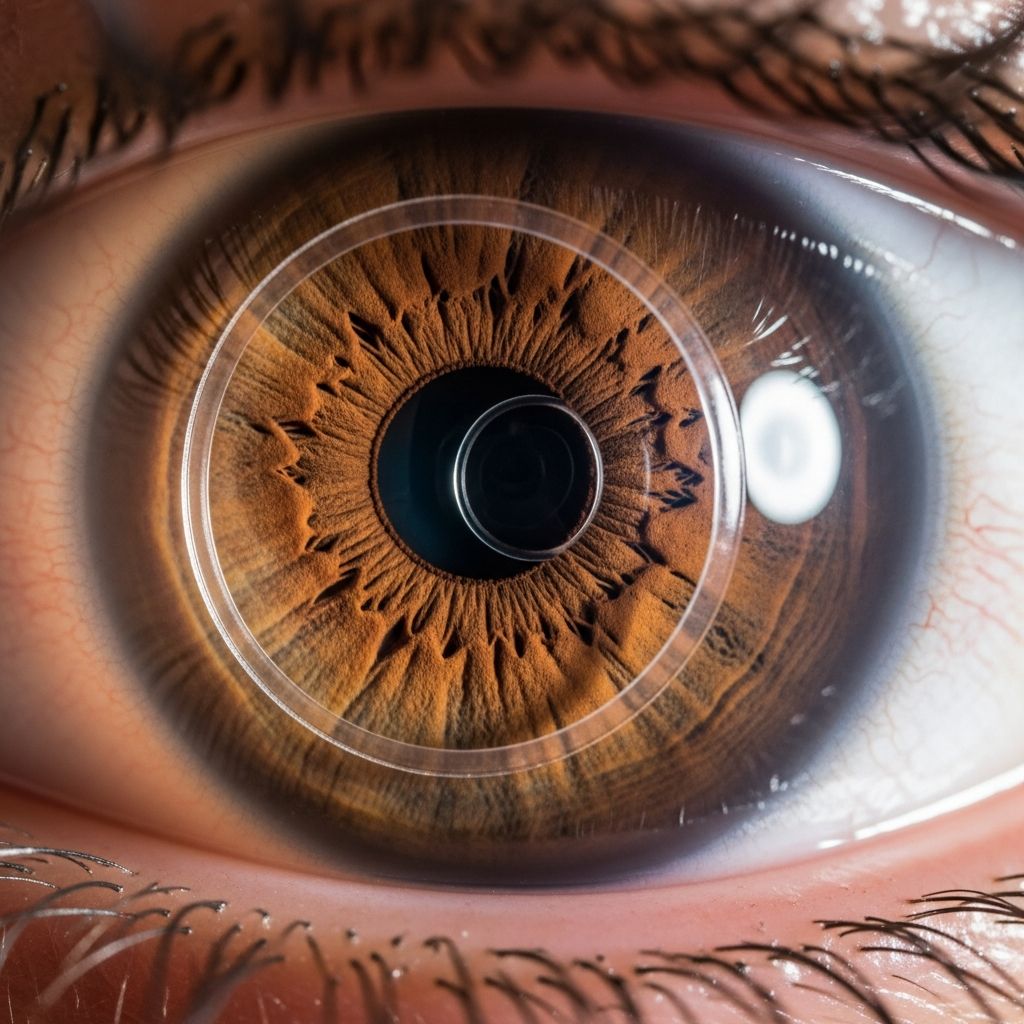
What is Implantable Collamer Lens (ICL) Surgery?
Implantable Collamer Lens (ICL) surgery is a refractive procedure that treats poor eyesight caused by refractive errors by implanting a specialized lens into your eye. Unlike traditional contact lenses that sit on the surface of your eye, an ICL is placed between your iris and your natural lens, providing a permanent or semi-permanent vision correction solution. This innovative procedure may be an excellent option for people who don’t meet the criteria for LASIK surgery.
The ICL is made from Collamer, a biocompatible material that combines plastic and collagen to create a more natural and flexible lens. These lenses are lighter than other types of intraocular lenses and are hydrophilic, meaning they can mix with water and become wet. A Collamer lens is particularly effective at allowing gas and nutrients to pass through, making it ideal for long-term implantation. The lens also includes built-in UV protection, adding an extra layer of defense for your eyes.
Also known as phakic intraocular lenses (IOLs), Implantable Collamer Lenses work like an internal contact lens. Rather than permanently altering the shape of your cornea as LASIK does, the ICL acts as a refractive implant that helps focus light properly on your retina, improving your vision almost immediately after surgery.
Understanding Refractive Errors Treated by ICL
ICL surgery can address several common refractive errors that prevent light from focusing correctly on the retina. The procedure is particularly effective for correcting the following vision problems:
- Myopia (nearsightedness) — difficulty seeing objects at a distance
- Astigmatism — blurred or distorted vision at all distances
- Hyperopia (farsightedness) — difficulty seeing objects up close
- Presbyopia — age-related difficulty focusing on near objects
These refractive errors occur when the cornea or lens doesn’t bend light properly, causing it to focus in front of or behind the retina rather than directly on it. ICL surgery corrects this by positioning a lens that refocuses incoming light onto the retina with precision.
Who is a Good Candidate for ICL Surgery?
Not everyone is a suitable candidate for ICL surgery. Your surgeon will evaluate your eyes and medical history to determine if you’re an appropriate candidate. ICL surgery is generally recommended for individuals who meet the following criteria:
- Are between the ages of 21 and 45 years old
- Have moderate to severe nearsightedness (myopia)
- Have astigmatism less than 6 diopters
- Have a stable prescription that hasn’t changed significantly for at least 12 months
- Are not good candidates for LASIK or PRK due to thin corneas or other corneal issues
- Have been told they’re not eligible for laser eye surgery
- Are seeking a permanent or semi-permanent solution to reduce dependence on glasses or contact lenses
ICL is particularly beneficial for young patients with myopia and astigmatism who cannot undergo laser vision correction due to anatomical limitations. If you have thin corneas, severe myopia, or other corneal conditions that make LASIK unsuitable, your eye care provider may recommend ICL as an alternative.
Related Stories



The ICL Procedure: Step-by-Step
Understanding what happens during your ICL surgery can help you prepare mentally and physically. The entire process, from consultation to surgery, involves several important stages.
Consultation and Measurement
Before your surgery, you’ll have a thorough eye examination and precise measurements of your eye will be conducted to tailor the ICL to your specific prescription. Your surgeon will assess your corneal thickness, anterior chamber depth, white-to-white distance, and other critical measurements to ensure the lens will fit properly. This customization is essential for achieving optimal vision correction and minimizing potential complications.
Pre-Operative Preparation
Before the surgery, your surgeon will dilate and numb your eyes with medicated eye drops. Your provider may also give you a mild sedative to help you stay calm and relaxed during the procedure. You’ll need to have an adult friend or family member drive you to and from the surgery, as you won’t be able to drive safely after receiving sedation.
The Surgical Procedure
After dilating and numbing your eyes, your surgeon will make a very small incision at the base of your cornea, typically measuring between 2.5 to 3.2 millimeters. They’ll fold and insert the implantable lens through this small opening and then adjust it behind your iris and in front of your natural lens. The procedure is minimally invasive and takes approximately 20-30 minutes total, usually for both eyes at once.
Because the incision is so small, you probably won’t need stitches as the cornea will heal on its own. The self-sealing nature of the keyhole incision makes this procedure particularly attractive for patients concerned about surgical trauma.
Advanced Technology: EVO ICL
Modern advancements have introduced the EVO Implantable Collamer Lens, which comes with a tiny hole in the middle of the lens. This innovation makes laser iridotomy (a procedure where surgeons create small holes in the iris) unnecessary. Fluids can flow naturally through the hole, preventing pressure buildup and reducing the risk of complications. Earlier versions of the implantable lens required surgeons to perform laser iridotomy before ICL surgery, but the EVO model has eliminated this extra step.
Recovery and Results
One of the significant advantages of ICL surgery is the relatively quick recovery time. After the procedure, your surgeon will give you instructions about what you need to do or what to avoid. You’ll receive eye drops to keep your eyes clean and prevent infection, and you may need to use these drops for about two weeks.
Many patients notice improved vision almost immediately after surgery. Within a few days, you should recover completely and be able to return to most regular activities. However, complete visual improvement may take a week to 10 days. During this recovery period, it’s important to follow your surgeon’s post-operative instructions carefully to ensure proper healing and optimal outcomes.
Advantages of Implantable Collamer Lens Surgery
ICL surgery offers numerous benefits that make it an attractive option for vision correction:
- Clear Vision: ICL can provide sharp, clear vision almost immediately after surgery
- Reversibility: Unlike LASIK, the ICL procedure is reversible. The lens can be removed or replaced if necessary, providing flexibility for future changes
- Preserves Corneal Structure: Because ICL doesn’t reshape your cornea, it preserves the natural anatomy of your eye
- Reduced Dry Eye Risk: This procedure reduces the risk of dry eyes compared to laser-based vision correction procedures
- Suitable for Thin Corneas: For patients with thin corneas who cannot have LASIK, ICL offers an alternative solution
- Long-Lasting Results: The procedure provides long-term vision correction, with surgeons having performed an estimated 500,000 ICL procedures throughout the world, using about 1 million lenses
- UV Protection: The Collamer material includes built-in UV protection for added eye safety
Potential Risks and Complications
Like any surgical procedure, ICL surgery carries certain risks. It’s important to discuss these potential complications with your surgeon before deciding to proceed:
- Halos and Glare: Some patients may experience halos around lights or glare, especially at night, following the surgery
- Infection: As with any surgery, there is a small risk of infection which could potentially be serious
- Cataract Formation: The ICL can cause cataracts to develop sooner in some patients, particularly if the lens inadvertently touches the crystalline lens
- Increased Intraocular Pressure (IOP): The ICL could lead to an increase in intraocular pressure, which can be a risk factor for glaucoma
- Endothelial Cell Loss: The cornea’s inner layer may lose cells over time, which could affect corneal health
- Need for Removal: You might need to have the lens removed if you have a change of prescription or if you develop cataracts
Your surgeon will monitor you closely after surgery to detect and manage any complications early. Most patients experience minimal complications and remain satisfied with their results.
ICL Surgery vs. LASIK Surgery
Both LASIK and ICL surgery aim to achieve decent vision without glasses or contact lenses, but they differ significantly in their approach and suitability for different patients.
| Aspect | LASIK Surgery | ICL Surgery |
|---|---|---|
| Method | Uses lasers to reshape your cornea | Places a new lens between your iris and natural lens |
| Eye Structure | Permanently changes corneal structure | Doesn’t change the structure of your eye |
| Reversibility | Permanent; cannot be reversed | Reversible; lens can be removed or replaced |
| Corneal Requirements | Requires adequate corneal thickness | Suitable for thin corneas |
| FDA Approval Timeline | Longer approval history in the U.S. | More recent FDA approval |
| Safety Profile | Very safe with reliable results | Very safe with reliable results |
Both procedures are very safe and provide reliable results. LASIK has had government approval in the U.S. for longer than ICL surgery has. The choice between the two depends on your specific eye anatomy, prescription, lifestyle, and surgeon recommendation.
Why Choose ICL Surgery?
If you want to stop wearing glasses or contact lenses to have good vision, you may want to contact an eye care provider to discuss surgery. ICL surgery is particularly recommended if you:
- Have been deemed unsuitable for LASIK due to thin corneas or other corneal conditions
- Have moderate to severe myopia that may exceed LASIK correction limits
- Prefer a reversible procedure that can be adjusted or removed if needed
- Want to preserve your natural corneal anatomy
- Are concerned about dry eye complications that can occur with laser procedures
- Are between 21 and 45 years old with a stable prescription
Frequently Asked Questions
Q: How long does ICL surgery take?
A: The ICL procedure typically takes less than 30 minutes for both eyes, usually performed at the same time. This doesn’t include pre-operative preparation and post-operative monitoring time.
Q: Is ICL surgery reversible?
A: Yes, unlike LASIK, the ICL procedure is reversible. The lens can be removed or replaced if necessary, providing flexibility for future changes to your vision or prescription.
Q: What is the age requirement for ICL surgery?
A: ICL surgery is generally recommended for individuals aged 21 to 45 years old. This age range ensures that your prescription has stabilized and you’re likely to benefit from the procedure.
Q: How quickly will I see results after ICL surgery?
A: Many patients notice improved vision almost immediately after surgery, with complete visual improvement typically occurring within a week to 10 days. You should be able to return to most regular activities within a few days.
Q: Can ICL correct astigmatism?
A: Yes, ICL can correct astigmatism, with the procedure being effective for astigmatism less than 6 diopters. The EVO ICL is specifically designed to correct common vision problems including both nearsightedness and astigmatism.
Q: What makes someone not a candidate for ICL surgery?
A: You may not be a candidate for ICL surgery if you’re outside the 21-45 age range, have an unstable prescription, have severe astigmatism greater than 6 diopters, or have certain eye conditions that your surgeon determines make the procedure unsuitable.
Q: Will I need stitches after ICL surgery?
A: No, you probably won’t need stitches because the incision is so small and will heal on its own. The self-sealing nature of the keyhole incision is one of the advantages of this procedure.
Q: Can I have ICL surgery if I’m not a candidate for LASIK?
A: Yes, ICL surgery may be possible for people who don’t meet the criteria for LASIK surgery. It’s particularly beneficial for those with thin corneas or other corneal conditions that make LASIK unsuitable.
Making Your Decision
If you’re considering vision correction surgery, ICL surgery represents an innovative option that has transformed the lives of hundreds of thousands of patients worldwide. Your surgeon will assess you and let you know whether you’d be a good candidate for Implantable Collamer Lens surgery. If you decide to have the surgery, make sure you have honest communication with your surgeon and get answers to all your questions.
ICL surgery is typically quite safe, and people who’ve had the surgery tend to be happy with their results. By understanding the procedure, its benefits, and its risks, you can make an informed decision about whether this vision correction option is right for you.
References
- Implantable Collamer Lens (ICL) Surgery — Retina Center Tijuana. Retina Center Tijuana. Accessed December 1, 2025. https://retinacentertijuana.com/procedure/implantable-collamer-lens-icl/
- Implantable Collamer Lens (ICL) Surgery — Cleveland Clinic. Last reviewed June 5, 2023. https://my.clevelandclinic.org/health/treatments/25050-implantable-collamer-lens-icl-surgery
- ICL Eye Surgery: Overview, Procedure, and Suitability — Dr. Anton van Heerden. Accessed December 1, 2025. https://drantonvanheerden.com.au/icl-eye-surgery/
- EVO ICL — LASIK Alternative in Cleveland — Cleveland Eye Clinic. Accessed December 1, 2025. https://clevelandeyeclinic.com/lasik-ohio/lasik-alternative-visian-icl/
Similar Articles








Read full bio of Sneha Tete