Inclisiran Injection: 3-Step Regimen For Lasting LDL-C Control
Inclisiran (Leqvio) is a groundbreaking siRNA therapy that lowers LDL cholesterol with just two doses per year, offering a convenient option for high-risk patients.
Inclisiran, marketed as Leqvio, represents a significant advancement in cholesterol management. This small interfering RNA (siRNA) therapy targets PCSK9 production in the liver, dramatically reducing low-density lipoprotein cholesterol (LDL-C) levels with infrequent dosing. Approved by the FDA, it is used adjunctively with diet, exercise, and maximally tolerated statins for adults with primary hypercholesterolemia, including heterozygous familial hypercholesterolemia (HeFH), clinical atherosclerotic cardiovascular disease (ASCVD), or those at increased risk who need additional LDL-C lowering.
About Inclisiran Injection
Inclisiran injection is a prescription medication designed to address uncontrolled high cholesterol, particularly in patients where statins alone are insufficient. Unlike traditional oral therapies, Leqvio is administered subcutaneously by a healthcare professional, providing sustained LDL-C reduction for up to six months per dose. This convenience improves patient adherence, a common challenge in long-term lipid management.
The drug’s innovative mechanism involves RNA interference (RNAi), where inclisiran binds to PCSK9 mRNA in hepatocytes, leading to its degradation. This boosts LDL receptor availability on liver cells, enhancing clearance of LDL-C from the bloodstream. Clinical trials like ORION-10 and ORION-11 demonstrated approximately 50% LDL-C reductions, maintained over 18 months with dosing every six months after initial doses.
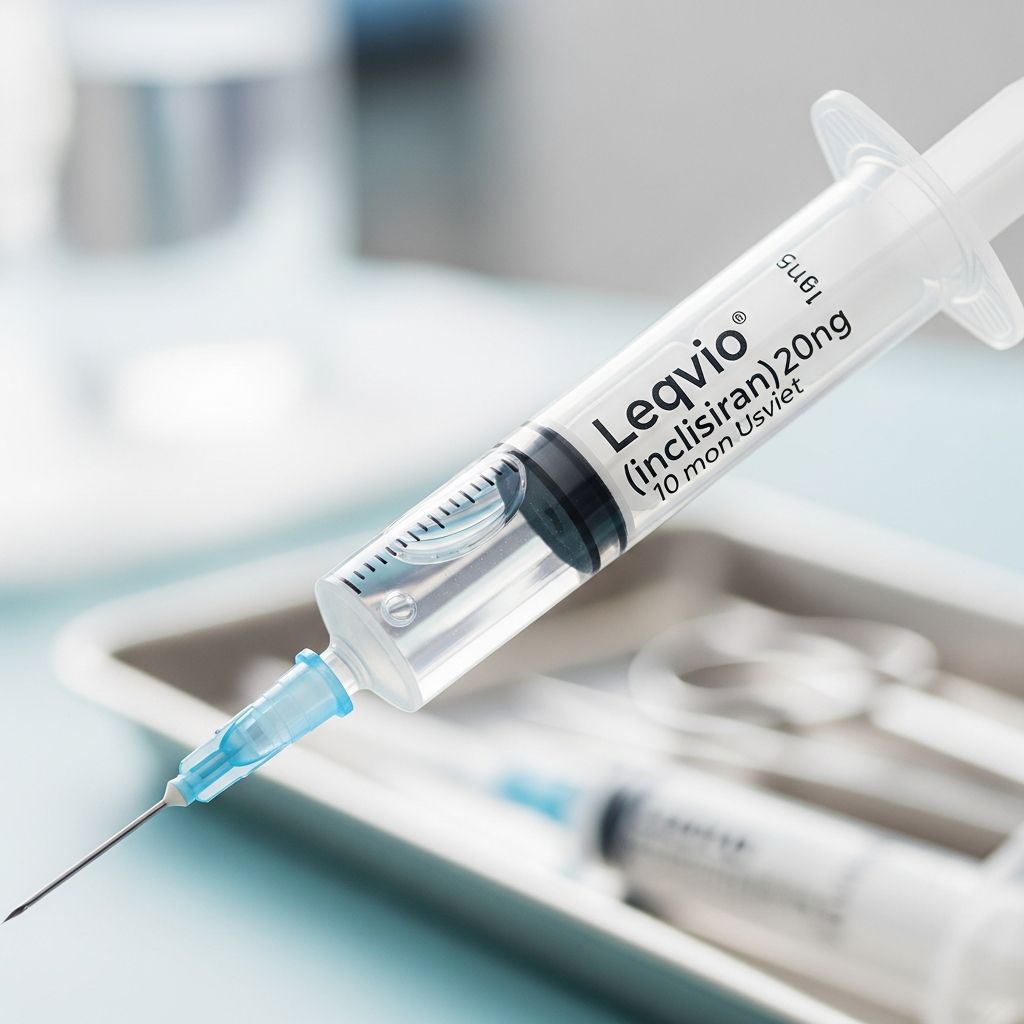
Leqvio comes as a prefilled syringe containing 284 mg/1.5 mL solution (189 mg/mL concentration), ensuring precise and sterile administration. It is not for self-injection and must be given under medical supervision.
When is Inclisiran not suitable?
Inclisiran is contraindicated in patients with hypersensitivity to inclisiran or any excipients. Those with a history of severe allergic reactions to siRNA therapies should avoid it. Caution is advised in pregnancy due to limited data; animal studies showed no direct harm, but potential risks to fetal development cannot be ruled out. Breastfeeding mothers should weigh benefits versus risks, as it is unknown if inclisiran passes into breast milk.
Patients with severe hepatic impairment (Child-Pugh C) have not been studied adequately, though mild to moderate cases show similar efficacy with slightly higher exposures. No dose adjustment is needed for renal impairment, including end-stage disease, as LDL-C reductions remain consistent.
How does Inclisiran work?
Inclisiran employs advanced RNA interference technology to silence the PCSK9 gene. PCSK9 is a protein that binds to LDL receptors on liver cells, promoting their degradation and thus reducing the liver’s ability to remove LDL-C from blood. By injecting synthetic double-stranded RNA conjugated to N-acetylgalactosamine (GalNAc), inclisiran specifically targets liver cells via the asialoglycoprotein receptor.
Once inside hepatocytes, the antisense strand of inclisiran guides the RNA-induced silencing complex (RISC) to PCSK9 mRNA, cleaving it and preventing translation into protein. This results in increased LDL receptor density, accelerated receptor recycling, and enhanced LDL-C uptake and catabolism. Pharmacodynamic effects begin within days, peaking at 50-60% LDL-C reduction by day 30, sustained through six months.
Related Stories



In phase 3 trials, time-adjusted LDL-C changes from baseline were -49.9% (ORION-10) and -46.0% (ORION-11) versus placebo, with benefits across subgroups including HeFH patients.
Inclisiran dosage
The recommended regimen for Leqvio is straightforward to promote adherence:
- Day 1: 284 mg subcutaneous injection.
- Day 90 (3 months): Second 284 mg dose.
- Thereafter: 284 mg every 6 months.
Injections are typically in the abdomen, upper arm, or thigh, rotating sites to minimize reactions. Administer by a healthcare provider; if a dose is missed by less than 3 months, give ASAP and resume schedule. For delays over 3 months, restart with the initial two-dose sequence.
| Dose Number | Timing | Route |
|---|---|---|
| 1 | Day 1 | Subcutaneous (284 mg) |
| 2 | Day 90 | Subcutaneous (284 mg) |
| Maintenance | Every 6 months | Subcutaneous (284 mg) |
No dosage adjustments for age, renal/hepatic function, or body weight. Recent FDA updates (July 2025) allow monotherapy use with diet/exercise for hypercholesterolemia, removing mandatory statin co-therapy.
Side-effects of Inclisiran
Leqvio is generally well-tolerated, with most adverse events mild and transient. Common side effects (≥3% incidence) include:
- Injection site reactions (pain, erythema, rash, pruritus, swelling; 8.4% vs. 2.8% placebo).
- Arthralgia (joint pain; 5.4% vs. 4.5%).
- Urinary tract infections (4.8% vs. 4.7%).
- Diarrhea, bronchitis, pain in extremity (slightly higher than placebo).
Serious adverse events were similar to placebo (e.g., 3.5% vs. 3.6%). No increased risk of new diabetes, hepatic events, or neurocognitive issues. Discontinuation due to side effects was low (0.3% inclisiran vs. 0.4% placebo).
Rare hypersensitivity reactions (angioedema, urticaria) require immediate discontinuation. Monitor for signs at injection sites; reactions typically resolve within days. Long-term data up to 4 years confirm durable safety.
Warnings and interactions
Pregnancy and fertility: Category not assigned; use only if benefits outweigh risks. No fertility impairment in animal studies.
Breastfeeding: Unknown excretion; consider pumping/discarding milk post-dose.
Interactions: Minimal, as inclisiran is not metabolized by CYPs. No statin potentiation or bleeding risks noted. Compatible with ezetimibe, bempedoic acid, or other lipid agents.
Statins remain foundational; Leqvio enhances their effect without increasing myopathy risk.
Patient Information Leaflet
Before starting Leqvio, discuss full medical history, allergies, and concurrent medications. Expect cholesterol checks pre- and post-dosing. Lifestyle modifications—low-saturated fat diet, 150+ minutes weekly exercise—are essential.
Report severe injection reactions, unexplained muscle pain, or allergic symptoms promptly. Store syringes refrigerated (2-8°C); allow 30 minutes room temperature before use. Discard if discolored/particulate.
Further reading and medical references
For in-depth info, consult FDA labels, ORION trials, and ESC guidelines endorsing inclisiran for high-risk patients intolerant to oral PCSK9 inhibitors.
Frequently Asked Questions (FAQs)
Q: How often is Leqvio given?
A: After two initial doses (day 1 and 90), it’s every 6 months, making it one of the most convenient cholesterol treatments.
Q: Does Leqvio replace statins?
A: No, it’s adjunctive, but 2025 FDA update allows monotherapy for statin-intolerant patients with diet/exercise.
Q: Can Leqvio cause serious side effects?
A: Serious events are rare; most common are mild injection site reactions resolving quickly.
Q: Is Leqvio suitable for HeFH?
A: Yes, robust LDL-C reductions seen in HeFH trials, ideal for genetic high cholesterol.
Q: How soon does it lower cholesterol?
A: Effects start within days, max reduction by 30 days, sustained 6 months.
References
- siRNA drug Leqvio (inclisiran) to lower cholesterol — PMC – NIH. 2022-12-22. https://pmc.ncbi.nlm.nih.gov/articles/PMC9802187/
- Leqvio Injection: Side Effects, Cost, Dosage, Uses, and More — Healthline. 2024. https://www.healthline.com/health/drugs/leqvio
- Inclisiran (Leqvio) – Medical Clinical Policy Bulletins — Aetna. 2025. https://www.aetna.com/cpb/medical/data/1000_1099/1004.html
- LEQVIO® (inclisiran) injection, for subcutaneous use — U.S. Food and Drug Administration. 2021-12-22. https://www.accessdata.fda.gov/drugsatfda_docs/label/2021/214012lbl.pdf
- Inclisiran (subcutaneous route) – Side effects & uses — Mayo Clinic. 2024. https://www.mayoclinic.org/drugs-supplements/inclisiran-subcutaneous-route/description/drg-20528309
Similar Articles








Read full bio of Sneha Tete