Infected Cut: Symptoms, Treatment, Prevention
Recognize signs of an infected cut early, learn effective home treatments, and discover prevention strategies to avoid serious complications.
An
infected cut
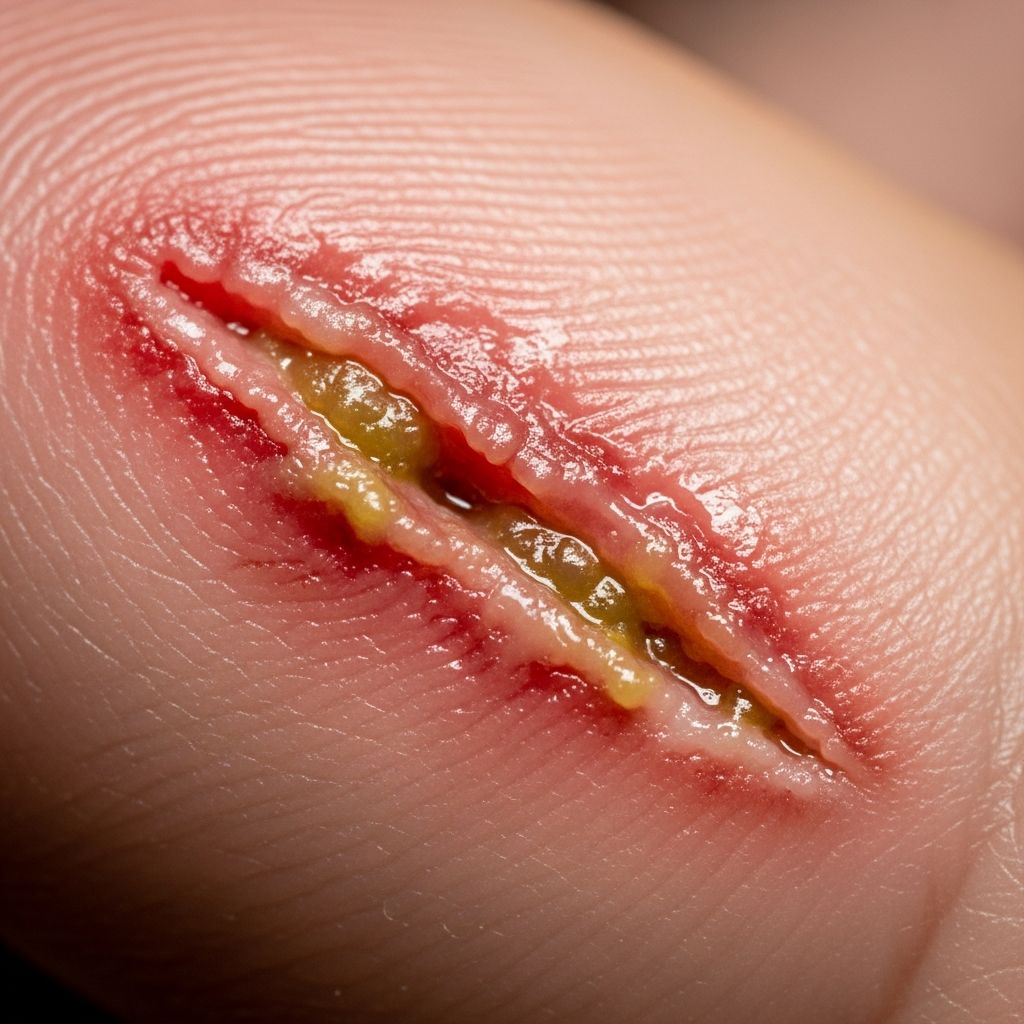
occurs when bacteria enter a skin wound, leading to worsening pain, redness, swelling, and potentially pus or fever. Prompt recognition and treatment are crucial to prevent spread to deeper tissues or bloodstream.What Is an Infected Cut?
A cut is any break in the skin from trauma, such as a scrape, slice, or puncture. While minor cuts heal naturally, germs can invade the exposed tissue, causing infection typically 2-3 days post-injury and lasting until visible healing. Uninfected cuts improve steadily, but infected ones deteriorate, with surrounding skin turning red, hot, and swollen. Factors like dirt, poor hygiene, or weakened immunity increase risk.
Infections arise from common bacteria like Staphylococcus or Streptococcus entering via the wound. Early intervention limits damage, but delays can lead to severe issues.
How to Identify an Infected Cut
Distinguishing infection from normal healing is vital. Normal inflammation peaks at 48 hours and subsides, but infection worsens progressively.
Key Symptoms of an Infected Cut
- Increasing pain: Wound hurts more over time, unlike healing cuts.
- Redness and warmth: Red area expands; skin feels hot to touch.
- Swelling: Puffiness around wound grows after 48 hours.
- Pus or drainage: Yellow, green, white, or foul-smelling fluid; pimple-like crust or soft scab enlarging.
- Red streaks: Lines spreading from wound toward heart signal lymph involvement.
- Fever or chills: Systemic signs like malaise, aches, nausea.
- Swollen lymph nodes: Tender nodes near wound.
Monitor daily: improvement by day 4 is normal; persistence beyond signals infection. Children may show fussiness or refusal to use the limb.
How to Treat an Infected Cut at Home
For mild early signs (slight redness, no pus/fever), home care can suffice if acting fast. Never treat large, deep, or severe cases at home—seek professional help.
Step-by-Step Home Treatment
- Wash hands thoroughly: Prevents introducing more bacteria.
- Clean wound: Rinse with soap and cool water 5-10 minutes; remove debris. Use antiseptic like hydrogen peroxide once only on day 1. For open cuts, soak in warm saltwater (2 tsp salt per quart water) 10 min, 3x/day.
- Dry gently: Pat with clean towel.
- Apply antibiotic ointment: Thin layer of Polysporin or Neosporin 3x/day to fight bacteria and keep moist.
- Cover: Use non-stick bandage; change daily or if wet/dirty. For sutured wounds, keep dry first 24 hours, then brief showers.
- Pain relief: Acetaminophen (Tylenol) or ibuprofen (Advil) as needed.
- Warm compress: For closed wounds, 10 min 3x/day after 24 hours to reduce swelling.
Expect peak pain/swelling day 2, redness gone by day 4, healing by day 10. If no improvement in 48 hours or worsening, see doctor.
When to Seek Medical Attention
Immediate care needed for:
- Spreading redness/streaks, pus, fever >100.4°F.
- Deep/large cuts, animal/human bites, embedded objects, unstoppable bleeding.
- No tetanus shot in 5 years for dirty/deep wounds.
- Diabetes, immunosuppression, or child/infant.
Go to ER for systemic symptoms like high fever, chills, vomiting.
Medical Treatment Options
Doctors assess via exam; may culture pus. Treatments include:
- Cleaning/debridement: Irrigate, numb, remove dead tissue.
- Antibiotics: Oral for mild-moderate; IV for severe. Common: amoxicillin-clavulanate (Augmentin), cephalexin (Keflex), doxycycline, dicloxacillin, trimethoprim-sulfamethoxazole (Bactrim), clindamycin. Complete full course.
- Drainage: Incise abscesses to release pus.
- Dressings: Specialized for ongoing care.
Related Stories



Hospitalization for severe cases.
Possible Complications of Infected Cuts
| Complication | Description | Risks |
|---|---|---|
| Cellulitis | Infection spreads to deeper skin layers | Fever, swelling; treatable with antibiotics |
| Abscess | Pus pocket requiring drainage | Pain, further spread if untreated |
| Sepsis | Bloodstream infection | Life-threatening; organ failure |
| Impetigo | Surface skin infection | Crusty sores, contagious |
| Necrotizing fasciitis | Rare ‘flesh-eating’ disease | Tissue death; amputation/surgery needed |
Untreated infections heal poorly, scar, or recur. Prompt care minimizes risks.
How to Prevent an Infected Cut
Prevention focuses on immediate action and monitoring:
- Clean promptly: Soap/water or alcohol wipes.
- Antiseptic/ointment: Apply bacitracin/Neosporin, cover with bandage.
- Choose right dressing: Non-stick, breathable; ask pharmacist.
- Monitor closely: Check daily for early signs.
- Tetanus protection: Booster every 10 years; post-injury if needed.
- Hygiene: Clean hands/tools; avoid dirty environments.
For high-risk (diabetics, elderly), extra vigilance.
Frequently Asked Questions (FAQs)
What does an infected cut look like?
Increasing redness, swelling, pus/drainage, warmth, red streaks, or fever.
Can I use hydrogen peroxide on an infected cut?
Once only on first day for cleaning; avoid repeated use as it harms healing tissue.
How long does a cut take to heal if infected?
With treatment, 7-10 days; untreated prolongs and risks complications.
Is pus always a sign of infection?
Yes, especially if foul-smelling or increasing; clear fluid may be normal.
When can my child return to school with a wound infection?
After 24 hours on oral antibiotics and fever-free.
Do all cuts need antibiotic ointment?
Recommended for unclean/minor cuts to prevent infection; skip if allergic.
References
- Infected Cut: Symptoms, Treatment, Prevention, Complications — Healthline. 2023. https://www.healthline.com/health/infected-cut
- Recognizing and Treating Wound Infection — UMass Memorial Health. 2024-01-15. https://www.ummhealth.org/health-library/recognizing-and-treating-wound-infection
- Recognizing Signs and Symptoms of Infection in Wounds — YouTube (Cleveland Clinic). 2022-05-10. https://www.youtube.com/watch?v=k_qoMDHEzSk
- Wound Infection — Seattle Children’s Hospital. 2025-03-20. https://www.seattlechildrens.org/conditions/a-z/wound-infection/
- Cuts and scrapes: First aid — Mayo Clinic. 2024-11-08. https://www.mayoclinic.org/first-aid/first-aid-cuts/basics/art-20056711
Similar Articles








Read full bio of medha deb