Infertility Treatments (IVF): Complete Guide To Options
Comprehensive guide to medicines, surgery, and assisted conception options for overcoming infertility in men and women.
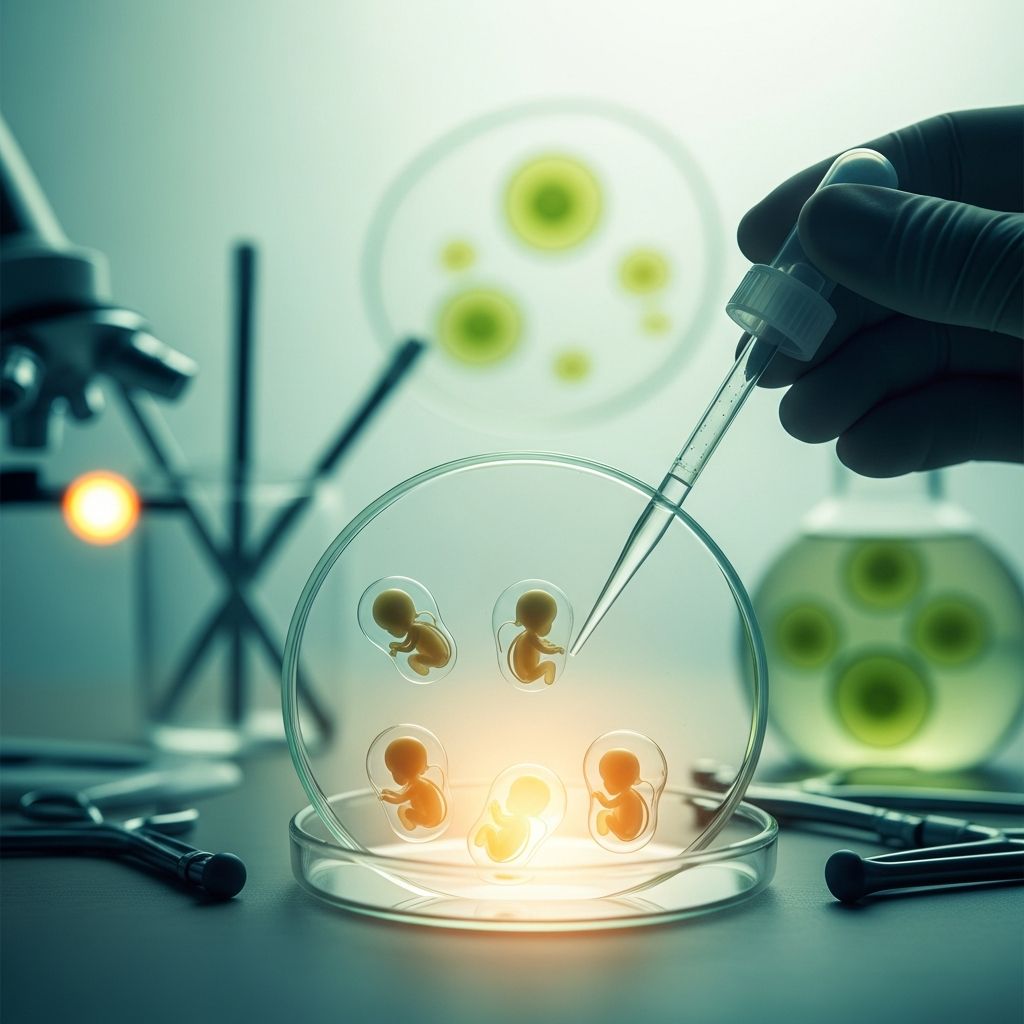
Infertility affects many couples, but a range of treatments can help improve chances of conception. These include medicines to stimulate ovulation, surgical interventions to correct anatomical issues, and assisted conception techniques like IVF. Success depends on factors such as age, underlying causes, and lifestyle.
In this article:
- Medicines that may improve fertility
- Surgical fertility treatments
- Assisted conception
- Possible complications of infertility treatments
- Frequently Asked Questions
Medicines that may improve fertility
Medicines are often the first-line treatment for infertility, particularly when ovulation issues are identified. They work by stimulating the ovaries to produce and release eggs or addressing hormonal imbalances.
Clomifene (Clomid®)
Clomifene is an anti-oestrogen drug commonly used as the initial treatment for women with anovulation, especially in cases of polycystic ovary syndrome (PCOS). It blocks oestrogen receptors in the brain, prompting the release of hormones that stimulate ovulation. Treatment typically involves taking tablets for five days early in the menstrual cycle, starting at 50 mg daily. Up to three cycles may be tried, with monitoring via ultrasound to check follicle development. Success rates show about 70-80% of women ovulate, though live birth rates are around 20-25% per cycle.
Medicines that contain gonadotrophins
Gonadotrophins are injectable hormones mimicking follicle-stimulating hormone (FSH) and luteinising hormone (LH). They are offered to women resistant to clomifene or those with specific ovulatory disorders. Injections are self-administered daily for about 10-12 days, with ultrasound monitoring to prevent ovarian hyperstimulation syndrome (OHSS). These are also used in men with hypogonadotrophic hypogonadism to boost sperm production.
Other medical treatments
Pulsatile gonadotrophin-releasing hormone (GnRH) therapy uses a pump to deliver pulses mimicking natural hormone release, effective for hypothalamic amenorrhoea. Dopamine agonists like bromocriptine treat hyperprolactinaemia by lowering prolactin levels, restoring ovulation. Metformin may be combined with clomifene for PCOS patients with insulin resistance.
Surgical fertility treatments
Surgery addresses structural problems identified during investigations, such as blocked tubes or endometriosis. These procedures can restore natural fertility or prepare for assisted conception.
- Tubal microsurgery: For mild tubal disease or proximal blockages, tubal catheterisation improves pregnancy chances by clearing obstructions.
- Laparoscopic ovarian drilling: Used in clomifene-resistant PCOS; a laser or heat punctures the ovarian surface to reduce androgen production and induce ovulation. Evidence suggests it may lower live birth rates compared to medical induction alone.
- Tubal and uterine surgery: Corrects blockages, adhesions, fibroids, or polyps. Hysteroscopy removes intrauterine abnormalities.
- Endometriosis treatment: Laparoscopic excision of endometriotic lesions can enhance fertility in mild cases.
Surgical options are less common now due to high success rates of IVF, but they remain valuable when a clear correctable issue exists.
Assisted conception
Assisted reproduction techniques bypass natural barriers, offering hope when medical or surgical treatments fail. These are regulated and success varies by clinic and patient factors.
Intrauterine insemination (IUI)
Sperm is prepared and inserted directly into the uterus around ovulation, often combined with ovarian stimulation using clomifene or letrozole. It’s suitable for mild male factor infertility, unexplained infertility, or same-sex couples using donor sperm. Live birth rates are 10-20% per cycle, recommended for 3-4 cycles before progressing to IVF.
Related Stories



In vitro fertilisation (IVF)
IVF involves ovarian stimulation to produce multiple eggs, retrieved via ultrasound-guided needle under sedation. Eggs are fertilised with sperm in a lab, cultured for 2-5 days, and embryos transferred to the uterus. Progesterone supports the luteal phase. Success declines with age: under 35, about 30-40% live birth per cycle; over 40, under 10%. Recommended after failed IUI or for tubal factors.
| Age Group | Live Birth Rate per IVF Cycle |
|---|---|
| Under 35 | 30-40% |
| 35-37 | 25-30% |
| 38-40 | 15-20% |
| Over 40 | <10% |
Note: Rates vary by clinic and patient health.
Intracytoplasmic sperm injection (ICSI)
ICSI is used when sperm quality is poor, including low count, motility issues, or previous IVF failure. A single sperm is injected directly into the egg cytoplasm. It’s standard for obstructive or non-obstructive azoospermia. Genetic counselling is advised if karyotyping is needed.
Other assisted techniques
- Gamete intrafallopian transfer (GIFT): Eggs and sperm placed directly into fallopian tubes laparoscopically; rarely used now.
- Oocyte donation: Donor eggs fertilised with partner’s sperm, transferred to recipient after endometrial preparation. Ideal for ovarian failure.
- Embryo donation: Spare embryos from IVF donors given to recipients.
Treatments for ovulation disorders
Ovulation issues are classified by WHO groups:
- WHO Group II (PCOS): First-line clomifene; second-line: gonadotrophins, metformin+clomifene, or drilling.
- WHO Group III (Ovarian failure): IVF with donor eggs primary option.
- Hyperprolactinaemia: Dopamine agonists.
Treatments for male infertility
Male factors affect 30-40% of cases. Gonadotrophins treat hypogonadism; surgery corrects varicocele. ICSI or donor sperm used for severe issues.
Possible complications of infertility treatments
Treatments carry risks:
- OHSS: Fluid shifts from overstimulation; severe in 1-2% of IVF cycles.
- Multiple pregnancy: Higher with stimulation; twins increase preterm risks.
- Ectopic pregnancy: Elevated post-IVF.
- Birth defects: Slightly higher with IVF/ICSI, though most studies show no major increase.
Counselling on emotional and financial burdens is essential. NHS funding limits cycles based on age/BMI.
Frequently Asked Questions (FAQs)
What is the first treatment for anovulation?
Ovulation induction with clomifene or letrozole, followed by timed intercourse or IUI.
Is IVF suitable for unexplained infertility?
After 3-4 cycles of IUI; first-line for women over 38-40.
How does ICSI differ from IVF?
ICSI injects a single sperm into the egg, ideal for male factor issues.
What lifestyle changes help fertility?
Maintain BMI 19-30, quit smoking, limit alcohol, exercise moderately.
Are there age limits for treatment?
Success drops after 40; clinics often cap at 50 for own eggs.
References
- Infertility Treatments: Options for Men and Women — Patient.info. 2023. https://patient.info/doctor/gynaecology/infertility-treatments
- Infertility Treatments (IVF): Medicine, Surgery, Assisted Conception — Patient.info. 2023. https://patient.info/womens-health/infertility-leaflet/treatments
- Diagnosis and Management of Infertility: A Review — PMC – NIH. 2022-07-12. https://pmc.ncbi.nlm.nih.gov/articles/PMC9302705/
- Infertility: Evaluation and Management — AAFP. 2023-06-01. https://www.aafp.org/pubs/afp/issues/2023/0600/infertility.html
- Treating Infertility — ACOG. 2023. https://www.acog.org/womens-health/faqs/treating-infertility
Similar Articles








Read full bio of Sneha Tete