Inflammatory Bowel Disease: Symptoms, Causes & Treatment
Comprehensive guide to IBD: understanding Crohn's disease, ulcerative colitis, and effective management strategies.
Understanding Inflammatory Bowel Disease (IBD)
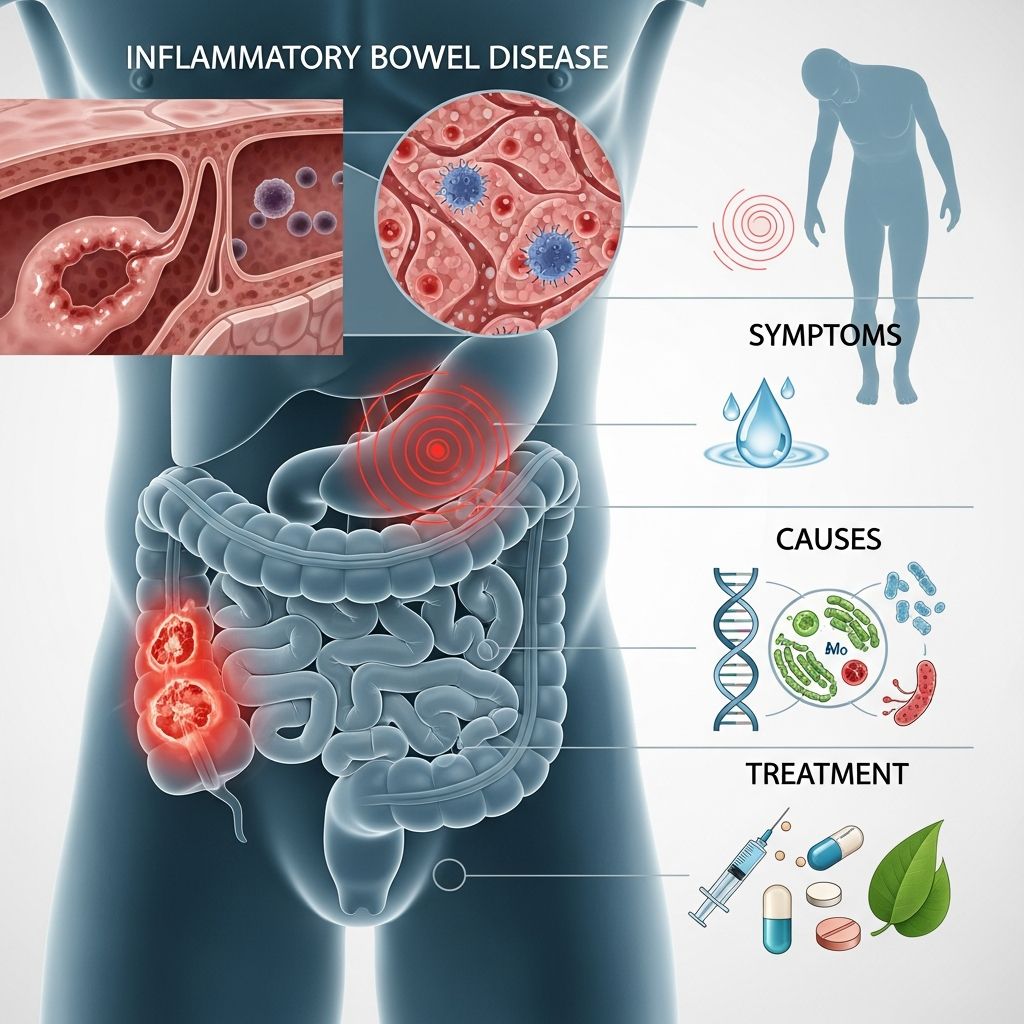
Inflammatory bowel disease (IBD) is a chronic condition that causes inflammation in your gastrointestinal (GI) tract. Unlike occasional digestive issues, IBD involves persistent inflammation that can significantly impact your quality of life, physical health, emotional well-being, and mental health. This condition affects approximately two million Americans and continues to increase in prevalence each year.
IBD refers to a group of illnesses rather than a single disease, with the two primary forms being Crohn’s disease and ulcerative colitis. Both conditions cause chronic inflammation in the digestive tract, leading to uncomfortable and sometimes debilitating symptoms. While IBD cannot be cured, various treatments can help manage symptoms and bring the disease into remission.
Types of Inflammatory Bowel Disease
Understanding the different types of IBD is essential for proper diagnosis and treatment planning. Each type affects different parts of the digestive system and presents unique characteristics.
Crohn’s Disease
Crohn’s disease is an inflammatory condition that can affect any part of the gastrointestinal tract, from the mouth all the way to the rectum and anus. This widespread potential for inflammation makes Crohn’s particularly challenging to manage, as the disease can develop in unexpected locations throughout the digestive system. The inflammation in Crohn’s disease typically affects all layers of the bowel wall, which can lead to complications such as strictures and fistulas.
Ulcerative Colitis
Ulcerative colitis differs from Crohn’s disease in that it affects only the colon and typically impacts the innermost lining of the colon. Patients with ulcerative colitis often experience significant problems with bleeding, diarrhea, and pain. While the inflammation is limited to one area, the symptoms can be severe and dramatically affect patients’ daily lives. Notably, ulcerative colitis is a disease frequently seen in younger populations, typically affecting people between 10 and 40 years of age during the prime of their lives when they are in school, beginning careers, and starting families.
Common Symptoms of IBD
IBD symptoms can vary widely in severity and may come and go unpredictably. When symptoms emerge or worsen, healthcare providers refer to this as an IBD flare or active disease. When symptoms subside following treatment, the disease is said to be in remission. Common IBD symptoms include:
- Abdominal pain and cramping
- Chronic diarrhea
- Blood in your stool (feces)
- Rectal bleeding
- Weight loss
- Loss of appetite
- Fever
- Fatigue and weakness
These symptoms may be mild or severe, and their unpredictable nature means you cannot always anticipate when they will occur. Some patients experience mild symptoms that barely interfere with daily activities, while others face severe manifestations that significantly disrupt their routines, work, and social life.
Understanding the Causes of IBD
The exact cause of IBD remains not fully understood by researchers, but scientific evidence points to a complex interaction between genetic, environmental, and immune system factors. When IBD develops, immune system cells in your GI tract mistakenly attack healthy tissue, causing inflammation that leads to Crohn’s disease and ulcerative colitis.
Related Stories



Genetic Factors
Research has identified over 160 different susceptibility genes that can increase your risk of developing IBD. When these genes undergo mutations or changes, they can compromise the normal function of your digestive tract and immune system. These genes normally regulate various immune functions, and when mutated, they create a predisposition toward IBD development. If you have inherited any number of these susceptibility genes, several everyday activities could trigger IBD symptoms.
Environmental Triggers
While genetic predisposition plays a crucial role, environmental factors significantly contribute to disease development and flares. Common IBD triggers include:
- Stress and emotional factors
- Certain foods and dietary components
- Environmental pollutants
- Infections
- Lifestyle changes
- Alterations in gut microbiome
It is important to note that these triggers do not actually cause IBD itself; rather, they activate symptoms in individuals who are genetically predisposed to the condition. Researchers are increasingly studying the role of the microbiome—the bacteria in our guts—and how these bacteria, along with environmental factors and diet, contribute to inflammation and disease progression.
Diagnosis of Inflammatory Bowel Disease
Proper diagnosis is essential for effective management. Healthcare providers follow a systematic approach to diagnose IBD:
Physical Examination and Medical History
Your healthcare provider will conduct a thorough physical examination and ask detailed questions about your symptoms, including how long you have experienced them, whether symptoms are mild or severe, and if they come and go intermittently.
Diagnostic Tests
Your provider may order several tests to confirm IBD diagnosis and determine its type and severity:
- Blood tests to check for anemia and inflammation markers
- Stool tests to identify infections or abnormalities
- Colonoscopy to visualize the colon and obtain tissue samples
- Endoscopy to examine the upper digestive tract
- Imaging studies such as CT scans or MRI
- Flexible sigmoidoscopy for examining the lower colon
These diagnostic tools help healthcare providers determine which type of IBD you have, the extent of inflammation, and the appropriate treatment approach.
IBD Complications
Without proper management, IBD can lead to serious complications that affect various body systems. These complications may include:
- Intestinal obstruction
- Strictures (narrowing of the bowel)
- Fistulas (abnormal connections between bowel segments)
- Abscesses and infections
- Toxic megacolon (severe colon dilation)
- Increased risk of colon cancer
- Malnutrition and vitamin deficiencies
- Osteoporosis and bone loss
- Eye problems and skin conditions
- Joint inflammation
One particularly important consideration is that IBD significantly increases your risk of serious illnesses like colon cancer, which is why regular monitoring and preventive care are crucial even when the disease is in remission.
Treatment Options for IBD
Treatment approaches vary depending on whether you have Crohn’s disease or ulcerative colitis, as well as the severity of your condition. However, all treatments focus on bringing IBD into remission and maintaining that remission to prevent flares.
Medications
Healthcare providers may prescribe various medications to ease symptoms and control inflammation:
- Anti-inflammatory medications
- Immunosuppressive drugs
- Biologic therapies
- Antibiotics for infections
- Symptom-relief medications for pain and diarrhea
Surgical Intervention
In cases where medications are not effective or complications develop, surgery may be necessary. Surgical options can provide significant relief and, in some cases, cure ulcerative colitis by removing the affected colon. The Digestive Disease and Surgery Institute performs a high volume of specialized procedures, including J-pouch procedures, and serves as one of the nation’s largest referral centers for repairing pelvic pouches and managing complex IBD cases.
Lifestyle Management
Beyond medication and surgery, managing IBD involves addressing dietary needs, stress management, and overall wellness. Cleveland Clinic emphasizes the importance of functional medicine, nutritional evaluation, and dietary modifications tailored to individual patient needs. The role of diet, stress, and psychosocial factors cannot be overstated, as these elements significantly influence disease progression and quality of life.
IBD Versus IBS: Key Differences
Many people confuse inflammatory bowel disease with irritable bowel syndrome (IBS), but these are distinctly different conditions. The key difference is that IBD involves inflammation in the gastrointestinal tract, while IBS does not. IBS is a functional disorder affecting how the bowel works, whereas IBD is an inflammatory condition causing physical damage to the digestive tract. This distinction is critical because treatment approaches differ significantly, and IBD requires more intensive medical management.
Living with IBD: Long-term Management
IBD is a chronic condition that requires lifelong management. Even when the disease is in remission, ongoing medical supervision is essential. Healthcare providers typically recommend scheduling appointments every six months when IBD is in remission, with more frequent visits during active flares. If you are in your 30s or 40s, your provider may recommend starting routine colonoscopies earlier than standard recommendations to monitor for complications and screen for cancer risk.
Managing IBD successfully involves understanding that this condition can disrupt your daily routine. However, healthcare providers are equipped with strategies to help you manage symptoms and maintain the best possible quality of life. This includes comprehensive, patient-centered care that addresses not only medical needs but also emotional and psychological well-being.
Multidisciplinary Approach to IBD Care
Leading medical centers like Cleveland Clinic provide seamless, multidisciplinary care for IBD patients of all ages throughout their lives. This comprehensive approach includes gastroenterology, surgery, mental health services, dietary and nutritional counseling, and specialist evaluations when necessary. The goal is to improve patient experience and outcomes while coordinating care effectively and providing individualized, patient-centered treatment. Patients often benefit from seeing multiple specialists in a single day and accessing same-day appointments when needed.
Frequently Asked Questions About IBD
Q: Can inflammatory bowel disease be cured?
A: No, IBD cannot be cured, but it can be effectively managed with medications, lifestyle modifications, and sometimes surgery. Treatment aims to achieve and maintain remission, allowing patients to live full, active lives.
Q: What percentage of IBD patients are children or young adults?
A: A significant portion of IBD cases occur in people between 10 and 40 years of age, meaning many patients are diagnosed during school, early career, or family-building years when disease management can be particularly challenging.
Q: How often should I see my healthcare provider if I have IBD?
A: When IBD is in remission, most healthcare providers recommend appointments every six months. During active flares, you may need more frequent visits. Some patients with mild disease only need annual checkups, while complex cases require more intensive monitoring.
Q: What is an IBD flare?
A: An IBD flare, also called active disease, occurs when symptoms suddenly emerge or worsen. Flares can involve intense stomach cramps, severe diarrhea, bleeding, and other uncomfortable symptoms that may disrupt daily activities.
Q: Can diet affect IBD symptoms?
A: Yes, diet plays a significant role in IBD management. Certain foods may trigger symptoms in susceptible individuals. Working with healthcare providers and nutritionists to identify personal triggers and develop an appropriate diet plan is an important part of disease management.
Q: Is surgery always necessary for IBD?
A: No, surgery is not always necessary. Many patients manage IBD effectively with medications alone. Surgery is typically recommended when medications are ineffective, serious complications develop, or in cases where it may provide significant relief or cure (particularly for ulcerative colitis).
Q: How does IBD affect mental health?
A: IBD can significantly impact mental health due to chronic symptoms, unpredictability, and lifestyle disruptions. Stress and emotional factors can also trigger disease flares. Comprehensive IBD care includes mental health services and psychological support to address these concerns.
References
- Inflammatory Bowel Disease (IBD): Symptoms, Causes, Treatment — Cleveland Clinic. 2024. https://my.clevelandclinic.org/health/diseases/15587-inflammatory-bowel-disease
- Inflammatory Bowel Disease (IBD) Patient-Centered Medical Home Delivers Integrated Multidisciplinary Care — Cleveland Clinic. 2024. https://my.clevelandclinic.org/podcasts/butts-and-guts/ibd-patient-centered-medical-home-delivers-integrated-multidisciplinary-care
- Inflammatory Bowel Disease (IBD) | Cleveland Clinic — Cleveland Clinic Digestive Disease and Surgery Institute. 2024. https://my.clevelandclinic.org/departments/digestive/depts/inflammatory-bowel-disorders
- Florian Rieder Lab: Intestinal Fibrogenesis Research — Cleveland Clinic Lerner Research Institute. 2024. https://www.lerner.ccf.org/inflammation-immunity/rieder/
- Get Treatment for Inflammatory Bowel Disease — Cleveland Clinic. 2024. https://my.clevelandclinic.org/services/inflammatory-bowel-disease-treatment
Similar Articles








Read full bio of Sneha Tete