Inflammatory Lesions in Acne: Types, Causes, and Management
Understanding papules, pustules, nodules, and pseudocysts in acne vulgaris for effective treatment.
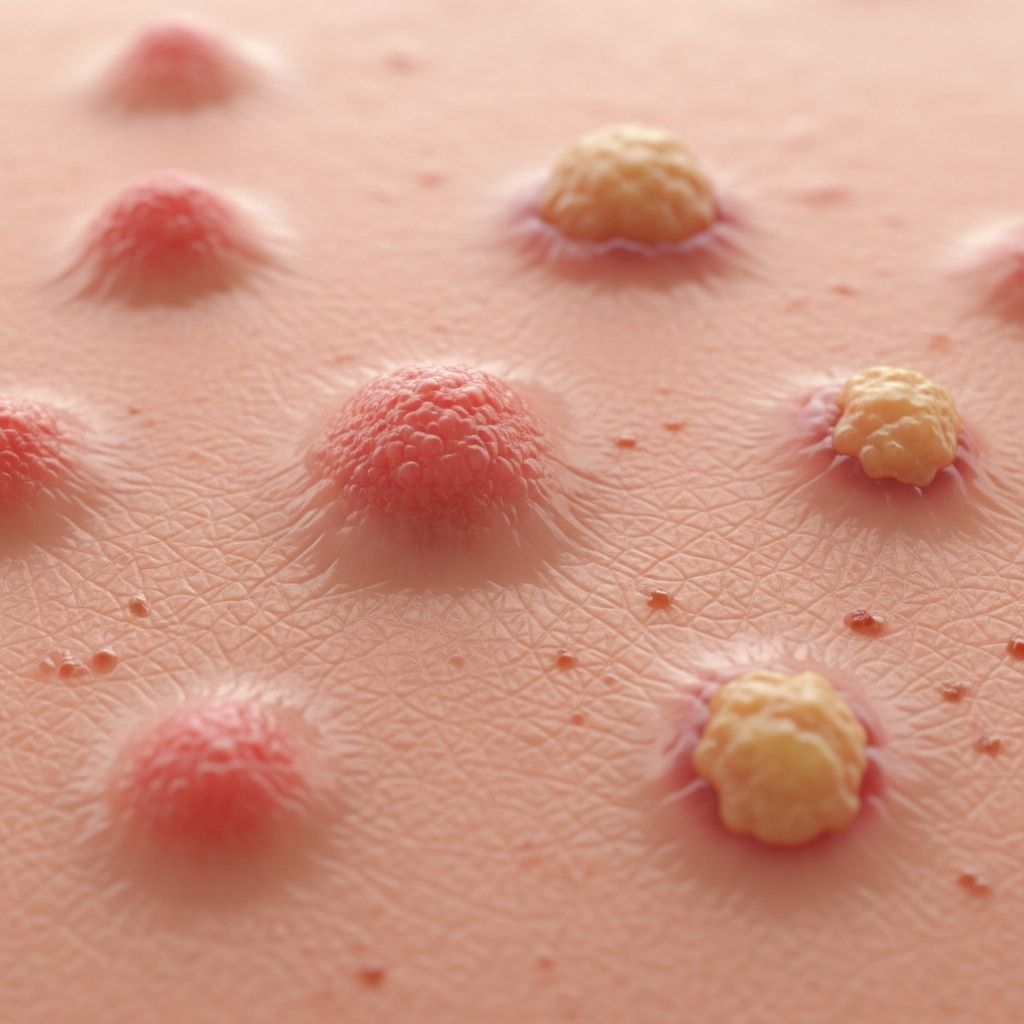
Inflammatory Lesions in Acne
Inflammatory acne lesions represent a significant subset of acne vulgaris, characterized by red, often painful skin eruptions that develop when the immune system reacts to bacterial colonization and follicular rupture within the pilosebaceous unit. These lesions include papules, pustules, nodules, and pseudocysts, each with distinct characteristics and clinical implications. Understanding the nature of inflammatory acne is essential for appropriate diagnosis and management, as these lesions carry a higher risk of permanent scarring compared to non-inflammatory comedones.
What Are Inflammatory Acne Lesions?
Inflammatory lesions in acne develop as a direct result of immune activation within and around the pilosebaceous unit, which comprises the hair follicle and its associated sebaceous gland. Unlike non-inflammatory comedones (blackheads and whiteheads) that result from simple follicular blockage, inflammatory lesions emerge when the body’s immune response is triggered by bacterial proliferation, particularly Cutibacterium acnes, and subsequent follicular rupture. These lesions are typically painful and tender, and individual inflammatory lesions can persist for extended periods, with deeper papules and nodules potentially lasting for months.
An inflamed lesion usually follows rupture of the wall of a closed comedo, though it may also arise from normal-appearing skin. The inflammatory process is multifaceted, involving immune cell infiltration, cytokine release, and tissue damage that extends beyond the follicular structure itself.
Types of Inflammatory Acne Lesions
Papules
Papules are small, firm, red bumps typically measuring under 5 millimeters in diameter. These superficial inflammatory lesions represent the mildest form of inflammatory acne and are often surrounded by visible inflammation. Papules may be tender to the touch and reflect a superficial infection of the sebaceous glands, usually involving Cutibacterium acnes bacteria. They can appear spontaneously on previously normal-appearing skin or develop from existing comedones when immune activation occurs. If left untreated, papules may evolve into more severe pustules or progress deeper into the dermis.
Pustules
Pustules represent an advancement in inflammatory severity compared to papules. These lesions contain visible yellowish pus and often develop directly on top of existing papules. Pustules appear as red bumps with a white or yellowish head composed of inflammatory fluid and bacterial debris. The presence of pustules indicates a more pronounced immune response and bacterial activity within the follicle. Pustules can rupture spontaneously on the skin’s surface, potentially spreading bacteria and inflammation to adjacent areas, or they may worsen into deeper nodules if inflammation spreads into the lower skin layers.
Nodules
Nodules are large, painful, deep-seated lesions that extend significantly into the skin’s lower layers, including the dermis and hypodermis. These firm bumps typically exceed 5 millimeters in size and are characterized by substantial depth and firmness upon palpation. Nodular acne represents severe inflammatory disease and presents a considerably higher risk for permanent scarring and tissue destruction. Nodules may persist for prolonged periods—sometimes lasting weeks or months—and can potentially become abscesses, rupture with drainage, or cause significant scarring. Some nodules may require professional drainage or minor surgical intervention.
Pseudocysts
Pseudocysts are fluctuant nodules that represent another severe inflammatory manifestation of acne vulgaris. These lesions have a soft, fluid-filled quality and indicate extensive inflammatory damage with accumulated fluid within deeper skin structures. Pseudocysts require careful management to prevent rupture and secondary infection.
Pathogenesis and Mechanisms of Inflammation
The development of inflammatory acne involves several interconnected pathogenic mechanisms. The microcomedo serves as the primary lesion and precursor for all clinical manifestations of acne vulgaris. This small, hyperkeratotic plug, primarily composed of corneocytes and located in the lower follicular infundibulum, gradually evolves into other acne lesions through a cascade of four primary pathogenic events.
Related Stories



Role of Cutibacterium acnes
Acne-associated strains of Cutibacterium acnes possess heightened capacity to stimulate pro-inflammatory cascades, specifically involving TH17 cells. These specialized immune cells secrete inflammatory cytokines including interferon-gamma (IFN-γ) and interleukin-17 (IL-17), which actively promote inflammation. In contrast, bacterial strains associated with healthy skin stimulate TH17 cells to produce anti-inflammatory cytokine IL-10, demonstrating the critical role of specific bacterial strains in determining inflammatory outcomes.
The bacterium activates Toll-like receptor-2 on perifollicular macrophages, triggering the release of additional pro-inflammatory cytokines such as IL-8 and IL-12. These cytokines attract neutrophils to the area, which release neutrophil lysosomal enzymes that contribute to follicular rupture and further tissue damage.
Immune Response and Molecular Mechanisms
Gene expression studies have demonstrated upregulation of matrix metalloproteinases 1 and 3, inflammatory cytokines (IL-8), and antimicrobial peptides including human beta-defensin 4 and granzyme B in inflammatory acne lesions. Additionally, biopsies from acne lesions reveal a significant increase in beta-defensin 2 immunoreactivity in both lesional and perilesional epithelium, with a relatively lesser increase in beta-defensin 1 immunoreactivity. This complex molecular environment perpetuates inflammation and tissue destruction.
Follicular Rupture
As the inflammatory process intensifies, follicles eventually rupture with the release of bacteria, keratin, and proinflammatory lipids into the surrounding dermis. This rupture exacerbates inflammation significantly and subsequently leads to nodule formation, representing the most severe manifestation of acne vulgaris.
Clinical Presentation and Risk Factors
Presentation Patterns
The extent of skin involvement in acne varies greatly among individuals, ranging from a few small comedones to numerous inflamed nodules. Patient characteristics significantly influence presentation patterns. Young adolescents often present with comedones involving the forehead, nose, and chin—commonly referred to as the T-zone. As acne progresses in adolescents, inflammatory lesions typically develop in addition to comedones. Adult women frequently experience acne primarily on the lower face and neck, with flare-ups often associated with menstrual cycle fluctuations.
Scarring Risk
Inflammatory acne lesions carry substantially higher risk of permanent scarring compared to non-inflammatory lesions. Deep lesions, particularly nodules and pseudocysts, can cause irreversible damage to skin structure. Improper treatment or manipulation of inflammatory lesions further increases scarring risk, emphasizing the importance of appropriate medical management.
Severity Classification and Treatment Approach
Mild Inflammatory Acne
Acne vulgaris is considered mild when it presents with a few scattered comedones or small inflammatory papules without scarring. Mild acne may include a few lesions on either a single body area or in multiple body areas, with important absence of nodules or their confluence. The primary treatment approach for mild acne vulgaris is topical therapy, which commonly involves topical retinoids, topical antibiotics, and benzoyl peroxide.
Moderate to Severe Inflammatory Acne
Moderate to severe inflammatory acne, characterized by numerous papules, pustules, or presence of nodules, typically requires systemic treatment in addition to topical approaches. Oral antibiotics such as doxycycline or lymecycline can be combined with topical treatments for moderate to severe acne. For cases with high scarring risk or treatment failure, isotretinoin represents the gold standard treatment for severe acne, though it requires close medical supervision due to potential side effects.
Management Strategies
Treatment Considerations
Managing inflammatory acne requires careful assessment of multiple factors including lesion severity, risk of scarring, and the psychosocial impact on quality of life. Treatment options vary significantly according to severity level and individual patient circumstances.
Topical Treatment Options
Benzoyl peroxide and retinoids are recommended for mild to moderate inflammatory acne forms. However, on their own, they are often insufficient for deep lesions like nodules or cysts that require systemic intervention. Topical treatments work by reducing bacterial colonization, promoting cell turnover, and reducing sebum production.
Oral Treatment Options
- Oral antibiotics including doxycycline and lymecycline provide systemic anti-inflammatory and antimicrobial effects
- Combination therapy with both oral and topical agents often provides superior outcomes for moderate acne
- Isotretinoin remains the most effective treatment for severe, scarring acne but requires careful monitoring
Frequently Asked Questions
Q: What is the difference between a papule and a pustule?
A: Papules are small red bumps (under 5mm) without visible pus, while pustules are similar red bumps that contain visible yellowish or whitish pus at the center. Pustules represent a progression of inflammation from papules.
Q: How long do inflammatory acne lesions typically last?
A: Most inflammatory acne lesions usually last less than 2 weeks, though deeper papules and nodules may persist for months. Individual lesion duration depends on severity and whether appropriate treatment is initiated.
Q: Can inflammatory acne lesions cause permanent scarring?
A: Yes, inflammatory acne lesions, particularly nodules and pseudocysts, carry a higher risk of permanent scarring compared to non-inflammatory comedones. Early, appropriate treatment significantly reduces scarring risk.
Q: Why is bacteria like Cutibacterium acnes important in inflammatory acne development?
A: Acne-associated strains of Cutibacterium acnes trigger stronger pro-inflammatory immune responses compared to strains found on healthy skin, promoting the release of inflammatory cytokines that drive papule, pustule, and nodule formation.
Q: Is isotretinoin necessary for all severe inflammatory acne?
A: Isotretinoin is reserved for severe acne with high scarring risk or cases that have failed other treatments. It requires strict medical supervision and monitoring due to potential serious side effects, making it a last-resort option.
Q: Can inflammatory acne lesions develop from normal-appearing skin?
A: Yes, inflamed lesions can arise from normal-appearing skin following immune activation around the pilosebaceous unit. They do not always require a visible preceding comedone.
References
- Acne Vulgaris — National Center for Biotechnology Information (NCBI), StatPearls. Reviewed 2024. https://www.ncbi.nlm.nih.gov/books/NBK459173/
- Inflammatory Acne: Causes, Treatments & How to Prevent — Dexeryl. 2024. https://www.dexeryl.com/en/your-skin/acne/acne-types/inflammatory-acne
- Inflammatory lesions in acne — DermNet, New Zealand Dermatological Society. Last updated February 2014. https://dermnetnz.org/topics/inflammatory-lesions-in-acne
- Acne Vulgaris: Features, Types, and Treatments — DermNet, New Zealand Dermatological Society. https://dermnetnz.org/topics/acne-vulgaris
Similar Articles








Read full bio of Sneha Tete