Inflammatory Linear Verrucous Epidermal Naevus
Understanding ILVEN: A rare, itchy skin condition along Blaschko lines with treatment challenges and management strategies.
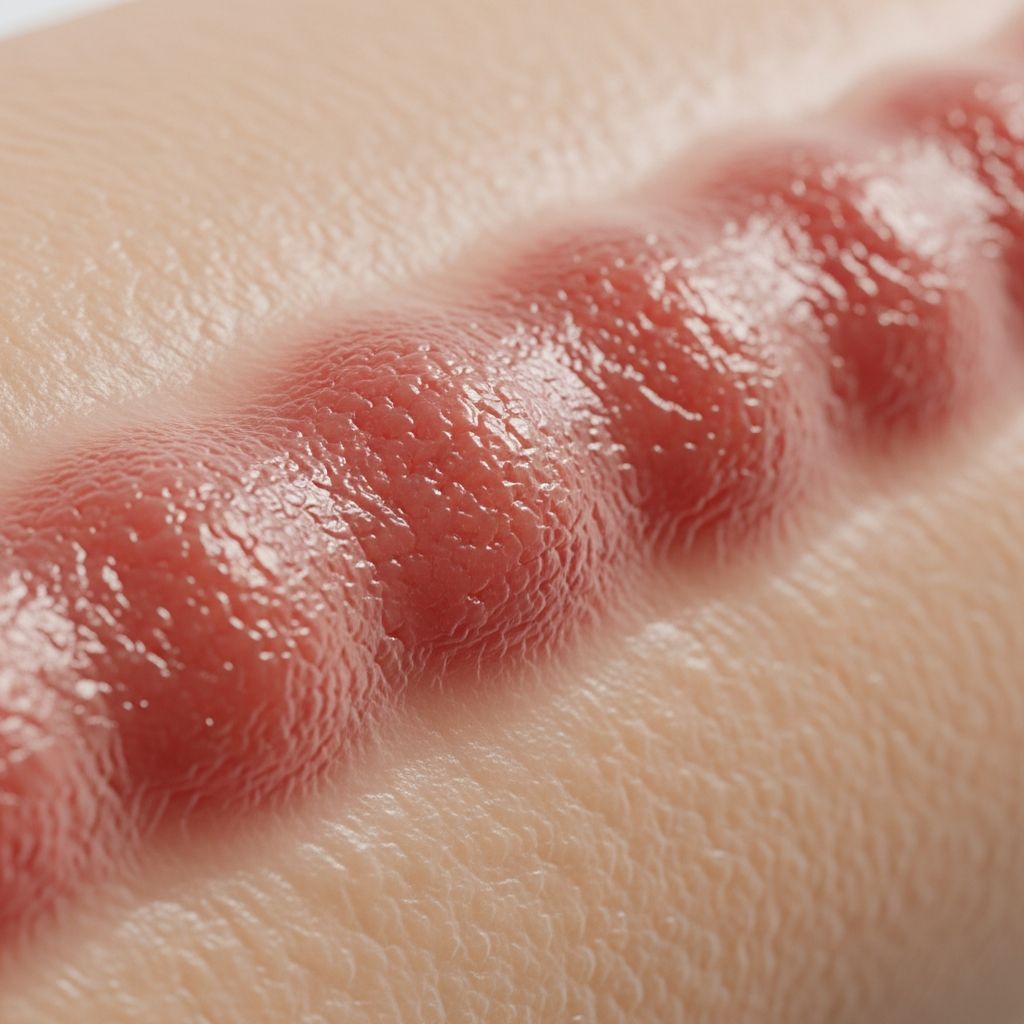
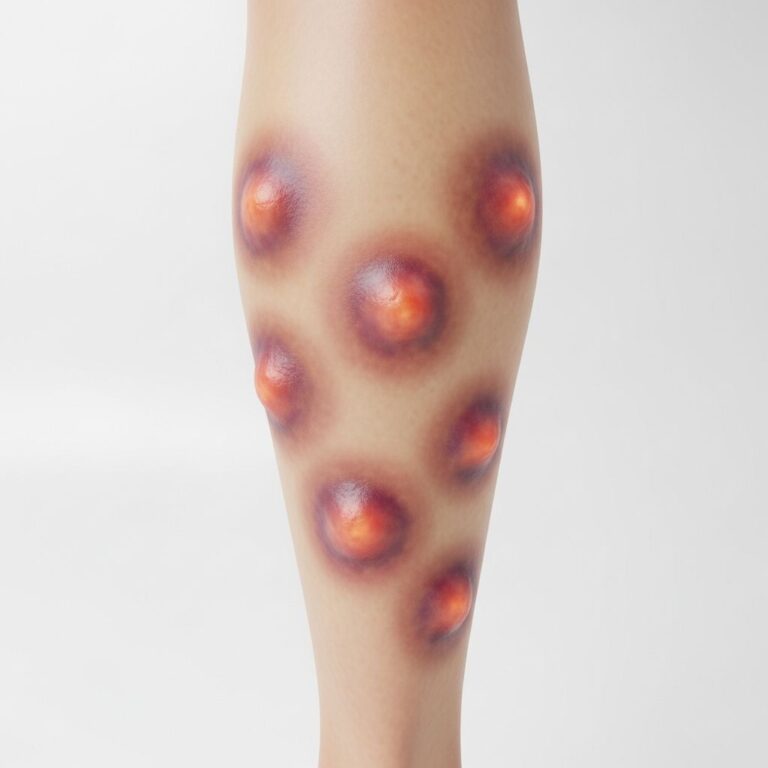
Inflammatory linear verrucous epidermal naevus (**ILVEN**) is a rare, benign variant of keratinocytic epidermal naevus characterized by unilateral, pruritic, erythematous, and hyperkeratotic papules and plaques distributed along the
Blaschko lines
. This condition belongs to the heterogeneous group of mosaic inflammatory skin disorders and typically manifests in infancy or early childhood, with a notable female predominance.What is ILVEN?
ILVEN represents a distinctive epidermal naevus where lesions appear inflamed and intensely itchy, distinguishing it from non-inflammatory linear verrucous epidermal naevi. The term ‘verrucous’ refers to the warty, hyperkeratotic surface, while ‘inflammatory linear’ highlights the red, eczematous or psoriasiform appearance arranged in linear patterns. These patterns follow
Blaschko lines
, which are invisible developmental pathways of embryonic skin cell migration, visible only through certain genetic mosaic conditions.Unlike common naevi, ILVEN lesions are persistently symptomatic, often causing significant discomfort due to severe pruritus. The condition is sporadic in most cases but arises from postzygotic somatic mutations leading to genetic mosaicism in the ectoderm—the embryonic layer forming the epidermis and neural tissue. Reported mutations involve genes such as
NSDHL
,PMVK
,HRAS
,GJA1
, andCARD14
, though many cases lack identifiable mutations, underscoring its genetic heterogeneity.Who gets ILVEN? (Epidemiology)
ILVEN predominantly affects females in a 4:1 ratio compared to males, with onset typically in infancy (birth to 6 months) or early childhood. The left lower limb is most commonly involved, often extending from the buttock to the foot in a unilateral distribution. Trunk, arm, genital, and mucosal involvement occurs less frequently. Familial cases are rare, but germline mutations with secondary somatic hits have been documented.
- Age of onset: Neonatal period or first year of life in >80% of cases.
- Sex predilection: Females > males (4:1).
- Site predilection: Lower extremities (especially left leg), unilateral.
- Rarity: Exact prevalence unknown; considered very rare, with <200 cases reported in literature.
What causes ILVEN?
The aetiology of ILVEN stems from genetic mosaicism due to somatic mutations during early embryogenesis. These mutations affect keratinocyte proliferation and differentiation in the ectoderm, resulting in clonal populations of abnormal skin cells along Blaschko lines. Key mechanisms include:
- Mosaic somatic mutations: Postzygotic changes in genes regulating cholesterol biosynthesis (e.g., NSDHL, PMVK) or signalling pathways (HRAS, CARD14).
- X-linked germline variants: With loss of heterozygosity in affected skin.
- Two-hit hypothesis: Germline mutation plus somatic second hit, explaining rare familial patterns.
No environmental triggers are established, and while identical twins show discordance, supporting non-inherited somatic origins. Genetic testing via biopsy can identify mutations, potentially guiding targeted therapies, though routine testing is not standard.
What are the clinical features of ILVEN?
Lesions present as grouped, linear, pruritic papules and plaques with a warty (verrucous), scaly surface. The erythema and inflammation evoke eczema or psoriasis, but the strict linear arrangement along Blaschko lines is pathognomonic. Pruritus is often severe, leading to excoriations and lichenification.
| Feature | Description |
|---|---|
| Distribution | Unilateral, following Blaschko lines; lower leg > thigh > buttock > trunk/arm. |
| Morphology | Erythematous, hyperkeratotic papules/plaques; psoriasiform or eczematous. |
| Symptoms | Intense pruritus; may worsen with heat/sweat. |
| Evolution | Persistent; may improve slightly post-puberty but rarely resolves. |
Related Stories



Rare extracutaneous associations include skeletal deformities, neurological issues (e.g., seizures), or ocular abnormalities, suggesting epidermal naevus syndrome when extensive.
Diagnosis
Diagnosis relies on characteristic clinical presentation: linear, unilateral, pruritic verrucous plaques along Blaschko lines in a child. Key diagnostic criteria (Altman and Mehregan) include early onset, female predominance, leg involvement, pruritus, treatment resistance, and psoriasiform histology.
- Clinical examination: Sufficient in typical cases.
- Skin biopsy: Confirms with epidermal hyperplasia, alternating ortho/parakeratosis, acanthosis, and dermal inflammation.
- Genetic testing: Optional for mutation identification.
Differential diagnoses
- Linear psoriasis: Less pruritic, responds to anti-psoriatics; symmetric distribution.
- Linear lichen planus: Purple polygonal papules; Wickham striae on dermoscopy.
- Adult-onset haemangioma: Vascular; blanches on pressure.
- Non-inflammatory epidermal naevus: Lacks erythema/pruritus.
- Lichen striatus: Self-limiting; finer lines.
Investigations
Usually unnecessary, but consider:
- Skin biopsy: Gold standard for histology.
- Imaging/MRI: If syndromic features (e.g., extensive lesions, developmental delay).
- Genetic analysis: Research setting for mosaicism.
Treatment
ILVEN is notoriously treatment-resistant. Goals are symptom control (pruritus, inflammation) and cosmesis. No curative therapy exists; management is multimodal.
| Treatment | Efficacy | Notes |
|---|---|---|
| Topical corticosteroids (potent) | Moderate; temporary relief | Clobetasol 0.05%; risk of atrophy/striae. |
| Topical calcineurin inhibitors (tacrolimus) | Moderate | Anti-inflammatory; steroid-sparing. |
| Vitamin D analogues (calcipotriol) | Low-moderate | Combined with steroids. |
| Topical retinoids | Low | Irritating; hyperkeratosis reduction. |
| Phototherapy (NB-UVB) | Variable | For extensive lesions. |
| Laser (CO2, Er:YAG) | Moderate; resurfacing | Recurrence common; scarring risk. |
| Surgical excision | High for small lesions | Definitive; grafting for large areas. |
Emerging: Targeted therapies based on mutations (e.g., statins for NSDHL). Emollients and antipruritics essential adjuncts.
Outcome
ILVEN is benign but chronic, persisting lifelong with possible mild improvement at puberty. Pruritus impacts quality of life; psychological support advised. Malignant transformation is exceedingly rare (<1%), but monitor for changes. Extensive disease warrants syndrome screening.
Frequently Asked Questions (FAQs)
Q: Is ILVEN contagious?
A: No, ILVEN is a genetic mosaic disorder, not infectious.
Q: Can ILVEN be cured?
A: No cure exists; treatments manage symptoms. Excision offers best long-term control for localized lesions.
Q: Does ILVEN affect internal organs?
A: Rarely; most cases skin-limited, but extensive ILVEN may associate with epidermal naevus syndromes.
Q: Why is the left leg commonly affected?
A: Unknown; reflects Blaschko line patterns and possible embryonic asymmetry.
Q: Is ILVEN hereditary?
A: Usually sporadic; rare familial cases via germline mutations.
References
- Epidermal Nevus Syndromes — National Organization for Rare Disorders (NORD). 2023-05-15. https://rarediseases.org/rare-diseases/epidermal-nevus-syndromes/
- Inflammatory linear verrucous epidermal naevus — DermNet NZ (University of Auckland Dermatology). 2024-01-12. https://dermnetnz.org/topics/inflammatory-linear-verrucous-epidermal-naevus
- Inflammatory Linear Verrucous Epidermal Nevus (ILVEN) — Primary Care Dermatology Society (PCDS). 2023-11-08. https://www.pcds.org.uk/clinical-guidance/inflammatory-linear-verrucous-epidermal-naevus-ilven
- Inflammatory linear verrucous epidermal nevus — MalaCards (human genetic disease database). 2025-09-20. https://www.malacards.org/card/inflammatory_linear_verrucous_epidermal_nevus
- Inflammatory Linear Verrucous Epidermal Nevus (ILVEN) — News-Medical.net (Health and Medicine). 2024-03-05. https://www.news-medical.net/health/Inflammatory-Linear-Verrucous-Epidermal-Nevus-(ILVEN).aspx
Similar Articles








Read full bio of medha deb