Influenza B: Symptoms, Causes, Treatment
Understand Influenza B: symptoms, transmission, treatment options, prevention strategies, and why it hits children hardest.
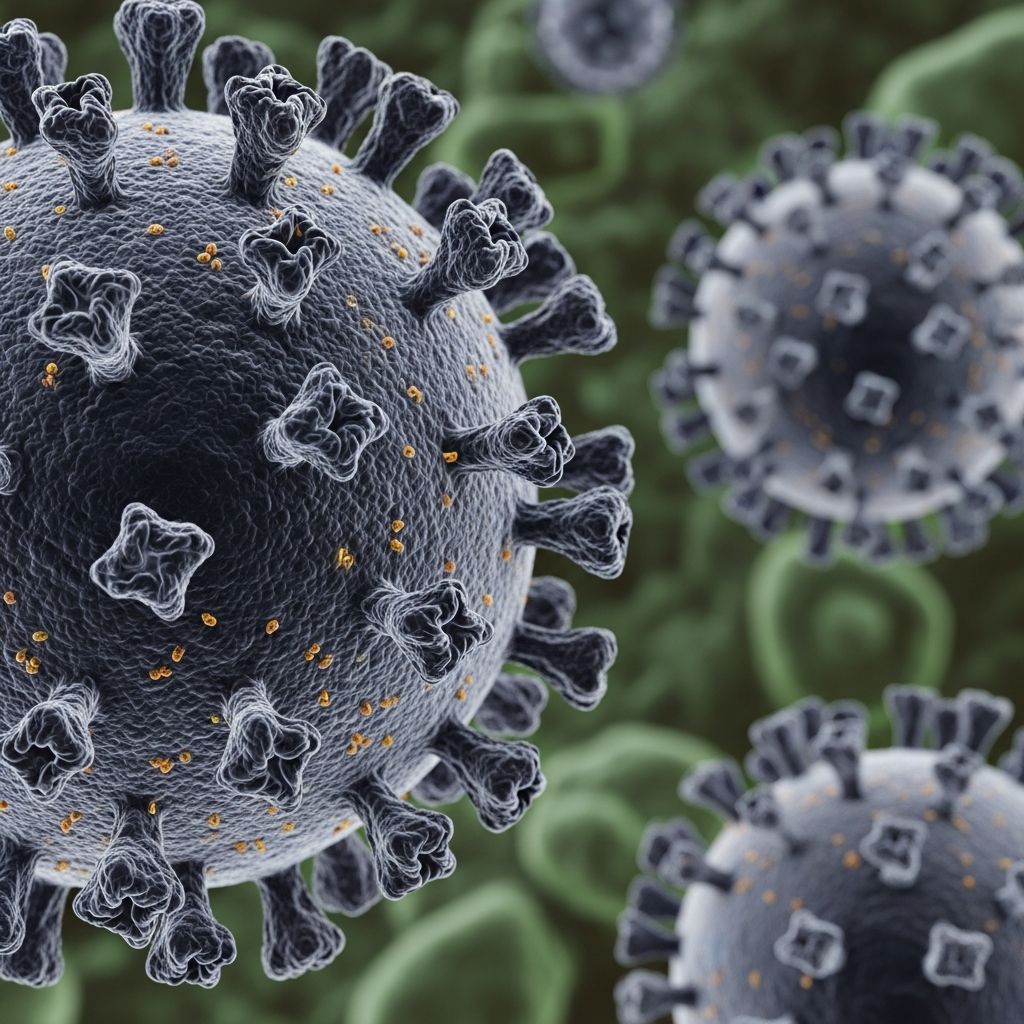
Influenza B is a contagious respiratory virus that causes seasonal flu, particularly affecting children and leading to outbreaks worldwide. Unlike influenza A, it lacks an animal reservoir but contributes significantly to annual epidemics, accounting for 20-30% of flu-related deaths.
What Is Influenza B?
Influenza B (IFB) belongs to the Orthomyxoviridae family and circulates exclusively in humans, posing no pandemic risk but causing notable seasonal morbidity. It features two distinct lineages: B/Victoria/2/87-like (Victoria) and B/Yamagata/16/88-like (Yamagata), which differ antigenically and genetically. These lineages co-circulate, with quadrivalent vaccines now targeting both to enhance protection.
IFB outbreaks occur globally, often peaking later in flu season compared to influenza A, sometimes into spring. While less mutable than influenza A subtypes like H1N1 or H3N2, IFB still drives epidemics, especially in schools and pediatric populations.
Symptoms of Influenza B
IFB typically presents with rapid-onset respiratory symptoms lasting 2-8 days, including cough, fever, myalgia, chills, and malaise. Common signs mirror general flu: high fever (100-102°F), chills, headache, muscle aches, fatigue, extreme exhaustion, runny/stuffy nose, sneezing, and sore throat.
In children, symptoms may be more severe, with high fever and rhinorrhea less common than in influenza A, but respiratory issues prevalent. Severe cases, particularly in young children or those with comorbidities, can lead to multi-organ failure, secondary bacterial pneumonia, or cardiac injury.
- Fever and chills: Often the first indicators, persisting several days.
- Respiratory symptoms: Cough, sore throat, nasal congestion.
- Systemic effects: Body aches, fatigue, weakness.
- Severe complications in kids: ICU admission risk higher for otherwise healthy children over 10 (odds ratio 5.79).
Causes and Transmission of Influenza B
IFB transmits via respiratory droplets from infected individuals, who are contagious 1 day before symptoms to 7 days after. The virus binds to respiratory epithelial cells using hemagglutinin (HA), with neuraminidase (NA) aiding entry by cleaving mucus.
Infection triggers immune responses: innate immunity via macrophages and NK cells, followed by adaptive B- and T-cell antibody production. No animal reservoir exists, limiting zoonotic jumps but sustaining human epidemics.
Epidemiologically, IFB comprises 20-50% of cases in many seasons, causing 22-44% of pediatric flu deaths (2004-2011). Infants represent 24% of cases, with boys slightly more affected; 34% have underlying conditions.
Influenza B vs. Influenza A
| Aspect | Influenza A | Influenza B |
|---|---|---|
| Prevalence | More common in adults; causes pandemics | 25% of cases; common in children |
| Severity | Often more aggressive | Milder but severe in kids under 5, elderly |
| Mutation | High (subtypes H1N1, H3N2) | Lower; two lineages (Victoria, Yamagata) |
| Timing | Peaks early winter | Later, into spring |
| Mortality in Kids | 0.4% hospitalized (Canada data) | 1.1%; 16-52% pediatric deaths (US 2010-2016) |
Flu A mutates faster due to animal reservoirs, while IFB’s human-only cycle makes it predictable yet challenging for vaccines.
Who Is at Risk for Influenza B?
Children, especially under 5 and those with comorbidities (e.g., malignancies, renal disorders, chronic pulmonary/cardiac issues, diabetes, immunosuppression), face higher severity. Healthy kids ≥10 may require ICU more often.
Related Stories



Older adults risk complications due to waning immunity. Globally, IFB contributes to 650,000 annual flu deaths. High-risk groups benefit most from vaccination.
- Young children (higher disease severity)
- Infants (24-27% of cases)
- Comorbid patients (34% of pediatric cases)
- Elderly
Diagnosis of Influenza B
Diagnosis relies on rapid molecular assays detecting IFB in respiratory samples. Clinical symptoms overlap with other flus, so testing distinguishes lineages. CDC recommends prompt testing in severe cases.
Treatment for Influenza B
Antivirals like oseltamivir reduce symptom duration, viral shedding, and complications in children. Supportive care includes rest, hydration, and fever reducers (avoid aspirin in kids due to Reye’s syndrome).
Hospitalization may be needed for pneumonia or respiratory failure. Early treatment within 48 hours is key.
Prevention and Influenza B Vaccine
Quadrivalent seasonal vaccines (IIV-4) include both B lineages, recommended for children with chronic conditions. Annual vaccination prevents severe outcomes.
Other measures: hand hygiene, avoiding sick contacts, masking in crowds. No live animal contact needed, unlike flu A.
Complications of Influenza B
Severe in children: bacterial pneumonia, cardiac injury, multi-organ failure. Mortality higher than flu A in hospitalized kids (1.1% vs. 0.4%). Long-term: increased ICU needs.
When to See a Doctor for Influenza B
Seek care for high-risk groups, difficulty breathing, chest pain, dehydration, or symptoms lasting >7 days.
Frequently Asked Questions (FAQs)
Is Influenza B worse than Influenza A?
No, flu A is often more aggressive, but IFB causes higher pediatric mortality and ICU rates in some groups.
Does the flu vaccine protect against Influenza B?
Yes, quadrivalent vaccines cover both B lineages.
How long is someone contagious with Influenza B?
1 day before symptoms to 7 days after.
Can Influenza B cause pneumonia?
Yes, secondary bacterial pneumonia is a key complication, especially in children.
Who should get the flu shot for Influenza B protection?
Children, elderly, and those with comorbidities; annual vaccination recommended.
References
- Influenza B infections in children: A review — PMC – PubMed Central. 2020-12-01. https://pmc.ncbi.nlm.nih.gov/articles/PMC7769779/
- Influenza B Virus: Biological & Clinical Aspects — Frontiers in Microbiology. 2024-10-01. https://www.frontiersin.org/journals/microbiology/articles/10.3389/fmicb.2024.1467029/full
- What’s the Difference Between Flu Type A and Flu B? — National Council on Aging. 2023-01-01. https://www.ncoa.org/article/whats-the-difference-between-flu-a-and-flu-b/
- About Influenza — Centers for Disease Control and Prevention (CDC). 2025-01-01. https://www.cdc.gov/flu/about/index.html
- Influenza (seasonal) — World Health Organization (WHO). 2024-01-01. https://www.who.int/news-room/fact-sheets/detail/influenza-(seasonal)
Similar Articles








Read full bio of Sneha Tete