Ingrown Toenail Treatment: Guide From Home To Surgery
Effective treatments for ingrown toenails from home remedies to surgical options for pain relief and prevention.
Ingrown Toenail Treatment: Home Remedies to Surgery
An
ingrown toenail
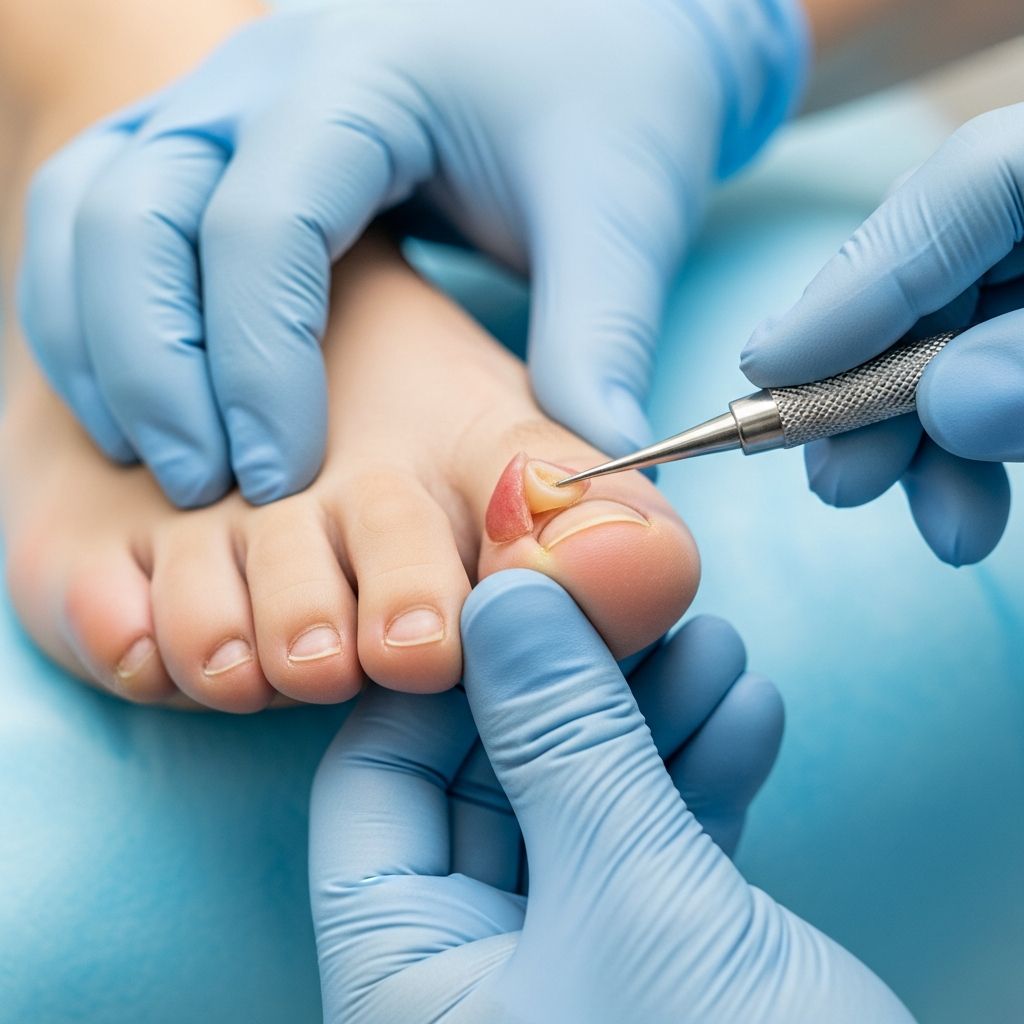
occurs when the edge of the toenail grows into the surrounding skin, causing pain, swelling, redness, and potential infection, most commonly affecting the big toe.What Is an Ingrown Toenail?
Ingrown toenails, medically known as onychocryptosis, develop when the nail plate curves and penetrates the lateral nail fold, leading to inflammation and discomfort. This condition affects people of all ages but is more prevalent in adolescents and young adults due to active lifestyles and improper nail care. Early recognition is key, as untreated cases can progress to infection or chronic issues.
The nail’s sharp edge irritates the soft tissue, triggering an inflammatory response. Factors like tight shoes exacerbate pressure on the toe, worsening the embedment.
Symptoms of Ingrown Toenails
Initial symptoms include localized
pain and tenderness
along the nail border, especially when pressure is applied, such as wearing shoes or socks. The skin becomes red and swollen, with possible warmth indicating inflammation.As it advances, symptoms escalate:
- Throbbing pain that intensifies with walking or standing.
- Discharge of pus if infection sets in.
- Granulation tissue formation, appearing as red, moist overgrowth.
- Difficulty bearing weight on the toe.
In severe cases, systemic signs like fever may occur if cellulitis develops.
Causes and Risk Factors
Common causes include
improper nail trimming
, where nails are cut too short or rounded, promoting inward growth. Trauma from stubbing toes or tight footwear compresses the nail bed, forcing edges into skin.Risk factors encompass:
- Genetic predisposition to curved nails.
- Hyperhidrosis (excessive sweating).
- Onychomycosis (fungal infections).
- Obesity or repetitive toe pressure from sports.
- Diabetes, poor circulation, or immunosuppression, heightening infection risk.
Understanding these helps in prevention.
Stages of Ingrown Toenails
Ingrown toenails are classified into three stages based on severity:
| Stage | Description | Symptoms |
|---|---|---|
| Stage 1 | Nail grows into skin. | Pain, inflammation, redness. |
| Stage 2 | Granuloma forms. | Weeping tissue, pus discharge. |
| Stage 3 | Chronic inflammation. | Oozing pus, granuloma over nail, possible bone involvement if untreated. |
Stage 1 responds well to conservative care, while stages 2-3 often require professional intervention.
Home Remedies and Conservative Treatments
For
mild to moderate
(Stage 1-2) ingrown toenails without severe infection, nonsurgical approaches are first-line.Soaking: Soak the foot in warm, soapy water 3-4 times daily for 15-20 minutes to soften skin and reduce inflammation. Dry thoroughly afterward.
Topical Care: Apply antibiotic ointment or mid-to-high potency steroid cream several times daily. Gently massage inflamed area.
Cotton Wick or Dental Floss: Place a small, damp piece of cotton or floss under the nail edge to lift it from skin. Change daily.
Gutter Splint: Physician-applied: Slit IV tubing fits over nail edge, secured with tape or adhesive for pain relief.
Cotton Nail Cast: Cotton placed in U-shape under nail fold, hardened with adhesive; resolves pain in 24-72 hours for many.
Wear open-toe shoes or sandals, avoid pressure. These methods allow nail to grow past the fold in 2-12 weeks.
When to See a Doctor
Seek medical help if home remedies fail after 2-3 days, or if signs of infection appear: increased pain, pus, fever, spreading redness, or in high-risk individuals (diabetes, poor circulation).
Podiatrists or primary care providers assess severity and rule out complications like abscess or osteomyelitis.
Medical Treatments
For persistent or moderate cases, professionals offer:
- Antibiotics: Oral or topical for infection.
- Partial Nail Avulsion (Ross Procedure): Remove ingrown portion under local anesthesia.
- Wedge Excision (Winograd Procedure): Excises nail fold and matrix tissue.
These provide rapid relief but may not prevent recurrence without matrixectomy.
Surgical Treatments
Surgery is recommended for
moderate to severe
cases or recurrences, superior to nonsurgical methods per Cochrane review.Partial Nail Avulsion with Matrixectomy: Gold standard. Nail edge removed, followed by phenol chemical ablation or surgical excision of lateral matrix horn. Equally effective, recurrence <5%.
- Procedure: Digital block, nail plate avulsion, matrix destruction.
- Healing: 2-4 months for regrowth; narrow nail prevents re-ingrowth.
Total Nail Avulsion (Zadik Procedure): For severe cases, with full matrixectomy.
Other Techniques: Rotational flap, radical excision (Vandenbos).
Post-op: Soaks, elevation, pain meds. Complications rare: infection, regrowth.
Prevention Tips
Prevent recurrence with:
- Proper Trimming: Straight across, not rounded; don’t cut too short.
- Footwear: Wide toe box, breathable materials.
- Hygiene: Dry feet, treat fungal issues.
- Foot Care: Regular pedicures by professionals for at-risk feet.
Monitor high-risk patients closely.
Special Considerations for High-Risk Patients
Individuals with
diabetes, neuropathy, or vascular disease
must avoid self-treatment due to infection risks. Prompt professional care prevents serious complications like bone infections.Frequently Asked Questions (FAQs)
Can I treat an ingrown toenail at home?
Yes, for mild cases: soak, lift nail edge, use topicals. See a doctor if worsening.
How long does it take for an ingrown toenail to heal?
Home treatment: 2-12 weeks. Surgery: 2-4 months for regrowth.
Will the nail grow back normally after surgery?
Partial avulsion with matrixectomy results in narrower nail, reducing recurrence.
Is surgery painful?
Local anesthesia ensures no pain during; mild post-op discomfort managed with meds.
Can ingrown toenails lead to serious problems?
Yes, infections can spread to bone in severe or high-risk cases.
Outlook and Prognosis
With proper treatment, most resolve without issues. Recurrence is common without matrixectomy or prevention; good foot care minimizes risk.
References
- Ingrown Toenail Management — American Academy of Family Physicians (AAFP). 2019-08-01. https://www.aafp.org/pubs/afp/issues/2019/0801/p158.html
- Overview: Ingrown toenail — InformedHealth.org – NCBI Bookshelf. (Updated within last 24 months as of 2026). https://www.ncbi.nlm.nih.gov/books/NBK513138/
- Ingrown toenail — MedlinePlus Medical Encyclopedia. (Updated within last 24 months as of 2026). https://medlineplus.gov/ency/article/001237.htm
- Ingrown Toenails – Causes, Treatment, and Prevention — 1Foot 2Foot (Balance Health). (Recent clinical resource). https://balancehealth.com/resources/ingrown-toenails-causes-treatment-and-prevention/1foot2foot/
Similar Articles




Read full bio of medha deb