Ingrown Toenail Treatment: Expert Guide To Relief & Prevention
Effective treatments for ingrown toenails from home remedies to surgery, including prevention tips and when to see a doctor.
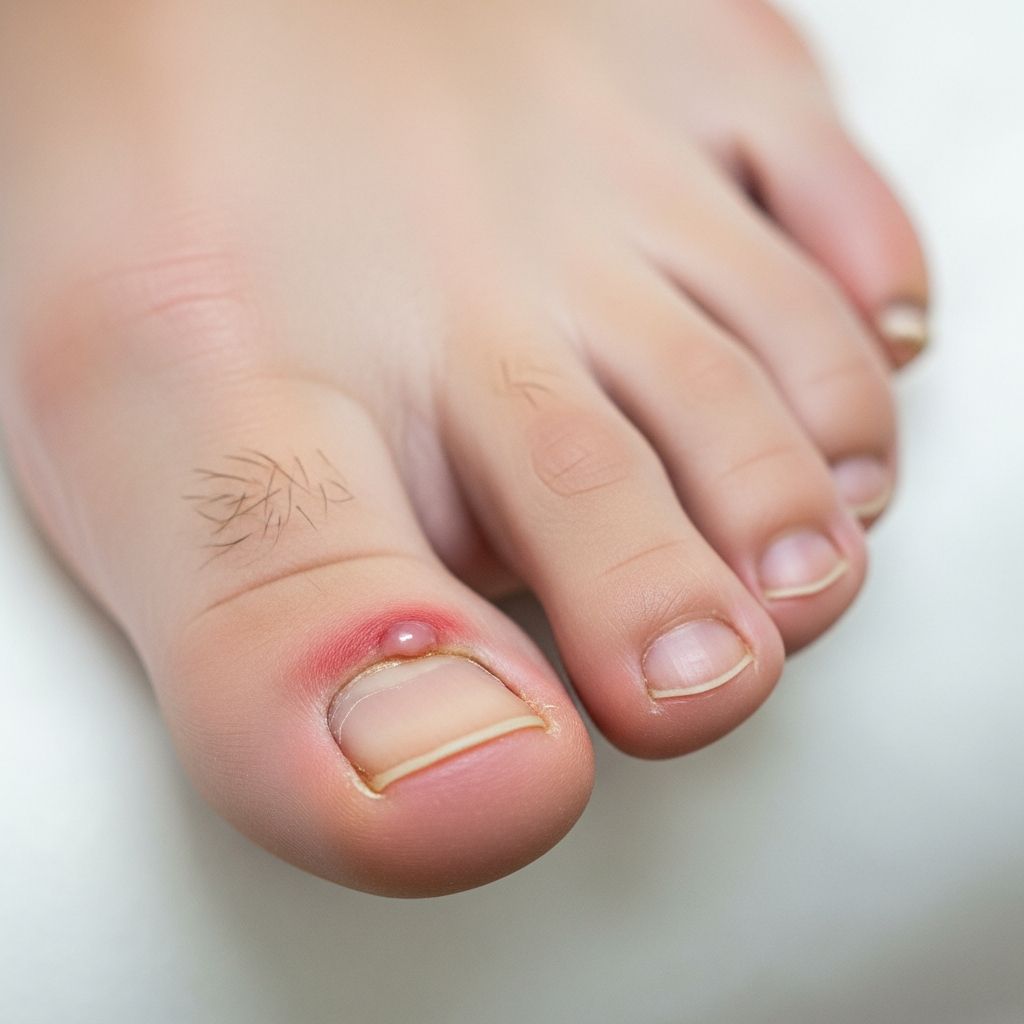
An
ingrown toenail
occurs when the edge of the toenail grows into the surrounding skin, often causing pain, swelling, redness, and sometimes infection. This common condition most frequently affects the big toe and can range from mild discomfort to severe complications requiring medical intervention.What Is an Ingrown Toenail?
An ingrown toenail, medically known as onychocryptosis, happens when the nail plate curves and penetrates the lateral nail fold, leading to inflammation. It is classified into grades: Grade I (mild inflammation), Grade II (hypertrophic lateral fold with drainage), and Grade III (granulation tissue or chronic inflammation).
Symptoms include tenderness, erythema, swelling, and purulent discharge in advanced cases. Risk factors encompass improper nail trimming, tight shoes, trauma, hyperhidrosis, and predisposing conditions like onychomycosis or diabetes.
Symptoms of an Ingrown Toenail
- Pain and tenderness along the nail edge, worsening with pressure from shoes or socks.
- Redness and swelling of the surrounding skin.
- Warmth in the area, indicating inflammation.
- Pus or drainage if infected.
- Granulation tissue (overgrowth of pink fleshy tissue) in chronic cases.
- Walking difficulty due to pressure on the toe.
Early recognition prevents progression; consult a provider if symptoms persist beyond a few days or if you have diabetes, poor circulation, or immunosuppression.
Causes of Ingrown Toenails
Common causes include:
- Improper nail trimming: Cutting nails too short or rounding edges instead of straight across promotes ingrowth.
- Tight or ill-fitting footwear: Shoes with narrow toe boxes compress toes, forcing nails into skin.
- Trauma: Stubbing the toe or sports injuries can alter nail growth.
- Genetic factors: Curved or thickened nails predispose individuals.
- Underlying conditions: Fungal infections, excessive sweating, or obesity increase risk.
When to See a Doctor
Seek medical care if home remedies fail after 2-3 days, or if you experience severe pain, spreading redness, pus, fever, or have diabetes/peripheral vascular disease. These indicate possible paronychia or cellulitis requiring professional evaluation.
Podiatrists or primary care physicians can assess severity and recommend nonsurgical or surgical options.
Home Remedies and Conservative Treatments
For
mild to moderate
(Grade I-II) ingrown toenails without significant infection, conservative measures relieve symptoms and allow normal nail regrowth, typically in 2-12 weeks.- Warm soaks: Soak the foot 3-4 times daily for 10-20 minutes in warm, soapy water to soften skin and reduce inflammation. Dry thoroughly afterward.
- Topical treatments: Apply mid- to high-potency steroid cream or antibiotic ointment several times daily for 2-14 days to decrease swelling and fight minor infection.
- Cotton wick or dental floss: Gently lift the nail edge and place a small piece of damp cotton or floss underneath to encourage nail growth over the skin. Replace daily.
- Proper footwear: Wear open-toed or wide-toe-box shoes to reduce pressure. Avoid tight socks.
Physician-applied options include:
- Gutter splint: A slit vinyl IV tubing piece fitted over the nail edge post-anesthesia, secured with tape or adhesive for immediate pain relief.
- Cotton nail cast: U-shaped cotton placed under the nail and hardened with cyanoacrylate; resolves pain in 24-72 hours.
- Taping or braces: Elastic tape pulls skin away; braces hook onto nail corners to realign growth.
Medical Treatments
If conservative methods fail or for moderate-severe cases, medical interventions are employed. Antibiotics treat infection but do not address the nail issue.
Partial Nail Avulsion
The most common procedure: Numbing injection followed by removal of the ingrown nail portion (about 1/3). The nail regrows in 2-4 months. Preferred over total avulsion to minimize trauma.
Related Stories



Surgical Treatments
**Surgical approaches** are recommended for moderate-severe ingrown toenails (Grade II-III) to prevent recurrence, outperforming nonsurgical methods per Cochrane review.
Options include:
- Partial nail avulsion (Ross procedure): Removes lateral nail edge, often with matrixectomy.
- Wedge resection (Winograd): Excises nail fold and matrix wedge.
- Total nail avulsion (Zadik): For bilateral ingrowth, with matrix destruction.
- Vandenbos procedure: Radical nail fold excision for space.
Nail Matrixectomy
Prevents regrowth of problematic nail portion via:
| Method | Description | Effectiveness |
|---|---|---|
| Surgical excision | Cuts out lateral matrix horn | Equal to phenol |
| Phenolization | Chemical ablation post-avulsion | Reduces recurrence to 14% vs 41% without |
| Electrocauterization/Laser | Heat destroys matrix | Effective alternative |
| Radiofrequency | Ablates tissue precisely | Low recurrence |
Phenol matrixectomy significantly lowers recurrence rates.
Recovery and Aftercare
Post-procedure: Keep the area clean/dry, change dressings daily, soak as directed. Pain subsides in days; full healing takes weeks. Avoid tight shoes; monitor for infection signs. New nail grows in 2-4 months.
Prevention Tips
- Trim nails straight across, not rounded; avoid too short.
- Wear properly fitting shoes with toe room.
- Keep feet dry; treat fungal infections promptly.
- Moisturize skin to prevent cracking.
- Protect toes during sports.
Frequently Asked Questions (FAQs)
Can I treat an ingrown toenail at home?
Yes, for mild cases: Soak, use cotton wicks, and wear loose shoes. See a doctor if no improvement or infection signs.
How long does recovery take after surgery?
Pain relief is quick; full nail regrowth 2-4 months. Follow aftercare to prevent complications.
Does surgery prevent recurrence?
Yes, especially with matrixectomy; phenol reduces risk from 41% to 14%.
Is phenol matrixectomy painful?
No, done under local anesthesia; chemical burn sensation is mild and temporary.
Who is at higher risk for complications?
Those with diabetes, poor circulation, or immunosuppression—seek prompt care.
References
- Ingrown Toenail Management — American Academy of Family Physicians (AAFP). 2019-08-01. https://www.aafp.org/pubs/afp/issues/2019/0801/p158.html
- Ingrown toenail: Learn More – Ingrown toenail treatment — National Center for Biotechnology Information (NCBI/NIH). Accessed 2026. https://www.ncbi.nlm.nih.gov/books/NBK513139/
- Ingrown toenail — MedlinePlus, U.S. National Library of Medicine (NIH). Accessed 2026. https://medlineplus.gov/ency/article/001237.htm
- Ingrown Toenail Management — American College of Osteopathic Family Physicians (ACOFP). 2021-05-01. https://acofp.org/news-and-publications/journal/article-detail/vol-13-no-3-(2021)-may-june-2021/ingrown-toenail-management
Similar Articles








Read full bio of medha deb