Ingrown Toenail: 3 Effective Treatments And Prevention Tips
Comprehensive guide to causes, stages, symptoms, and treatments for painful ingrown toenails (onychocryptosis).
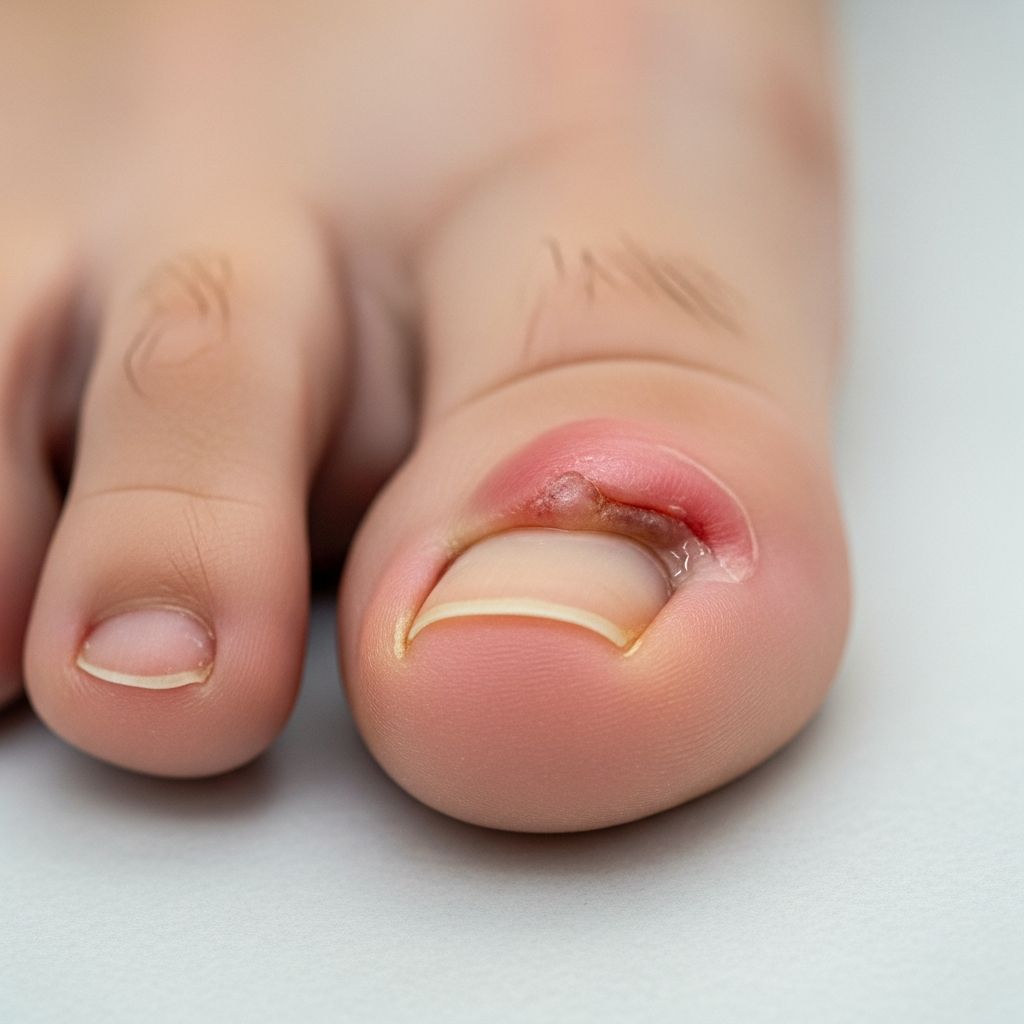
An
ingrown toenail
, medically termed onychocryptosis, is a common and painful condition where the side or corner of the toenail grows into the surrounding skin, leading to inflammation, tenderness, and potential infection. It most frequently affects the great toe (big toe) but can occur on any toenail. This condition impacts about 20% of patients visiting podiatrists or doctors for foot issues, disrupting daily activities like walking due to pain.What is an ingrown toenail?
The toenail plate penetrates the soft tissue of the lateral nail fold, causing the skin to become irritated, red, and swollen. Over time, this can lead to granulation tissue formation—a fleshy overgrowth—and secondary bacterial infection with pus discharge. Predominantly seen in adolescents and young adults, it arises from a combination of nail growth patterns and external pressures.
Who gets ingrown toenails?
Ingrown toenails affect individuals across all ages but are more common in:
- Teenagers and young adults due to active lifestyles and footwear choices.
- People with sweaty feet (hyperhidrosis), poor foot hygiene, or obesity, which increase pressure on toes.
- Athletes or those engaging in sports with tight shoes or repetitive toe pressure.
- Individuals with fungal nail infections (onychomycosis), as thickened nails are prone to ingrowing.
- Those on certain medications like epidermal growth factor receptor inhibitors (e.g., gefitinib).
Genetic factors, such as congenital malalignment of the great toenail, may predispose some people.
Causes of ingrown toenails
The primary causes include:
- Improper nail trimming: Cutting nails too short, rounded, or leaving sharp spikes that pierce the skin—the most common etiology.
- Ill-fitting footwear: Tight, narrow, or pointed shoes that compress toes, forcing nails into skin.
- Trauma or injury: Stubbing the toe or repetitive pressure from sports.
- Nail abnormalities: Thickened nails from fungal infections or deformities.
- Other factors: Hyperhidrosis, tight socks, or medications like isotretinoin.
Debate exists on whether the nail grows into the skin or excess skin bulges over the nail, but the consensus is that the nail edge penetrates the lateral nail fold, exacerbated by pressure.
Stages of ingrown toenails
Ingrown toenails progress through three stages based on severity:
| Stage | Symptoms | Key Features |
|---|---|---|
| Stage 1 (Mild) | Redness, minor swelling, pain on nail compression | Early inflammation without infection; nail edge visible digging into skin. |
| Stage 2 (Moderate) | Increased swelling, pus/discharge, warmth, ulceration | Acute infection with seropurulent drainage; early granulation. |
| Stage 3 (Severe) | Hypertrophic granulation tissue, chronic discharge, severe pain | Overgrown tissue compresses nail; persistent infection. |
Signs and symptoms
Common presentations include:
- Pain, tenderness, throbbing on nail sides.
- Redness, swelling, warmth around the nail fold.
- Pus (yellow/green), bleeding, or fluid leakage.
- Pain while walking, wearing shoes, or even from bedsheet pressure.
- In advanced cases, foul odor from infection or granulation tissue overgrowth.
Related Stories



Symptoms worsen with pressure, often limiting mobility.
Diagnosis
Diagnosis is clinical, based on history and examination. No imaging is typically needed unless osteomyelitis (bone infection) is suspected in severe, chronic cases. Podiatrists or dermatologists assess stage and infection signs. Fungal cultures may be taken if onychomycosis is present.
Treatment of stage 1 ingrown toenail
Conservative management is first-line:
- Soak foot in warm water (with salt or antiseptic) 3–4 times daily for 15–20 minutes to soften skin and reduce swelling.
- Gently lift nail edge with cotton wool or dental floss, changed daily after soaking.
- Apply topical antibiotics (e.g., mupirocin) and pain relief with local anesthetics.
- Wear open-toed shoes; avoid tight footwear.
- Proper nail trimming: straight across, not rounded.
Most stage 1 cases resolve in 2–4 weeks.
Treatment of stage 2 ingrown toenail
Requires intervention if conservative measures fail:
- Topical or oral antibiotics (e.g., cephalexin) for infection.
- Partial nail avulsion under local anesthesia to remove the offending spike.
- Analgesics for pain control.
- Continue soaks and elevation.
Treatment of stage 3 ingrown toenail
Surgical options are definitive:
- Lateral nail avulsion with matricectomy: Removal of nail portion plus nail matrix destruction (chemical with phenol or sodium hydroxide, or surgical). Phenolization has >95% success, low recurrence (2–5%).
- Gutter/splinter technique: Plastic tubing or acrylic to separate nail from fold.
- Spicule excision: Targeted removal of penetrating spike.
Avoid total nail avulsion without matricectomy due to high recurrence.
Post-surgery procedures
- Daily soaks starting 48 hours post-op.
- Antibiotics if infected; pain meds.
- Dressings changed regularly; keep foot dry.
- Follow-up in 1–2 weeks; restrict activity initially.
- Healing takes 2–4 weeks; recurrence rare with matricectomy.
What is the outcome for ingrown toenails?
Early treatment yields excellent results. Surgical matricectomy prevents recurrence in 90–98% of cases. Untreated, it leads to chronic pain, recurrent infections, or rare complications like cellulitis.
Prevention of ingrown toenails
- Trim nails straight across, slightly long at edges.
- Wear well-fitting shoes with toe room.
- Maintain foot hygiene; treat fungal infections promptly.
- Avoid trauma; use orthotics if needed.
Frequently asked questions
Should I cut my own ingrown toenail?
No, avoid self-cutting to prevent worsening infection. Soak and consult a professional.
Can ingrown toenails heal on their own?
Stage 1 may with conservative care, but advanced stages need medical intervention.
Is surgery for ingrown toenail painful?
Performed under local anesthesia; post-op discomfort managed with meds. Quick recovery.
How long does recovery take after surgery?
1–4 weeks; full activity resumes soon with proper care.
Can children get ingrown toenails?
Yes, especially active kids; prevention via proper trimming key.[10]
References
- Ingrown toenails (onychocryptosis) — DermNet NZ. 2023. https://dermnetnz.org/topics/ingrown-toenail
- Ingrown Toenails — StatPearls, NCBI Bookshelf, NIH. 2023-10-01. https://www.ncbi.nlm.nih.gov/books/NBK546697/
- Ingrown Toenail | Causes, Symptoms and Diagnosis — The Foot Hub (podiatry clinic, cites clinical data). 2024. https://thefoothub.com.au/foot-conditions/ingrown-toenail/
- Ingrown toenail — Patient.info (NHS-affiliated). 2024. https://patient.info/foot-care/ingrowing-toenails-ingrown-toenails
- Ingrown toenails: digging out the facts — BPAC New Zealand (peer-reviewed clinical guide). 2014-12-01. https://bpac.org.nz/BPJ/2014/December/ingrown-toenails.aspx
Similar Articles








Read full bio of medha deb