Inhaler Devices: Types, Usage, and Selection Guide
Understand different inhaler technologies and find the right device for your respiratory needs.
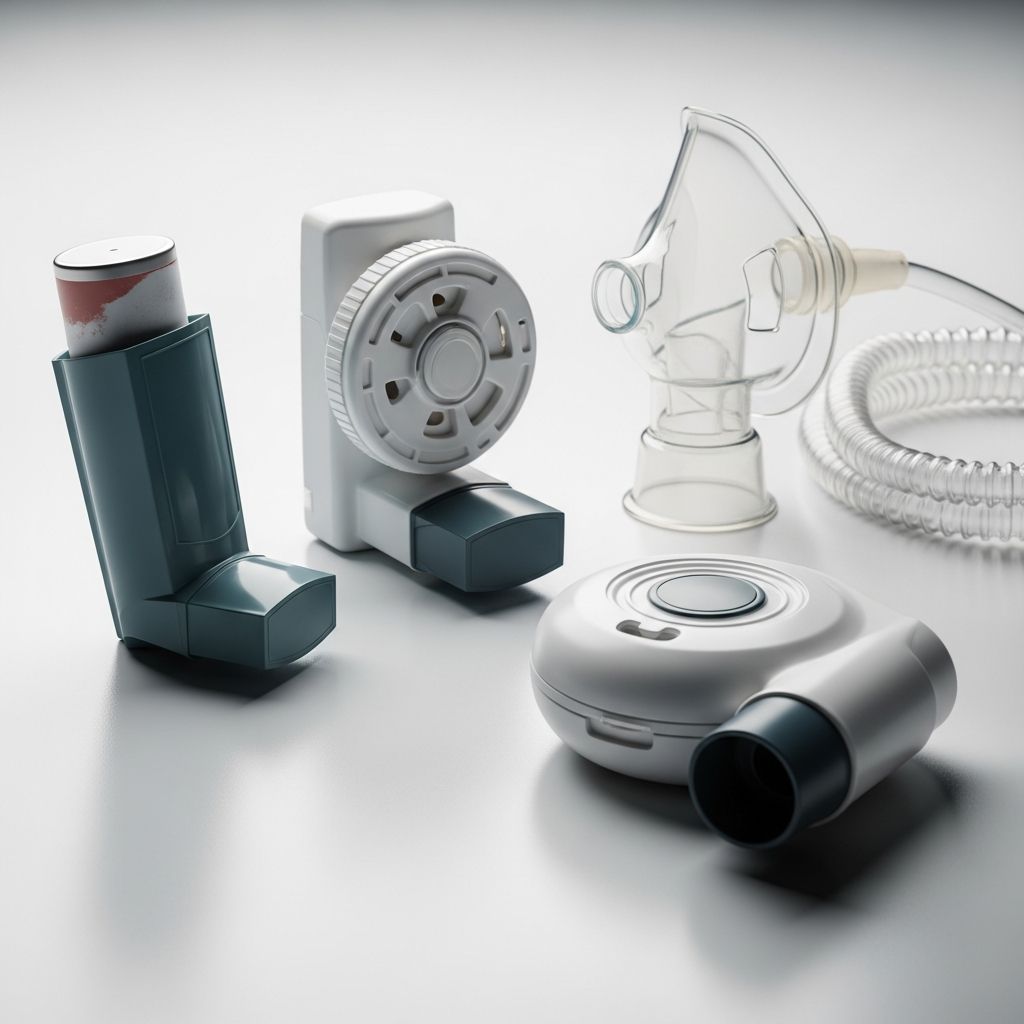
Inhalation therapy represents one of the most effective methods for delivering medication directly to the respiratory system. Rather than taking oral medications that circulate throughout the entire body, inhaled medicines target the lungs and airways precisely where treatment is needed most. This approach allows for lower doses, faster symptom relief, and reduced side effects compared to systemic administration. Whether managing asthma, chronic obstructive pulmonary disease (COPD), or other respiratory conditions, understanding the various inhaler device options available can significantly improve treatment outcomes and quality of life.
The Spectrum of Inhaler Device Technologies
Modern respiratory medicine offers several distinct inhaler delivery systems, each employing different mechanisms to deposit medication into the lungs. These devices vary in size, complexity, ease of use, and the type of breath technique required for effective medication delivery. Healthcare providers must carefully match each patient with an appropriate device based on individual factors including age, physical capability, breathing strength, and personal preference.
Pressurized Metered-Dose Inhalers (pMDIs)
The pressurized metered-dose inhaler, commonly referred to as an MDI or “puffer,” represents the most widely recognized and prescribed inhaler type globally. These compact, pocket-sized devices contain medication suspended in a pressurized canister with a propellant system. When the user depresses the canister while simultaneously inhaling, the propellant forces a precisely measured dose of medication into the airways in aerosol form, similar to how a spray can releases its contents.
The primary challenge with MDI use involves coordinating the manual depression of the canister with the inhalation breath. This coordination requirement makes MDIs less suitable for young children, elderly individuals with reduced dexterity, or those experiencing acute respiratory distress. Many MDI users benefit from using a spacer chamber—an extension tube that attaches to the inhaler and creates a reservoir for the aerosol cloud. The spacer allows users additional time to inhale the medication without precise timing coordination and improves overall drug deposition in the lungs, particularly for those struggling with hand-breath synchronization.
Common medications available in MDI form include:
- Salbutamol (Ventolin) for rapid relief of acute symptoms
- Fluticasone (Flixotide) for long-term inflammation control
- Beclomethasone for corticosteroid therapy
- Combination formulations containing both corticosteroids and bronchodilators
Dry Powder Inhalers (DPIs)
Dry powder inhalers function through a fundamentally different mechanism than pressurized systems. Rather than relying on chemical propellants, DPIs contain medication in powdered form that becomes aerosolized through the patient’s own inhalation effort. When a user breathes in deeply and rapidly, the incoming air carries the powder particles into the lungs for absorption.
Because DPI operation depends entirely on the user’s breathing capability, these devices require adequate inspiratory flow rates and breathing strength. This characteristic makes them less suitable for very young children or individuals with severely compromised lung function. However, DPIs offer distinct advantages for patients with sufficient breathing capacity: they require no propellant, involve no coordination timing, and their operation is often intuitive—simply breathe in to receive the medication.
Various DPI designs exist in clinical practice, including turbuhaler, accuhaler, ellipta, and breezhaler formats, each with slightly different loading and activation mechanisms. Despite these design variations, all DPIs share the fundamental principle of powder aerosolization through inhalation effort.
Soft Mist Inhalers (SMIs)
Soft mist inhalers represent a relatively newer technology that combines advantages of both MDI and DPI systems. Unlike pressurized inhalers, SMIs do not require propellants. Unlike dry powder devices, they do not demand forceful inhalation. Instead, SMIs release a slowly dissipating cloud of medication that remains suspended in the air for several seconds.
Users can inhale this medication mist during normal breathing without requiring precise timing or exceptional inspiratory force. The medication particles remain airborne longer than those from MDIs, allowing more complete lung deposition and improved therapeutic effect. This characteristic makes SMIs particularly valuable for patients with limited breathing capacity or coordination difficulties. However, as an emerging technology, SMIs remain less widely available and more costly than traditional MDI or DPI alternatives.
Related Stories



Nebulizers for Sustained Treatment
Nebulizers operate through a fundamentally different delivery principle than handheld devices. These machines convert liquid medication into a fine mist through either jet nebulization or vibrating mesh technology, continuously delivering this mist through a connected mouthpiece or face mask. Treatment sessions typically last 5 to 15 minutes, during which patients breathe normally while inhaling the medication aerosol.
Nebulizers require no coordination, timing, or particular breathing technique—users simply breathe naturally as the device continuously delivers medication. This passive delivery method makes nebulizers ideal for very young children, acute respiratory distress situations where concentration is difficult, and individuals with significant physical limitations. Portable battery-powered nebulizers have expanded treatment accessibility, though traditional electric-powered units remain more powerful and efficient. The primary disadvantage is size and portability compared to compact handheld inhalers.
Categorizing Inhaler Medications by Function
Beyond the physical device mechanism, inhaler medications fall into distinct functional categories based on their therapeutic action and intended use pattern. Understanding these medication classifications helps patients recognize why multiple inhalers might be prescribed and how to use each appropriately.
Rapid-Acting Relief Medications
Short-acting beta-agonists (SABAs) and short-acting muscarinic antagonists (SAMAs) provide immediate bronchodilation during acute symptoms. These rescue inhalers work within minutes to open constricted airways, relieving wheezing, shortness of breath, and chest tightness during asthma attacks or COPD exacerbations.
Relying regularly on rescue inhalers indicates inadequate disease control and warrants discussion with healthcare providers about stepping up maintenance therapy. Patients should carry rescue inhalers consistently and understand when symptoms warrant seeking emergency medical attention rather than self-managing with inhaler use alone.
Long-Term Control and Prevention Therapy
Maintenance medications taken daily, regardless of symptom presence, suppress airway inflammation and prevent symptom development. Inhaled corticosteroids represent the most effective controller medications for reducing inflammation. Long-acting bronchodilators (beta-agonists and anticholinergics) provide sustained airways opening for extended periods, with some formulations lasting 24 hours.
Combination inhalers containing both corticosteroids and long-acting bronchodilators offer convenient simplified regimens where patients receive multiple medications through a single device. These combinations reduce pill burden, simplify treatment adherence, and optimize therapeutic synergy between anti-inflammatory and bronchodilating actions.
Factors Influencing Inhaler Device Selection
| Selection Criterion | Consideration Factors |
|---|---|
| Patient Age | Young children may require nebulizers or MDIs with spacers; older children and adults can use DPIs if breathing capacity permits |
| Physical Capability | Hand strength, dexterity, and coordination affect MDI usability; arthritis or tremors may necessitate alternative devices |
| Respiratory Function | DPIs require adequate inspiratory flow rates; patients with severely compromised lung function may need nebulizers |
| Medication Requirements | Specific medications may be available in limited device formats; combination therapy needs influence device selection |
| Treatment Setting | Portable handheld devices suit outpatient use and travel; nebulizers better suit home-based or institutional settings |
| Cognitive Ability | Complex device operation may challenge patients with cognitive impairment; simpler devices with fewer steps are preferable |
Optimizing Inhaler Technique for Maximum Benefit
Possessing appropriate inhaler devices means little without proper technique. Studies consistently demonstrate that significant percentages of patients use their inhalers incorrectly, resulting in inadequate medication delivery and poor disease control. Healthcare providers should periodically observe patient technique and provide corrective feedback.
General principles for successful inhaler use include maintaining a calm breathing pattern, emptying the lungs before inhaling medication, breathing slowly and deeply to maximize lung deposition, and holding breath briefly after inhalation to allow medication settling. Device-specific techniques vary considerably—MDI users require precise coordination, DPI users need forceful inhalation, SMI users simply breathe normally, and nebulizer users maintain relaxed steady breathing.
Frequently Asked Questions About Inhaler Devices
Can different medications be mixed in a single inhaler?
Combination inhalers contain two or more medications formulated together. These pre-combined products are manufactured specifically to ensure appropriate drug ratios and stability. Patients should never attempt manually combining medications from separate inhalers into one device, as this may compromise medication efficacy or create dangerous interactions.
How frequently should inhalers be cleaned?
MDI mouthpieces should be rinsed weekly with warm water and allowed to air dry completely before reuse to prevent medication buildup and contamination. DPI and SMI devices vary in cleaning requirements; manufacturers’ instructions should be followed carefully. Nebulizer components contacting medication or mist require regular cleaning per manufacturer specifications to prevent bacterial growth.
What should patients do if they cannot synchronize hand and breath with an MDI?
Spacer chambers substantially improve medication delivery for patients struggling with coordination. Alternative devices like DPIs, SMIs, or nebulizers may be more suitable if spacers prove inadequate. Healthcare providers can evaluate individual cases and recommend the most practical alternative.
Are all inhalers safe for children?
Device appropriateness depends on age and developmental stage. Very young children generally use nebulizers or MDIs with spacers and masks. As children develop better coordination and understanding, DPIs become feasible. Healthcare providers select devices matching the child’s developmental capabilities.
Can regular inhaler use cause dependency?
Properly used maintenance inhalers prevent disease progression and reduce rescue inhaler dependence. Concern about addiction should never discourage appropriate use. However, reliance on rescue inhalers for frequent relief indicates inadequate disease control rather than medication dependency.
Conclusion: Matching Devices to Individual Needs
The diversity of available inhaler technologies reflects recognition that no single device suits all patients. Effective respiratory disease management requires thoughtfully matching each patient’s physical capabilities, medication requirements, and personal preferences with an appropriate delivery system. Regular reassessment ensures continued device suitability as patients age or circumstances change. With proper device selection and technique instruction, inhaled medications offer highly effective, well-tolerated respiratory disease management that significantly improves symptom control and quality of life.
References
- Inhaler types for asthma and COPD — Medical News Today. 2024. https://www.medicalnewstoday.com/articles/inhaler-types
- Types of Asthma Inhalers: How They Work, Effectiveness, and Cost — GoodRx Health. 2024. https://www.goodrx.com/conditions/asthma/inhaler-guide
- Inhaler device selection for people with asthma or chronic obstructive pulmonary disease — National Center for Biotechnology Information (PMC). 2024. https://pmc.ncbi.nlm.nih.gov/articles/PMC11540917/
- Inhaler devices – Healthdirect — Australian Government Department of Health. 2024. https://www.healthdirect.gov.au/how-to-use-an-inhaler
- Devices for Inhaled Medications (Asthma Inhalers, COPD Inhalers) — National Jewish Health. 2024. https://www.nationaljewish.org/conditions/medications/devices
- Asthma – COPD – Inhaler Device Selection and Technique — American Thoracic Society. 2024. https://www.thoracic.org/professionals/clinical-resources/video-lecture-series/obstructive-lung-disease/asthma/inhaler-device-selection-and-technique.php
Similar Articles








Read full bio of medha deb