Inhaler Spacers: Delivery, Benefits, and Proper Use
Understanding how spacers improve asthma medication delivery and who benefits most.
What Is an Inhaler Spacer?
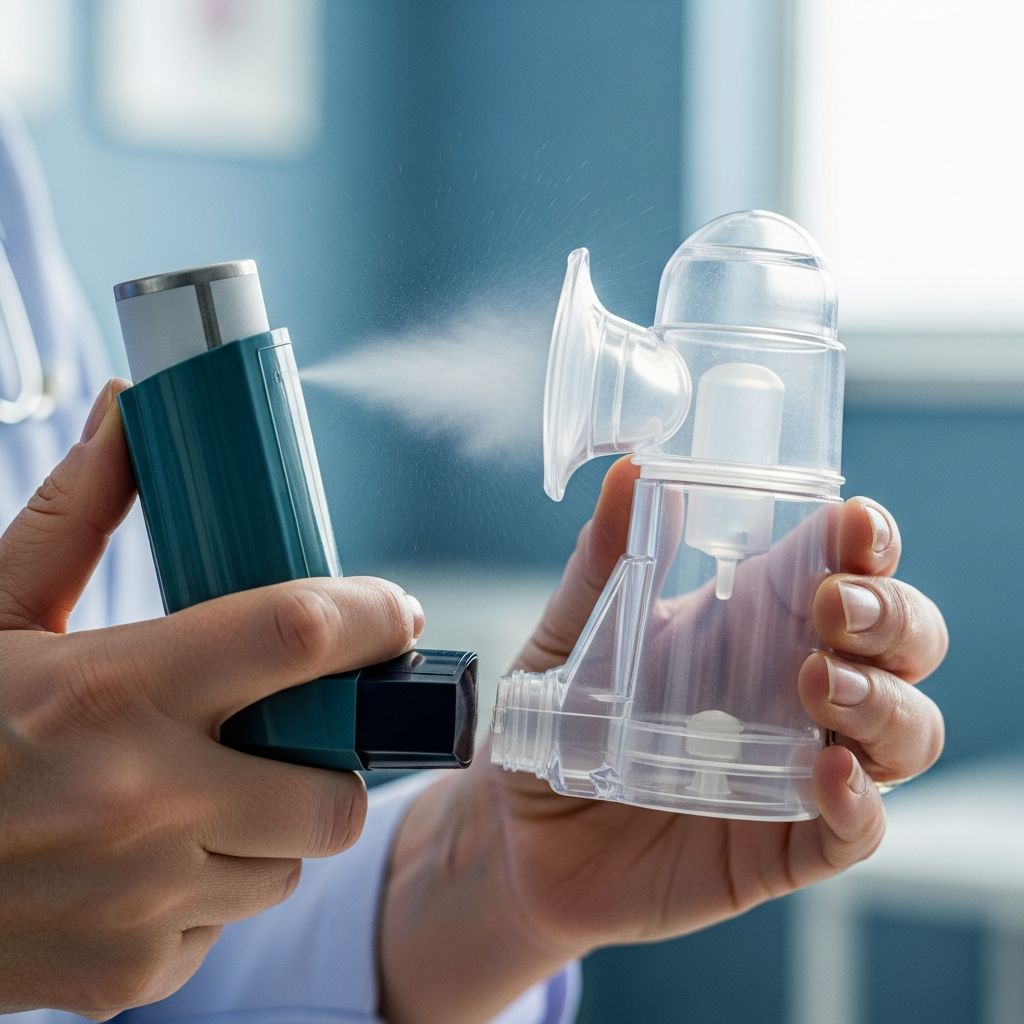
An inhaler spacer is a tube-shaped or chamber-like device that attaches to the mouthpiece of a metered-dose inhaler (MDI), also known as a puffer. The spacer creates additional space between the medication canister and the patient’s mouth, allowing aerosolized medication to travel through a controlled pathway rather than directly into the oral cavity. This simple but effective design helps medication particles slow down and break into smaller droplets, making them easier to inhale deeply into the lungs.
Spacers are typically made of plastic and come in various sizes and configurations. While all spacers share the fundamental purpose of extending the inhaler and creating space for medication, they differ in design, valve systems, and intended use cases. Understanding these differences is essential for selecting the appropriate device for individual needs.
Understanding Valved Holding Chambers
A specialized type of spacer known as a valved holding chamber (VHC) incorporates a one-way valve mechanism at the mouthpiece end. This valve serves a critical function: it allows medication to enter the chamber when the inhaler is activated, but prevents exhaled air from re-entering the device. Additionally, the valve holds the medication within the chamber briefly, giving patients time to take slow, deep breaths without losing the dose.
The distinction between standard spacers and VHCs is functionally significant. Standard spacers lack valve systems, meaning patients must inhale immediately after pressing the inhaler to prevent medication loss. In contrast, VHCs provide a window of opportunity—patients can breathe naturally without coordinating their inhalation precisely with the inhaler activation. This fundamental difference makes VHCs particularly valuable for populations with coordination challenges.
How Spacers Improve Medication Delivery
The primary mechanism by which spacers enhance therapeutic outcomes involves reducing particle velocity and improving lung deposition. When medication is released directly from an MDI without a spacer, large aerosolized particles travel at high speed toward the mouth and throat. Many of these particles impact in the oral cavity and pharynx rather than reaching the lower airways where they are needed.
By introducing a spacer into the delivery pathway, medication particles are slowed and allowed to separate into progressively smaller droplets. This process, combined with the patient’s natural breathing pattern, allows smaller particles to travel deeper into the respiratory tract. Research demonstrates that valved holding chambers can increase lung deposition by two to four times compared to using an MDI alone. This substantial improvement means patients receive greater therapeutic benefit from each dose, potentially reducing the need for higher medication amounts or additional treatments.
Beyond improving lung delivery, spacers reduce systemic side effects caused by medication depositing in the mouth and throat rather than the lungs. For patients using inhaled corticosteroids, this benefit is particularly important, as oral deposition can lead to local irritation, hoarseness, and increased infection risk.
Types of Medications and Spacer Use
Spacers are compatible with both categories of asthma medications delivered via MDI. Long-acting maintenance medications, such as inhaled corticosteroids, are designed to control symptoms throughout the day and prevent exacerbations. These require consistent, accurate delivery to the lungs to maintain steady therapeutic levels. Spacers significantly enhance the reliability of long-acting medication delivery.
Related Stories



Quick-relief medications, typically bronchodilators, are used during symptom flare-ups or to prevent acute exacerbations. In emergency situations, the improved delivery efficiency of spacers becomes even more critical. Research has shown that pMDI-spacer combinations are at least as effective and safe as nebulized therapy for acute exacerbations in both children and adults, while also being cheaper, more portable, and easier to maintain.
Patient Populations That Benefit Most
Healthcare providers recommend spacers and VHCs for anyone using metered-dose inhalers, but certain populations derive particularly significant benefits.
Young Children
Children under five years old represent the primary beneficiaries of spacer technology. Young children typically lack the cognitive ability to follow complex coordination instructions and cannot reliably synchronize inhaler actuation with inhalation. Spacers designed with facemask attachments allow children to breathe naturally while receiving their medication without conscious coordination effort. The valve system in VHCs is especially advantageous for this age group, as it permits tidal breathing without medication loss between breaths.
Elderly Individuals
Older adults frequently experience dexterity challenges, arthritis, or reduced hand strength that makes precise inhaler manipulation difficult. Additionally, elderly patients may have cognitive or hearing impairments that complicate learning proper inhaler technique. Spacers reduce the technical demands of inhaler use, making respiratory medication more accessible to this population.
Patients with Coordination or Physical Challenges
Individuals with neurological conditions, arthritis, facial paralysis, or cognitive impairments benefit substantially from spacer use. These patients may struggle to coordinate the simultaneous actions of pressing the inhaler and breathing in. VHCs with facemask attachments are particularly valuable, as they eliminate the need for precise hand-mouth coordination and allow medication delivery through natural tidal breathing.
Users of Inhaled Corticosteroids
Patients prescribed inhaled corticosteroids represent another key beneficiary group. Corticosteroid medications deposited in the mouth and throat can cause local side effects, including oral thrush and hoarseness. Spacers significantly reduce oral deposition, minimizing these adverse effects while ensuring medication reaches the intended target—the lungs.
Comparing Spacer Options
| Patient Profile | Recommended Device | Key Considerations |
|---|---|---|
| Adults with good coordination | VHC or spacer | Consider inhaler cost and medication type |
| Patients with coordination difficulties | Anti-static VHC | Multiple-breath capability; enhanced delivery |
| Children/adults with cognitive issues or facial paralysis | VHC with facemask | Emergency accessibility; ease of use; avoids medication loss during rapid breathing |
Design Features That Matter
Not all spacers perform identically; several design characteristics influence their effectiveness. Understanding these features helps patients and providers select the most appropriate device.
Volume and Size
Spacers are categorized by volume: small-volume (up to 100 mL), medium-volume (100–350 mL), and large-volume (exceeding 700 mL) devices. Small-volume spacers are compact and portable but require more precise timing between inhaler actuation and inhalation. Medium and large-volume spacers, typically equipped with valves, provide greater timing flexibility and are therefore classified as valved holding chambers.
Valve Systems
As previously noted, valveless spacers are simple tubes that distance the inhaler from the patient’s mouth but do not retain medication. Valved holding chambers incorporate low-resistance, one-way valves that retain the aerosol until the patient inhales, preventing exhaled breath from re-entering the device. This valve mechanism is the defining feature that enables VHCs to accommodate less-than-perfect timing.
Material and Static Properties
Spacers are frequently manufactured from plastic, which can accumulate electrostatic charge during use. Static electricity can cause aerosolized particles to adhere to the chamber walls, reducing the amount of respirable medication. Anti-static spacers or VHCs address this limitation and are recommended for patients requiring maximum medication efficiency.
Adapter Compatibility
Some spacers are designed for use with specific MDI models, while others feature universal adapters that accept various inhaler sizes. It is important that the MDI fits securely into the spacer adapter to ensure the spray is directed into the center of the chamber.
Practical Maintenance and Care
Proper maintenance is essential for spacer efficacy and longevity. Spacers require regular cleaning, typically with warm soapy water, to prevent medication buildup and microbial growth. However, aggressive cleaning or exposure to moisture during storage can damage valves and reduce device lifespan. Following manufacturer instructions regarding cleaning frequency and methods is recommended.
Another consideration is portability and bulk. While large-volume spacers provide superior performance, their size makes them less convenient for travel or emergency use compared to small-volume spacers or standard inhalers alone. Patients should balance performance benefits against practical lifestyle needs when selecting a device.
Advantages and Limitations
Key Benefits:
- Significantly improved medication delivery to the lungs
- Reduced side effects from oral and throat deposition
- Easier administration for very young children and patients with coordination challenges
- Effective alternative to nebulizers during acute exacerbations
- Lower cost and better portability compared to nebulizers
- Simpler technique reduces need for provider oversight
Potential Drawbacks:
- Require regular cleaning and maintenance
- Large-volume devices are bulky and less portable
- Electrostatic charge may reduce respirable medication fraction
- Higher initial cost compared to inhalers alone
Frequently Asked Questions
Who should use a spacer?
Healthcare providers recommend spacers for anyone using a metered-dose inhaler, but they are especially important for young children, elderly patients, individuals with coordination difficulties, and anyone using inhaled corticosteroids.
Is a spacer the same as a holding chamber?
Not exactly. A spacer is a general term for a tube-like device extending the inhaler. A valved holding chamber (VHC) is a specific type of spacer that includes a one-way valve, allowing the device to hold medication and provide more flexibility in breathing timing.
How much does a spacer improve medication delivery?
Research shows that valved holding chambers can increase lung deposition by two to four times compared to using an MDI alone, meaning more medication reaches the lungs where it is needed.
Can spacers be used with both maintenance and rescue medications?
Yes, spacers work with both long-acting maintenance medications and quick-relief bronchodilators. They are equally beneficial for both medication types.
How often should a spacer be cleaned?
Spacers require regular cleaning to prevent buildup, typically with warm soapy water. However, specific cleaning frequency depends on manufacturer recommendations and frequency of use.
Conclusion: Optimizing Respiratory Medication Delivery
Inhaler spacers represent a simple yet highly effective technology for improving asthma and respiratory medication delivery. By slowing aerosolized particles and creating time for deeper inhalation, spacers increase the amount of medication reaching the lungs while reducing unwanted oral deposition. For young children, elderly patients, and individuals with coordination challenges, spacers—particularly valved holding chambers—transform inhaler therapy from a technically demanding procedure into an accessible, reliable treatment method.
Healthcare professionals should recommend spacer use for all MDI patients, with particular emphasis on populations facing coordination difficulties or using inhaled corticosteroids. Proper device selection, regular maintenance, and patient education about correct technique ensure that spacers deliver on their promise of improved therapeutic outcomes and reduced medication waste.
References
- Inhaler Spacer for Asthma: Uses, Benefits, and More — Healthline. 2024. https://www.healthline.com/health/asthma/inhaler-spacer
- Spacer or Valved Holding Chamber: What’s the Difference? — Monaghan Medical. https://www.monaghanmed.com/spacer-chamber-differences/
- Spacer devices for inhaled therapy: why use them, and how? — PubMed Central (National Center for Biotechnology Information). 2018. https://pmc.ncbi.nlm.nih.gov/articles/PMC6004521/
- Inhaler spacer — Wikipedia. https://en.wikipedia.org/wiki/Inhaler_spacer
- NVO – Product Classification — FDA (U.S. Food and Drug Administration). https://www.accessdata.fda.gov/scripts/cdrh/cfdocs/cfPCD/classification.cfm?ID=NVO
- What is an Inhaler spacer or chamber? — Philips Healthcare. https://www.usa.philips.com/c-e/hs/respiratory-care/what-is-asthma-spacer.html
- Spacer use and care — National Asthma Council Australia. https://www.nationalasthma.org.au/living-with-asthma/resources/patients-carers/factsheets/spacer-use-and-care
- Valved Holding Chambers and Spacers — American Lung Association. https://www.lung.org/lung-health-diseases/lung-disease-lookup/asthma/treatment/devices/chambers-spacers
Similar Articles








Read full bio of medha deb