Inhalers and Nebulizers: Complete Guide to Respiratory Medication Delivery
Understanding inhalers and nebulizers: How they work, when to use each, and what's best for you.
Understanding Inhalers and Nebulizers
Inhalers and nebulizers are medical devices used to deliver medication directly into the lungs to treat respiratory conditions such as asthma, chronic obstructive pulmonary disease (COPD), and cystic fibrosis. Both devices are effective when used properly, but they operate differently and have distinct advantages and disadvantages. Understanding how these devices work and when to use each can help patients and caregivers make informed decisions about respiratory treatment.
What Are Inhalers?
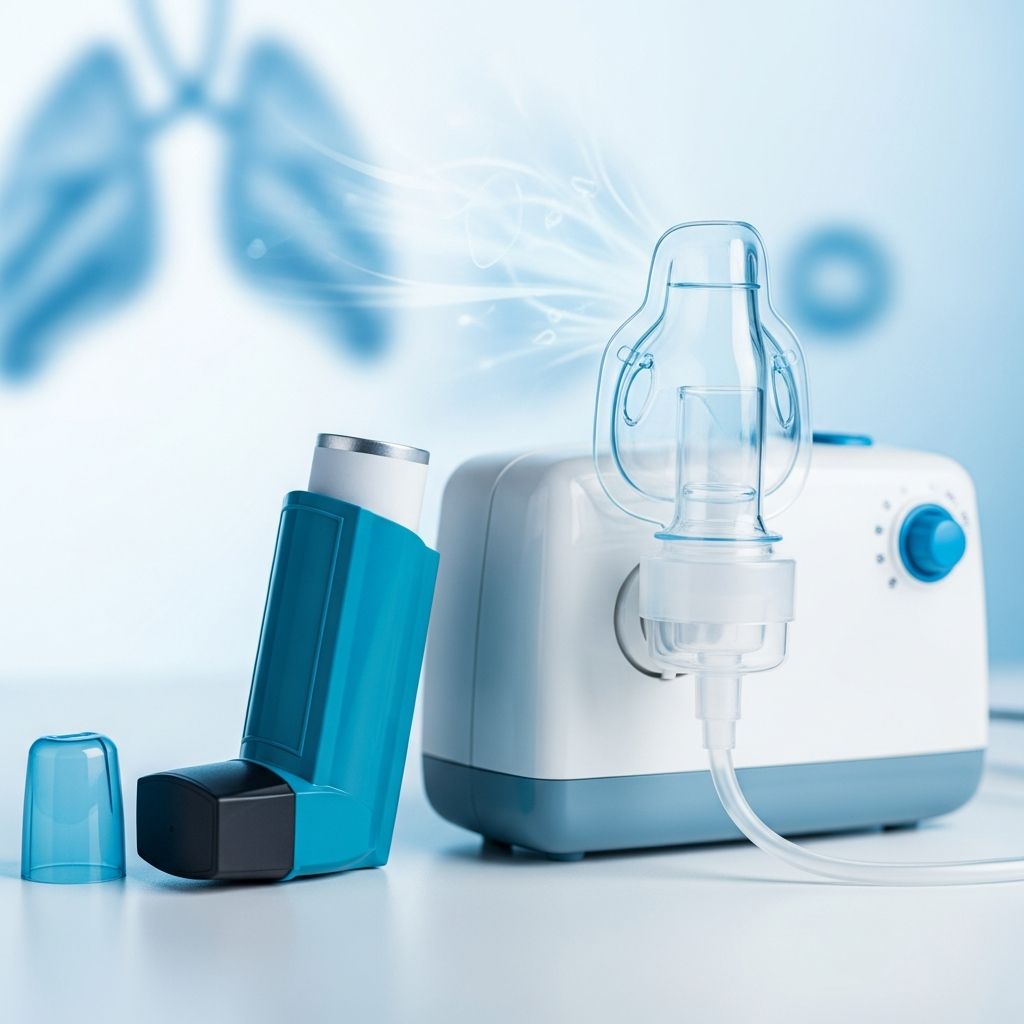
An inhaler is a portable, handheld device that delivers a measured dose of medication in the form of a pressurized spray or dry powder. The most common type is the metered-dose inhaler (MDI), which looks like a small aerosol can. When a person squeezes the MDI, it releases a precise dose of medication that can be inhaled directly into the lungs.
Types of Inhalers
Metered-Dose Inhalers (MDIs) are the most widely prescribed inhalers. These devices deliver a specific amount of medication with each actuation. Some MDIs include counters that display the number of remaining doses, helping users track when a refill is needed.
Dry Powder Inhalers (DPIs) deliver medication as a dry powder that patients must actively inhale. These devices require more coordination and inspiratory effort compared to MDIs. However, research shows that critical errors in DPI technique are common, with studies indicating that approximately 88% of patient observations showed critical errors in use, affecting medication delivery efficiency.
Spacers and Holding Chambers
A spacer, also called a holding chamber, is an accessory device that attaches to an MDI to improve medication delivery. The spacer creates a reservoir where medication can collect after being released from the inhaler, allowing users more time to inhale the dose. This is particularly beneficial for young children and individuals who struggle with coordinating the squeezing action with inhalation. With a spacer, medication can reach the lungs in less than 30 seconds, making it easier for patients of all ages to receive their medication effectively.
What Are Nebulizers?
A nebulizer is a machine that converts liquid medication into a fine mist that can be inhaled over several minutes. The device consists of a compressor unit connected by tubing to a cup that holds the medication. A mouthpiece or face mask attaches to the cup, and when the machine is turned on, it creates a mist that patients breathe in passively. The entire process typically takes 5 to 10 minutes or longer, depending on the medication and device used.
How Nebulizers Work
When powered on, the nebulizer’s compressor forces compressed air through the liquid medication, converting it into aerosol particles small enough to reach deep into the lungs. Children and adults don’t need to perform any active coordination or breathing technique—they simply need to breathe normally through the mouthpiece or face mask while the mist is generated. This passive delivery method makes nebulizers particularly useful for very young children, severely ill patients, or those experiencing acute respiratory distress.
Types of Nebulizers
Tabletop Nebulizers are stationary machines used primarily at home. These devices are powerful and effective but are less portable due to their size and weight.
Related Stories



Portable Nebulizers are smaller, lighter versions designed for travel and on-the-go use. While more convenient than tabletop models, portable nebulizers can still be bulky compared to inhalers, making them less ideal for situations requiring portability and discretion.
Comparing Inhalers and Nebulizers
| Feature | Inhalers (MDI with Spacer) | Nebulizers |
|---|---|---|
| Delivery Time | Less than 30 seconds | 5-10+ minutes |
| Portability | Highly portable and discreet | Less portable; larger devices |
| Ease of Use | Requires coordination and technique | Requires minimal patient effort |
| Best For | Older children and adults with proper technique | Young children, severe cases, coordination difficulty |
| Cost | Generally less expensive | More expensive initially |
| Medication Waste | Less waste with proper technique | More consistent drug delivery |
Efficacy and Clinical Evidence
Extensive research has shown that both MDIs with spacers and nebulizers deliver medication effectively when used properly. Clinical studies demonstrate no significant difference in efficacy between these two devices for administering inhaled beta-2 agonists (quick-relief medications) to children with mild to severe asthma. Both delivery systems are considered ideal for delivering inhaled medications when used correctly.
However, home nebulizer use is generally favored over MDI use when difficulty exists in coordinating inspiration with MDI actuation, particularly in acutely ill, crying, or dyspneic children. It is estimated that more than 50% of patients experience difficulty using MDIs properly, which can significantly impact treatment effectiveness.
Advantages of Inhalers
- Quick medication delivery in less than 30 seconds
- Highly portable and discreet for use anywhere
- Lower initial cost compared to nebulizers
- Less equipment to maintain and clean
- Ideal for patients who can coordinate proper technique
- Suitable for use during physical activity or travel
Advantages of Nebulizers
- Requires minimal patient coordination or effort
- Ideal for very young children and infants
- Effective for severely ill or dyspneic patients
- Patients can see and feel the medication mist
- Easier for caregivers to verify that medication is being received
- Can deliver larger doses of medication if needed
Choosing the Right Device
The decision to use an inhaler or nebulizer should be based on individual patient needs, the child’s inhalation and coordination skill level, and family circumstances. Healthcare providers recommend that the preferred mode of asthma medication delivery for children is an MDI with a spacer, based on extensive research supporting equal efficacy with these devices. However, for children aged 2 years or younger or when a proper MDI technique cannot be achieved, nebulizers are recommended as the more suitable option.
Many physicians continue to prescribe nebulizers for home use even when MDIs with spacers might be effective, particularly in inner-city populations where accessibility and ease of use are important considerations. The key is finding the device that best fits the patient’s ability to use it correctly and consistently.
Proper Use and Technique
Using a Metered-Dose Inhaler with a Spacer
For maximum effectiveness, proper MDI technique is essential. Users should attach the spacer to the MDI, place the mouthpiece in their mouth or fit the face mask over the nose and mouth, press down on the inhaler to release the medication, and then breathe in slowly and deeply. The spacer holds the medication until the patient inhales, reducing the need for precise coordination between pressing and breathing.
Using a Nebulizer
To use a nebulizer correctly, pour the prescribed medication into the medication cup, attach the cup to the compressor unit, connect the mouthpiece or face mask, and turn on the machine. Patients should then breathe normally and deeply until all the medication has been delivered as a mist. Most treatments take 5 to 15 minutes depending on the medication and device.
Medication Types Used With These Devices
Both inhalers and nebulizers can deliver various types of respiratory medications including quick-relief bronchodilators (such as albuterol), long-acting bronchodilators, inhaled corticosteroids, and combination medications. The choice of medication and device depends on the specific condition being treated and the frequency of treatment required.
Maintenance and Cleaning
Proper maintenance extends the life of these devices and ensures effective medication delivery. MDIs require minimal maintenance beyond checking the counter and keeping the mouthpiece clean. Nebulizers require more extensive care, including regular cleaning of the medication cup, mouthpiece, and tubing to prevent bacterial growth and ensure optimal performance.
Special Populations
Young Children
For infants and very young children, nebulizers with face masks are often the most practical choice, as they don’t require active coordination. An MDI with a spacer and face mask can also be effective for young children, providing a faster alternative when children can tolerate the device.
Older Adults
Older adults may benefit from inhalers with spacers or nebulizers depending on their manual dexterity and ability to coordinate inhalation. Spacers can help reduce the coordination required for effective MDI use.
Severely Ill Patients
Patients experiencing acute respiratory distress or severe dyspnea may benefit more from nebulizer therapy, as it requires minimal patient effort and can deliver larger doses of medication when necessary.
Frequently Asked Questions
Q: Which device delivers medication faster, an inhaler or a nebulizer?
A: Inhalers deliver medication much faster, typically in less than 30 seconds with a spacer, while nebulizers usually take 5 to 10 minutes or longer to complete a full treatment.
Q: Can inhalers and nebulizers be used interchangeably?
A: Research shows that MDIs with spacers and nebulizers have equal efficacy for most medications. However, the choice depends on the patient’s age, ability to use the device correctly, and specific medical needs.
Q: Are nebulizers better for young children?
A: Yes, nebulizers are often preferred for children aged 2 years or younger because they require minimal coordination. However, an MDI with a spacer and face mask can also be effective.
Q: What is a spacer and why is it important?
A: A spacer is a holding chamber that attaches to an MDI and collects the medication, allowing more time for the patient to inhale it. Spacers significantly improve medication delivery, especially for young children.
Q: How often should nebulizers be cleaned?
A: After each use, wash the medication cup, mouthpiece, and tubing with warm soapy water and air dry completely. This prevents bacterial growth and maintains device functionality.
Q: Can I use my inhaler during exercise?
A: Yes, inhalers are ideal for use during or before physical activity due to their portability and quick delivery. Your healthcare provider may recommend using a quick-relief inhaler before exercise if you have exercise-induced asthma.
Q: Is there a difference in cost between inhalers and nebulizers?
A: Inhalers are generally less expensive initially and have lower ongoing costs. Nebulizers have higher upfront costs but may reduce overall healthcare expenses by improving medication adherence in some patients.
Q: What should I do if my inhaler counter reaches zero?
A: Replace your inhaler with a new one even if it still feels like it contains medication. An empty counter indicates the device can no longer deliver accurate doses.
References
- Nebulizer Use in Inner-City Children With Asthma — JAMA Pediatrics, American Medical Association. 2001. https://jamanetwork.com/journals/jamapediatrics/fullarticle/351701
- Guiding Principles for the Use of Nebulized Long-Acting Beta2-Agonists in Patients with COPD — Journal of COPD Foundation. 2018. https://journal.copdfoundation.org/jcopdf/id/1132/Guiding-Principles-for-the-Use-of-Nebulized-Long-Acting-Beta2-Agonists-in-Patients-with-COPD-An-Expert-Panel-Consensus
- What Are Nebulizers and Inhalers? — Nemours KidsHealth. 2024. https://kidshealth.org/en/parents/nebulizer-inhaler.html
- Effectiveness of Nebulizer Use–Targeted Asthma Education — National Institutes of Health, U.S. National Library of Medicine. 2008. https://pmc.ncbi.nlm.nih.gov/articles/PMC2269706/
- Nebulizers: Definition, Types, Uses, and Cleaning — WebMD. 2024. https://www.webmd.com/asthma/home-nebulizer-therapy
Similar Articles








Read full bio of medha deb