Inner Ear: Anatomy, Function & Related Disorders
Discover how your inner ear enables hearing and balance through sophisticated anatomical structures.
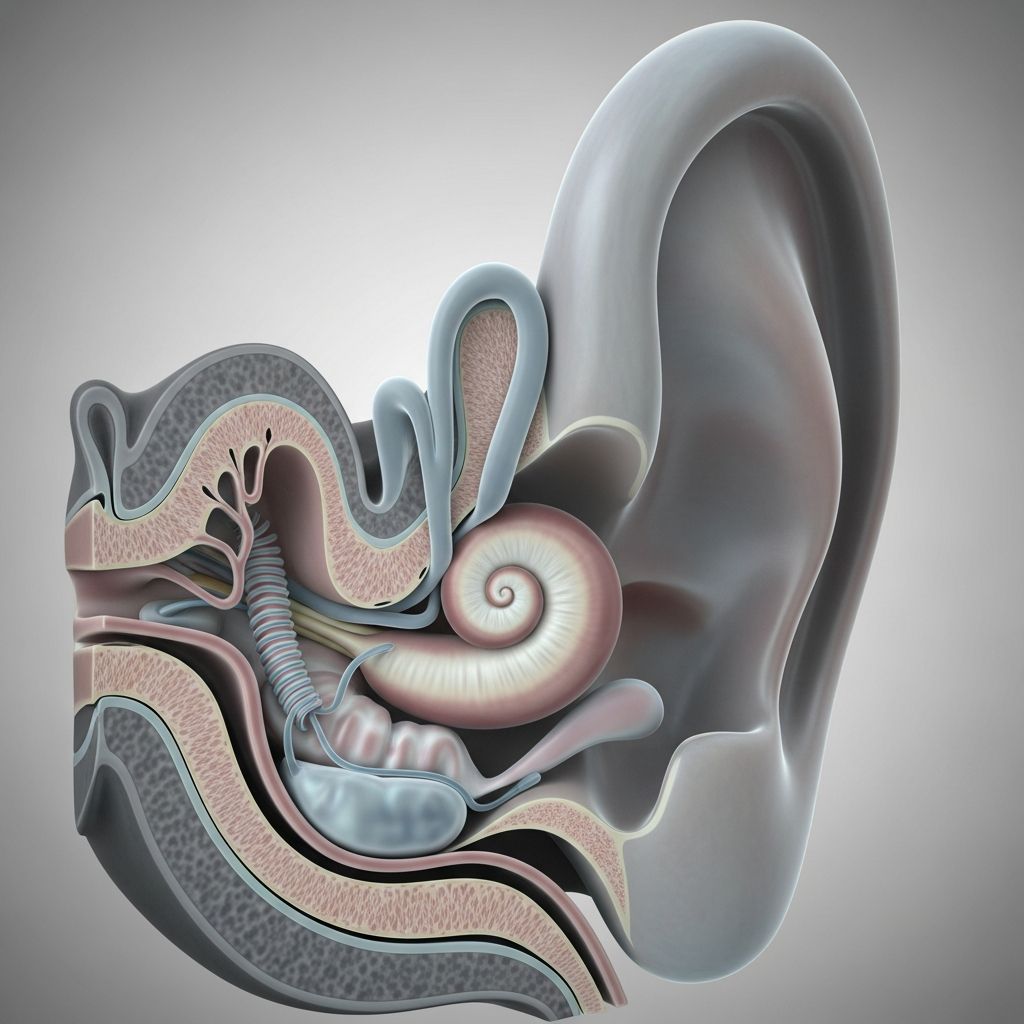
Your inner ear is the innermost part of your hearing system and serves as the home to your vestibular (balance) system. It represents the final destination in a carefully orchestrated journey that sound waves undertake, beginning from your outer ear, traveling through your middle ear, and finally reaching your inner ear. Within this sophisticated structure, sound waves are transformed into electrical energy that your hearing nerve delivers to your brain, making it possible for you to perceive sound. Simultaneously, your inner ear monitors your movements and alerts your brain to changes in your position, enabling your body to maintain balance and equilibrium.
The Two Critical Functions of Your Inner Ear
Your inner ear performs two essential functions that are vital to your daily functioning and quality of life:
- Hearing: Your inner ear converts sound vibrations into electrical signals that travel to your brain, allowing you to hear and interpret sounds from your environment.
- Balance: Your inner ear monitors your body’s position and movement, providing your brain with critical information needed to maintain equilibrium and prevent falls.
Anatomy of the Inner Ear
Your inner ear consists of two main anatomical components that work in concert to achieve these dual functions. Understanding the structure of your inner ear helps explain how these remarkable functions are accomplished.
The Cochlea: Your Hearing Organ
The cochlea is a snail-shaped organ within your inner ear that is primarily responsible for your hearing ability. This spiral-shaped structure resembles a snail shell, which is actually where its name originates—cochlea means snail shell in Latin. The cochlea is filled with fluid that moves in response to sound waves and is divided into three tubes by two thin membranes. This fluid-filled chamber houses the delicate structures responsible for converting mechanical vibrations into electrical signals.
One of the most important membranes within the cochlea is the basilar membrane, which functions like an elastic wall. Sitting on top of this membrane is the organ of Corti, a sophisticated sensory structure that contains thousands of tiny hair cells, known as stereocilia. These stereocilia are delicate, hair-like projections that react to cochlea fluid movement, initiating the conversion of sound vibrations into neural signals.
Endolymph: The Sensory Fluid
Endolymph is a specialized sensory fluid in your inner ear that plays a crucial role in both your hearing and balance systems. This fluid fills the cochlear duct—the innermost part of your cochlea—and helps transform sound waves into auditory signals so you can hear. When sound waves traveling within your inner ear create vibrations in endolymph, the hair cells in the organ of Corti move in response. The displaced hair cells release auditory signals that travel to the part of your brain that processes sound information.
Beyond hearing, endolymph is equally important for balance. When your head moves, the endolymph inside your inner ear shifts and displaces the hair cells. These cells release signals to the part of your brain that registers information about your body’s position, enabling you to stay in balance.
The Membranous and Bony Labyrinths
Endolymph fills a network of ducts within your inner ear called the membranous labyrinth. This complex system includes your cochlear duct (where sound waves get converted into auditory signals) and an intricate pathway of organs that sense movement, including the utricle, saccule, and semicircular canals.
The endolymph-filled membranous labyrinth is housed inside a sturdy protective casing called the bony labyrinth. The bony labyrinth also contains perilymph, your other important inner ear fluid. A barrier called Reissner’s membrane separates the membranous labyrinth (and the endolymph inside) from the perilymph within the bony labyrinth. This separation is crucial for maintaining the proper fluid balance and chemical composition necessary for optimal inner ear function.
Related Stories



The Vestibular System: Your Balance Organs
Your vestibular system is the collection of organs and structures in your inner ear that help you maintain your sense of balance and spatial orientation. This system works continuously to monitor your head position, movements, and changes in motion. The vestibular system includes specialized structures known as otolith organs and semicircular canals, which detect different types of movement and orientation.
How Your Inner Ear Processes Sound
The journey of sound through your inner ear is a remarkable process that occurs almost instantaneously. Understanding this process provides insight into the sophistication of your auditory system.
The Sound Wave Journey
Sound waves enter your ear canal and cause your eardrum (tympanic membrane) to vibrate. This vibration is then passed to three tiny bones in your middle ear called ossicles. These bones—the malleus (hammer), incus (anvil), and stapes (stirrup)—amplify the sound signal as they transmit vibrations from your eardrum to your inner ear. The ossicles are the smallest bones in your body, yet they play a key role in helping you hear by moving sound vibrations from your eardrum to your cochlea.
Conversion to Electrical Signals
Once sound vibrations reach your inner ear, the fluid inside your cochlea begins to move in response to these vibrations. This fluid movement causes the tiny hair cells (stereocilia) in the organ of Corti to vibrate as well. When these hair cells vibrate, they transmit signals to your auditory nerve. The hair cells release electrical signals that your brain understands as sound, completing the transformation from mechanical vibration to neural impulse.
Neural Transmission to the Brain
Your auditory nerve runs from your cochlea to a station in your brain stem known as the nucleus. From that station, neural impulses travel to your temporal lobe, where your brain attaches meaning to the sounds you hear. The vestibulocochlear nerve, also known as the eighth cranial nerve (CN VIII), consists entirely of afferent, or sensory, neurons that carry signals helping the brain process information based on your hearing and perception of your body’s position.
How Your Inner Ear Maintains Balance
While your cochlea is busy processing sound, your vestibular system is simultaneously working to keep you balanced and oriented in space. This dual functionality makes your inner ear one of the most important sensory organs in your body.
Movement Detection and Response
Your inner ear monitors your movements by detecting changes in your head position and motion. When your head moves, the endolymph within your vestibular system shifts, displacing specialized hair cells that sense this movement. These hair cells then send signals to your brain about your body’s position in space, allowing your brain to coordinate your muscles and maintain balance.
The Role of the Vestibulocochlear Nerve
The vestibulocochlear nerve keeps your vestibular and hearing systems connected to your brain. Without this essential connection, your inner ear could generate messages about sound and balance, but they wouldn’t be interpreted or understood. A fully functional vestibulocochlear nerve keeps you connected to the sensory experiences in the world around you.
Conditions and Disorders Affecting the Inner Ear
When your inner ear is not functioning properly, it can lead to various hearing and balance disorders. Vertigo, dizziness, and balance disorders can make you feel unsteady on your feet and significantly impact your quality of life. These conditions may arise from infections, inflammation, structural problems, or age-related changes in the inner ear.
Common Inner Ear Disorders
Several conditions can affect inner ear function. These may include Meniere’s disease, benign paroxysmal positional vertigo (BPPV), vestibular neuritis, and age-related hearing loss (presbycusis). Each of these conditions can impair either your hearing, balance, or both, and should be evaluated by a healthcare professional.
Maintaining Inner Ear Health
Protecting your inner ear is essential for maintaining both hearing and balance throughout your life. Several steps can help you preserve inner ear function:
- Protect your ears from loud noise by using hearing protection in noisy environments
- Maintain good ear hygiene and avoid inserting foreign objects in your ears
- Treat ear infections promptly to prevent complications
- Stay active and exercise regularly to support vestibular function
- Have regular hearing checks, especially as you age
- Manage underlying health conditions like diabetes and hypertension that can affect hearing
When to See a Healthcare Provider
You should seek medical attention if you experience sudden hearing loss, persistent dizziness, vertigo, tinnitus (ringing in the ears), or a sensation of fullness in your ears. These symptoms may indicate an inner ear problem that requires professional evaluation and treatment. Early intervention can often prevent further complications and help preserve your hearing and balance.
Frequently Asked Questions
Q: What is the main difference between the cochlea and the vestibular system?
A: The cochlea is responsible for hearing—it converts sound vibrations into electrical signals your brain interprets as sound. The vestibular system is responsible for balance—it detects your head position and movement to help you maintain equilibrium.
Q: What role does endolymph play in hearing?
A: Endolymph is the fluid that fills your cochlea and responds to sound vibrations. When sound waves enter your inner ear, they create vibrations in the endolymph, which in turn displaces hair cells in the organ of Corti, triggering the conversion of sound into electrical signals.
Q: How does the vestibulocochlear nerve function?
A: The vestibulocochlear nerve (CN VIII) is the eighth cranial nerve that transmits sensory information from your inner ear to your brain. It carries signals related to both hearing from your cochlea and balance information from your vestibular system.
Q: Can inner ear damage be repaired?
A: Some types of inner ear damage, such as minor inflammation or temporary fluid imbalance, may resolve on their own. However, damage to hair cells in the cochlea is generally permanent, which is why protecting your hearing is important. Hearing aids or cochlear implants can help if permanent hearing loss occurs.
Q: What causes vertigo and dizziness?
A: Vertigo and dizziness can result from various inner ear disorders, including Meniere’s disease, benign paroxysmal positional vertigo (BPPV), vestibular neuritis, or inflammation. These conditions disrupt the normal function of your vestibular system, causing the sensation of spinning or unsteadiness.
Q: Why is the organ of Corti important?
A: The organ of Corti is the sensory structure in your cochlea that contains hair cells (stereocilia). These hair cells are responsible for converting sound vibrations into electrical signals that your auditory nerve can transmit to your brain for interpretation.
References
- Endolymph: Function, Anatomy & Related Disorders — Cleveland Clinic. 2024. https://my.clevelandclinic.org/health/body/endolymph
- Vestibulocochlear Nerve (CN VIII): Function & Anatomy — Cleveland Clinic. 2024. https://my.clevelandclinic.org/health/body/vestibulocochlear-nerve
- Ossicles: Function & Anatomy — Cleveland Clinic. 2024. https://my.clevelandclinic.org/health/body/ossicles
- Inner Ear: Anatomy, Function & Related Disorders — Cleveland Clinic. 2024. https://my.clevelandclinic.org/health/body/24340-inner-ear
- Ear: Anatomy, Facts & Function — Cleveland Clinic. 2024. https://my.clevelandclinic.org/health/body/24048-ear
- Hearing (How Auditory Process Works) — Cleveland Clinic. 2024. https://my.clevelandclinic.org/health/articles/17054-hearing
- Vestibular System: Function & Anatomy — Cleveland Clinic. 2024. https://my.clevelandclinic.org/health/body/vestibular-system
Similar Articles








Read full bio of medha deb