Scleral Melt: Innovative, Evidence-Based Treatments 2025
Discover cutting-edge surgical and medical strategies to combat scleral melt and restore eye integrity effectively.
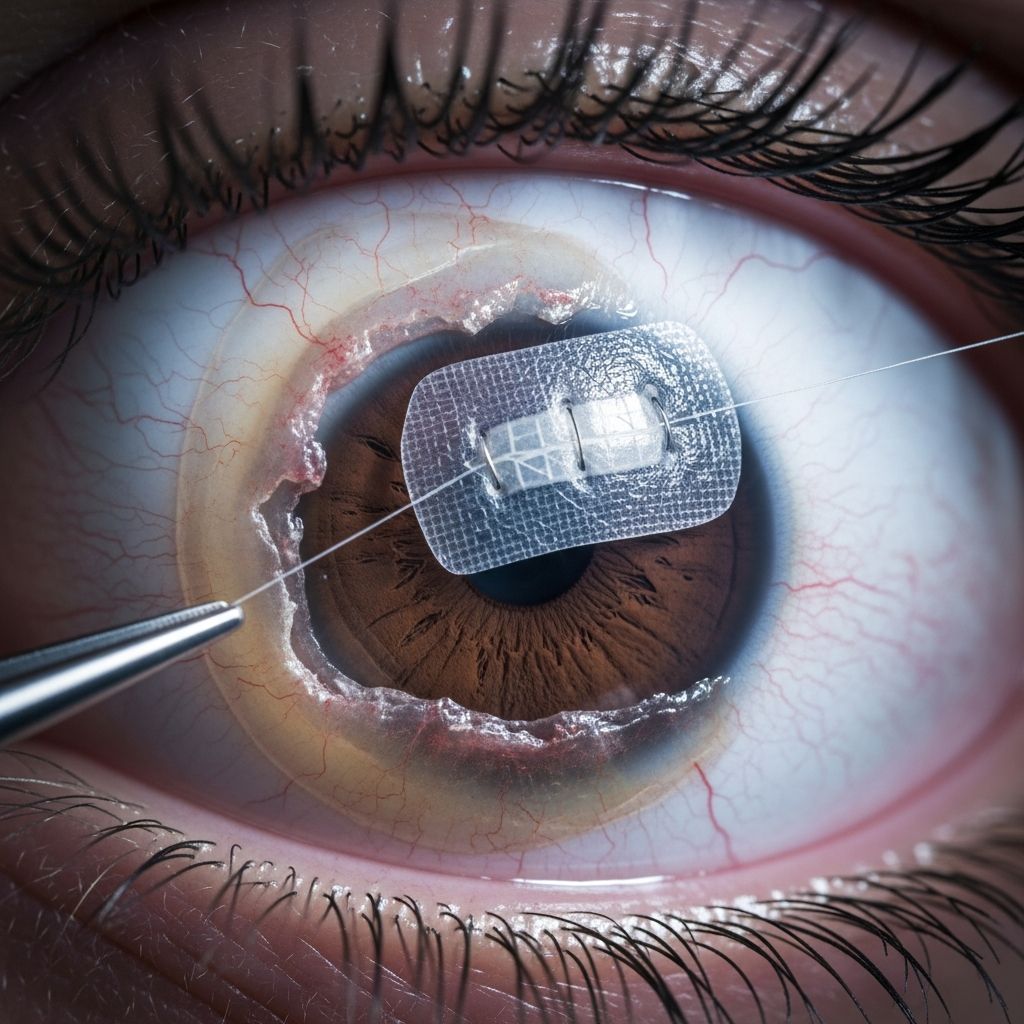
Scleral melt represents a severe ocular condition where the sclera, the white outer layer of the eye, undergoes necrosis or thinning, often leading to potential perforation and vision loss. This article delves into contemporary management strategies, drawing from recent clinical insights to provide a comprehensive overview of causes, diagnostic approaches, and both conservative and surgical interventions.
Understanding the Anatomy and Pathology of Scleral Tissue
The sclera provides structural support to the eyeball, maintaining its shape and protecting internal components. Composed primarily of collagen fibers, it is avascular in adults, relying on diffusion from overlying conjunctiva and underlying choroid for nourishment. When this delicate balance is disrupted, scleral melt can occur, characterized by enzymatic degradation of collagen by matrix metalloproteinases (MMPs) triggered by inflammation, ischemia, or infection.
Common etiologies include surgically induced necrotizing scleritis (SINS), autoimmune disorders like rheumatoid arthritis, pterygium excision complications, and ischemic events post-glaucoma surgery. Early recognition is crucial, as untreated melt progresses rapidly, exposing uveal tissue and risking endophthalmitis.
Recognizing Symptoms and Risk Factors
- Pain and redness: Persistent ocular pain disproportionate to visible inflammation, often with sectoral conjunctival injection.
- Visible thinning: Avascular, translucent sclera with uveal show, progressing to cheese-like necrosis.
- Vision changes: Induced astigmatism or hypotony from aqueous leakage in advanced cases.
- Risk amplifiers: History of ocular surgery, systemic rheumatologic diseases, or long-term topical preservatives.
Diagnosis involves slit-lamp examination, anterior segment OCT for depth assessment, and systemic workup including ESR, CRP, and autoimmune panels to differentiate infectious from noninfectious causes.
Non-Surgical Management Options
Conservative therapies aim to halt progression by addressing underlying drivers like ischemia or inflammation. For ischemic melts, normobaric oxygen (NBO) therapy has emerged as a promising noninvasive option. Delivered via face mask at 10 L/min for 1 hour twice daily, NBO promotes vascularization and epithelialization in ischemic areas.
Clinical data from a series of 9 eyes showed healing initiation within 3-4 days, complete resolution in 18.1 ± 4.7 days, with stability over 9 months. This approach is particularly valuable when prior medical or surgical attempts fail, offering a bridge to more invasive procedures.
In autoimmune-related melts, high-dose systemic corticosteroids like oral prednisone (1 mg/kg) form the cornerstone, often pulsed with IV methylprednisolone for acute flares. Refractory cases necessitate immunomodulators such as azathioprine or cyclophosphamide to spare steroid toxicity. Antibiotics target infectious etiologies, with topical ciprofloxacin for suspected bacterial involvement.
| Treatment Type | Indication | Dosage/Regimen | Expected Outcome |
|---|---|---|---|
| NBO Therapy | Ischemic melt | 100% O2, 10L/min, 1h BID | Vascularization in 3-4 days |
| Systemic Steroids | Inflammatory SINS | Prednisone 1mg/kg or pulse IV | Halt necrosis progression |
| Immunomodulators | Refractory cases | Azathioprine 2-3mg/kg | Long-term control |
Surgical Interventions for Structural Reinforcement
When medical therapy fails or perforation impends, surgery provides tectonic support. Techniques are tailored to defect size and location: minimal thinning may respond to Tenon’s membrane covering (TMC), while extensive melts require patch grafts.
Related Stories



TMC involves mobilizing Tenon’s fascia over the defect, promoting revascularization without donor tissue. Combined with amniotic membrane transplant (AMT), it enhances healing via anti-inflammatory cytokines and growth factors. For uveal prolapse or large defects, corneoscleral patch grafts (CPG) with AMT offer durability, performed under peribulbar block with bupivacaine and lidocaine.
Postoperative care includes aggressive immunosuppression if scleritis persists, as evidenced by elevated inflammatory markers. One case series reported success with oral prednisolone tapered over weeks alongside grafts, averting further melt.
Case Studies Highlighting Tailored Approaches
Consider a patient post-pterygium surgery with ischemic thinning: TMC alone sufficed, avoiding immunosuppression. Conversely, rheumatoid arthritis patients with high CRP benefited from CPG + AMT and high-dose steroids. NBO rescued cases unresponsive to tenoplasty or AMT, underscoring its adjunctive role.
In SINS, ruling out infection precedes steroids; tectonic keratoplasty salvages perforations. These examples illustrate pathogenesis-driven therapy: ischemia favors vascular promotion, inflammation demands immunosuppression, infection needs antimicrobials.
Potential Complications and Prognosis
Surgery risks include graft melt from unchecked inflammation, infection, or rejection. Medical therapies carry systemic side effects like osteoporosis from steroids or myelosuppression from immunomodulators. Long-term, stable vascularized repairs yield good cosmesis and function, though irregular astigmatism may persist.
Prognosis hinges on etiology and timeliness: early ischemic intervention with NBO boasts high success; delayed autoimmune melts risk globe loss. Multidisciplinary input from rheumatology optimizes outcomes.
Emerging Therapies and Future Directions
Beyond NBO, hyperbaric oxygen and anti-MMP agents like doxycycline show promise. Tissue engineering with scleral fibroblasts or biosynthetic patches may revolutionize repairs. Randomized trials are needed to standardize protocols given the rarity of cases.
Frequently Asked Questions (FAQs)
What causes scleral melt?
Primarily inflammation from autoimmune diseases, surgical trauma, ischemia, or infection leading to collagen breakdown.
Is surgery always required?
No, NBO or medical therapy often suffices for early or ischemic cases; surgery for structural compromise.
How long does recovery take?
Medical healing in weeks; surgical grafts stabilize in months with vigilant follow-up.
Can scleral melt recur?
Yes, if underlying disease persists; lifelong immunosuppression may be needed for SINS.
What is the role of oxygen therapy?
NBO induces neovascularization noninvasively, effective post-failed conventional treatments.
This overview equips clinicians with evidence-based tools to manage scleral melt, emphasizing personalized strategies for optimal preservation of ocular integrity.
References
- Tailored treatment for the management of scleral necrosis following pterygium excision — Spandidos Publications. 2017-02-01. https://www.spandidos-publications.com/10.3892/etm.2017.4038
- Normobaric Oxygen Therapy for Scleral Ischemia or Melt — National Center for Biotechnology Information (PMC). 2013-03-01. https://pmc.ncbi.nlm.nih.gov/articles/PMC3595579/
- Surgically-Induced Necrotizing Scleritis — EyeWiki (American Academy of Ophthalmology). 2023-01-01. https://eyewiki.org/Surgically-Induced_Necrotizing_Scleritis
Similar Articles








Read full bio of Sneha Tete