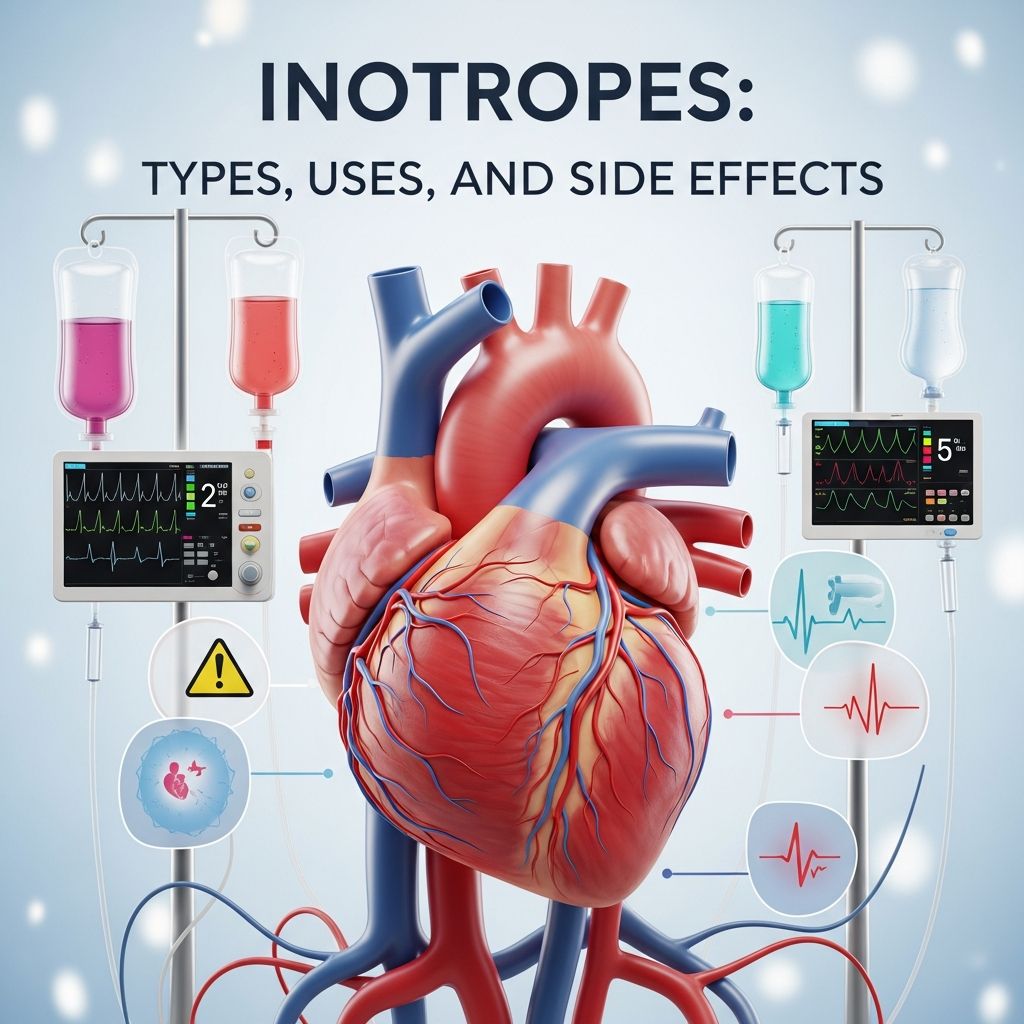
Inotropes: Types, Uses, and Side Effects
Understanding inotropic medications for heart failure and cardiac support treatment.
Understanding Inotropes: Strengthening Your Heart’s Pump
Inotropes are powerful cardiac medications designed to strengthen the heart’s ability to pump blood throughout your body. These drugs work by increasing the force of heart muscle contractions, which helps improve blood circulation and oxygen delivery to vital organs. For patients with advanced heart failure or severe cardiac conditions, inotropes can be lifesaving interventions that enhance quality of life and provide hemodynamic support when the heart can no longer function adequately on its own.
The term “inotrope” comes from the Greek word “tropos,” meaning turning or changing, combined with “ino,” referring to muscle fiber. Essentially, inotropes change the way cardiac muscle fibers contract, making each heartbeat more forceful and effective. This is particularly important for patients whose hearts have become weakened or damaged by disease, allowing them to maintain adequate blood flow and oxygen distribution to their bodies.
What Are Inotropes and How Do They Work?
Inotropes function by enhancing cardiac contractility—the strength and efficiency of heart muscle contractions. They accomplish this through various mechanisms that interact with cellular pathways responsible for heart function. Some inotropes work by increasing calcium availability to heart muscle cells, while others stimulate specific receptors on the cardiac tissue to enhance contraction strength.
The primary goal of inotropic therapy is to improve cardiac output, which is the amount of blood the heart pumps with each minute. By increasing the force of contractions, inotropes help reduce symptoms associated with heart failure, including weakness, fatigue, shortness of breath, and fluid accumulation in the body. This improved hemodynamic status can significantly enhance patients’ ability to perform daily activities and improve their overall sense of wellbeing.
Common Types of Inotropic Medications
Several inotropic agents are available for clinical use, each with distinct mechanisms of action and clinical applications.
Dobutamine
Dobutamine is a synthetic catecholamine that acts as a beta-1 adrenergic receptor agonist. It increases the force of heart contractions and also causes vasodilation, reducing the workload on the heart by decreasing afterload. Dobutamine is typically administered as a continuous intravenous infusion and is commonly used in acute decompensated heart failure episodes. Standard dosing ranges from 2.5 to 15 micrograms per kilogram per minute, though lower doses of around 4.4 micrograms per kilogram per minute have become increasingly common in recent practice patterns.
Dopamine
Dopamine operates as a precursor to norepinephrine and acts on multiple receptor types depending on the dose administered. At lower doses, dopamine primarily affects dopamine receptors and causes renal vasodilation, potentially improving kidney blood flow. At moderate to higher doses, it stimulates beta-adrenergic and alpha-adrenergic receptors, increasing heart contractility and blood pressure. This dose-dependent effect makes dopamine particularly versatile in managing patients with both low cardiac output and low blood pressure.
Milrinone
Milrinone operates through a different mechanism than catecholamine-based inotropes. It belongs to a class of medications called phosphodiesterase-3 inhibitors, which increase intracellular cyclic adenosine monophosphate (cAMP) levels. This leads to increased cardiac contractility without requiring direct adrenergic receptor stimulation. Additionally, milrinone causes vasodilation, reducing both preload and afterload. Typical dosing ranges from 0.25 to 0.75 micrograms per kilogram per minute, with recent data suggesting a median dose of approximately 0.3 micrograms per kilogram per minute in chronic settings.
Related Stories



Digoxin
Digoxin, a cardiac glycoside derived from the foxglove plant, has been used in cardiology for centuries. It increases cardiac contractility by inhibiting the sodium-potassium pump, thereby increasing intracellular calcium availability. Unlike other inotropes, digoxin also slows conduction through the atrioventricular node, making it particularly useful in patients with atrial fibrillation and heart failure. It can be administered orally or intravenously and has a narrow therapeutic window requiring careful monitoring.
Clinical Indications for Inotropic Therapy
Inotropes are prescribed in several clinical situations where the heart cannot maintain adequate pumping function on its own.
Acute Decompensated Heart Failure
During acute exacerbations of chronic heart failure, patients often develop symptoms including severe dyspnea, orthopnea, and peripheral edema. Inotropic support during hospitalization can rapidly improve hemodynamics, reduce filling pressures, and relieve acute symptoms, often making the difference between recovery and clinical deterioration.
Advanced or Stage D Heart Failure
Patients with the most severe form of heart failure—Stage D—may become dependent on inotropic therapy for symptom management. For these patients, inotropes serve as “bridge therapy,” maintaining adequate function and quality of life until either heart transplantation becomes available or mechanical circulatory support can be implemented. In some cases, inotropes are used as palliative therapy when other interventions are not feasible or when patients choose comfort-focused care.
Cardiogenic Shock
When the heart cannot pump sufficient blood to meet the body’s metabolic needs, cardiogenic shock develops. This life-threatening condition requires aggressive inotropic support to restore adequate tissue perfusion and prevent multi-organ failure.
Post-Operative Cardiac Dysfunction
Following major cardiac surgery, some patients experience temporary or prolonged contractile dysfunction. Inotropic support can bridge this period, allowing the heart to recover while maintaining adequate perfusion.
Benefits of Inotropic Therapy
When appropriately prescribed and monitored, inotropes offer several significant benefits for patients with severe cardiac dysfunction.
Hemodynamic Improvements
Inotropes directly improve cardiac output by enhancing the force of contractions. Studies demonstrate that these medications reduce pulmonary capillary wedge pressure and increase cardiac index, leading to improved tissue perfusion. Patients often experience median survival rates of 18 months with chronic inotropic therapy, compared with historical expectations of 3 to 6 months without such intervention.
Symptom Relief
Beyond hemodynamic parameters, inotropes provide substantial symptomatic improvement. Patients report decreased dyspnea, improved exercise tolerance, reduced fatigue, and better overall functional capacity. Many patients transition from New York Heart Association (NYHA) Class IV symptoms at baseline to Class III or better following initiation of inotropic therapy.
Quality of Life Enhancement
Perhaps most importantly, inotropes significantly enhance quality of life for patients with end-stage heart disease. The ability to remain ambulatory, engage in daily activities, and spend meaningful time with loved ones often outweighs the inconvenience of chronic intravenous therapy.
Administration Methods and Protocols
Inotropes can be administered through various routes, each with specific indications and requirements.
Intravenous Administration
Continuous intravenous infusion remains the most common method for acute inotropic therapy. This approach requires hospitalization and central venous catheter placement for most agents, particularly vasopressors. The infusion is typically titrated based on hemodynamic response, with doses adjusted to achieve target blood pressure and cardiac output while minimizing adverse effects.
Outpatient Parenteral Therapy
Many patients with advanced heart failure can be managed on chronic outpatient inotropic infusions. These patients receive periodic infusions in specialized clinics or learn to self-administer therapy at home using portable infusion pumps. Some patients tolerate “pulsed therapy”—intermittent infusions rather than continuous administration—which may reduce certain side effects while maintaining clinical benefit.
Dose Optimization
Optimal dosing of inotropes represents a balance between hemodynamic benefit and side effect risk. Recent experience suggests that lower doses of inotropes may be preferable to maximize safety while maintaining clinical efficacy. The trend toward lower median doses reflects refined understanding of long-term inotropic effects and improved patient outcomes.
Potential Side Effects and Complications
Despite their benefits, inotropes carry significant risks that must be carefully weighed against their advantages.
Arrhythmias and Sudden Cardiac Death
The most serious concern with chronic inotropic therapy is the potential for increased arrhythmogenesis and sudden cardiac death. Inotropes, particularly catecholamine-based agents, can increase myocardial irritability and trigger dangerous rhythm disturbances, especially in susceptible patients. This represents the primary limitation of long-term inotropic therapy and requires careful patient selection and monitoring.
Systemic Effects
Inotropic medications can cause tachycardia, increased myocardial oxygen consumption, and peripheral vasoconstriction at higher doses. Dopamine and dobutamine may cause headache, tremor, and anxiety. These systemic effects can limit dose escalation and reduce tolerability in some patients.
Tolerance Development
Chronic exposure to inotropes may lead to “tachyphylaxis,” where the heart becomes less responsive to the medication over time. This phenomenon may necessitate dose increases or medication changes to maintain clinical efficacy.
Vascular and Injection Site Complications
Patients requiring chronic intravenous inotropic therapy face risks of central line infection, thrombosis, and extravasation injury. Regular line care and monitoring are essential to prevent these complications.
Risk-Benefit Considerations in Clinical Decision-Making
The decision to initiate long-term inotropic therapy requires careful consideration of individual patient factors. For patients with severely symptomatic advanced heart failure, the trade-off between potential arrhythmia risk and marked symptomatic improvement often favors inotropic therapy. The quality of life enhancement and improved symptom control can be transformative for patients facing the end stages of heart disease.
However, this decision should not be made lightly. Patients must be carefully selected, thoroughly counseled about risks and benefits, and closely monitored. In many cases, inotropes represent a temporary bridge to definitive therapies like cardiac transplantation or mechanical circulatory support rather than a permanent solution.
Inotropes Compared to Other Cardiac Therapies
| Therapy Type | Mechanism | Primary Use | Key Advantages | Main Limitations |
|---|---|---|---|---|
| Inotropes | Increase contractility | Acute/chronic heart failure | Rapid hemodynamic improvement | Arrhythmia risk, tolerance |
| ACE Inhibitors/ARBs | Neurohormonal antagonism | Chronic heart failure | Long-term survival benefit | Slower onset of action |
| Beta-Blockers | Reduce sympathetic activity | Chronic heart failure | Improved survival, rate control | Initial hemodynamic worsening |
| Vasodilators | Reduce preload/afterload | Decompensated heart failure | Improved filling pressures | May worsen hypotension |
| Diuretics | Reduce fluid volume | Congestion relief | Symptom relief, diuresis | Electrolyte disturbances |
Monitoring and Follow-up Requirements
Patients on chronic inotropic therapy require intensive monitoring to optimize outcomes and minimize complications. Regular assessment includes hemodynamic measurements, cardiac imaging, blood work including renal function and electrolytes, and electrocardiographic monitoring for arrhythmias. Dose adjustments should be based on clinical response and tolerability rather than fixed protocols, as individual patient needs vary considerably.
Communication between the cardiologist, primary care physician, and other healthcare providers is essential to ensure comprehensive, coordinated care. Patients should be educated about recognizing signs of decompensation or adverse effects and instructed to report concerning symptoms promptly.
Future Directions in Inotropic Therapy
Ongoing research seeks to develop new inotropic agents with improved efficacy and safety profiles. Recent investigation focuses on modulating calcium cycling and intracellular signaling pathways to produce increased contractility without increasing arrhythmogenesis, apoptosis, or direct cellular toxicity. These next-generation agents may offer the hemodynamic benefits of current inotropes while reducing the concerning arrhythmia risk that currently limits their use.
Frequently Asked Questions About Inotropes
Q: Are inotropes permanent solutions for heart failure?
A: No, inotropes are typically bridge therapies rather than permanent solutions. They improve symptoms and hemodynamics but do not cure the underlying heart disease. They are often used until heart transplantation, mechanical support, or other definitive interventions become available, or as palliative therapy in end-stage disease.
Q: Can inotropes be taken as pills rather than injections?
A: Most inotropes require intravenous administration for acute use. However, digoxin can be taken orally and has been used in chronic heart failure management. Most other inotropes are not effective when taken by mouth because they are broken down in the digestive system.
Q: How long can patients safely remain on inotropic therapy?
A: There is no strict time limit, though median survival on chronic inotropic therapy ranges from 9 to 18 months depending on the patient population and indication. Some patients continue successfully for years, while others may require escalation or transition to other therapies sooner.
Q: What happens if I stop taking inotropes suddenly?
A: Abrupt discontinuation of inotropes can lead to hemodynamic rebound and worsening heart failure symptoms. Any changes to inotropic therapy should be made under medical supervision with careful monitoring for adverse effects.
Q: Can inotropes prevent sudden cardiac death?
A: No, inotropes do not prevent sudden cardiac death and may actually increase the risk in some patients. Patients at high risk should have implantable cardioverter-defibrillators (ICDs) placed to provide protection against dangerous rhythms.
References
- Outpatient parenteral inotropic therapy for advanced heart failure — National Center for Biotechnology Information/PubMed. 2001. https://pubmed.ncbi.nlm.nih.gov/11016488/
- Chronic Inotropic Therapy in the Current Era — American Heart Association, Circulation: Heart Failure. 2016. https://www.ahajournals.org/doi/10.1161/CIRCHEARTFAILURE.115.002481
- Vasopressors: Types, Purpose and Side Effects — Cleveland Clinic. 2024. https://my.clevelandclinic.org/health/treatments/23208-vasopressors
- Do I always need a central venous catheter to administer inotropes? — Cleveland Clinic Journal of Medicine. 2024. https://www.ccjm.org/content/91/5/287
- Heart Rupture: Symptoms and Causes — Cleveland Clinic. 2024. https://my.clevelandclinic.org/health/diseases/23529-myocardial-rupture
Similar Articles








Read full bio of Sneha Tete