Insect Sting Allergies: Symptoms, Diagnosis, and Treatment
Understanding insect sting allergies: comprehensive guide to reactions, diagnosis, and effective management strategies.
Understanding Insect Sting Allergies
Insect sting allergies represent a significant health concern affecting millions of people worldwide. While stinging insect reactions are relatively uncommon in the general population, they can escalate from minor local irritation to life-threatening anaphylaxis. Understanding the nature of these allergies, recognizing symptoms, and knowing appropriate treatment options are essential for anyone who may encounter stinging insects outdoors. This comprehensive guide explores the spectrum of insect sting reactions, diagnostic approaches, and evidence-based management strategies.
Types of Stinging Insects and Common Reactions
Various insects can deliver stings that trigger allergic responses. The most common culprits include honeybees, wasps, hornets, yellow jackets, and fire ants. Each species has different venom compositions, which can influence the type and severity of allergic reactions. Insects belonging to the order Hymenoptera are the primary stinging insects responsible for allergic reactions in humans.
Reactions to insect stings typically fall into several categories based on severity and distribution:
Local Reactions
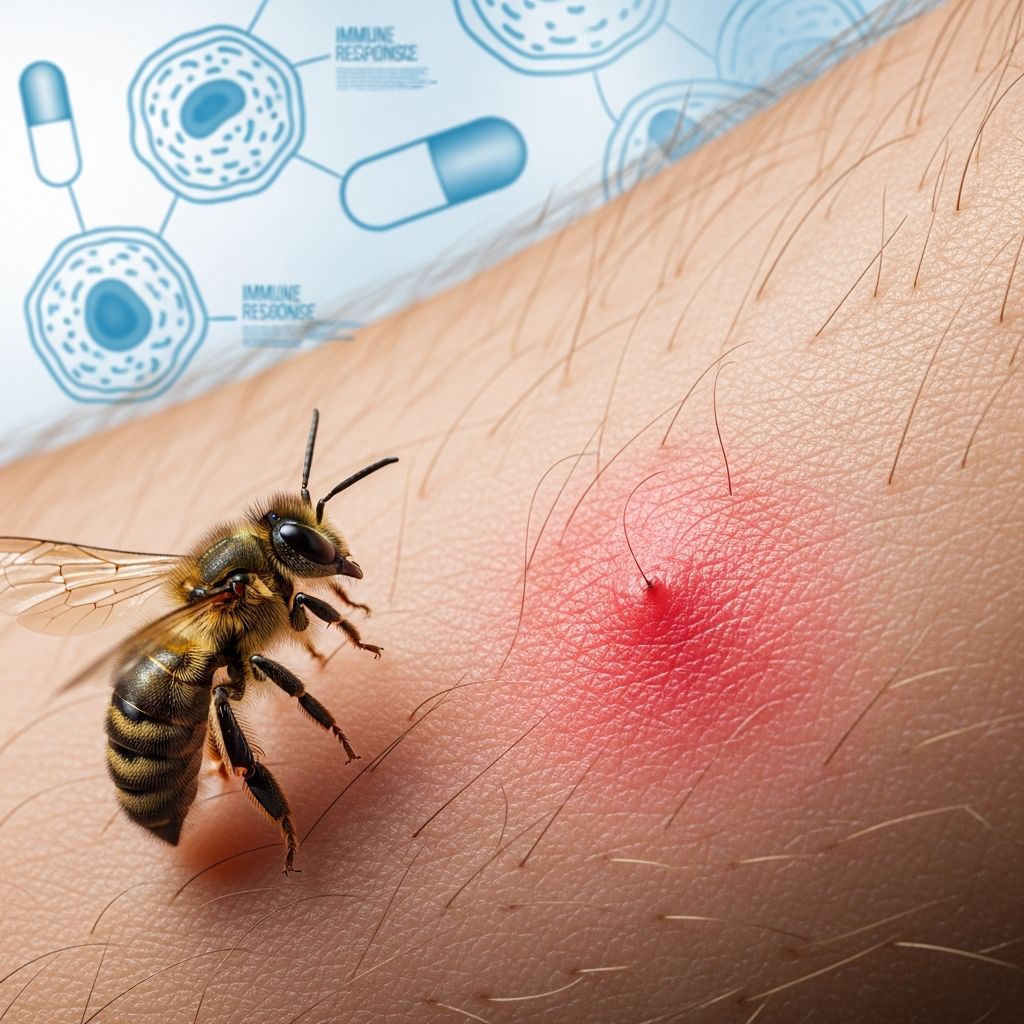
Local reactions represent the most common response to insect stings. These reactions remain confined to the area immediately surrounding the sting site and include redness, swelling, warmth, and itching. Typically, local reactions resolve within a few hours to a few days without requiring medical intervention. While uncomfortable, local reactions are generally not dangerous and do not indicate systemic allergic disease.
Large Local Reactions
Large local reactions (LLR) extend beyond the immediate sting site and can involve significant swelling of an entire limb or body region. These reactions may last several days and can cause considerable discomfort and functional impairment. Despite their size and persistence, large local reactions carry only a 3-10% risk of progressing to systemic reactions with future stings, making them generally less concerning than systemic allergic responses.
Systemic Reactions
Systemic reactions affect multiple organ systems and represent true allergic responses involving the immune system’s histamine and other mediator release. These reactions can progress from mild cutaneous symptoms to severe, life-threatening anaphylaxis. Systemic reactions may include skin manifestations, respiratory symptoms, gastrointestinal disturbances, cardiovascular collapse, and neurological effects.
Symptoms and Clinical Presentation
Recognizing the signs of insect sting allergies is crucial for appropriate response and treatment. Symptoms vary considerably based on reaction severity and individual sensitivity.
Mild to Moderate Systemic Reactions
Mild systemic reactions typically involve cutaneous symptoms such as urticaria (hives) and flushing that appear within minutes of the sting. These may progress to include pruritus, angioedema (swelling of deeper skin layers), and general malaise. Moderate reactions can include gastrointestinal symptoms like nausea, vomiting, and abdominal cramping, along with respiratory symptoms such as throat tightness or mild wheezing.
Severe Anaphylaxis
Anaphylactic reactions represent medical emergencies requiring immediate treatment. Symptoms of severe anaphylaxis include cardiovascular collapse with hypotension and shock, severe respiratory distress or airway obstruction, loss of consciousness, and severe gastrointestinal symptoms. Anaphylaxis can develop within seconds to minutes of a sting and poses significant risk of death without prompt epinephrine administration.
Related Stories



Diagnostic Approaches
Accurate diagnosis of insect sting allergies requires a systematic approach combining clinical history with objective testing.
Clinical History
A detailed clinical history forms the foundation of diagnosis. Healthcare providers assess the circumstances of the sting, time interval between sting and symptom onset, symptom duration and severity, and any previous sting reactions. The history helps determine reaction classification and guides decisions regarding testing and treatment.
Venom Skin Testing
Venom skin tests represent the primary confirmatory diagnostic tool. These tests involve intradermal injection of standardized venom extracts and observation for local wheal and flare reactions. Both venom skin tests and serum immunoglobulin E (IgE) tests can confirm the presence of venom sensitization. Importantly, the strength of test results correlates with likelihood of systemic reaction but does not reliably predict severity. Some patients with very strong sensitivity experience minimal reactions to stings, while others with barely detectable venom sensitivity may suffer life-threatening anaphylaxis.
Serum-Specific IgE Testing
Blood tests measuring venom-specific IgE antibodies provide an alternative or complementary diagnostic method to skin testing. These tests are particularly useful in patients taking medications that interfere with skin testing, those with extensive skin disease, or individuals unable to tolerate skin testing procedures.
Baseline Serum Tryptase Measurement
Measurement of baseline serum tryptase (bST) levels serves multiple important functions in insect sting allergy evaluation. Elevated baseline tryptase levels can stratify risk and suggest underlying mast cell disorders. Any patient with sting anaphylaxis in whom the bST level exceeds 8 ng/mL should undergo testing for hereditary alpha-tryptasemia (HαT), which occurs in patients with sting anaphylaxis at two to three times the frequency in the general population. Patients with hereditary alpha-tryptasemia experience more severe anaphylaxis. Additionally, clonal mast cell disorders, primarily systemic mastocytosis, may be present in over 10% of patients with sting anaphylaxis and possibly exceeding 25% of those with hypotensive reactions. These conditions significantly increase the risk of severe anaphylaxis from insect stings.
Risk Stratification and Prognosis
Understanding individual risk factors helps guide treatment recommendations and patient counseling.
Risk Categories
Patients with previous severe sting reactions face a 50-75% chance of systemic reaction with future stings, with approximately half of these being severe. Those who experienced moderate, non-life-threatening anaphylaxis have a 30-50% chance of systemic reaction with future stings, though fewer will be severe. These populations clearly warrant venom immunotherapy. Patients with only cutaneous reactions carry a 3-10% risk of anaphylaxis, generally not requiring immunotherapy. High-risk patients demonstrating 30-70% risk of anaphylaxis benefit significantly from venom immunotherapy.
Special Risk Factors
Several factors increase anaphylaxis risk. Underlying mast cell disorders substantially elevate severity risk. Medications such as beta-blockers and ACE inhibitors were historically thought to worsen anaphylaxis, though recent evidence suggests they do not increase frequency of severe anaphylaxis in patients taking them before or during venom immunotherapy.
Treatment and Management Strategies
Treatment approaches vary based on reaction type and individual risk assessment.
Immediate Sting Response
For local and mild systemic reactions, immediate management includes removing the stinger if present, washing the area, applying ice, and taking antihistamines or topical corticosteroids to reduce itching and inflammation. Most local reactions resolve spontaneously without medical intervention.
Anaphylaxis Treatment
Anaphylaxis constitutes a medical emergency requiring immediate epinephrine administration. The treatment protocol involves intramuscular epinephrine as the first-line medication, positioning the patient in a recumbent posture to maintain blood pressure, and providing adjunctive measures including intravenous fluids and oxygen. After epinephrine administration, patients require medical observation and monitoring for potential biphasic reactions.
Venom Immunotherapy
Venom immunotherapy (VIT) represents the most effective long-term management strategy for patients with significant anaphylaxis risk. This treatment involves gradually introducing increasing doses of insect venom extract to desensitize the immune system. VIT rapidly reduces the risk of sting anaphylaxis by up to 98% in treated patients. The therapy involves an initial build-up phase where doses increase over several weeks, followed by maintenance therapy typically occurring at 4-8 week intervals.
VIT can be safely initiated using rush regimens that accelerate the build-up phase. For most patients, maintenance treatment can be successfully discontinued after 5 years of therapy. However, extended or indefinite VIT at 12-week intervals is recommended for patients with known high-risk factors such as systemic mastocytosis or hereditary alpha-tryptasemia, as well as patients where stopping would cause significantly impaired quality of life.
Research shows that approximately two-thirds of patients on VIT have fewer than three risk factors and carry less than 3% anaphylaxis risk to future stings after stopping therapy. The other third, with one or more risk factors, face an estimated 45% risk of anaphylaxis if VIT is discontinued.
Additional Management Options
For recurrent systemic reactions despite standard VIT, omalizumab treatment (used off-label) may be considered. All patients at risk for anaphylaxis should carry epinephrine auto-injectors and receive training in their use. Patient education regarding sting avoidance, appropriate outdoor precautions, and emergency response planning is essential.
Frequently Asked Questions
Q: What is the difference between a local reaction and anaphylaxis from an insect sting?
A: Local reactions remain confined to the sting area with redness and swelling, resolving in hours to days. Anaphylaxis is a systemic allergic reaction affecting multiple organ systems, potentially causing shock, respiratory distress, and death without immediate epinephrine treatment.
Q: Can someone with a local reaction develop anaphylaxis with a future sting?
A: Progression from local reactions alone to anaphylaxis is uncommon. However, individuals with previous large local reactions have a 3-10% risk of systemic reaction to future stings, warranting consideration of venom immunotherapy in some cases.
Q: How effective is venom immunotherapy?
A: Venom immunotherapy reduces the risk of anaphylaxis by up to 98% in treated patients. Most patients can discontinue maintenance therapy after 5 years, though some with high-risk factors may require indefinite treatment.
Q: Should I carry an epinephrine auto-injector if I have insect sting allergy?
A: Yes, individuals with history of anaphylaxis or systemic reactions should carry epinephrine auto-injectors at all times and receive training in their proper use. Prompt epinephrine administration is lifesaving in anaphylaxis.
Q: Can medications affect my reaction to an insect sting?
A: While beta-blockers and ACE inhibitors were historically thought to worsen anaphylaxis, recent evidence indicates they do not increase the frequency of severe reactions or complications with venom immunotherapy treatment.
Q: What is baseline serum tryptase and why is it measured?
A: Baseline serum tryptase levels help identify underlying mast cell disorders that significantly increase anaphylaxis risk. Elevated levels warrant testing for systemic mastocytosis and hereditary alpha-tryptasemia.
Prevention and Lifestyle Measures
Beyond medical management, practical prevention strategies reduce sting risk. These include avoiding brightly colored clothing and floral patterns that attract insects, wearing protective clothing when outdoors, using insect repellents appropriately, and being cautious around food and trash that attract wasps and yellow jackets. Individuals should learn to identify nests and avoid disturbing them.
Conclusion
Insect sting allergies span a spectrum from minor local irritation to life-threatening anaphylaxis. Accurate diagnosis through clinical history and confirmatory testing enables appropriate risk stratification. For high-risk patients, venom immunotherapy offers highly effective long-term protection with sustained benefit even after treatment discontinuation. Continued research refines clinical approaches to insect sting hypersensitivity, improving outcomes and quality of life for affected individuals. Healthcare providers and patients benefit from improved awareness and implementation of evidence-based management approaches to this common yet potentially serious allergic condition.
References
- Approach to Patients with Stinging Insect Allergy — Johns Hopkins University, Department of Medicine. 2020-01. https://pure.johnshopkins.edu/en/publications/approach-to-patients-with-stinging-insect-allergy
- Update in Stinging Insect Hypersensitivity — National Institutes of Health, National Center for Biotechnology Information. 2024. https://pmc.ncbi.nlm.nih.gov/articles/PMC12419974/
- Venom Immunotherapy Practice Parameters — American Academy of Allergy, Asthma & Immunology. 2024. https://www.aaaai.org/
Similar Articles








Read full bio of medha deb