Insulin Pumps: What It Is, How It Works & Types
Complete guide to insulin pumps: Learn how these wearable devices work and which type suits your diabetes management needs.
What Is an Insulin Pump?
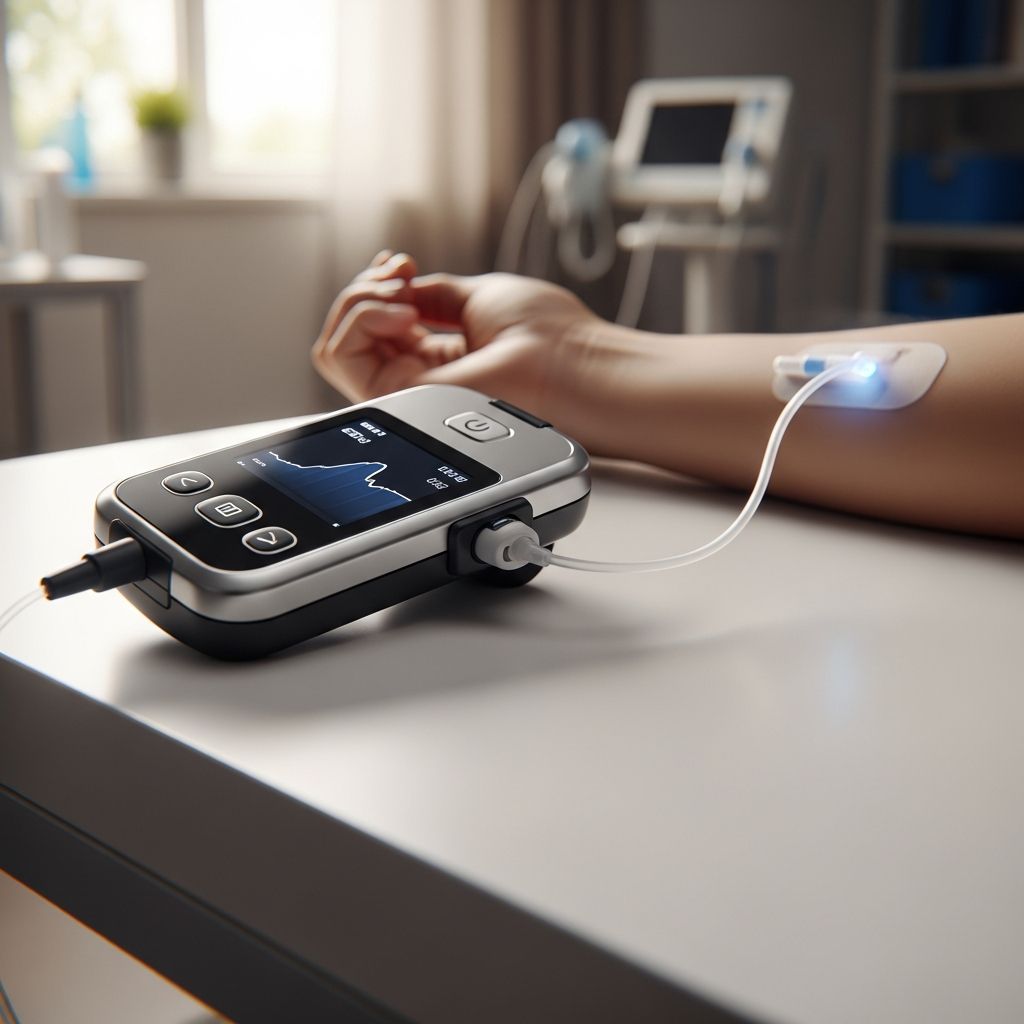
An insulin pump is a wearable medical device that delivers a continuous flow of insulin beneath your skin, providing an alternative to multiple daily insulin injections. Rather than relying on syringes or pens for insulin administration, pumps automate the delivery process, mimicking how the pancreas naturally releases insulin throughout the day and in response to meals.
For people with diabetes who require insulin to manage their condition, pumps represent a significant advancement in treatment technology. The device continuously supplies rapid-acting insulin in small doses, allowing for more precise glucose control and greater flexibility in daily life compared to traditional injection methods.
How Insulin Pumps Work
Insulin pumps operate through a combination of mechanical delivery and increasingly sophisticated algorithmic technology. The fundamental mechanism involves a reservoir that stores insulin, tubing that connects to a cannula (a small tube), and an infusion set that remains under your skin.
Modern pumps deliver insulin in two primary ways. First, they provide a basal rate—a continuous, preset dose of insulin delivered hourly throughout the day to maintain stable blood glucose levels between meals and overnight. Second, patients manually administer boluses, which are additional insulin doses calculated based on carbohydrate intake and current blood glucose levels when eating meals.
Today’s insulin pump technology rapidly evolves to integrate with continuous glucose monitoring (CGM) systems. This integration enables pumps to automatically adjust insulin delivery based on real-time glucose readings, significantly improving glycemic control without requiring constant manual adjustments by the user.
Types of Insulin Pumps
Understanding the different pump options available helps patients and healthcare providers select the most appropriate device for individual needs and lifestyle preferences.
Tubed Insulin Pumps
Traditional tubed pumps feature an external pump unit about the size of a pager or small cell phone, connected to your body via thin tubing leading to an infusion set inserted under your skin. Examples of popular tubed pumps include the t:slim X2, MiniMed, Mobi, and iLet ACE models.
With tubed pumps, you change the infusion set every two to three days or when the insulin reservoir becomes empty. The tubing allows flexibility in device placement—you can clip the pump to your waistband, carry it in a pocket, or use an armband, while the infusion set sits discreetly under your skin on your abdomen, arm, hip, or thigh.
Tubeless Patch Pumps
Patch pumps, also called pods, represent a newer pump category that eliminates external tubing. Examples include the Omnipod DASH and Omnipod 5. These single-use devices adhere directly to your skin and contain both the insulin reservoir and delivery mechanism in one compact pod.
Before attaching a pod, you fill its internal reservoir with insulin. You then press a button that releases a needle threaded through the cannula inside the pod. The needle retracts, leaving only the small cannula beneath your skin for insulin delivery. Like tubed pumps, you replace pods every two to three days or when insulin runs out. Patch pumps can be worn on your upper arm, belly, hip, buttock, or thigh, offering substantial freedom in placement options.
Related Stories



Hybrid Closed-Loop Systems
Hybrid closed-loop (HCL) systems represent the most advanced insulin pump technology currently available. These automated insulin delivery systems integrate with CGM technology and use proprietary algorithms that respond to real-time glucose sensor readings. The algorithm automatically modulates basal insulin delivery without requiring patients to calculate corrections manually.
Some HCL systems require users to input basal insulin rates initially, while the algorithm handles real-time adjustments. Others use patient information like body weight and glucose targets to determine appropriate basal rates automatically. The iLet Bionic Pancreas, cleared by the FDA in May 2023, exemplifies this advanced approach—it requires patients to indicate meal size (usual, smaller, or larger than usual) rather than counting carbohydrates, simplifying the user experience significantly.
Insulin Pump Integration With CGM Technology
All insulin pumps available in the United States today integrate with continuous glucose monitoring technology. This integration represents a fundamental shift in diabetes management, enabling automatic insulin adjustments based on current glucose levels.
The FDA has cleared several CGM models for integration with specific insulin pumps. The t:slim X2 integrates with both the Freestyle Libre 2 Plus and Dexcom G7 CGMs. The iLet ACE and Bionic Pancreas work with Dexcom G7, while both devices remain compatible with earlier Dexcom G6 models. These interoperable CGMs allow for seamless communication between glucose monitoring and insulin delivery systems, creating a more efficient diabetes management ecosystem.
Benefits of Insulin Pumps
Compared to multiple daily injections, insulin pumps offer numerous evidence-based advantages that have made them the gold standard of care for many patients with type 1 diabetes.
- Improved glycemic control: Pumps deliver insulin more precisely and consistently than injections, resulting in better blood glucose management and lower hemoglobin A1C levels for many users.
- Reduced hypoglycemia risk: The continuous, programmable delivery of small insulin doses reduces dangerous low blood sugar episodes compared to injection therapy.
- Greater dietary flexibility: Pumps allow users to adjust insulin doses based on actual meal composition rather than eating on a fixed schedule, providing unprecedented mealtime freedom.
- Simplified overnight management: Automated basal rates maintain stable glucose levels during sleep without requiring bedtime injections.
- Improved quality of life: Fewer daily injections and automatic glucose adjustments reduce daily diabetes management burden and enhance psychological well-being.
- Faster insulin action: Rapid-acting insulin delivery through subcutaneous infusion results in quicker response to blood glucose changes than intramuscular injections.
- Customizable delivery patterns: Different basal rates can be programmed for different times of day, accommodating varied activity levels, work schedules, and sleep patterns.
Most endocrinologists and diabetes specialists strongly encourage insulin pump use due to these well-documented benefits and the technology’s proven safety profile in clinical practice.
Disadvantages and Challenges of Insulin Pumps
While insulin pumps offer substantial advantages, patients should understand potential limitations before starting pump therapy.
The most significant disadvantage involves insulin delivery issues that can occur for various reasons. Tubing can become bent or kinked, occluding insulin flow. Infusion sets may disconnect from tubing or become dislodged from the skin. Bubbles can form in tubing or reservoirs, interrupting delivery. The cannula tip may migrate, causing delivery failure.
Modern pumps include occlusion alerts—when the pump detects a blockage, it alerts you to change the infusion set or pod. However, some delivery failures go undetected by the pump. If your infusion set becomes disconnected from tubing, for example, the pump cannot recognize the issue since it measures insulin in the reservoir rather than confirming actual skin delivery. Using a CGM helps identify these unrecognized delivery failures when glucose levels rise unexpectedly despite the pump delivering insulin as programmed.
Additional pump disadvantages include the need for frequent site changes (every two to three days), potential skin irritation or infection at infusion sites, the visibility of tubed pumps for some users, and the ongoing need for carbohydrate counting and bolus calculations with non-HCL systems. Pump costs can also be substantial, though insurance coverage varies.
Who Should Consider an Insulin Pump?
While insulin pumps benefit many patients with diabetes, they work best for individuals meeting specific criteria. Candidates should demonstrate reliable adherence to their current diabetes management regimen, indicating they will consistently maintain pump supplies and follow recommended infusion set change schedules.
Psychological readiness matters significantly—pumps require comfort with technology, willingness to troubleshoot issues, and acceptance of being connected to a device. Mental health status should be stable, as pump users must manage increased responsibility for insulin dosing decisions.
Healthcare provider availability for follow-up visits and pump management support is essential. Most importantly, patients must have financial access to pumps, either through insurance coverage or personal resources, as devices represent a substantial investment compared to injection therapy.
Insulin Pumps in Special Populations
Pregnancy and Insulin Pumps
Insulin pump use is now recognized as the gold standard of management for pregnant patients with type 1 diabetes. Pregnancy presents unique challenges, as it dramatically increases insulin resistance and requires more aggressive blood glucose targets to protect fetal development.
Hybrid closed-loop insulin pumps have become transformational for pregnant women with type 1 diabetes. These sensor-augmented pumps with enhanced technologies enable patients to meet the stringent glucose targets required during pregnancy. The automatic insulin adjustments provided by HCL systems help reduce the hypoglycemic episodes that traditionally complicated pregnancy management with insulin injections.
Clinical case examples demonstrate this technology’s impact. One pregnant patient using traditional insulin injections with blood glucose checks five to six times daily experienced highly variable glucose readings ranging from 45 mg/dL to 265 mg/dL. After switching to HCL therapy with a t:slim X2 pump and Humalog insulin, her first-week average daily glucose improved to 119 mg/dL, with readings remaining stable at 120 mg/dL by week 36 of pregnancy.
Selecting the Right Pump: Key Considerations
Choosing an insulin pump requires evaluating multiple factors to match the device with individual needs and lifestyle.
| Consideration | Tubed Pumps | Patch Pumps | Hybrid Closed-Loop |
|---|---|---|---|
| Visibility | External pump visible to others | Single pod on skin, discreet | Varies by type (tubed or patch) |
| Manual Input Required | Carbohydrate counting for boluses | Carbohydrate counting for boluses | Meal size indication or automatic |
| Frequency of Site Changes | Every 2-3 days | Every 2-3 days | Every 2-3 days |
| CGM Integration | Compatible with multiple CGMs | Latest models with full integration | Full automatic integration standard |
| Ideal For | Flexible placement preference | Discretion and simplicity | Maximum automation and convenience |
Managing Your Insulin Pump
Successful insulin pump therapy requires ongoing education and management. Healthcare providers should ensure users understand how to program basal rates, calculate and deliver meal boluses, recognize and respond to delivery failures, change infusion sets properly, and identify when professional assistance is needed.
Patients must develop skills in carbohydrate counting (for non-HCL systems), interpretation of CGM readings, recognition of insulin delivery problems, and appropriate troubleshooting. Regular follow-up appointments with endocrinologists or diabetes educators help optimize pump settings and address emerging concerns.
Frequently Asked Questions About Insulin Pumps
Q: How often do I need to change my insulin pump infusion set?
A: Most insulin pumps require infusion set changes every two to three days, or immediately when the insulin reservoir becomes empty. Some users may need more frequent changes if they experience skin irritation or if their healthcare provider recommends it based on individual circumstances.
Q: Can I wear an insulin pump while swimming or bathing?
A: Most insulin pump manufacturers provide guidelines for temporary disconnection during water activities. Some newer pumps are water-resistant and may remain connected during brief water exposure, but you should follow your specific pump’s recommendations and consult your healthcare provider about the safest approach for your situation.
Q: What happens if my insulin pump malfunctions or stops working?
A: You should have backup insulin supplies (syringes, pens, or vials) available at all times. If your pump fails, immediately switch to backup insulin via injection to maintain glucose control. Contact your pump manufacturer and healthcare provider for assistance with pump replacement or repair.
Q: Are insulin pumps covered by insurance?
A: Many insurance plans cover insulin pumps, but coverage varies significantly. Typically, you must meet certain criteria such as a diagnosis of type 1 diabetes, previous insulin therapy trial, and documented medical necessity. Contact your insurance provider to understand your specific coverage and any prior authorization requirements.
Q: Can children use insulin pumps?
A: Yes, children with type 1 diabetes can use insulin pumps. Many pumps are approved for pediatric use, and children as young as two years old have successfully used pump therapy. The decision depends on the child’s individual circumstances, family readiness, and healthcare provider recommendations.
Q: How do I prevent skin infections at my infusion set site?
A: Practice good hygiene by cleaning the infusion set area with antiseptic wipes before insertion. Rotate infusion sites regularly to prevent repeated use of the same skin area. Change infusion sets every two to three days as recommended. Watch for signs of infection such as redness, warmth, swelling, or discharge, and contact your healthcare provider if you notice these symptoms.
Q: What is the difference between open-loop and closed-loop insulin pump systems?
A: Open-loop pumps deliver insulin based on your programmed settings and manual bolus entries; you must actively adjust insulin doses. Closed-loop (automated) systems use CGM readings to automatically adjust basal insulin delivery without manual intervention, significantly reducing the daily diabetes management burden.
References
- Insulin Pump: What It Is, How It Works & Types — Cleveland Clinic. 2024. https://my.clevelandclinic.org/health/articles/insulin-pumps
- Diabetes Technology: A Primer for Clinicians — Cleveland Clinic Journal of Medicine, 91(6). 2024. https://www.ccjm.org/content/91/6/353
- Hybrid Closed Loop Insulin Pumps in Pregnancy — Consult QD, Cleveland Clinic. 2024. https://consultqd.clevelandclinic.org/hybrid-closed-loop-insulin-pumps-in-pregnancy
- Insulin Pumps: Beyond Basal-Bolus — Cleveland Clinic Journal of Medicine, 82(12). 2015. https://www.ccjm.org/content/82/12/835
- iLet Bionic Pancreas FDA Clearance — U.S. Food and Drug Administration. May 2023. https://www.fda.gov
- Continuous Glucose Monitoring Technology — American Diabetes Association. 2024. https://www.diabetes.org
Similar Articles








Read full bio of Sneha Tete