Insulin Syringes: Selection, Use, and Safety
Master insulin syringe selection and proper injection techniques for optimal diabetes management.
Understanding Insulin Syringes in Modern Diabetes Care
Insulin syringes remain one of the most fundamental tools in diabetes management, providing individuals with a straightforward and cost-effective method to deliver life-sustaining medication. For people living with type 1 diabetes and some with type 2 diabetes, the ability to self-administer insulin with precision determines whether they can maintain stable blood glucose levels and prevent serious health complications. Unlike newer delivery systems such as insulin pens or pumps, traditional syringes require drawing insulin directly from a vial before each injection, a process that many patients have relied upon for decades.
The importance of understanding your insulin syringe cannot be overstated. These devices are engineered with specific design features that facilitate subcutaneous injection—delivery beneath the skin into fatty tissue where insulin can be rapidly absorbed into the bloodstream. The relationship between proper syringe selection, correct injection technique, and achieving therapeutic blood sugar control forms the foundation of successful at-home diabetes management.
Key Components and Design Features
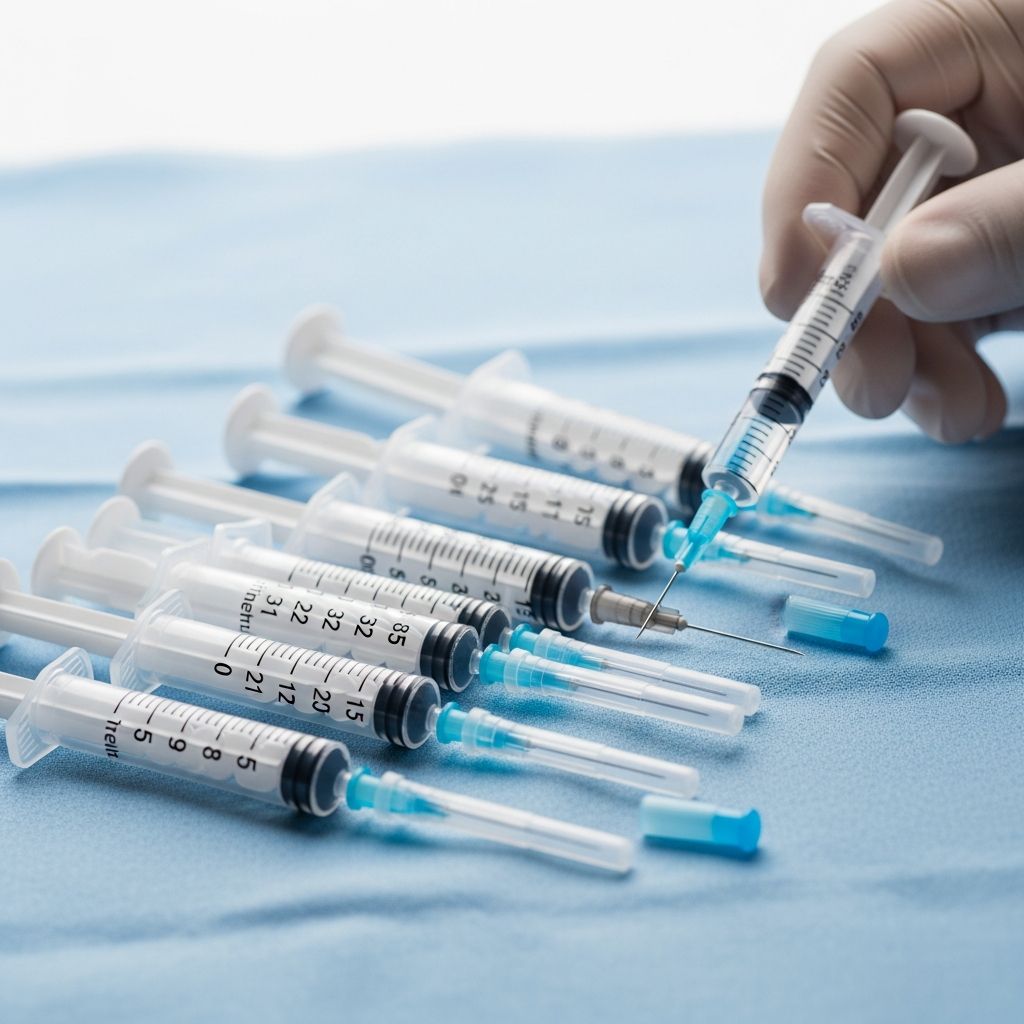
An insulin syringe consists of several essential components, each serving a critical function. The barrel is the cylindrical chamber that holds insulin and features measurement markings to help patients draw precise doses. These markings are calibrated in units, allowing for accurate quantification of medication.
The needle is perhaps the most significant component from a patient experience perspective. Modern insulin needles are extremely fine, manufactured through precision engineering to minimize tissue trauma during injection. They are pre-sterilized and come mounted securely onto the barrel, ready for immediate use. The plunger sits within the barrel and allows controlled delivery of insulin once the needle has been properly positioned beneath the skin.
These components work together to enable what medical professionals consider the gold standard of insulin delivery for home management: precise dosing, reliable absorption, and user control over the injection process. The straightforward design also means fewer mechanical components can malfunction, making syringes highly reliable even in resource-limited settings.
Syringe Volume Capacities and Dosing Options
Insulin syringes are manufactured in several volume sizes, each designed to accommodate different daily insulin requirements. Understanding which capacity suits your needs is essential for accurate dosing and preventing potentially dangerous medication errors.
- 1.0 mL syringes: These represent the standard capacity for most insulin users and can accommodate doses up to 100 units. This size suits the majority of patients and is the most widely available option.
- 0.5 mL syringes: Designed for patients requiring lower insulin doses, typically up to 50 units. These are particularly useful for pediatric patients and adults with insulin sensitivity.
- 0.3 mL syringes: The smallest standard capacity, holding up to 30 units. These are ideal for patients on very low doses and help improve dosing accuracy for minimal amounts of medication.
- U-500 specialized syringes: Manufactured exclusively for high-concentration U-500 insulin formulations. These syringes come in 0.5 mL capacity and must be paired with U-500 insulin to prevent serious dosing errors.
Selecting the appropriate syringe capacity is not merely a matter of convenience—it directly affects your ability to measure insulin accurately. Using a 1.0 mL syringe to administer a 5-unit dose, for example, creates significant measurement challenges and increases error risk. Conversely, using a syringe that is too small for your dose makes the injection process frustrating and may lead to incomplete dose delivery.
Insulin Concentration Standards: U-40 Versus U-100
One of the most critical distinctions in insulin syringe selection involves understanding insulin concentration standards, specifically U-40 and U-100 formulations. This differentiation has significant safety implications that every insulin-dependent person must understand.
Related Stories



U-100 syringes are specifically calibrated for insulin containing 100 units per milliliter and represent the standard throughout most of the world, including North America and Europe. The syringe markings correspond directly to insulin units when drawing U-100 insulin.
U-40 syringes are calibrated for insulin containing 40 units per milliliter and are used primarily in countries where U-40 formulations remain the standard. Using a U-40 syringe with U-100 insulin (or vice versa) represents a critical medication error that could result in receiving 2.5 times the intended dose or only 40 percent of the prescribed dose.
Your healthcare provider will specify which insulin concentration you are using, and you must ensure your syringe type matches precisely. This matching requirement cannot be compromised—it is a non-negotiable safety issue in insulin administration.
Needle Gauge, Length, and Patient Comfort
The needle component of your syringe dramatically affects both the injection experience and injection success. Two measurements define needle characteristics: gauge (thickness) and length.
Understanding Needle Gauge
Gauge refers to the thickness of the needle, measured numerically where higher numbers indicate thinner needles. Gauge selection involves balancing comfort against medication flow and ease of drawing insulin.
Ultra-fine needles (gauges 30, 31, and 32) are the thinnest available and cause significantly less pain during insertion. These are particularly recommended for individuals with needle anxiety or those requiring frequent injections. The trade-off is that very fine needles may require slightly more force when drawing insulin from a vial, though this is rarely problematic in clinical practice.
Standard gauges (27, 28, and 29) represent a balance between comfort and practical functionality. These needles allow for easy insulin draw while still being relatively thin and minimally painful. Most insulin users find these gauges highly acceptable for routine daily use.
Thicker gauges (25 and 26) provide excellent flow characteristics and require minimal effort when drawing insulin. However, they cause noticeably more discomfort during needle insertion and are generally reserved for situations where rapid insulin administration is necessary or for patients with severe difficulty drawing insulin.
Needle Length Considerations
Length varies from 4 millimeters to 12.7 millimeters and should be selected based on body composition and tissue thickness at the injection site. Selecting appropriate needle length prevents insulin from being delivered into muscle tissue, which would cause rapid, unpredictable absorption and potentially dangerous blood sugar fluctuations.
Shorter needles (4-6 mm) are appropriate for most adults and are particularly suitable for children. These lengths reliably deliver insulin into subcutaneous tissue without penetrating muscle layers, even in lean individuals. They cause less tissue trauma and discomfort while maintaining reliable insulin absorption.
Medium-length needles (6-8 mm) suit individuals with average body composition and represent a reasonable default choice for most patients.
Longer needles (8-12.7 mm) are reserved for individuals with greater subcutaneous fat thickness who require deeper penetration to reliably reach the adipose tissue layer. Using longer needles than necessary increases discomfort without providing therapeutic benefit.
Advantages Over Alternative Insulin Delivery Systems
While insulin pens and insulin pumps offer convenience and automation, syringes maintain several distinct advantages that make them the preferred choice for many patients.
Cost-effectiveness represents perhaps the most significant advantage. Insulin syringes are inexpensive compared to pens or pump supplies, making them accessible to patients facing financial constraints or those without comprehensive insurance coverage. This affordability can literally mean the difference between consistent medication adherence and rationing insulin doses.
Wide availability ensures that syringes can be obtained almost anywhere, from community pharmacies to rural clinics worldwide. This universal availability means patients traveling or facing supply disruptions can still maintain their insulin regimen.
Precise dosing control allows users to draw any dose within their syringe capacity, not just preset increments. For patients with changing insulin requirements or those developing insulin resistance, this flexibility proves invaluable.
Compatibility with insulin vials and cartridges makes syringes versatile delivery tools. Patients can draw insulin from vials, refill insulin pump reservoirs, or even mix multiple insulin types in a single syringe when therapeutically appropriate.
Simplicity and reliability mean fewer mechanical components can fail. This straightforward design appeals to elderly patients, those uncomfortable with technology, and individuals in settings with limited technical support.
Proper Injection Technique and Best Practices
Selecting the correct syringe represents only the first step in effective insulin administration. Proper injection technique ensures optimal insulin absorption, prevents tissue damage, and allows for consistent blood sugar control.
Begin by assembling your supplies in a clean environment. Wash your hands thoroughly and gather your insulin vial, syringe, alcohol wipe, and any other necessary items. If using cloudy (NPH) insulin, gently roll the vial between your palms to ensure even distribution—do not shake vigorously, as this can create air bubbles.
Draw air into the syringe equal to your insulin dose. This air injection into the vial prevents a vacuum from forming, making insulin easier to draw. Insert the needle into the vial and inject this air, keeping the needle tip above the insulin surface.
Invert the vial and, keeping the needle tip submerged in insulin, draw your prescribed dose slowly. Drawing too quickly can create bubbles that reduce actual insulin volume. Carefully remove the needle from the vial and position your injection site.
Clean the injection area with an alcohol wipe and allow it to dry completely—injecting into wet skin can introduce alcohol into subcutaneous tissue. Pinch the skin gently and insert the needle at a 45 to 90-degree angle, depending on your body composition and needle length. Depress the plunger slowly and steadily, then withdraw the needle and apply gentle pressure with a clean tissue.
Rotate injection sites systematically to prevent lipodystrophy—the development of fatty deposits or depressions at frequently injected sites. These tissue changes can alter insulin absorption patterns, destabilizing your blood sugar control. Establish a site rotation pattern using different body areas (abdomen, thighs, upper arms, buttocks) and different locations within each area.
Storage, Handling, and Safety Considerations
Proper syringe storage and handling preserve their sterility and functionality. Store unopened insulin vials according to your insulin type’s specifications—most require refrigeration until first use. Once opened, insulin vials can typically remain at room temperature for 28 days before discarding.
Never reuse syringes, as needle dulling and loss of lubrication occur immediately after initial use. Reusing needles dramatically increases injection pain, tissue trauma, and infection risk. All insulin syringes are single-use, disposable devices designed for use only once.
Dispose of used syringes in puncture-resistant sharps containers readily available from pharmacies or healthcare facilities. Never dispose of syringes in regular trash, as they pose serious injury and infection risks to sanitation workers.
Keep insulin and syringes away from extreme temperatures, direct sunlight, and freezing conditions. Insulin exposed to freezing temperatures loses potency and should be discarded. Similarly, insulin exposed to excessive heat degrades and becomes unsafe for use.
Frequently Asked Questions
Can I switch between insulin syringe sizes without changing my insulin dose?
No. Each syringe size has specific unit markings calibrated to that capacity. Switching syringe sizes without adjusting your dosing technique could lead to measurement errors. Always use the syringe size recommended by your healthcare provider based on your typical insulin dose.
What if I accidentally use a U-40 syringe with U-100 insulin?
Contact your healthcare provider or poison control immediately. This represents a serious medication error. You would be drawing 2.5 times your prescribed dose. Do not inject the insulin; instead, discard it and speak with your healthcare team about dose adjustment and monitoring.
Are shorter needles truly effective for insulin delivery?
Yes. Shorter needles (4-6 mm) reliably deliver insulin into subcutaneous tissue where absorption occurs optimally. They reduce pain, tissue trauma, and bruising while maintaining therapeutic effectiveness for the vast majority of patients.
How often should I rotate injection sites?
Establish a systematic rotation pattern using different body regions for each injection. Within each region (such as the abdomen), rotate to different locations with each subsequent injection. This prevents lipodystrophy and ensures consistent insulin absorption.
Can insulin syringes be used with insulin pens?
No. Insulin pens use specific pen needles that are incompatible with traditional syringes. However, you can use syringes to draw insulin from pen cartridges if needed, though this requires careful technique and is generally not recommended due to cartridge design.
References
- Insulin Syringe: Uses and Benefits — DiabeSmart. Accessed 2026. https://diabesmart.in/blogs/diabetic/what-are-the-uses-of-insulin-syringe
- Insulin Syringes — Riley Children’s Health. Accessed 2026. https://www.rileychildrens.org/health-info/insulin-syringes
- Insulin Syringes Sizes and Lengths: Importance and How to Choose — Healthline. Accessed 2026. https://www.healthline.com/health/diabetes/insulin-syringes-sizes
- How to Choose the Right Insulin Syringes for Your Needs — KDL. Accessed 2026. https://www.kdlnc.com/how-to-choose-insulin-syringes/
- Insulin Syringe Needle Sizes: A Complete Overview — MyCo Medical. Accessed 2026. https://www.mycomedical.com/post/insulin-syringe-needle-sizes
Similar Articles








Read full bio of Sneha Tete