IRF4 Gene: Structure, Pigmentation, Melanoma Risks, Immune Roles
Exploring the IRF4 gene's pivotal role in pigmentation, naevi, melanoma risk, and immune cell development.
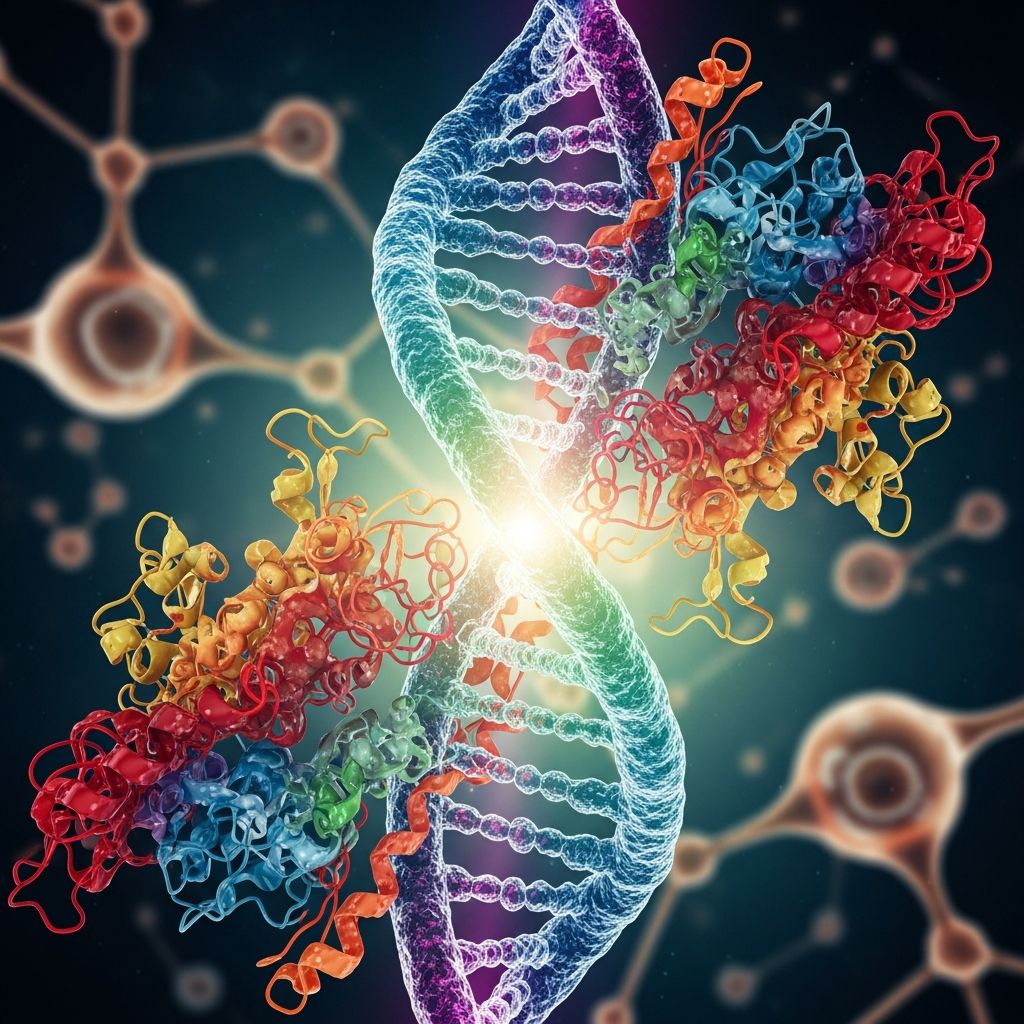
The interferon regulatory factor 4 (IRF4) gene belongs to a family of DNA-binding proteins that play an important role in immune system development and function, as well as pigmentation traits in skin, hair, and eyes. Encoded on chromosome 6p25.1, IRF4 produces a transcription factor critical for lymphoid and myeloid cell differentiation, and it modulates melanocyte activity influencing naevus formation and melanoma progression. This article examines IRF4’s structure, expression, key polymorphisms like rs12203592, associations with pigmentation and naevi, melanoma implications, and broader immunological functions.
What is the IRF4 gene?
IRF4, also known as MUM1 (multiple myeloma oncogene 1), is a protein-coding gene in the interferon regulatory factor family. These factors contain a conserved DNA-binding domain with a tryptophan pentad repeat and regulate interferon responses to viral infections, interferon-inducible genes, and Toll-like receptor (TLR) signaling in innate and adaptive immunity. IRF4 is lymphocyte-specific, negatively regulating TLR pathways central to immune activation. It binds interferon-stimulated response elements (ISRE) in promoters like MHC class I and immunoglobulin lambda light chain enhancers, often cooperating with PU.1.
Structurally, IRF4 features a DNA-binding domain and an IRF association domain for cofactor interactions. It acts as a transcriptional activator or repressor based on partners like BCL6, NFATs, BATF, or JUNB. Expression is primarily in immune cells— T cells, B cells, macrophages, dendritic cells—and melanocytes within naevi and melanomas. Dysregulation turns IRF4 into an oncogene or tumor suppressor via translocations like t(6;14)(p25;q32) in multiple myeloma.
IRF4 in pigmentation and naevi
A single nucleotide polymorphism (SNP) within intron 4 of IRF4, rs12203592*C/T, plays a major role in pigmentation. IRF4 is one of only two genes—alongside tyrosinase (TYR)—known to affect skin, eye, hair pigmentation, and, with melanocortin 1 receptor (MC1R), freckling. IRF4 independently influences total body naevus counts.
IRF4 is expressed in melanocytes of naevi and primary melanomas, regulating melanocyte differentiation and pigment production. The rs12203592*T allele disrupts a transcriptional silencer, increasing IRF4 expression and altering pigmentation pathways. Asian and African populations are fixed for the ancestral rs12203592*C allele (monomorphic), while Europeans show ~17% T allele frequency, rising to 40% in Ireland.
Phenotypic associations
rs12203592*T carriers exhibit fairer skin and eye color, higher adolescent naevus counts, reduced tanning ability, and fewer naevi with age. The Study of Nevi in Children (SONIC) found five significant associations (p < 0.005) between IRF4 rs12203592 variants and naevus appearance, including globular patterns. T alleles link to increased naevus counts regardless of sun exposure (p < 0.0001).
| rs12203592*C (ancestral) | rs12203592*T (derived) |
|---|---|
| Darker pigmentation | Fairer skin/eyes, poor tanning |
| Lower adolescent naevus count | High naevus count, reduces with age |
| Globular naevus patterns less common | Associated with globular patterns |
IRF4 in melanoma
IRF4 rs12203592 influences melanoma risk, thickness, and survival. T carriers show reduced naevi with age, fairer phenotypes, and melanomas with solar elastosis, increased Breslow thickness, and poorer survival.
| Benefit for T carriers | Risk for T carriers |
|---|---|
| Increased survival in melanoma (some contexts) | Reduced survival in melanoma (chronic UV) |
| Lower incidence of nodular melanoma | Higher incidence of nodular melanoma |
Patients with T variants have melanomas linked to chronic UV damage (solar elastosis), thicker Breslow depth, and worse prognosis. C alleles correlate with lower naevus burden and potentially better outcomes in sun-exposed cases. IRF4 modulates epigenetic silencing of tumor suppressors and oncogenic pathways in melanoma.
Related Stories



Immune functions of IRF4
IRF4 is essential for immune cell development.
T cell differentiation
- IRF4 drives Th2 and Th17 differentiation via apoptosis and cytokine regulation.
- Limits Th2 cytokines in naïve T cells but upregulates in effector/memory cells.
- Supports CD8+ cytotoxic T cells via BLIMP-1, BATF, T-bet, RORγt.
- Necessary for Treg effector function through BLIMP-1.
B cell differentiation
- With IRF8, induces Ikaros/Aiolos for pre-BCR downregulation and BCR rearrangement.
- Upregulates BCL6/POU2AF1 for germinal center (GC) formation; high IRF4 represses BCL6, promotes BLIMP-1/Zbtb20 for plasma cell differentiation.
- Required for class-switch recombination via AID enzyme upregulation; absence prevents Ig secretion.
Dendritic cells
- IRF4 induces CD4+ DCs; IRF8 for CD8+ DCs; both yield double-negative DCs.
- With GM-CSF, enables monocyte-derived DC cross-presentation to CD8+ T cells.
- Forms BATF-JUNB complex recognizing AICE sequences for DC gene activation.
Macrophages
- IRF4/IRF8 differentiate myeloid progenitors; IRF4 key for M2 polarization via JMJD3.
Clinical implications
IRF4 variants like rs12203592 stratify pigmentation-related risks. T carriers warrant enhanced melanoma surveillance due to fair phenotypes, high naevus counts, and aggressive tumors with solar damage. Genotyping aids risk assessment in Europeans, especially Irish. Therapeutically, IRF4 modulation via epigenetics targets oncogenesis. In immunotherapy, IRF4’s immune roles suggest applications in checkpoint inhibitors or CAR-T cells.
Frequently asked questions
What is the main pigmentation SNP in IRF4?
rs12203592*C/T in intron 4; T allele increases IRF4 expression, causing fairer pigmentation and higher naevus counts.
How does IRF4 affect naevus counts?
T allele links to elevated adolescent naevi, independent of sun exposure, reducing with age.
What melanoma risks are tied to IRF4 T carriers?
Thicker Breslow, solar elastosis, nodular subtype, reduced survival with chronic UV.
Is IRF4 expressed outside immune cells?
Yes, in melanocytes of naevi/melanomas and adipocytes.
Can IRF4 variants predict melanoma outcome?
Yes, rs12203592*T indicates poorer prognosis in sun-damaged melanomas.
What immune cells depend on IRF4?
Th2/Th17/Treg T cells, GC B cells, plasma cells, CD4+ DCs, M2 macrophages.
References
- IRF4 – Wikipedia — Wikipedia contributors. 2023-10-15. https://en.wikipedia.org/wiki/IRF4
- IRF4 Gene – GeneCards — GeneCards. 2024-01-10. https://www.genecards.org/cgi-bin/carddisp.pl?gene=IRF4
- Interferon regulatory factor 4 gene – DermNet — DermNet NZ. 2023-05-20. https://dermnetnz.org/topics/interferon-regulatory-factor-4-gene
- Interferon regulatory factor 4 modulates epigenetic silencing — FEBS Journal (Wiley). 2022-11-01. https://febs.onlinelibrary.wiley.com/doi/10.1002/1878-0261.13672
- UniProtKB – Q15306 (IRF4_HUMAN) — UniProt. 2024-09-05. https://www.uniprot.org/uniprotkb/Q15306/entry
Similar Articles








Read full bio of medha deb