Intermittent Fasting vs. Calorie Counting for Weight Loss
Discover which weight loss method—intermittent fasting or calorie counting—delivers better results, sustainability, and health benefits based on recent research.
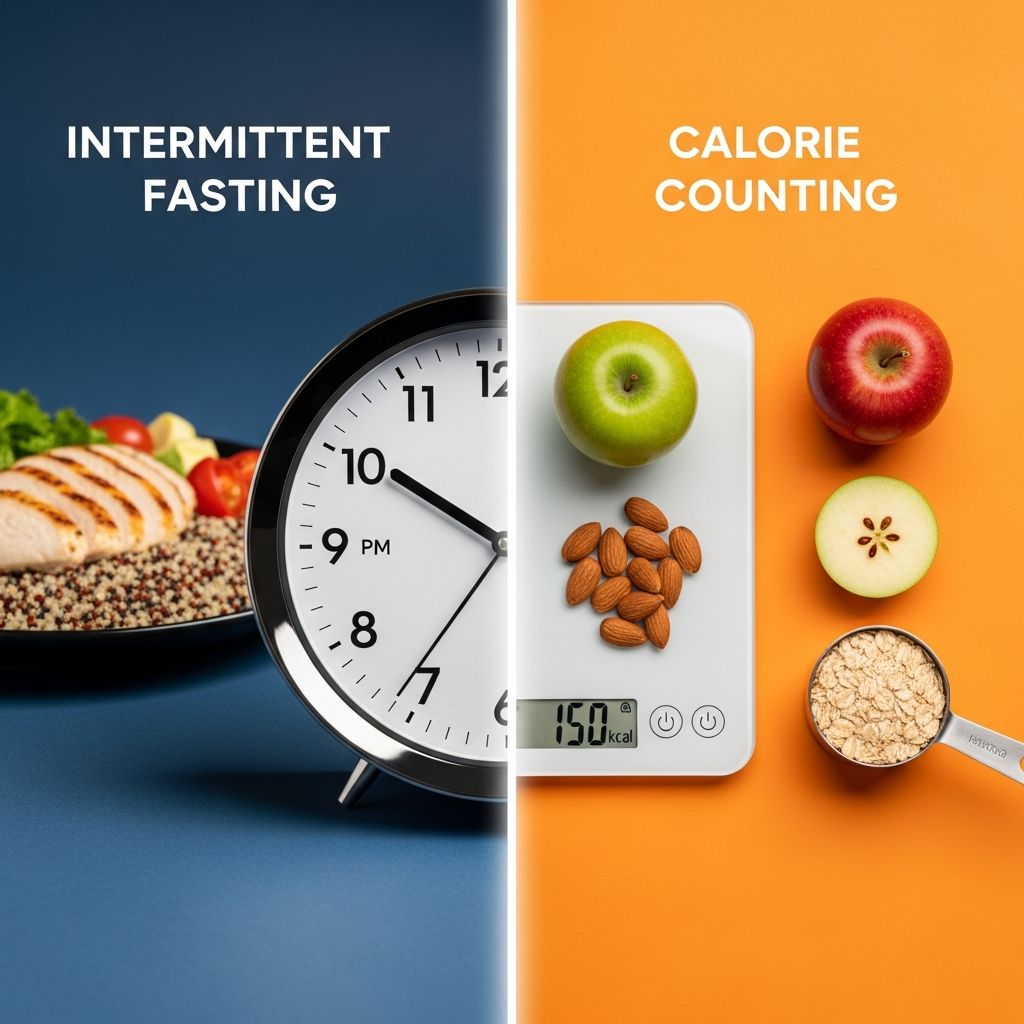
Both intermittent fasting (IF) and calorie counting aim to create a caloric deficit for weight loss, but they differ in approach: IF focuses on when you eat, while calorie counting emphasizes how much. Recent research, including a landmark study from the University of Colorado Anschutz Medical Campus, suggests IF—particularly the 4:3 protocol—may lead to greater weight loss (7.6% vs. 5% body weight reduction at one year) and better adherence than daily calorie restriction.
What Is Intermittent Fasting?
Intermittent fasting involves cycling between periods of eating and fasting, without strictly limiting food types during eating windows. Popular methods include:
- 16/8 method: Eat within an 8-hour window, fast for 16 hours daily.
- 5:2 diet: Eat normally five days, restrict to 500-600 calories on two non-consecutive days.
- 4:3 protocol: Eat freely four days, restrict calories by ~80% (500-600 calories) on three nonconsecutive days—shown superior in recent trials.
During non-fasting periods, focus on nutrient-dense foods for optimal health. IF may improve insulin sensitivity, reduce inflammation, and promote fat loss by aligning with circadian rhythms.
What Is Calorie Counting?
Calorie counting, or daily caloric restriction (DCR), tracks total daily energy expenditure (TDEE) and subtracts 500-1,000 calories for 1-2 pounds weekly loss. Tools like apps (MyFitnessPal) help log intake.
- Pros: Flexible, customizable to preferences; evidence-based for sustained loss if adhered to.
- Cons: Tedious tracking leads to burnout; lower adherence in long-term studies.
Guidelines recommend 1,200-1,500 calories for women and 1,500-1,800 for men, prioritizing protein (1.6-2.2g/kg body weight) to preserve muscle.
How Do They Compare for Weight Loss?
A randomized trial (n=165, BMI 27-46) compared 4:3 IF to ~34% daily calorie cuts over 12 months, with behavioral support and 300 min/week exercise.
| Metric | Intermittent Fasting (4:3) | Calorie Counting (DCR) |
|---|---|---|
| Body Weight Loss (12 months) | 7.6% (~17 lbs) | 5% (~11 lbs) |
| BMI Reduction | Greater by 1 point | Baseline |
| Waist Circumference | Improved more | Less improvement |
| Adherence | Higher (easier for some) | Lower long-term |
IF group showed superior reductions in systolic blood pressure, LDL cholesterol, triglycerides, insulin resistance (HOMA-IR), fasting glucose, and HbA1c. Differences attributed to better adherence, not activity levels.
Conflicting studies on time-restricted eating (TRE, e.g., 8-hour windows) show no edge over calorie counting, highlighting IF variant matters.
Health Benefits Beyond Weight Loss
- Metabolic Improvements: IF enhances autophagy (cellular repair), lowers oxidative stress; DCR improves lipids but less dynamically.
- Cardiometabolic: IF group had better blood pressure and cholesterol profiles at 12 months.
- Muscle Preservation: Both maintain lean mass with exercise/protein; IF may edge via hormonal shifts (e.g., higher growth hormone).
- Mental Health: IF reduced binge eating scores more; DCR risks obsession with numbers.
Which Is Easier to Stick With?
Adherence is key—90% diets fail long-term. IF’s structured ‘off’ days feel liberating vs. constant vigilance of DCR. Authors note: “The best strategy is one people adhere to.” However, IF suits structured eaters; DCR fits intuitive ones. Both need support: weekly dietitian sessions boosted success.
Related Stories



Potential Downsides and Risks
- IF Risks: Hunger on fast days, irritability, nutrient gaps if poor choices; not for pregnant, eating disorders, diabetes without supervision.
- DCR Risks: Fatigue, slowed metabolism if extreme; muscle loss without resistance training.
- Common: Initial side effects fade; consult doctor for BMI >30 or meds.
Study excluded high-risk groups; real-world varies.
Expert Opinions
“IF provides an evidence-based alternative for those struggling with daily restriction.” — Victoria Catenacci, MD, CU Anschutz.
“No superior approach; tailor to individual.” — Amy Rothberg, MD, Univ. of Michigan.
Experts recommend combining with exercise, sleep, stress management for 5-10% sustained loss.
Tips for Success
- IF: Start gradual (12:12), hydrate fast days, break fasts with protein/fiber.
- DCR: Batch-prep, use 80/20 rule (80% whole foods).
- Both: Track non-scale victories (energy, clothes fit); weekly weigh-ins.
Frequently Asked Questions (FAQs)
What is the 4:3 intermittent fasting method?
Eat normally four days/week; restrict to 500-600 calories three nonconsecutive days. Proven for 7.6% weight loss in trials.
Does intermittent fasting preserve muscle better than calorie counting?
Similar with protein/exercise; IF may boost via fasting-induced hormones, but evidence mixed.
Can beginners try IF or calorie counting?
Yes, start slow. IF: 12-hour fasts. DCR: 200-calorie daily cut. Seek professional guidance.
Is IF safe for women?
Generally yes, but cycle-sync (avoid prolonged fasts pre-menstrually); monitor hormones.
How much weight can I expect to lose?
IF: 7-8% in year 1 with support. DCR: 5%. Varies by adherence, starting weight.
Conclusion: Which Should You Choose?
Try IF if you prefer structure over tracking; opt for calorie counting if flexible portions appeal. Both work via deficit—pick sustainable. Recent data favors 4:3 IF for superior loss/adherence, but individualize with pros.
References
- Intermittent fasting beats calorie counting for weight loss — CU Anschutz Medical Campus. 2025-04-01. https://news.cuanschutz.edu/news-stories/intermittent-fasting-outperforms-calorie-counting-in-weight-loss-study
- Intermittent fasting vs. calorie counting: Which is more effective? — Advisory Board. 2025-04-03. https://www.advisory.com/daily-briefing/2025/04/03/intermittent-fasting
- Effectiveness of Intermittent Fasting and Time-Restricted Feeding Compared to Continuous Energy Restriction for Weight Loss — NCBI / Annals of Internal Medicine. 2023. https://www.ncbi.nlm.nih.gov/search/research-news/19152
- Time-restricted eating no better than counting calories, study finds — NCBI. 2022. https://www.ncbi.nlm.nih.gov/search/research-news/16046
Similar Articles








Read full bio of medha deb