Interproximal Reduction (IPR): Purpose & Benefits
Learn how interproximal reduction creates space for orthodontic treatments and improves your smile.
Understanding Interproximal Reduction (IPR)
Interproximal reduction (IPR) is a common dental procedure designed to remove small amounts of enamel from the surfaces between your teeth. Dentists and orthodontists use this minimally invasive technique to create additional space in your mouth before placing clear aligners, braces, or other orthodontic treatments. Also known as interproximal stripping or teeth slenderizing, this procedure has become increasingly popular in modern orthodontics, with one 2022 study finding that approximately 71% of people undergoing Invisalign treatment required some form of interproximal reduction.
The primary goal of IPR is to gain space without resorting to tooth extraction, making it a conservative approach to orthodontic treatment. By carefully removing minimal amounts of tooth structure, dentists can help crowded, oversized, or overlapped teeth achieve optimal alignment and positioning. For many patients with insufficient space in their mouth, IPR offers a non-invasive alternative that maintains the natural tooth structure while facilitating proper tooth movement.
What Is Interproximal Reduction?
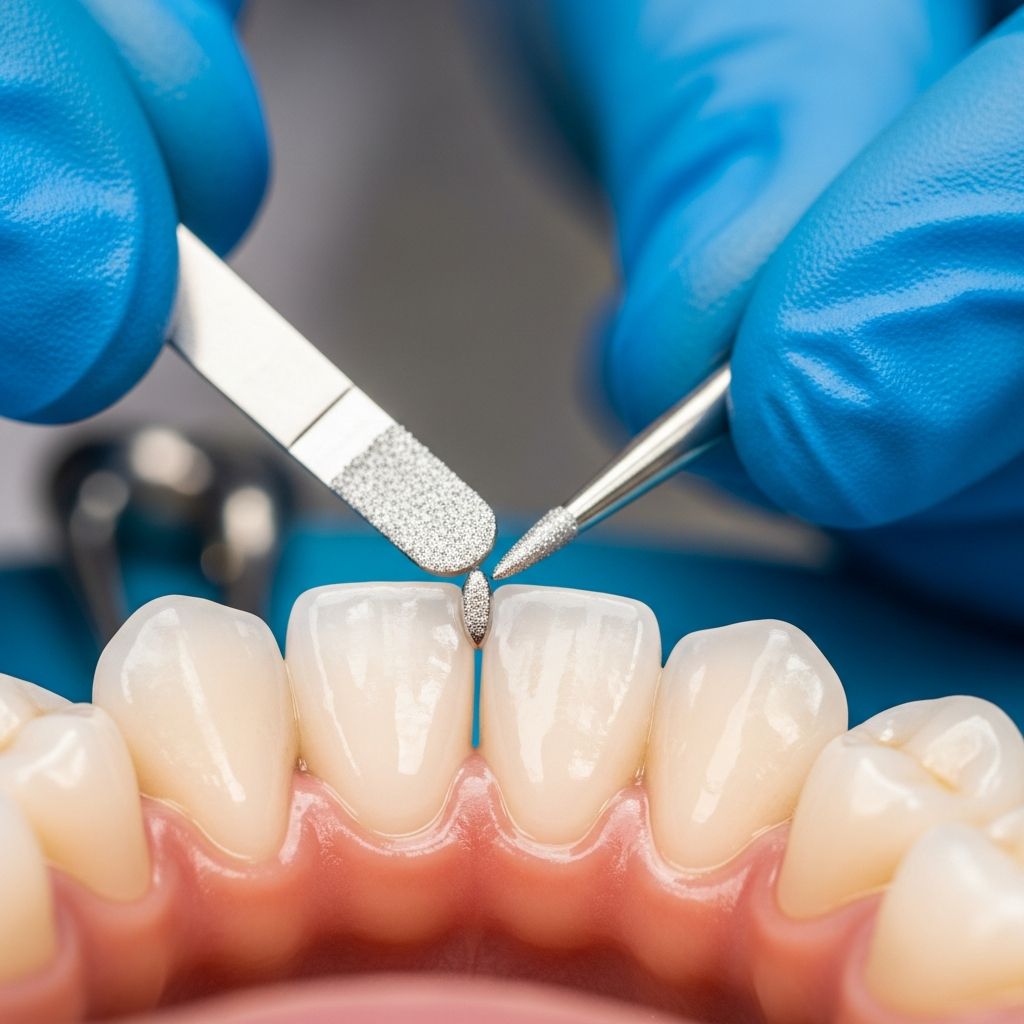
Interproximal reduction involves the precise removal of enamel from the contact areas between adjacent teeth. This procedure is performed using specialized dental instruments that allow for controlled and conservative enamel removal. The amount of tooth structure removed during IPR is typically minimal, usually no more than 0.5 millimeters per contact area, meaning you may not even notice visible changes in your smile after the procedure.
The procedure works by slightly reducing the mesiodistal dimensions of your teeth, which is the width of each tooth from the front-facing surface to the back-facing surface. This reduction creates subtle additional space that allows teeth to shift into better alignment during orthodontic treatment. The enamel removed is permanent, as enamel does not regenerate or repair itself over time.
Common Uses and Indications for IPR
Orthodontists recommend interproximal reduction in several clinical situations. The most common indication is when patients have mild to moderate crowding that requires additional space for teeth to move into proper alignment during clear aligner or braces treatment. IPR is particularly beneficial for patients who want to avoid tooth extraction, as it provides a space-gaining solution without removing entire teeth.
Additional clinical uses for IPR include:
- Creating space when tooth proportions are slightly larger than average
- Correcting tooth size discrepancies between upper and lower teeth
- Adjusting the bite relationship, particularly in cases requiring midline correction
- Enhancing the overall aesthetic outcome of orthodontic treatment
- Reducing the total number of orthodontic aligners or appointments needed
- Stabilizing contact points and reducing the need for permanent fixed retainers
The IPR Procedure: What to Expect
Understanding what happens during interproximal reduction can help alleviate any concerns about undergoing this procedure. During IPR, your dentist uses specialized instruments, typically either a thin, flexible sanding strip or a rotating hand instrument, to carefully remove enamel between your teeth. The procedure is precise and controlled, with your dentist removing as little enamel as possible while still achieving the necessary space.
Procedure Duration and Sessions
Interproximal reduction typically takes only a few minutes to complete. However, depending on your specific situation and how many teeth require reduction, you might have one session or several sessions spread out over weeks or months. Your dentist will customize the treatment plan based on your individual needs and the complexity of your case.
Related Stories



Pain and Comfort During IPR
One of the most reassuring aspects of interproximal reduction is that it should not cause pain. Since there are no nerves in tooth enamel, the removal of enamel does not result in discomfort or pain. Most people do not require local anesthesia for this procedure, though you may feel slight vibrations from the rotating instrument. If you do experience any pain during the procedure, inform your dentist immediately, as this would be unusual and warrant immediate attention.
Benefits of Interproximal Reduction
Interproximal reduction offers several significant advantages for patients requiring orthodontic treatment. As a conservative treatment option, IPR provides substantial long-term benefits that make it an attractive choice for many patients and dental professionals.
Key benefits include:
- Non-extraction alternative: Allows patients to maintain all their natural teeth while gaining the space needed for alignment
- Reduced treatment complexity: Often decreases the number of orthodontic appointments and aligners needed
- Shorter treatment duration: By facilitating more efficient tooth movement, IPR can reduce overall treatment time
- Improved aesthetics: Helps achieve better smile proportions and contact point positioning
- Predictable outcomes: When performed correctly by skilled professionals, IPR provides reliable results
- Minimal invasiveness: The procedure is far less invasive than tooth extraction or surgical alternatives
- Preservation of tooth function: Maintains the natural structure and function of your teeth
Risks and Considerations
While interproximal reduction is generally considered a safe procedure with low associated risks, it is important to understand potential complications and considerations before undergoing treatment. The permanence of IPR means that careful planning and precise execution are essential.
Primary Risks of IPR
The main risk associated with interproximal reduction is removing too much enamel. When excessive enamel is removed, it can make your teeth weaker and more vulnerable to damage, fracture, and decay. Additionally, aggressive enamel removal can increase tooth sensitivity and may affect the long-term structural integrity of your teeth.
Other potential risks and considerations include:
- Increased tooth sensitivity following the procedure
- Greater susceptibility to tooth decay if enamel removal is excessive
- Potential for pulp temperature elevation during the procedure
- Changes in enamel surface roughness that may affect plaque accumulation
- Permanent and irreversible nature of enamel removal
Patient Suitability and Contraindications
Not every patient is a suitable candidate for interproximal reduction. IPR is only performed in patients with good dental hygiene and a low risk of dental caries. Additionally, patients must have adequate gingival retraction and clear visualization of contact areas to ensure proper procedure execution. Patients with existing dental disease or insufficient oral hygiene may need to address these issues before undergoing IPR.
Permanent Nature of Interproximal Reduction
It is crucial to understand that interproximal reduction is a permanent and irreversible procedure. Unlike other orthodontic interventions that can be adjusted or reversed, the enamel removed during IPR does not grow back. Tooth enamel is composed of mineralized crystals that do not regenerate, making this decision permanent. This permanence underscores the importance of having IPR performed only by skilled and licensed dental professionals who can ensure precise and conservative enamel removal.
Success Rates and Outcomes
When performed by a skilled and licensed dental professional, interproximal reduction is typically successful in achieving its intended goals of creating adequate space for tooth movement and improving bite relationships. Research has demonstrated that IPR is effective for gaining the space necessary to avoid extractions in orthodontic treatment. Studies examining clear aligner therapy with IPR show favorable treatment outcomes and patient satisfaction when the procedure is executed properly.
To ensure the best possible results from interproximal reduction, patients should:
- Practice excellent oral hygiene throughout treatment
- Attend all scheduled follow-up visits with their dentist
- Follow their dentist’s recommendations for post-procedure care
- Report any unusual symptoms or concerns immediately
- Maintain regular dental checkups and cleanings
Important Safety Considerations
Patient safety and long-term dental health are paramount when considering interproximal reduction. It is absolutely essential that IPR be performed only by trained, qualified dental professionals. You should never attempt teeth shaving or enamel reduction on your own, as this can result in severe damage to your teeth, improper enamel removal, and significant complications. Attempting DIY teeth modification can lead to irreversible damage that would be far more costly and complex to address than professional IPR performed by a dentist or orthodontist.
Before undergoing IPR, ensure that your dental professional obtains signed informed consent, clearly explaining the procedure, its benefits, risks, and permanent nature. A trusted dental professional is the best way to avoid mishaps and ensure optimal treatment outcomes.
Before Your IPR Procedure
Prior to undergoing interproximal reduction, several important preparatory steps should be completed. Your dentist will conduct a comprehensive evaluation to ensure you are a suitable candidate for the procedure. This evaluation includes assessing your oral hygiene status, checking for existing dental disease, and evaluating your tooth and bone structure through imaging studies if necessary.
Your dentist should also discuss:
- The specific amount of enamel to be removed
- The timeline for the procedure and any follow-up sessions
- Your expectations and realistic outcomes
- Post-procedure care and sensitivity management
- The permanent nature of the procedure
- Alternative treatment options available to you
Post-Procedure Care and Management
Following interproximal reduction, certain care measures can help minimize sensitivity and promote optimal healing. Your dentist may recommend using desensitizing toothpaste if you experience sensitivity following the procedure. Maintaining excellent oral hygiene, including careful brushing and flossing, helps protect the treated areas and promotes gingival health.
It is important to avoid very hard or sticky foods immediately after the procedure and to be gentle when flossing in the treated areas. Most patients find that any initial sensitivity subsides within a few days to a week following the procedure. If sensitivity persists or worsens, contact your dentist for evaluation and potential treatment options.
Frequently Asked Questions
Q: Does everyone undergoing orthodontic treatment need interproximal reduction?
A: No, not everyone needs IPR. If you have enough room in your mouth to move teeth around, it is probably not necessary. Your dentist will evaluate your specific situation and recommend IPR only if it would benefit your treatment.
Q: Is interproximal reduction painful?
A: No, IPR should not hurt. Since there are no nerves in tooth enamel, the removal of enamel does not cause pain. Most people do not require anesthesia and may only feel slight vibrations from the rotating instrument.
Q: How much enamel is removed during IPR?
A: Dentists remove very small amounts of enamel, usually no more than 0.5 millimeters per contact area. You may not even notice visible changes in your smile after the procedure.
Q: Is interproximal reduction reversible?
A: No, interproximal reduction is permanent and irreversible. The enamel removed during the procedure does not grow back, making this a permanent modification to your teeth.
Q: What happens if too much enamel is removed?
A: Removing too much enamel can weaken your teeth and make them more vulnerable to damage and decay. This emphasizes the importance of having IPR performed only by skilled dental professionals.
Q: Can I have IPR multiple times?
A: While it is possible to perform IPR in multiple sessions over time, the total amount of enamel that can be removed is limited. This is why conservative planning and precise execution are crucial.
Q: Will IPR cause my teeth to become sensitive?
A: Some patients may experience temporary tooth sensitivity following IPR, but this usually subsides within a few days to a week. Your dentist can recommend desensitizing treatments if needed.
Q: Is IPR appropriate if I have existing dental problems?
A: IPR is only performed in patients with good dental hygiene and low risk of dental decay. If you have existing dental disease, you should address these issues with your dentist before considering IPR.
References
- Interproximal Reduction (IPR): Purpose & Benefits — Cleveland Clinic. Accessed December 2025. https://my.clevelandclinic.org/health/procedures/interproximal-reduction
- The Role of Interproximal Reduction (IPR) in Clear Aligner Therapy — National Center for Biotechnology Information (NCBI). 2024. https://pmc.ncbi.nlm.nih.gov/articles/PMC11032144/
- Guidelines for Interproximal Enamel Reduction (IPR) — American Dental Association Commons. https://commons.ada.org/cgi/viewcontent.cgi?article=1133&context=nysdj
Similar Articles








Read full bio of Sneha Tete