Interstitial Granulomatous Dermatitis Pathology
Comprehensive guide to the histopathology, clinical features, and management of interstitial granulomatous dermatitis.
Abstract
Interstitial granulomatous dermatitis (IGD), also known as interstitial granulomatous dermatitis with plaques or rope sign, represents a rare cutaneous reaction pattern characterized by a distinctive histopathology. This condition features a diffuse interstitial infiltrate of histiocytes in the reticular dermis, often surrounding fragmented collagen bundles, with variable eosinophils, neutrophils, and lymphocytes. Clinically, it manifests as erythematous to violaceous papules, plaques, or nodules, frequently on the trunk and proximal extremities, sometimes exhibiting the pathognomonic linear cord-like rope sign along the lateral trunk. IGD is strongly associated with autoimmune diseases such as rheumatoid arthritis, systemic lupus erythematosus, and others, though it may also arise idiopathically or in response to medications. Diagnosis hinges on histopathological examination, as clinical features overlap with granuloma annulare, cutaneous T-cell lymphoma, and drug eruptions. Management targets underlying conditions, with variable responses to topical or systemic therapies. This article synthesizes clinicopathological correlations, drawing from peer-reviewed studies to aid dermatologists and pathologists in accurate recognition and differentiation.
Introduction
Interstitial granulomatous dermatitis (IGD) is an uncommon dermatological entity first described in 1993 by Ackerman et al. as a unique histopathological pattern distinct from infectious granulomas. It belongs to the spectrum of non-infectious cutaneous granulomatous diseases, primarily affecting middle-aged women, with a mean onset age of 58 years. The precise pathogenesis remains elusive, but immune complex deposition in dermal vessels is hypothesized to trigger complement activation, neutrophil recruitment, and subsequent collagen degeneration, eliciting a granulomatous response.
Clinically heterogeneous, IGD challenges dermatologists due to its mimicry of diverse conditions. Histology provides the gold standard for diagnosis, revealing a band-like or interstitial histiocytic infiltrate with collagen necrobiosis. Associations with autoimmune rheumatic diseases occur in up to 50-70% of cases, underscoring the need for systemic evaluation. Recent studies emphasize its overlap with palisaded neutrophilic granulomatous dermatitis (PNGD), suggesting a unified spectrum rather than discrete entities. This review details the pathological hallmarks, clinical spectrum, and diagnostic pitfalls based on high-quality histopathological analyses.
Clinical features
IGD presents with a wide array of cutaneous lesions, predominantly asymptomatic, though mild pruritus or tenderness may occur. Common manifestations include:
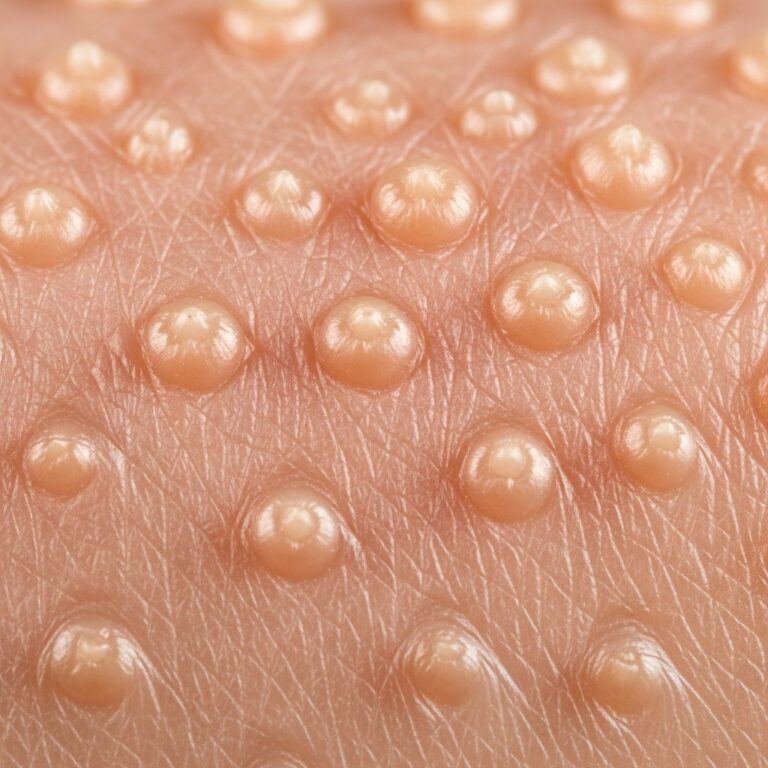
- Erythematous to violaceous papules and plaques: Often annular or arcuate, symmetrically distributed on the trunk, thighs, buttocks, and intertriginous areas.
- Subcutaneous nodules: Firm, tender nodules in dermal or hypodermal layers, occasionally coalescing.
- Rope sign: Pathognomonic indurated, linear cord-like plaque extending from the lateral trunk to axillae or groin, present in a minority (~20-30%) of cases.
- Hyperkeratotic or hyperpigmented variants: Less common, mimicking lichen simplex or post-inflammatory changes.
Lesions evolve over weeks to months, with spontaneous resolution, flares, or persistence reported. Systemic symptoms like arthralgias, myalgias, or fever accompany ~30% of cases, particularly those linked to autoimmune disease. Pediatric and male cases are rare but documented, often drug-induced.
Dermoscopy
Dermoscopic findings in IGD are non-specific but aid in biopsy site selection. Key features include:
- Structureless red to violaceous areas reflecting dermal inflammation.
- Linear white tracks corresponding to the rope sign fibrosis.
- Scattered dotted vessels amid a pink background.
- Absence of scale or milia-like cysts, distinguishing from granuloma annulare.
These patterns correlate with histiocytic interstitial infiltrates and collagen degeneration, enhancing pre-biopsy suspicion.
Pathology
Histopathological examination is essential, as clinical diagnosis is unreliable. Core features include:
Microscopic features
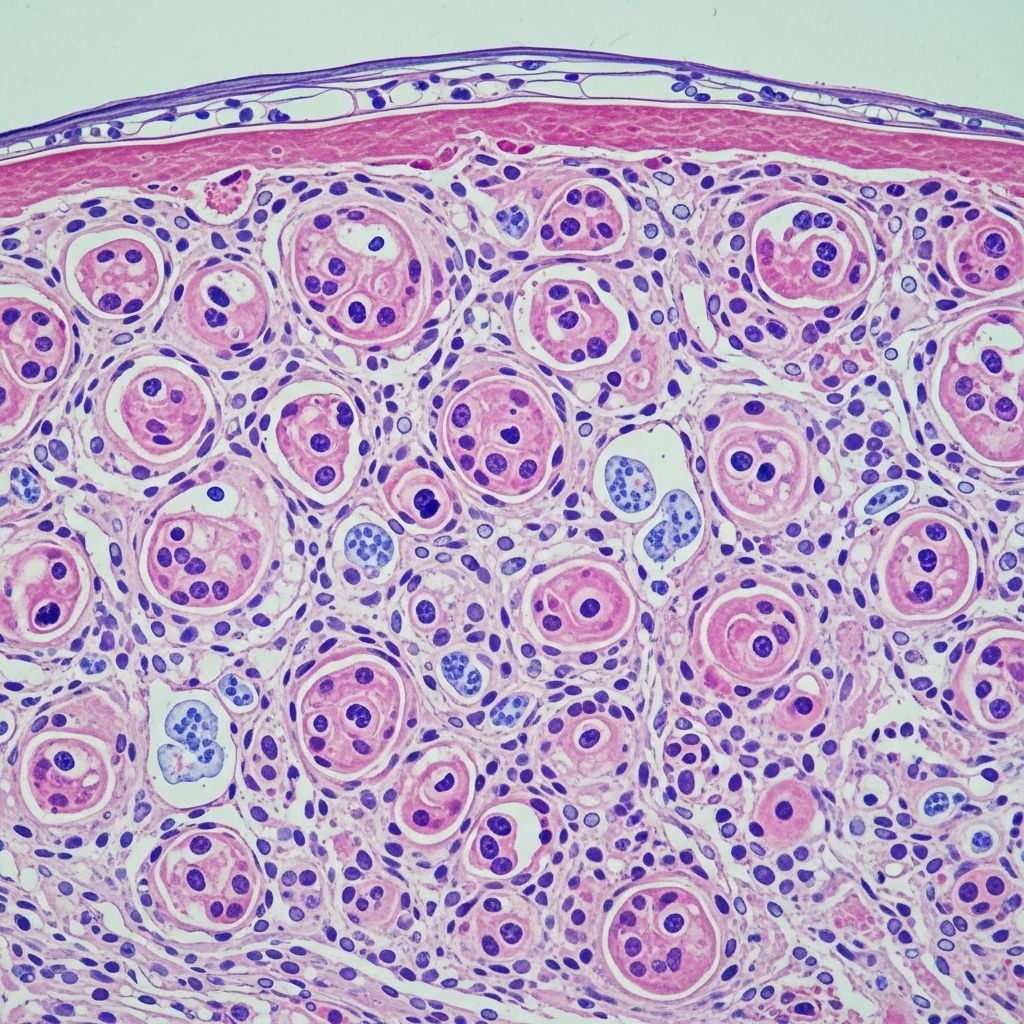
- Diffuse interstitial histiocytic infiltrate: Predominantly in mid- to deep reticular dermis, composed of mononuclear phagocytes (CD68+), lymphocytes (CD3+), and variable eosinophils/neutrophils.
- Collate fragmentation and necrobiosis: Eosinophilic, swollen collagen bundles with palisading histiocytes; piecemeal necrosis in 70%.
- Leukocytoclasia: Karyorrhectic debris in 80%, without frank vasculitis.
- Band-like pattern: Superficial dermis involvement in 40%, palisading in 60%.
- Mucin deposition: Focal stromal mucin (Colloidal iron+), especially in autoimmune-associated cases.
Related Stories



Early lesions show more neutrophils; late stages feature fibrosis and sparse infiltrate. Multinucleated giants are infrequent.
Special stains
- Periodic acid-Schiff (PAS): Negative for fungi.
- Ziehl-Neelsen/Grocott: Rule out mycobacteria.
- Immunofluorescence: IgM/C3 deposits in vessels or basement membrane in subsets.
Immunohistochemistry
| Marker | Pattern | Significance |
|---|---|---|
| CD68 | Diffuse histiocytes | Confirms macrophage predominance |
| CD3/CD4 | Interstitial T-cells | Reactive lymphoid component |
| CD20 | Focal B-cells | Excludes lymphoma |
| CD30 | Negative | Ruled out lymphoproliferative |
| HLA-DR | Activated monocytes/T-cells | Indicates immune activation |
Pathogenesis
The inciting event likely involves immune complex deposition in post-capillary venules, activating complement and neutrophils, leading to collagenolysis and granulomatous repair. Associated conditions amplify this:
- Autoimmune diseases: Rheumatoid arthritis (most common), SLE, Sjögren syndrome, autoimmune thyroiditis.
- Drugs: TNF inhibitors (adalimumab, etanercept), trastuzumab, ACE inhibitors.
- Malignancies: Rarely lymphoproliferative disorders.
Genetic predispositions (HLA associations) and cytokine dysregulation (TNF-α, IL-1) contribute.
Differential diagnosis
| Condition | Key Distinguishing Features |
|---|---|
| Granuloma annulare | Mucin-rich, superficial palisading, no neutrophils |
| PNG D | More neutrophils/vasculitis, epidermal change |
| Drug eruption | Similar histology; resolves on cessation |
| Cutaneous T-cell lymphoma | Atypical lymphocytes, epidermotropism |
| Morphea | Sclerosing dermis, no granulomas |
| Infectious granuloma | Organisms on special stains |
Treatment
No standardized therapy exists; approach targets etiology:
- Underlying disease control: DMARDs for RA, immunosuppression for SLE.
- Symptomatic: Topical corticosteroids, intralesional steroids.
- Systemic: Dapsone (effective in reports), hydroxychloroquine, methotrexate.
- Refractory cases: Anti-TNF paradoxically implicated but others trialed.
Spontaneous remission common; monitor for systemic involvement.
FAQs
Q: What is the rope sign in IGD?
A: A thick, indurated linear plaque along the lateral trunk/axilla, highly suggestive but seen in minority.
Q: Is biopsy always required?
A: Yes, due to clinical overlap; histology confirms interstitial histiocytes and necrobiosis.
Q: Which autoimmune disease is most associated?
A: Rheumatoid arthritis, followed by SLE.
Q: Can IGD resolve spontaneously?
A: Yes, flares/remissions typical; treat underlying cause.
Q: How to differentiate from granuloma annulare?
A: IGD deeper infiltrate, neutrophils, less mucin; GA more superficial/mucinous.
References
- Interstitial granulomatous dermatitis: a characteristic histological pattern with diverse clinical associations — Rodriguez-Justo M et al. PMC. 2015-12-01. https://pmc.ncbi.nlm.nih.gov/articles/PMC4697021/
- Interstitial Granulomatous Dermatitis Associated With the Use of Tumor Necrosis Factor α Inhibitors — Deng A et al. JAMA Dermatology. 2006-11-01. https://jamanetwork.com/journals/jamadermatology/fullarticle/402844
- Interstitial Granulomatous Dermatitis: A Clinicopathological Study — Tomasini C et al. PubMed. 2015-04-01. https://pubmed.ncbi.nlm.nih.gov/25830722/
- Interstitial granulomatous dermatitis with arthritis — Verneuil L et al. Penn State University. 2001-01-01. https://pure.psu.edu/en/publications/interstitial-granulomatous-dermatitis-with-arthritis/
Similar Articles








Read full bio of medha deb