Intra-Aortic Balloon Pump Therapy: A Comprehensive Guide
Life-saving mechanical support for failing hearts and cardiogenic shock.
Understanding Intra-Aortic Balloon Pump Therapy
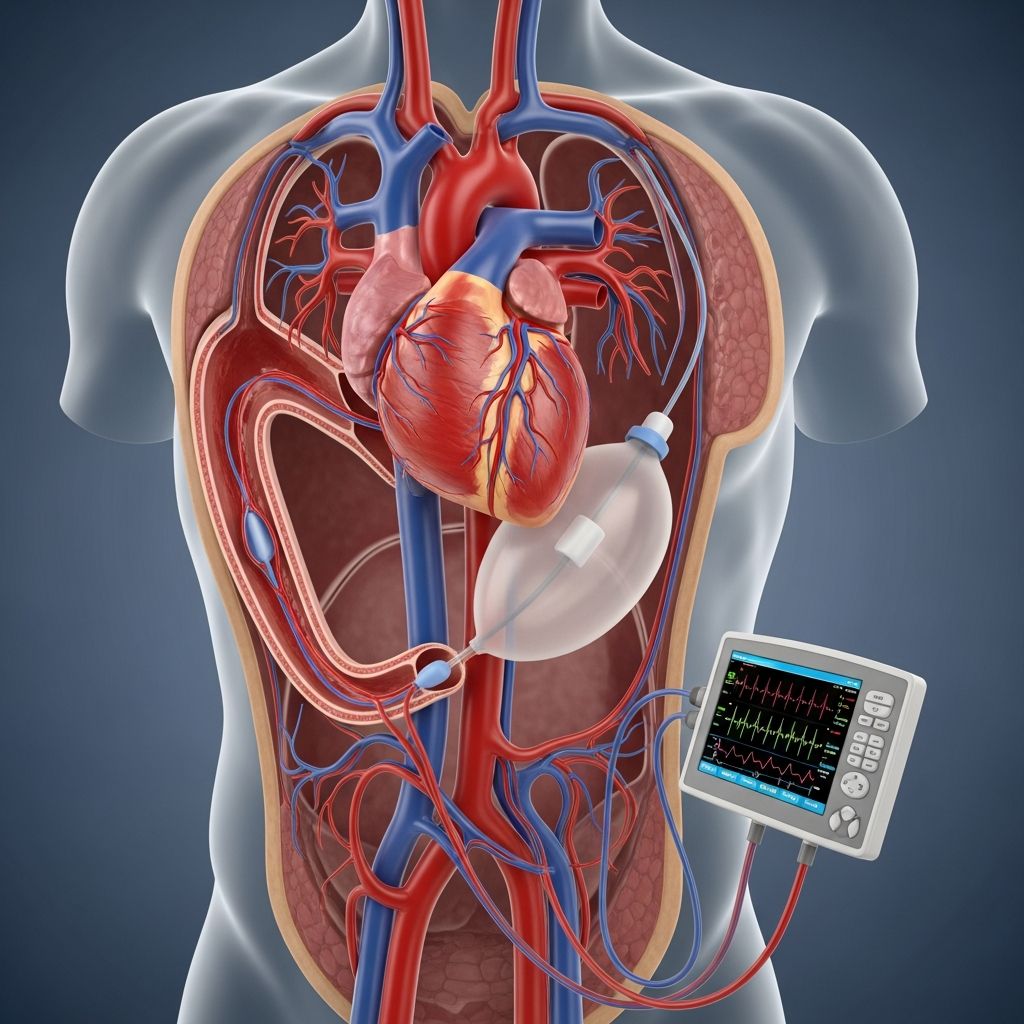
An intra-aortic balloon pump (IABP) is a sophisticated mechanical device designed to assist your heart when it cannot pump sufficient blood to meet your body’s needs. This life-saving technology represents a critical intervention in cardiac care, particularly for patients experiencing cardiogenic shock or severe heart complications. The IABP works by augmenting diastolic aortic pressure and reducing the workload on your heart, thereby improving blood flow to vital organs and the heart muscle itself.
The device consists of a thin, flexible tube called a catheter with a specially designed balloon attached to its tip. This balloon, known as an intra-aortic balloon (IAB), inflates and deflates in precise synchronization with your heart’s rhythm. The catheter connects to a sophisticated computer console that manages the timing of balloon inflation and deflation, ensuring optimal therapeutic benefit with each heartbeat.
How the Intra-Aortic Balloon Pump Works
Physiological Mechanism
The IABP operates on a sophisticated principle of counterpulsation that directly supports your heart’s function. When your heart relaxes (diastole), the balloon inflates, pushing blood backward into the coronary arteries—the vessels that supply oxygen-rich blood to the heart muscle itself. This process significantly enhances coronary perfusion, ensuring that your heart receives the oxygen it critically needs. Simultaneously, the inflated balloon increases diastolic aortic pressure, improving blood flow throughout your body.
When your heart contracts (systole), the balloon rapidly deflates. This deflation reduces the resistance (afterload) that your heart must work against when pumping blood to the body. By decreasing afterload, the IABP allows your heart to pump more blood with considerably less energy expenditure. This reduction in workload directly decreases myocardial oxygen demand, protecting a heart that is already compromised.
Hemodynamic Benefits
The hemodynamic advantages of IABP therapy are substantial and well-documented. Research demonstrates that IABP therapy can achieve a 24% increase in cardiac index while simultaneously reducing myocardial oxygen demand by 31%. These improvements translate into better cardiac output through increased stroke volume, particularly beneficial for patients with reduced left ventricular function. The device also improves ventriculoarterial coupling, which enhances the heart’s efficiency in pumping blood.
For patients with systolic heart failure, the IABP reduces both end-systolic and end-diastolic pressures within the left ventricle. This reduction in pressure and volume produces a beneficial leftward shift in the pressure-volume loop, indicating decreased myocardial oxygen demand. Additionally, patients with acute right ventricular failure benefit from reduced right ventricular afterload as pulmonary artery pressures decrease, subsequently improving overall cardiac output.
When You Might Need IABP Therapy
Primary Indications
IABP therapy is indicated for several serious cardiac conditions where your heart cannot maintain adequate circulation. The primary condition requiring IABP support is cardiogenic shock—a life-threatening state where your heart cannot pump enough blood to meet your body’s metabolic demands. However, the indications extend beyond this critical condition.
Related Stories



Common situations requiring IABP placement include:
- Acute myocardial infarction (heart attack) complicated by cardiogenic shock or mechanical complications
- Acute congestive heart failure with significant hypotension unresponsive to medications
- Mechanical complications of heart attack, including acute mitral regurgitation due to papillary muscle rupture or ventricular septal rupture
- Low cardiac output state following coronary artery bypass grafting surgery
- Unstable angina uncontrolled by medications
- Certain abnormal heart rhythms causing hemodynamic instability
- Severe intrinsic heart disease awaiting definitive surgical or interventional treatment
Prophylactic and Bridge Therapy Use
Beyond acute crisis management, IABP therapy serves as prophylactic support in high-risk patients undergoing percutaneous coronary intervention (PCI) or cardiac surgery. Your cardiologist may recommend prophylactic IABP placement if you have significant risk factors that might lead to hemodynamic instability during the procedure. The IABP functions as a bridge to definitive treatment, providing temporary stabilization while you recover or await surgery, stent placement, or other definitive interventions. This bridging role is crucial in patients with refractory heart failure or intractable myocardial ischemia.
The IABP Procedure: What to Expect
Pre-Procedure Preparation
Before undergoing IABP placement, your healthcare team will conduct a thorough evaluation of your condition. Your cardiologist will explain the procedure in detail, discussing its risks, benefits, and what you can expect during and after placement. In emergency situations, this explanation may be abbreviated due to the critical nature of your condition. Your medical team will ensure you understand the procedure and address any questions or concerns you have.
Placement Procedure Steps
The IABP placement procedure typically follows these carefully orchestrated steps:
- Your healthcare provider will make a small incision through the skin and into an artery in your upper inner thigh or groin area. This location provides optimal access to the arterial system.
- The balloon-tipped catheter is carefully inserted through this arterial access point.
- Under continuous X-ray imaging (fluoroscopy), your surgeon advances the catheter through your arterial system toward your heart.
- The catheter is positioned so that the balloon rests in your thoracic aorta, the large artery that exits your heart and distributes blood to your entire body.
- Once properly positioned, the balloon is programmed to inflate precisely when your heart relaxes and deflate when your heart contracts.
- The external end of the catheter connects to a computer console that monitors your heart rhythm and controls balloon inflation and deflation.
In many cases, IABP placement occurs during an acute hospitalization or emergency intervention. Sometimes it is placed during planned cardiac surgery. Your medical team may insert the device at your bedside in an intensive care unit, in the cardiac catheterization laboratory, or in the operating room, depending on your specific clinical situation.
Timing and Synchronization
The critical factor determining IABP effectiveness is precise timing of balloon inflation and deflation relative to your heart’s electrical activity. Your heart rate and the device’s assist ratio—essentially how many of your heartbeats receive IABP support—influence the overall benefit. The device typically provides support on every heartbeat, though this can be adjusted based on your clinical response and recovery progress.
Duration and Management
How Long You’ll Have the Device
The duration of IABP support varies considerably depending on your specific condition and recovery trajectory. Some patients require only hours to days of support, while others may need the device for several days or even weeks. Your healthcare team continuously assesses your cardiac function and hemodynamic status to determine when you are ready for device removal. As your heart recovers strength and your medications optimize your condition, your cardiologist will gradually reduce IABP support before complete removal.
Intensive Care Management
While the IABP is in place, you will remain in an intensive care unit where specialized nurses and physicians monitor your condition continuously. Your medical team watches your heart rhythm, blood pressure, oxygen levels, and overall hemodynamic status minute by minute. They assess your response to therapy and make adjustments to ensure optimal support. Movement is limited while the IABP is in place to prevent catheter displacement, though your care team will help you maintain some mobility as appropriate.
Advantages and Limitations
Key Advantages
The IABP offers several important advantages over other mechanical support options. It is relatively simple to place and remove, requires no major surgery for insertion, can be implanted quickly in emergency situations, and is cost-effective compared to other advanced mechanical circulatory support devices. The IABP has an excellent safety profile with minimal complications when managed by experienced teams. It can be effectively managed in intensive care units by standard ICU staff with appropriate training. Additionally, the IABP is reversible—the device can be removed quickly if needed without permanent changes to your body.
Limitations and Considerations
While effective, IABP therapy does have limitations. The hemodynamic support, though valuable, is more modest compared to more advanced mechanical circulatory devices. Certain patient factors can reduce IABP effectiveness. Tachycardia (heart rates exceeding 130 beats per minute) diminishes the device’s benefit because there is insufficient time for proper balloon inflation and deflation. Significant aortic regurgitation (leakage of the aortic valve) reduces IABP effectiveness. Patients with very low cardiac indices may not generate sufficient blood flow to maintain balloon function.
The device requires proper positioning in the aorta, and patient immobility is necessary to prevent catheter displacement. In patients receiving extracorporeal membrane oxygenation (ECMO), controversy exists regarding optimal IABP use, as the devices’ positions in the aorta may theoretically interfere with each other. There is also a small risk of lower limb ischemia when the IABP catheter remains in place for extended periods.
Risks and Potential Complications
While the IABP is generally safe, any invasive procedure carries potential risks. These may include infection at the insertion site, bleeding from the arterial puncture, vascular injury, limb ischemia (reduced blood flow to the leg where the catheter was inserted), balloon rupture, catheter malposition, and thrombus (blood clot) formation on the balloon surface. Your healthcare team takes meticulous precautions to minimize these risks. They monitor you closely for any signs of complications and address them promptly if they develop.
Recovery and Aftercare
Immediate Post-Removal Period
After your IABP is removed, your healthcare team will monitor you closely to ensure you tolerate the loss of mechanical support. Your leg at the insertion site will be carefully assessed for proper blood flow and healing. You will typically receive pain management and be monitored for any delayed complications.
Ongoing Recovery
Recovery from IABP therapy depends on the underlying cardiac condition requiring the device. You will continue cardiac medications as prescribed, attend follow-up appointments with your cardiologist, and gradually increase activity as tolerated. Cardiac rehabilitation may be recommended to help rebuild your strength and endurance. Your long-term prognosis depends on your specific diagnosis, the extent of cardiac damage, and your response to treatment.
Comparison with Other Mechanical Support Options
| Device | Complexity | Support Level | Insertion Method | Duration |
|---|---|---|---|---|
| IABP | Simple, non-surgical | Moderate | Percutaneous catheter | Hours to weeks |
| ECMO | Complex, requires surgery | Complete circulatory support | Surgical cannulation | Days to weeks |
| Ventricular Assist Devices | Very complex, major surgery | Complete LV support | Surgical implantation | Weeks to permanent |
Frequently Asked Questions
Q: Will I be awake during IABP placement?
A: In emergency situations, you may receive sedation. During scheduled procedures, you may receive local anesthesia with sedation or general anesthesia depending on your clinical situation and institutional protocols.
Q: Can I move around with the IABP in place?
A: Movement is limited to prevent catheter displacement. However, your care team will encourage appropriate movement and may help you sit up or perform gentle range-of-motion exercises to prevent complications from immobility.
Q: How long does IABP support typically last?
A: Duration varies widely from hours to several weeks depending on your condition and recovery. Your cardiologist will determine when you are ready for device removal based on your hemodynamic status and cardiac function improvement.
Q: What happens after the IABP is removed?
A: Your leg will be monitored for bleeding and proper blood flow. You will remain hospitalized briefly for observation, then gradually resume normal activities as tolerated while continuing cardiac medications and rehabilitation.
Q: Are there alternatives to IABP therapy?
A: Yes, alternatives include medications to support heart function, ECMO for complete circulatory support, and ventricular assist devices. Your cardiologist will recommend the best option based on your specific condition and needs.
Q: What is the success rate of IABP therapy?
A: Success depends on your underlying condition and how quickly you receive treatment. IABP provides temporary stabilization, allowing time for your heart to recover or for definitive treatments like surgery or stenting to be performed.
References
- Intra-Aortic Balloon Pump Therapy — University of Rochester Medical Center. 2024. https://www.urmc.rochester.edu/encyclopedia/content?contenttypeid=135&contentid=341
- Intra-Aortic Balloon Pump – StatPearls — National Center for Biotechnology Information (NCBI), U.S. National Library of Medicine. 2024. https://www.ncbi.nlm.nih.gov/books/NBK542233/
- Intra-Aortic Balloon Pump Overview — Life in the Fast Lane (LITFL) Clinical Education. 2024. https://litfl.com/intra-aortic-balloon-pump-ccc/
- Understanding Intra-Aortic Balloon Pump Therapy — Northwestern Medicine. 2024. https://encyclopedia.nm.org/Library/HealthSheets/3,S,90230
- IABP First Line Support for High Risk Patients — Getinge. 2024. https://www.getinge.com/us/products-and-solutions/cardiovascular-procedures/iabp-counterpulsation/
- Intra-Aortic Balloon Pump — Kaiser Permanente Health Encyclopedia. 2024. https://healthy.kaiserpermanente.org/health-wellness/health-encyclopedia/he.intra-aortic-balloon-pump.tx4071abc
Similar Articles








Read full bio of Sneha Tete