Intraepidermal Carcinoma Images: Clinical Gallery And Guide
Comprehensive visual guide to intraepidermal squamous cell carcinoma, including clinical images, diagnosis, and treatment options for early skin cancer detection.
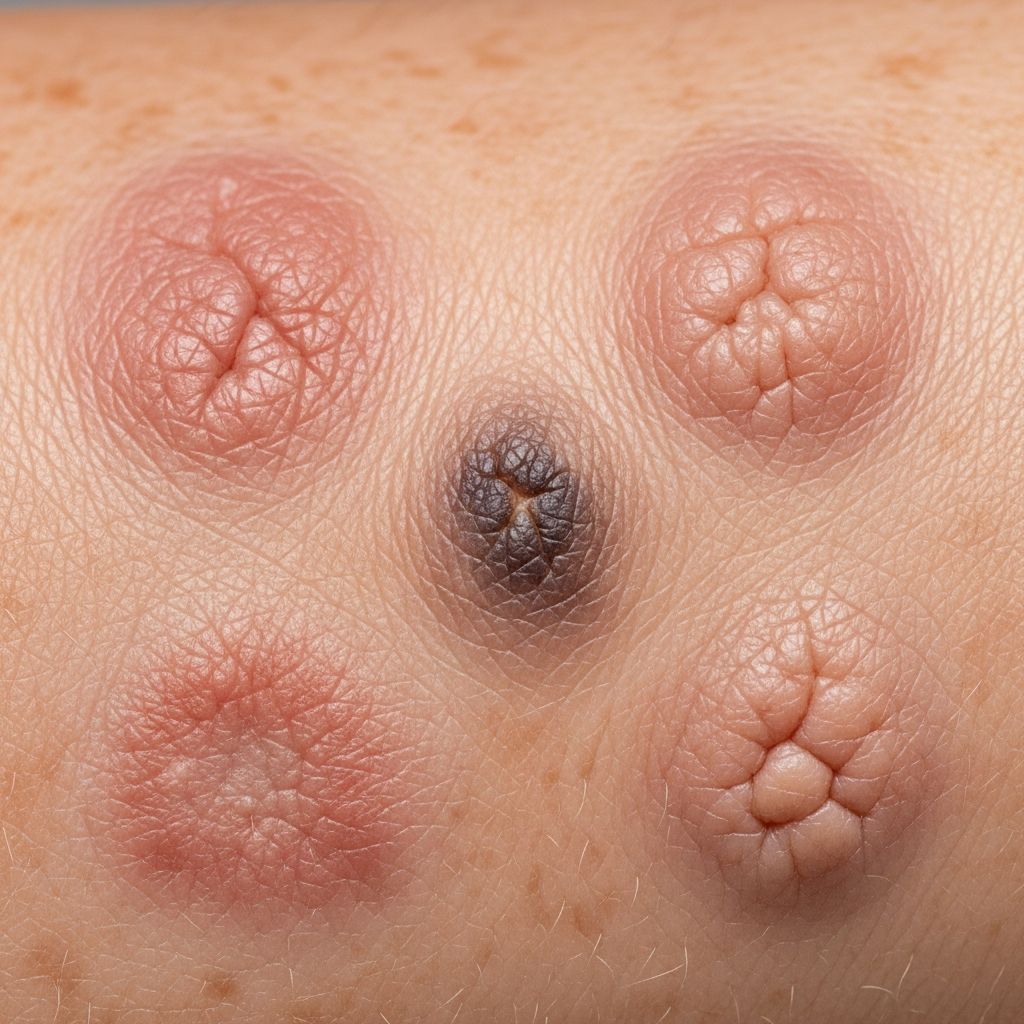
Intraepidermal carcinoma, also known as intraepidermal squamous cell carcinoma (SCC), Bowen’s disease, or squamous cell carcinoma in situ (SCCIS), is a superficial form of skin cancer confined to the epidermis, the outermost layer of the skin. This condition presents as irregular scaly plaques, often on sun-exposed areas, and early recognition through visual identification is crucial for effective treatment. This article provides a comprehensive gallery of clinical images alongside detailed explanations of demographics, causes, clinical features, diagnosis, treatment, prevention, and outlook to aid dermatologists, healthcare professionals, and patients in understanding and managing this common keratinocyte cancer.
What is intraepidermal carcinoma?
Intraepidermal carcinoma refers to malignant changes within the squamous cells of the epidermis, remaining “in situ” without invading deeper tissues. First described by American dermatologist John T. Bowen in 1912, it is characterized by full-thickness dysplasia of the epidermis. These flat squamous cells produce keratin, a protein essential for skin, hair, and nails. While not immediately life-threatening, untreated lesions have a 3-5% risk of progressing to invasive squamous cell carcinoma, particularly in immunocompromised individuals.
Key characteristics:
- Confined to the epidermis (non-invasive).
- Slow-growing, persistent plaques.
- High recurrence rate post-treatment (up to 10-20% in some cases).
- Most common on sun-exposed sites like face, ears, hands, and lower legs.
Demographics
Intraepidermal carcinoma predominantly affects older adults, with peak incidence in those over 60 years. It is more common in fair-skinned individuals (Fitzpatrick skin types I-II) due to cumulative UV exposure. Men and women are equally affected, though distribution may vary by site—genital lesions are more frequent in women. Immunosuppressed patients, such as organ transplant recipients or those on long-term corticosteroids, have a 10-fold higher risk. Globally, incidence rates are rising with aging populations and increased sun exposure.
In Australia and New Zealand, where UV radiation is intense, intraepidermal SCC accounts for up to 20% of keratinocyte cancers. Multiple lesions occur in 10-20% of cases, often asymmetrically distributed, distinguishing it from symmetrical conditions like psoriasis.
Causes
The primary cause is chronic ultraviolet (UV) radiation exposure from sun or tanning beds, leading to DNA damage in keratinocytes. Other risk factors include:
- Arsenic exposure: Historically from contaminated water or pesticides; presents with multiple lesions on trunk and extremities.
- Human papillomavirus (HPV): Especially HPV-16 in genital Bowen’s disease.
- Immunosuppression: HIV, transplants, or chronic lymphocytic leukemia increase susceptibility.
- Genetic predispositions: Rare syndromes like xeroderma pigmentosum amplify UV damage.
Rare associations include radiation therapy sites and chronic inflammatory dermatoses.
Clinical features
Intraepidermal carcinoma typically manifests as one or more irregular, well-demarcated plaques up to several centimeters in diameter. Common appearances include:
- Orange-red or erythematous scaly patches.
- Brown, hyperpigmented, or verrucous (warty) surfaces.
- Slow growth over months to years; may itch, crust, or bleed if traumatized.
Site-specific features:
- Sun-exposed areas (80%): Face, scalp, ears, dorsal hands, lower legs—red scaly plaques.
- Genital/perianal: Velvety red plaques, often HPV-related; may be asymptomatic or pruritic.
- Trunk: Associated with arsenicosis; multiple lesions.
Progression signs: nodule formation, ulceration, or induration indicate invasive transformation (3-5% risk).
Images of intraepidermal carcinoma
Related Stories



This section features curated clinical images demonstrating varied presentations. (Note: Images described based on standard dermatological atlases; consult a dermatologist for personal evaluation.)
Sun-exposed sites
- Lower leg plaque: Sharply demarcated, orange-red scaly patch, 2 cm diameter, on pretibial skin of elderly male. Glazed surface with adherent scale.
- Dorsal hand lesion: Irregular hyperkeratotic plaque, 1.5 cm, with central crusting on fair skin.
- Facial involvement: Erythematous scaly patch on cheek, mimicking actinic keratosis but larger and asymmetrical.
Pigmented variants
- Brown plaque on trunk: Hyperpigmented, velvety lesion, 3 cm, in arsenic-exposed patient.
- Verrucous form: Warty, hyperkeratotic growth on shin, with coiled vessels on dermatoscopy.
Genital and mucosal
- Vulvar IEC: Bright red, velvety plaque on labia majora, pruritic.
- Penile shaft: Flat, scaly erythematous patch, HPV-associated.
Dermatoscopy reveals glomerular or coiled vessels, white structureless areas, and mosaic patterns, aiding non-invasive diagnosis.
Diagnosis
Clinical suspicion arises from characteristic plaques on sun-exposed skin. Confirmatory diagnosis requires skin biopsy showing full-thickness epidermal atypia with preserved basement membrane. Histology: hyperkeratosis, acanthosis, dyskeratosis, and mitotic figures spanning epidermis.
Differential diagnosis:
| Condition | Key Distinguishing Features |
|---|---|
| Actinic keratosis | Smaller (<1 cm), sandpaper texture, partial atypia on biopsy. |
| Psoriasis | Symmetrical, silvery scale, Auspitz sign. |
| Eczema | Ill-defined, oozing, responds to topicals. |
| Invasive SCC | Nodule/ulceration, dermal invasion on biopsy. |
Treatment
Treatment aims for lesion clearance with minimal scarring, given high recurrence (5-10%). Options include:
- Topical therapies (first-line for small lesions): 5-fluorouracil (5-FU) cream (twice daily, 4-6 weeks); imiquimod (3x/week, 6-16 weeks); cryotherapy for select cases.
- Surgical: Curettage and electrocautery (simple, outpatient); excision for high-risk sites.
- Photodynamic therapy (PDT): Effective for multiple/field lesions; aminolevulinic acid + light.
- Laser/Other: CO2 laser ablation; radiotherapy for large/inoperable.
Immunosuppressed patients require closer follow-up.
Prevention
Primary prevention focuses on UV protection:
- Sunscreen (SPF 50+ daily).
- Protective clothing, hats, shade-seeking.
- Avoid tanning beds.
- Regular skin checks, especially high-risk groups.
Outlook
Prognosis is excellent with early treatment; <5% progress to invasion. Recurrence is common (10%), necessitating surveillance. Mortality is rare unless invasive SCC develops.
Frequently Asked Questions (FAQs)
What does intraepidermal carcinoma look like?
A red, scaly, irregular plaque on sun-exposed skin, slowly enlarging.
Is intraepidermal carcinoma curable?
Yes, with high cure rates (>90%) using topical or surgical methods.
Can it spread?
Rarely (3-5%) if untreated; remains in situ otherwise.
How is it different from squamous cell carcinoma?
Intraepidermal is in situ (epidermis only); invasive SCC penetrates dermis.
Who is at risk?
Fair-skinned elderly with sun exposure history or immunosuppression.
References
- Intraepidermal squamous cell carcinoma — DermNet NZ. 2023. https://dermnetnz.org/topics/intraepidermal-squamous-cell-carcinoma
- Intraepidermal Carcinoma — MD Searchlight. 2024. https://mdsearchlight.com/cancer/intraepidermal-carcinoma/
- Squamous cell carcinoma of the skin – Symptoms and causes — Mayo Clinic. 2025-01-15. https://www.mayoclinic.org/diseases-conditions/squamous-cell-carcinoma/symptoms-causes/syc-20352480
- Intraepidermal Carcinoma — StatPearls, NCBI Bookshelf. 2024-07-01. https://www.ncbi.nlm.nih.gov/books/NBK482474/
- Bowen’s disease — NHS UK. 2023. https://www.nhs.uk/conditions/bowens-disease/
- Squamous cell carcinoma in situ (Bowen disease) — BAD Patient Hub. 2024. https://www.skinhealthinfo.org.uk/condition/bowens-disease-squamous-cell-carcinoma-in-situ/
Similar Articles








Read full bio of Sneha Tete