Intraepidermal Squamous Cell Carcinoma: Diagnosis & Treatment
Comprehensive guide to intraepidermal squamous cell carcinoma (Bowen disease), covering causes, diagnosis, treatment, and prevention strategies.
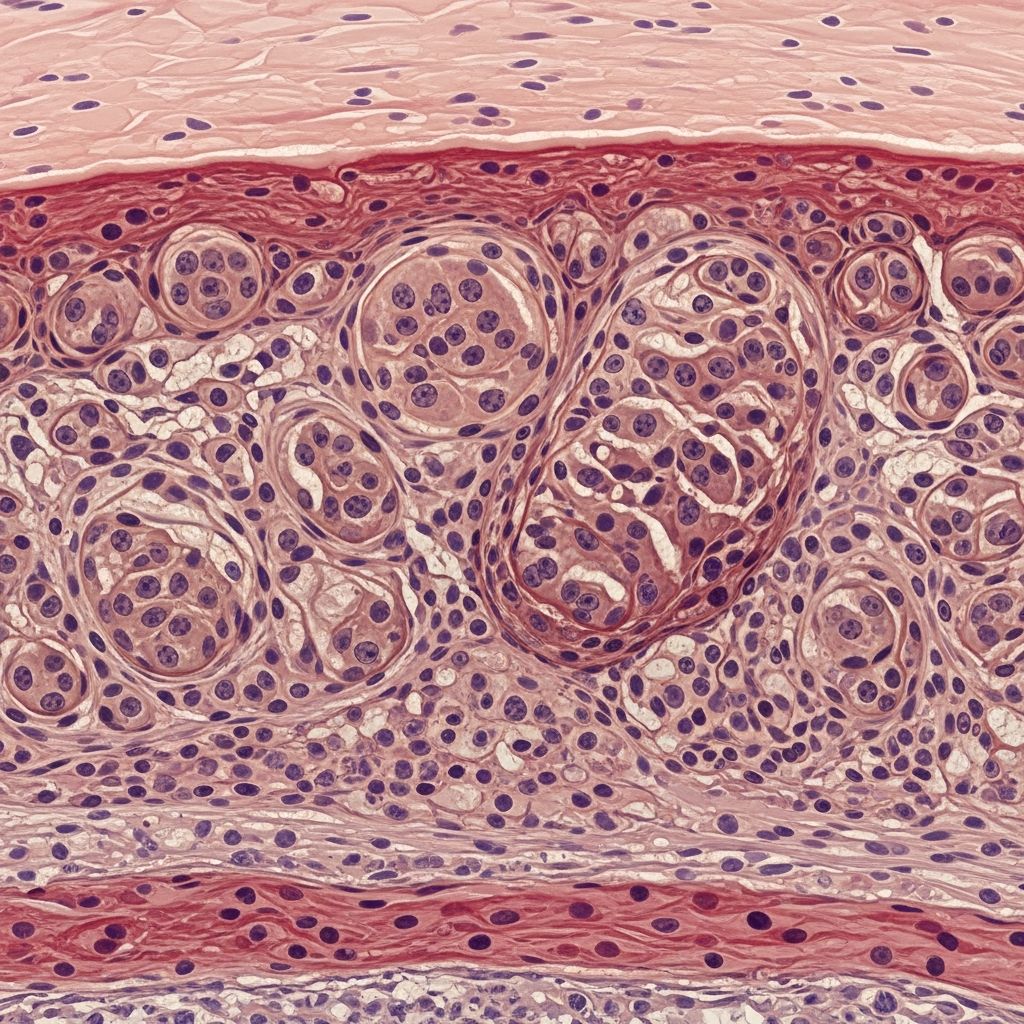
Intraepidermal squamous cell carcinoma (SCC), also known as Bowen disease, intraepidermal carcinoma (IEC), or squamous cell carcinoma in situ (SCC in situ), represents a common superficial form of keratinocyte cancer. This condition arises from squamous cells, the flat epidermal cells responsible for producing keratin, the protein that forms skin, hair, and nails. The term ‘intraepidermal’ or ‘in situ’ indicates that the atypical malignant cells are strictly confined to the epidermis, the outermost layer of the skin, without breaching the basement membrane into deeper dermal layers. This confinement makes it a pre-invasive lesion with excellent prognosis when treated promptly.
Demographics
Intraepidermal SCC predominantly affects older adults, typically those over 60 years of age, reflecting cumulative sun exposure over a lifetime. It is more common in fair-skinned individuals (Fitzpatrick skin types I-III) who burn easily and tan poorly. Men and women are equally affected, though some studies note a slight male predominance due to occupational sun exposure. Immunosuppressed patients, such as organ transplant recipients on long-term immunosuppressive therapy, exhibit a significantly higher incidence—up to 100 times greater than the general population. Additionally, up to 50% of patients diagnosed with intraepidermal SCC have concurrent or prior histories of other keratinocytic skin cancers, primarily basal cell carcinoma or invasive SCC.
Causes
The primary cause of intraepidermal SCC is chronic ultraviolet (UV) radiation exposure from sunlight or tanning beds, which induces DNA damage in epidermal keratinocytes, leading to mutations such as in the p53 tumor suppressor gene. This results in a clonal expansion of dysplastic cells. Other etiological factors include:
- Arsenic exposure: Historically from contaminated well water or pesticides, causing multiple lesions on palms, soles, and trunk.
- Human papillomavirus (HPV): Certain high-risk strains (e.g., HPV-16) associated with genital lesions (erythroplasia of Queyrat).
- Immunosuppression: HIV/AIDS, organ transplantation, or chronic lymphocytic leukemia increases susceptibility.
- Genetic predispositions: Rare syndromes like xeroderma pigmentosum impair DNA repair.
- Trauma or chronic inflammation: Post-radiotherapy sites or long-standing ulcers.
Unlike invasive SCC, intraepidermal variants rarely arise de novo but often on actinically damaged skin.
Clinical Features
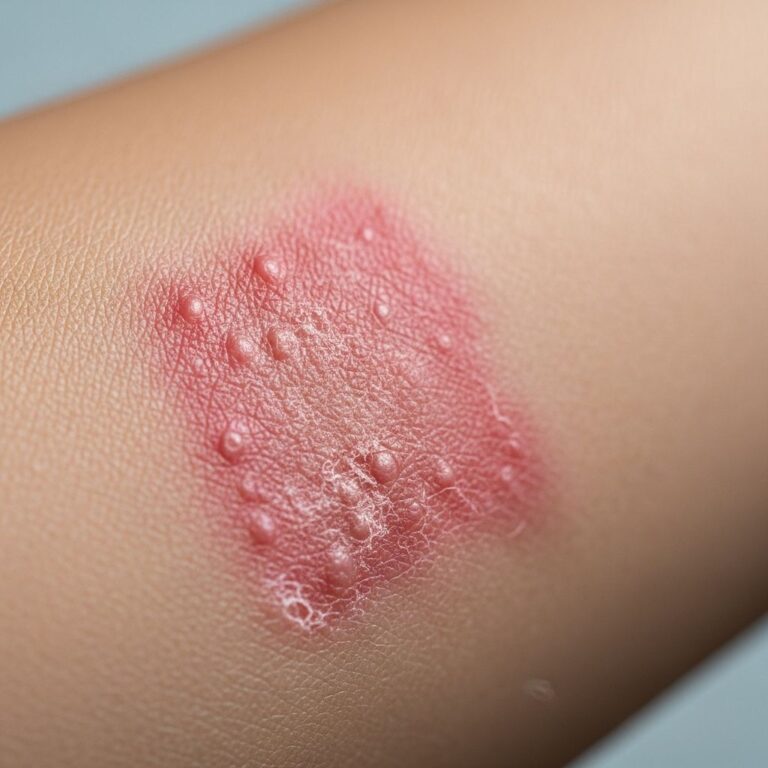
Intraepidermal SCC manifests as one or more asymptomatic, persistent, irregular scaly plaques ranging from 0.5 to several centimeters in diameter. Characteristic appearances include:
- Color: Orange-red, erythematous, or hyperpigmented (brown/black in darker skin types).
- Surface: Scaly, crusted, or velvety; may sting, burn, or itch mildly.
- Shape/Borders: Asymmetrical with irregular, well-defined borders.
Common sites are sun-exposed areas: lower legs (especially in women wearing skirts), ankles, dorsal hands, face, ears, and scalp. Less common locations include trunk, genitals (Bowenoid papulosis), or mucosal surfaces. Multiple lesions suggest field cancerization from widespread UV damage. Differential diagnoses include psoriasis, eczema, actinic keratosis, superficial basal cell carcinoma, or amelanotic melanoma. Dermatoscopy reveals glomerular or coiled vessels on a structureless red background, aiding non-invasive diagnosis.
Complications
While intraepidermal SCC remains non-invasive in over 95% of cases, untreated lesions carry a 3-5% risk of progression to invasive SCC, particularly on the scalp, forehead, or in immunocompromised patients. Metastasis is exceedingly rare (<1%) but reported in genital or perianal sites. Recurrence post-treatment occurs in 10-20% due to subclinical extension or field change. Cosmetic concerns arise from scarring with ablative therapies. Immunosuppressed individuals face aggressive behavior and higher multiplicity.
Diagnosis
Clinical suspicion prompts skin biopsy for confirmation. Punch, shave, or incisional biopsy reveals full-thickness epidermal dysplasia with nuclear atypia, hyperkeratosis, and parakeratosis, without dermal invasion. Histology distinguishes it from actinic keratosis (partial thickness) or Paget disease. Full skin examination is mandatory to detect synchronous lesions. Advanced cases may require imaging (CT/MRI) if invasion suspected. Dermatoscopy and reflectance confocal microscopy offer in vivo adjuncts.
Related Stories



Treatment
Treatment selection balances efficacy (90-95% cure rates), cosmesis, patient factors, lesion size/number, and site. Options include:
- Topical therapies (early/superficial lesions):
- 5-Fluorouracil (5-FU) 5% cream: Twice daily for 4-6 weeks; causes inflammation/ulceration.
- Imiquimod 5% cream: Immune modulator, 3-5x/week for 6-12 weeks; 80-90% clearance.
- 5-FU + calcipotriol: Twice daily 5-10 days; superior response rates.
- Ingenol mebutate: Short course, less irritation.
- Photodynamic therapy (PDT): Methyl aminolevulinate (MAL) cream + red light; excellent for face/legs, painful but cosmetic.
- Cryotherapy: Liquid nitrogen; simple office procedure for small lesions.
- Curettage & electrodessication (C&E): Scrape + cauterize; 90-95% cure for low-risk sites.
- Surgical excision: For suspicious/recurrent lesions; 4mm margins.
- Mohs micrographic surgery: Tissue-sparing for high-risk (large >2cm, perineural invasion, recurrent).
- Radiotherapy/Laser: Reserved for nonsurgical candidates.
For frail elderly or low-risk lesions, observation with keratolytics (urea/salicylic acid) may suffice. Immunosuppressed patients warrant aggressive multimodal therapy.
| Treatment | Cure Rate | Best For | Drawbacks |
|---|---|---|---|
| Topical 5-FU/Imiquimod | 80-90% | Multiple superficial | Inflammation, compliance |
| PDT | 90-95% | Face/legs, cosmesis | Pain, cost |
| C&E | 90-95% | Small, low-risk | Scar, recurrence |
| Mohs/Excision | >95% | High-risk sites | Invasive, scar |
Prevention
Primary prevention targets UV exposure: broad-spectrum SPF50+ sunscreen daily, UPF clothing, shade-seeking 10am-4pm, avoiding tanning beds. Regular full-skin exams for high-risk groups (fair skin, immunosuppression, prior NMSC). Self-monitoring for new/changing lesions. Chemoprevention with nicotinamide (500mg BID) reduces actinic keratosis/SCC in high-risk patients. HPV vaccination may prevent genital variants.
Outlook
Prognosis is excellent with >95% cure rates and negligible mortality. Post-treatment surveillance every 6-12 months is essential, as patients risk new intraepidermal SCC (10-20%/year) and other skin cancers (BCC, melanoma). Recurrence mandates repeat treatment or escalation. In immunosuppressed cohorts, vigilant monitoring and systemic therapies (e.g., acitretin) mitigate multiplicity.
Frequently Asked Questions
What is intraepidermal squamous cell carcinoma?
A non-invasive skin cancer confined to the epidermis, also called Bowen disease.
Is it dangerous?
Rarely; 3-5% progress to invasive if untreated, but early treatment cures >95%.
How is it treated?
Topicals (5-FU, imiquimod), PDT, cryotherapy, or surgery based on lesion characteristics.
Can it recur?
Yes, 10-20%; regular follow-up needed.
How to prevent it?
Sun protection, skin checks, especially if high-risk.
References
- Intraepidermal Squamous Cell Carcinoma — Moffitt Cancer Center. 2023. https://www.moffitt.org/cancers/squamous-cell-carcinoma/diagnosis/types/intraepidermal-squamous-cell-carcinoma/
- Intraepidermal squamous cell carcinoma — DermNet NZ. 2024-01-15. https://dermnetnz.org/topics/intraepidermal-squamous-cell-carcinoma
- Intraepidermal Carcinoma — PubMed/NCBI. 2018-03-01. https://pubmed.ncbi.nlm.nih.gov/29494081/
- Intraepidermal Carcinoma — MD Searchlight. 2024. https://mdsearchlight.com/cancer/intraepidermal-carcinoma/
- Squamous Cell Carcinoma in Situ — Merck Manuals. 2025. https://www.merckmanuals.com/home/skin-disorders/skin-cancers/squamous-cell-carcinoma-in-situ
Similar Articles








Read full bio of medha deb