Intralesional Injection: Uses, Procedure, Benefits, And Risks
Direct injection of therapeutic agents into skin lesions to treat inflammatory, hypertrophic, and hyperplastic conditions effectively.
An
intralesional injection
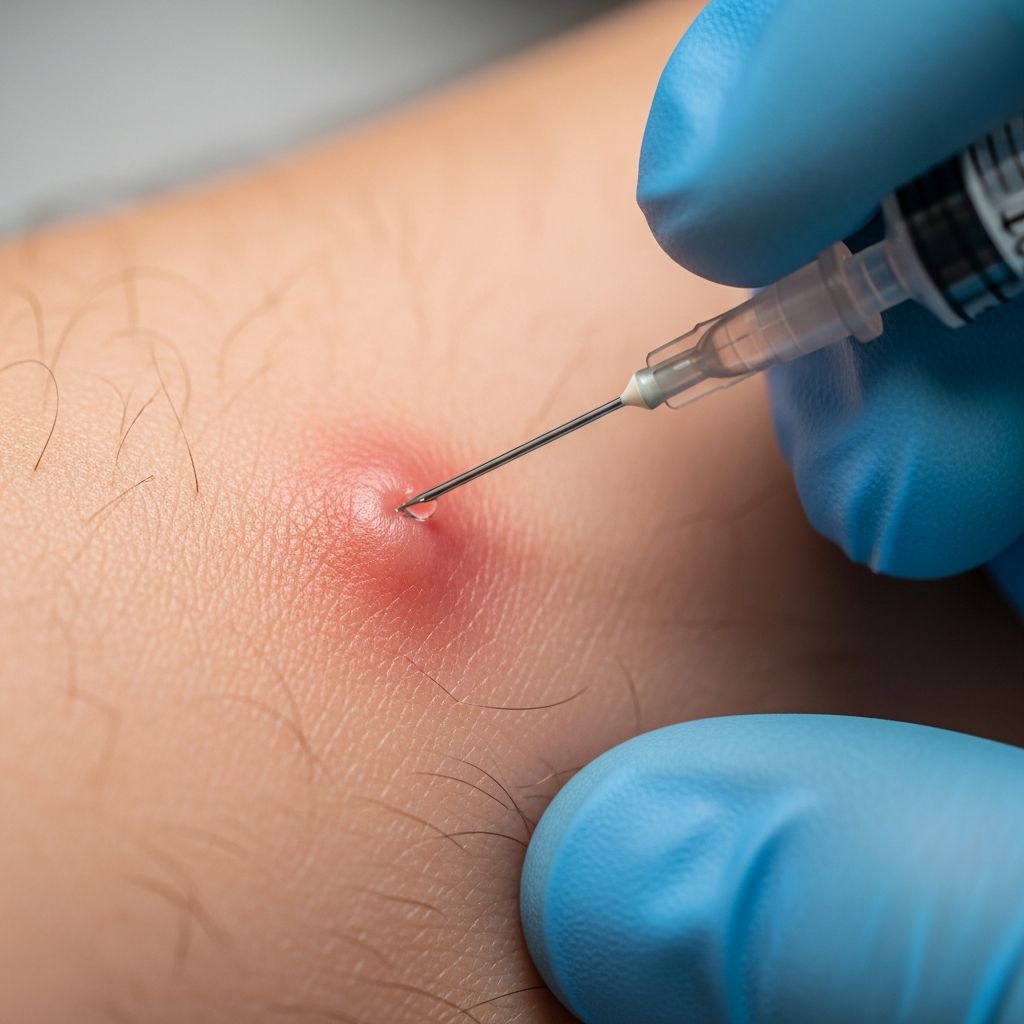
is the direct administration of a therapeutic substance into a skin lesion or the dermis. This method delivers a high concentration of medication precisely to the pathological site, enhancing therapeutic efficacy while reducing systemic exposure and adverse effects.What is an intralesional injection?
Intralesional injections involve injecting medication directly into affected skin areas, bypassing the skin’s outer layers to target inflammation or abnormal growth at the source. This technique is particularly valuable in dermatology for localized conditions where topical treatments prove insufficient. The procedure typically uses fine needles to deposit small volumes of drug into the dermis or lesion, ensuring minimal discomfort and rapid onset of action.
Corticosteroids, such as triamcinolone acetonide, are the most frequently employed agents due to their potent anti-inflammatory properties. These steroids suppress local immune responses, reduce collagen overproduction, and alleviate symptoms like redness, swelling, and itching. Other medications, including 5-fluorouracil for keloids, bleomycin for warts, or methotrexate for nail psoriasis, may also be used depending on the condition.
Uses of intralesional injections
Intralesional injections treat a variety of
inflammatory, hyperplastic, and hypertrophic skin lesions
. They are ideal for localized problems unresponsive to creams or oral therapies.- Keloid and hypertrophic scars: Reduce excessive collagen and flatten raised scars.
- Alopecia areata: Stimulate hair regrowth by targeting inflamed follicles, especially effective for patches affecting less than 50% of the scalp.
- Acne cysts: Quickly resolve deep, inflamed nodules resistant to topicals.
- Psoriasis plaques and lichen simplex chronicus: Diminish thickened, itchy plaques.
- Granuloma annulare, discoid lupus erythematosus, sarcoidosis: Control annular or nodular lesions.
- Lichen planus (hypertrophic): Soften hyperkeratotic areas.
- Other: Nodulocystic prurigo, viral warts (with bleomycin), and melanoma metastases (with immunotherapy).
These injections excel in delivering precise dosing, often outperforming systemic steroids by avoiding widespread side effects.
Contraindications
Certain conditions preclude intralesional injections to prevent complications:
- Widespread or extensive lesions, as multiple injections become impractical.
- Active infections at the site, risking dissemination.
- Known hypersensitivity to the injected agent.
- Thinning skin or atrophic areas, where atrophy could worsen.
- Pregnancy or breastfeeding, unless benefits outweigh risks (consult specialist).
Patients with diabetes or glaucoma require caution due to potential blood sugar or intraocular pressure elevations from absorbed steroids.
Medications used
The choice of medication varies by lesion type:
| Medication | Concentration | Common Uses |
|---|---|---|
| Triamcinolone acetonide | 10 mg/mL or 40 mg/mL | Keloids, alopecia areata, acne cysts, psoriasis |
| 5-Fluorouracil | Varies | Keloid scars |
| Bleomycin | Varies | Viral warts |
| Methotrexate | Low dose | Nail psoriasis |
| Interferon or Rose Bengal | Varies | Melanoma metastases |
Doses are tailored: typically 0.1–0.2 mL per cm² of lesion, diluted with saline or anesthetic if needed. Triamcinolone is diluted for sensitive areas like the face to prevent atrophy.
Procedure for intralesional injections
The technique ensures accurate delivery and safety:
- Preparation: Cleanse skin thoroughly. No routine anesthetic needed, though topical may be applied for sensitive patients.
- Equipment: Luer-lock or insulin syringe with 25–30 gauge needle (0.5–1 inch). Dermojet for controlled depth.
- Injection technique: For flat lesions (e.g., alopecia areata), insert needle at 10–20° angle into dermis. For raised lesions (e.g., keloids), steeper angle into lesion core. Avoid subcutaneous fat.
- Dosing: Inject slowly in small aliquots (0.05–0.1 mL per site), fanning out if large. Total volume limited to 2–5 mL per session.
- Post-procedure: Apply pressure to minimize bleeding, cover with dressing. Patients resume normal activities immediately.
Related Stories



Sessions repeat every 4–6 weeks until resolution, often 3–6 treatments needed.
Benefits
- Targeted therapy: High local concentrations with low systemic absorption.
- Rapid response: Improvement in 1–4 weeks for inflammation reduction.
- Fewer side effects: Avoids issues of oral steroids like weight gain or immunosuppression.
- Versatile: Suitable for scars, hair loss, cysts across all ages.
- Outpatient: Quick (5–15 minutes), same-day as consultation.
Side effects and risks
Generally safe, but risks include:
- Local atrophy/hypopigmentation: Skin thinning or lightening at site (reversible).
- Pain/bleeding: Mild, transient pinpoint bleeding.
- Infection: Rare with sterile technique.
- Telangiectasia: Visible vessels.
- Systemic (rare): Adrenal suppression with overuse, hyperglycemia.
Avoid indiscriminate use; improper dosing heightens risks. Monitor facial injections closely.
Frequently Asked Questions (FAQs)
Who performs intralesional injections?
Dermatologists or trained specialists ensure precise technique and dosing.
Does it hurt?
Mild discomfort like a pinch; tolerable without anesthetic for most.
How soon do results appear?
1–4 weeks; multiple sessions may be required.
Are they safe for the face?
Yes, with low-dose dilutions to prevent atrophy.
Can they cure keloids permanently?
Often flatten scars significantly, but recurrence possible; combine with other therapies.
How often can I get injections?
Every 4–6 weeks, not exceeding recommended totals.
For comprehensive management, consult a dermatologist. Intralesional injections offer a powerful, targeted solution for stubborn skin lesions.
References
- What is an Intralesional Steroid Injection? — Sanova Dermatology. 2023. https://www.sanovadermatology.com/eczema/what-are-intralesional-steroid-injections-used-for/
- Intralesional Steroid Injection Dermatologist — Reading Dermatology (Penelope Pratsou). 2024. https://readingdermatology.co.uk/intralesional-steroid-injection-dermatologist/
- Intralesional injection — DermNet NZ. 2025-01-15. https://dermnetnz.org/topics/intralesional-injection
- Intralesional triamcinolone (IL TAC) — West County Dermatology. 2024. https://westcoderm.com/procedure/il-tac/
- Intralesional Steroid Injections — Heights Dermatology. 2023. https://www.heightsskin.com/intralesional-steroid-injections
- Intralesional Steroid Injections: Look Before You Leap! — PMC (NCBI). 2014-07-15. https://pmc.ncbi.nlm.nih.gov/articles/PMC4103286/
Similar Articles








Read full bio of Sneha Tete