Intralymphatic Histiocytosis: Causes, Diagnosis, Treatment
Rare benign skin condition linked to rheumatoid arthritis, implants, and cancer, featuring histiocytes in dilated lymphatics.
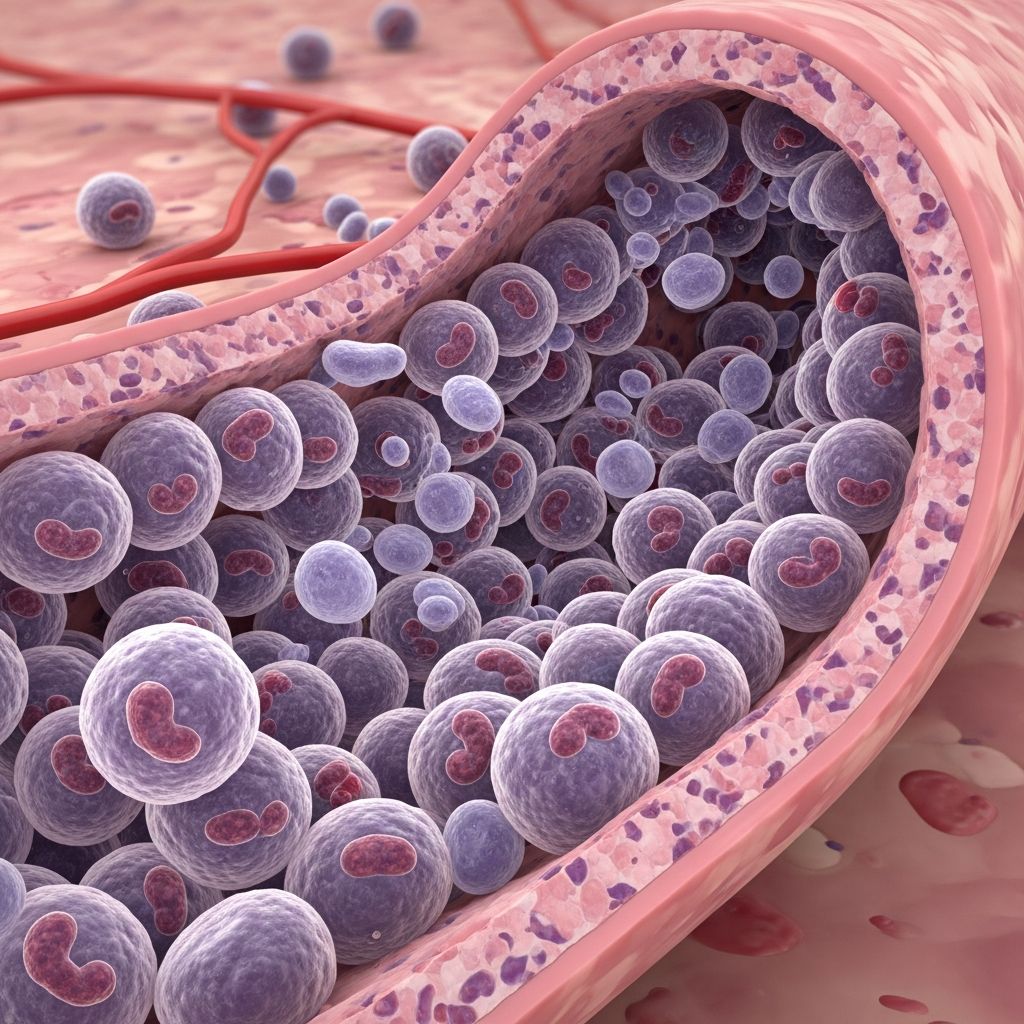
Intralymphatic histiocytosis is a rare, benign, chronic cutaneous condition characterised by the accumulation of histiocytes within dilated lymphatic vessels in the dermis. First described in 1994 as intravascular histiocytosis, it is most commonly associated with rheumatoid arthritis (RA), orthopaedic metal implants, or cancer surgery.
Who gets intralymphatic histiocytosis (Epidemiology)
Intralymphatic histiocytosis primarily affects adults, with cases reported across various age groups but no strong gender predominance noted in the literature. It is exceedingly rare, with fewer than 100 cases documented in peer-reviewed publications since its initial description. The condition shows a strong association with underlying systemic diseases, particularly
rheumatoid arthritis (RA)
, which is implicated in approximately 50-60% of reported cases. Other links include osteoarthritis, chronic inflammatory states, and neoplastic processes such as breast cancer, colon cancer, and Merkel cell carcinoma. Orthopaedic metal implants, especially hip or knee prostheses, are frequently correlated, suggesting a reactive process to foreign materials. Rare presentations have been noted in patients with psoriasis, tonsillitis, or post-surgical scars like mastectomy sites. Demographic data from case series indicate lesions often appear in individuals aged 50-70 years, though paediatric cases are absent from records. No ethnic predisposition is evident, but vigilance is recommended in patients with joint replacements or active RA, as the rash may overlay affected joints without correlating to RA disease activity.What causes intralymphatic histiocytosis (Aetiology)
The precise aetiology of intralymphatic histiocytosis remains elusive, but it is widely regarded as a reactive histiocytic proliferation rather than a neoplastic process. Key associations include:
- Rheumatoid arthritis (RA): The most common trigger, possibly due to chronic inflammation activating histiocytes that migrate into lymphatics.
- Orthopaedic metal implants: Reactions to titanium or cobalt-chromium alloys in joint prostheses, with lesions often localised over the implant site.
- Malignancy: Reported with breast, colon, and Merkel cell carcinomas, potentially linked to lymphatic obstruction or paraneoplastic phenomena.
- Other inflammatory conditions: Osteoarthritis, granulomatous cheilitis, Melkersson-Rosenthal syndrome, tonsillitis, and vulval necrosis.
Pathogenic mechanisms may involve impaired lymphatic drainage, histiocyte activation by chronic antigens (e.g., metal ions), or cytokine-driven accumulation. In RA cases, elevated matrix metalloproteinase-3 levels have been observed, hinting at connective tissue remodelling. Tumour necrosis factor-α inhibitors like adalimumab have paradoxically been implicated in some granulomatous variants. Histiocytes within vessels are polyclonal and lack atypical features, confirming a benign reactive nature.
What are the clinical features of intralymphatic histiocytosis?
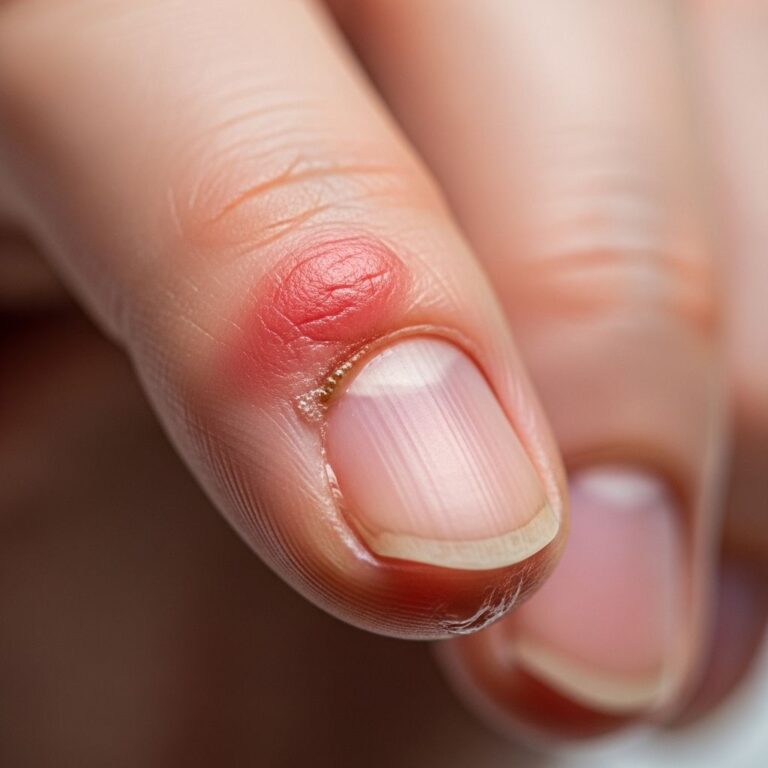
Intralymphatic histiocytosis typically manifests as an asymptomatic rash confined to one limb or region, often overlying or adjacent to an affected joint, implant, or surgical scar. Common presentations include:
- Erythematous plaques or patches: Red to violaceous, flat or slightly raised lesions, sometimes blanching.
- Livedo reticularis-like patterns: Net-like purplish discoloration, mimicking vascular occlusion.
- Papules, nodules, or vesicles: Less common, may be excoriated or form linear arrangements.
- Rare sites: Trunk (over mastectomy scars), face, oral mucosa, vulva, or lower lip extending to chin/neck.
The arm is affected in about 50% of cases, followed by the leg; bilateral involvement is rare. Lesions may recur episodically, lasting days to weeks, and become refractory over time. No pruritus, pain, or systemic symptoms are usual, and there is no pitting oedema or true lymphoedema. In one case, a violaceous edematous plaque on the lower face followed Legionnaires’ disease in a smoker with psoriasis. Lesions do not correlate with RA flares but align with joint involvement.
Diagnosis
Diagnosis mandates skin biopsy, as clinical features are nonspecific and overlap with lymphoedema, vasculitis, or infections. Histopathology reveals:
- Dilated dermal lymphatic vessels: Irregularly ectatic channels in the upper and reticular dermis containing aggregates of mononuclear histiocytes.
- Histiocytes: CD68-positive, with normal morphology; no foamy changes or Touton giant cells typically.
- Endothelial markers: Vessel walls positive for D2-40 (lymphatic-specific), podoplanin, LYVE-1, or PROX-1; negative for vascular markers like CD31 in lumina.
- Associated changes: Perivascular or interstitial granulomatous inflammation with lymphocytes, plasma cells, and occasional histiocytic spillover mimicking interstitial granulomatous dermatitis.
Epidermis and papillary dermis are spared. Differential diagnosis includes:
| Condition | Key Distinguishing Features |
|---|---|
| Reactive haemophagocytic lymphohistiocytosis | Systemic symptoms, bone marrow involvement, erythrophagocytosis. |
| Lymphoedema | Pitting oedema, no histiocytes in vessels. |
| Angiolymphatic lymphoma | Atypical lymphocytes, monoclonal proliferation. |
| Granuloma faciale | Eosinophils, league-of-nations phenomenon. |
| Interstitial granulomatous dermatitis | Rope sign, palisading granulomas without intralymphatic histiocytes. |
Related Stories



Immunohistochemistry is crucial to confirm lymphatic origin and rule out malignancy.
Treatment of intralymphatic histiocytosis
Intralymphatic histiocytosis is notoriously treatment-resistant, with most topical, intralesional, or systemic steroids yielding only transient relief followed by relapse. Approaches include:
- Addressing underlying cause: Joint replacement for RA knee, antibiotics/tonsillectomy for tonsillitis, or debridement for necrosis have led to clearance.
- Intralesional steroids: Triamcinolone acetonide injections directly into dermis showed sustained improvement in osteoarthritis case.
- Systemic therapies: Methotrexate, ciclosporin, etanercept, or lenalidomide tried with variable, often partial success.
- Other: Isotretinoin, photodynamic therapy, laser, or excision for localised lesions; leg elevation and compression occasionally helpful.
Spontaneous resolution occurs rarely. Prognosis is excellent with no malignant potential, though chronic persistence impacts quality of life. Multidisciplinary management targeting comorbidities is key.
Frequently asked questions about intralymphatic histiocytosis
What is intralymphatic histiocytosis?
A rare benign skin condition with histiocytes filling dilated dermal lymphatics, linked to RA, implants, or cancer.
Is intralymphatic histiocytosis dangerous?
No, it is non-malignant and asymptomatic, though persistent and treatment-resistant.
How is intralymphatic histiocytosis diagnosed?
By skin biopsy showing CD68+ histiocytes in D2-40+ lymphatic vessels.
Does treating RA cure the rash?
Not reliably; rash activity is independent, but joint surgery may help.
Can intralymphatic histiocytosis spread?
Typically unilateral and localised; systemic spread is not reported.
References
- Intralymphatic Histiocytosis with Massive Interstitial Granulomatous Foci — PMC. 2017-03-15. https://pmc.ncbi.nlm.nih.gov/articles/PMC5383756/
- Intralymphatic histiocytosis – DermNet — DermNet NZ. 2023-01-01. https://dermnetnz.org/topics/intralymphatic-histiocytosis
- Intralymphatic Histiocytosis Associated with Osteoarthritis: A Case — PMC. 2022-05-20. https://pmc.ncbi.nlm.nih.gov/articles/PMC9171188/
- Intralymphatic Histiocytosis Treated With Intralesional Triamcinolone — MDedge Cutis. 2018-01-01. https://www.mdedge.com/cutis/article/164390/dermatopathology/intralymphatic-histiocytosis-treated-intralesional/page/0/1
- Intralymphatic Histiocytosis: An Unusual Presentation — PMC. 2021-02-10. https://pmc.ncbi.nlm.nih.gov/articles/PMC7879247/
Similar Articles








Read full bio of Sneha Tete