Dermatopathology: 6 Common Patterns Every Clinician Should Know
Explore the microscopic world of skin diseases: how dermatopathology diagnoses and reveals the hidden structures of cutaneous conditions.
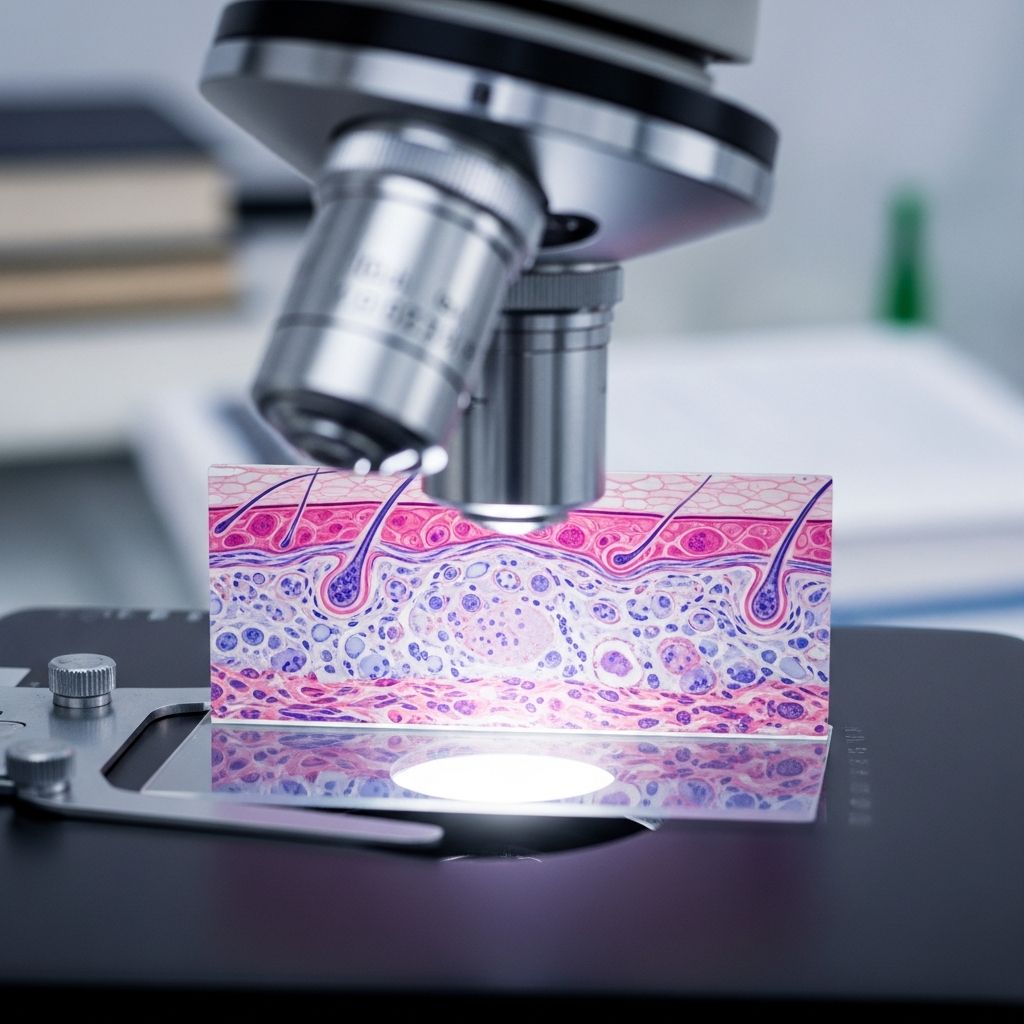
Dermatopathology is the subspecialty bridging dermatology and pathology, focusing on the microscopic examination of skin biopsies to diagnose over 1500 cutaneous diseases, from inflammatory rashes to malignant neoplasms.
What is dermatopathology?
Dermatopathology involves the study and description of structural and compositional changes in skin diseases at a microscopic and molecular level. It combines expertise in clinical dermatology with pathological analysis to interpret biopsy specimens accurately. Dermatopathologists, trained in both dermatology and pathology, examine skin, hair, and nail samples to identify conditions like infections, autoimmune disorders, and cancers.
Founded by Gustav Simon in 1848 with his seminal textbook Die Hautkrankheiten durch anatomische Untersuchungen erläutert, the field has evolved to encompass advanced techniques such as special stains, immunohistochemistry, and molecular biology. Today, it plays a pivotal role in confirming diagnoses that guide treatment, distinguishing benign from malignant lesions, and understanding disease mechanisms.
How dermatopathology works
The process begins with a clinical dermatologist performing a physical examination of suspicious skin lesions. If needed, a biopsy is taken—a small sample of skin tissue is removed using techniques like punch biopsy, shave biopsy, or excisional biopsy. The sample is then processed in a pathology lab.
Key steps include:
- Fixation: The biopsy is preserved in formalin to prevent degradation.
- Embedding: Tissue is embedded in paraffin wax for sectioning into thin slices (typically 4-5 micrometers).
- Staining: Hematoxylin and eosin (H&E) stain is standard, highlighting nuclei (blue/purple) and cytoplasm/extracellular matrix (pink). Special stains may follow for pathogens (e.g., Gram, PAS for fungi), deposits (e.g., Perl’s for iron), or cell markers (immunohistochemistry for proteins like S100 in melanoma).
- Microscopic examination: Systematic review of epidermis, dermis, subcutis, and adnexa under light, electron, or fluorescence microscopy.
The pathologist integrates histological patterns with clinical history (age, lesion duration, distribution) to render a diagnosis or differential. For instance, acanthosis (epidermal thickening) might suggest psoriasis, while interface dermatitis points to lupus.
Potential errors in diagnosis
Despite rigorous methods, errors occur due to sampling issues, interpretive challenges, or incomplete clinical data. Common pitfalls include:
- Inadequate biopsy: Tangential sectioning misses key features, like failing to capture the dermal-epidermal junction in lichen planus.
- Processing artifacts: Over-fixation or crush artifacts distort cells, mimicking malignancy.
- Pattern overlap: Many diseases share features; e.g., keratoacanthoma vs. squamous cell carcinoma requires clinical correlation for spontaneous regression.
- Limited training: General pathologists may overlook subtle dermatological nuances, emphasizing the need for fellowship-trained dermatopathologists.
Studies highlight discordance rates of 10-20% between initial and expert reviews, underscoring multidisciplinary consultation. Advances like digital pathology and AI improve accuracy by analyzing vast image datasets.
Common inflammatory skin diseases
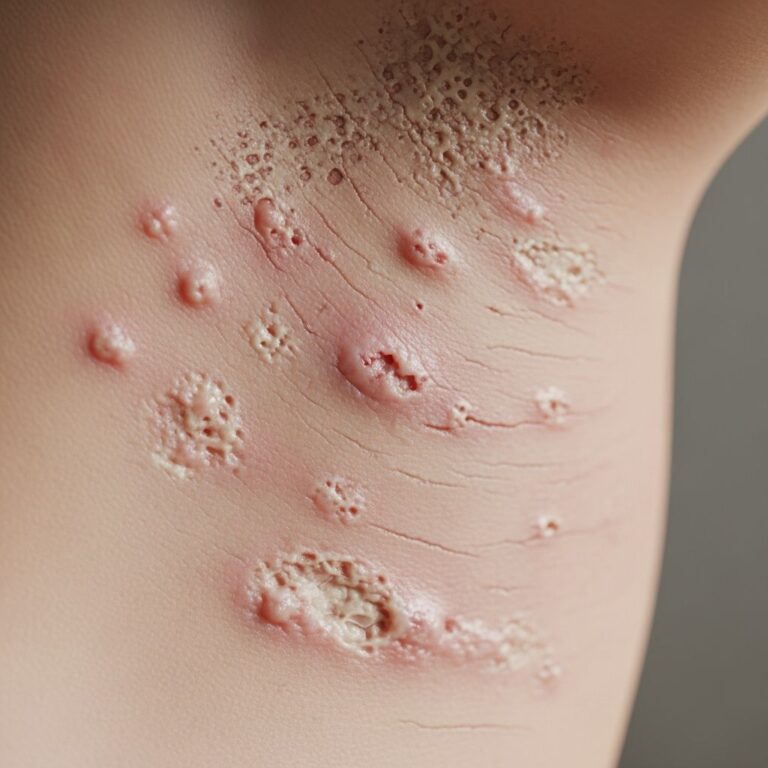
Inflammatory conditions dominate dermatopathology, classified by reaction patterns. Over 100 ‘dermatitis’ subtypes exist, differentiated by gross signs (erythema, scale, vesicles) and microscopy.
| Pattern | Key Features | Examples |
|---|---|---|
| Spongiotic dermatitis | Epidermal intercellular edema (spongiosis), exocytosis of lymphocytes; often acute vesicles. | Allergic/irritant contact dermatitis, acute eczema. |
| Psoriasiform dermatitis | Regular acanthosis, parakeratosis, Munro microabscesses, dilated capillaries. | Psoriasis, chronic eczema. |
| Interface dermatitis | Vacuolar degeneration at dermo-epidermal junction, apoptotic keratinocytes, lichenoid infiltrate. | Lichen planus, erythema multiforme, graft-vs-host disease. |
| Lichenoid dermatitis | Band-like lymphocytic infiltrate hugging epidermis, hypergranulosis. | Lichenoid drug eruptions, pityriasis lichenoides. |
| Bullous diseases | Intraepidermal (acantholytic) or subepidermal blisters; immunofluorescence confirms autoantibodies. | Pemphigus vulgaris (suprabasal), bullous pemphigoid (subepidermal). |
| Granulomatous dermatitis | Naked/palisaded/foreign body granulomas with histiocytes, multinucleated giants. | Sarcoidosis, granuloma annulare, infections (TB, fungi). |
Related Stories



These patterns guide differentials; e.g., spongiosis with eosinophils favors allergy, while plasma cells suggest syphilis. Molecular techniques now subclassify atopic dermatitis and psoriasis via cytokine profiles.
Neoplastic diseases add complexity: benign (warts, seborrheic keratosis) vs. malignant (melanoma with atypical melanocytes, nested architecture). Over 1500 entities demand broad knowledge.
Frequently Asked Questions (FAQs)
What training does a dermatopathologist need?
A dermatopathologist completes medical school, residency in dermatology or pathology (4 years), and a 1-2 year dermatopathology fellowship, followed by board certification.
How long does a skin biopsy report take?
Typically 24-48 hours for routine cases; urgent (frozen sections) in minutes for Mohs surgery, complex IHC in days.
Can AI replace dermatopathologists?
AI enhances accuracy in image analysis but cannot integrate clinical context or handle rarities; it augments human expertise.
What if the biopsy doesn’t match my symptoms?
Re-biopsy, provide full history, or consult experts; correlation is key to avoid errors.
Are all skin pathologists dermatopathologists?
No; general pathologists handle basics, but subspecialists excel in nuanced skin diagnoses.
Recent Advances and Future Directions
Digital pathology enables whole-slide imaging for teleconsultation and AI training. Molecular dermatopathology profiles mutations (e.g., BRAF in melanoma) for targeted therapies. Immunotherapy markers (PD-L1) predict responses. Bridging dermatology-pathology divides via integrated training promises refined classifications, like distinguishing keratoacanthoma’s self-regression molecularly.
Challenges persist with rare diseases and AI validation, but recency in peer-reviewed literature (e.g., 2022 NIH review) affirms progress.
References
- Dermatopathology — Wikipedia. 2024-01-15. https://en.wikipedia.org/wiki/Dermatopathology
- Dermatopathology | Research Starters — EBSCO. 2023-06-01. https://www.ebsco.com/research-starters/health-and-medicine/dermatopathology
- Dermatopathology | Careers in Medicine — AAMC. 2024-03-20. https://careersinmedicine.aamc.org/explore-options/specialty-profiles/dermatopathology
- What is dermatopathology? – DermNet — DermNet NZ. 2023-11-10. https://dermnetnz.org/topics/dermatopathology
- The Philosophy of Dermatopathology — PMC/NIH. 2022-12-20. https://pmc.ncbi.nlm.nih.gov/articles/PMC9777359/
- What is Dermatopathology? — Finan Templeton Dermatology. 2023-08-05. https://www.finantempleton.com/what-is-dermatopathology
Similar Articles








Read full bio of medha deb