Introvert Vs Extrovert: What You Need To Know
Understand the key differences between introverts and extroverts, from energy sources to social behaviors and brain science.
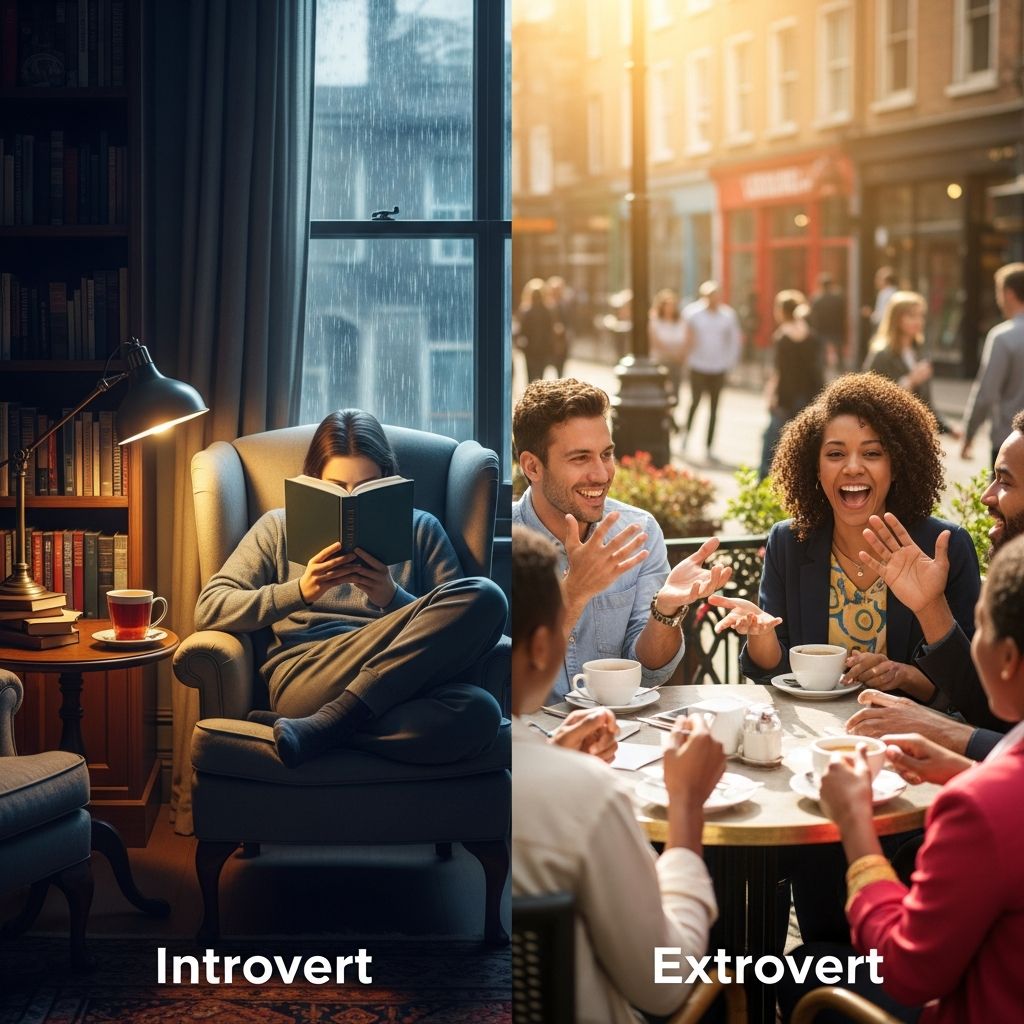
Introversion and extroversion represent core personality dimensions that influence how people recharge, socialize, and approach life. Coined by psychologist Carl Jung, these traits describe whether individuals draw energy from solitude or social interaction.
What Are Introverts and Extroverts?
Introverts recharge through alone time, processing thoughts internally and thriving in quiet environments. They feel drained by prolonged socializing and prefer deep, meaningful conversations over small talk.
Extroverts gain energy from external stimuli, such as people, events, and action. They enjoy crowds, think aloud, and feel energized after social engagements.
Genetic factors and neurotransmitter levels, like higher dopamine in extroverts, contribute to these differences. Parents’ traits can influence children, though environment plays a role.
Characteristics of Introverts
Introverts exhibit distinct behaviors shaped by their inward focus:
- Prefer solitude to recharge and feel overwhelmed in crowds.
- Listen more than speak, analyzing others’ words thoughtfully.
- Detail-oriented, creative, and strong independent workers.
- Avoid conflict, express feelings reservedly, and plan meticulously.
- Sensitive to negative feedback, leading to cautious social engagement.
In work settings, introverts excel at focused tasks, generating innovative ideas after reflection.
Characteristics of Extroverts
Extroverts thrive on interaction and external energy:
- Energized by people, places, and lively environments.
- Strong interpersonal skills, initiate conversations effortlessly.
- Quick thinkers, decisive, and team-oriented.
- Optimistic, finding positives even in challenges.
- Express thoughts and emotions openly without hesitation.
Extroverts shine in brainstorming, leadership, and networking, adapting smoothly to new situations.
Introvert vs. Extrovert: A Side-by-Side Comparison
| Aspect | Introvert | Extrovert |
|---|---|---|
| Energy Source | Alone time, internal reflection | Social interaction, external stimuli |
| Socializing | Drained by crowds, prefers small groups | Recharged by groups, initiates talks |
| Decision-Making | Reflective, rational, considers outcomes | Quick, action-oriented, impulsive |
| Communication | Thinks before speaking, listener | Thinks aloud, expressive |
| Work Style | Independent, detail-focused | Team-based, idea-sharing |
| Conflict | Avoids, sensitive to criticism | Confronts directly |
This table highlights core contrasts, though individuals vary.
Ambiverts: The Middle Ground
Many people are ambiverts, blending traits. They enjoy socializing but need downtime, performing well in both solo and group settings without extreme drain.
Ambiverts adapt flexibly, decisive yet thoughtful, making up a significant portion of the population.
Brain Science Behind Personality Types
Research shows neurological differences: extroverts process social stimuli with greater reward sensitivity, linked to dopamine pathways. They engage more actively in interactions.
Introverts exhibit differences in learning, motor control, and language processing, with lower dopamine responses favoring internal focus.
Extraverts seek stimulation due to efficient arousal systems, while introverts avoid overload.
Strengths and Challenges
Introvert Strengths
- Deep focus and creativity in quiet settings.
- Empathetic listeners, building strong one-on-one bonds.
- Strategic planning and problem-solving.
Introvert Challenges
- Networking difficulties in extrovert-dominated environments.
- Exhaustion from mandatory socializing.
- Misunderstood as shy or aloof.
Related Stories



Extrovert Strengths
- Networking prowess and leadership.
- Resilience and optimism in adversity.
- Innovation through collaboration.
Extrovert Challenges
- Struggles with solitude or routine tasks.
- Impulsivity leading to hasty decisions.
- Overlooking details in fast-paced action.
Introverts and Extroverts in Relationships
Mixed pairs succeed with understanding: introverts need space, extroverts crave connection. Compromise, like alternating social plans, fosters balance.
Extroverts can draw introverts out gently; introverts help extroverts reflect deeply.
Introverts and Extroverts at Work
Introverts thrive in roles allowing independence, like writing or research. Extroverts excel in sales, management, or public-facing jobs.
Teams benefit from diversity: extroverts drive ideas, introverts refine them.
Which Personality Type Are You? Quiz Indicators
Self-assess with these signs:
- Introvert: Prefer solo errands, exhaust after parties, think before speaking.
- Extrovert: Energized post-socializing, talk to process ideas, seek groups.
- Ambivert: Balanced comfort in both.
Frequently Asked Questions (FAQs)
What is the main difference between introverts and extroverts?
Introverts recharge alone and process internally; extroverts gain energy from social interaction and think aloud.
Can introverts become extroverts?
Personality is stable but flexible; introverts can develop social skills without changing core traits.
Are extroverts happier?
No, both types report similar happiness; extroverts’ networks may support health.
What causes introversion or extroversion?
Genetics, dopamine levels, and brain wiring contribute.
Do ambiverts exist?
Yes, most people fall on a spectrum, balancing traits.
Thriving as Your Personality Type
Introverts: Schedule downtime, seek quiet workspaces. Extroverts: Balance with solo reflection. Understand your spectrum position for fulfillment.
Embrace traits without judgment; diversity enriches society.
References
- Introvert vs Extrovert: Which personality type are you? — MedPark Hospital. 2023. https://www.medparkhospital.com/en-US/lifestyles/introvert-vs-extrovert
- Introvert vs. Extrovert: What’s The Difference? — Cleveland Clinic. 2023-10-25. https://health.clevelandclinic.org/introvert-vs-extrovert
- Extroverts, Introverts, and Everything in Between — Healthline. 2023. https://www.healthline.com/health/extrovert-vs-introvert
- Do extraverts process social stimuli differently from introverts? — PMC (National Library of Medicine). 2011-07-07. https://pmc.ncbi.nlm.nih.gov/articles/PMC3129862/
- Introvert vs Extrovert: Understanding the Spectrum — PositivePsychology.com. 2023. https://positivepsychology.com/introversion-extroversion-spectrum/
Similar Articles








Read full bio of medha deb