Intussusception: What It Is, Symptoms, Diagnosis & Treatment
Understanding intussusception: A medical emergency in children requiring immediate diagnosis and treatment.
Understanding Intussusception
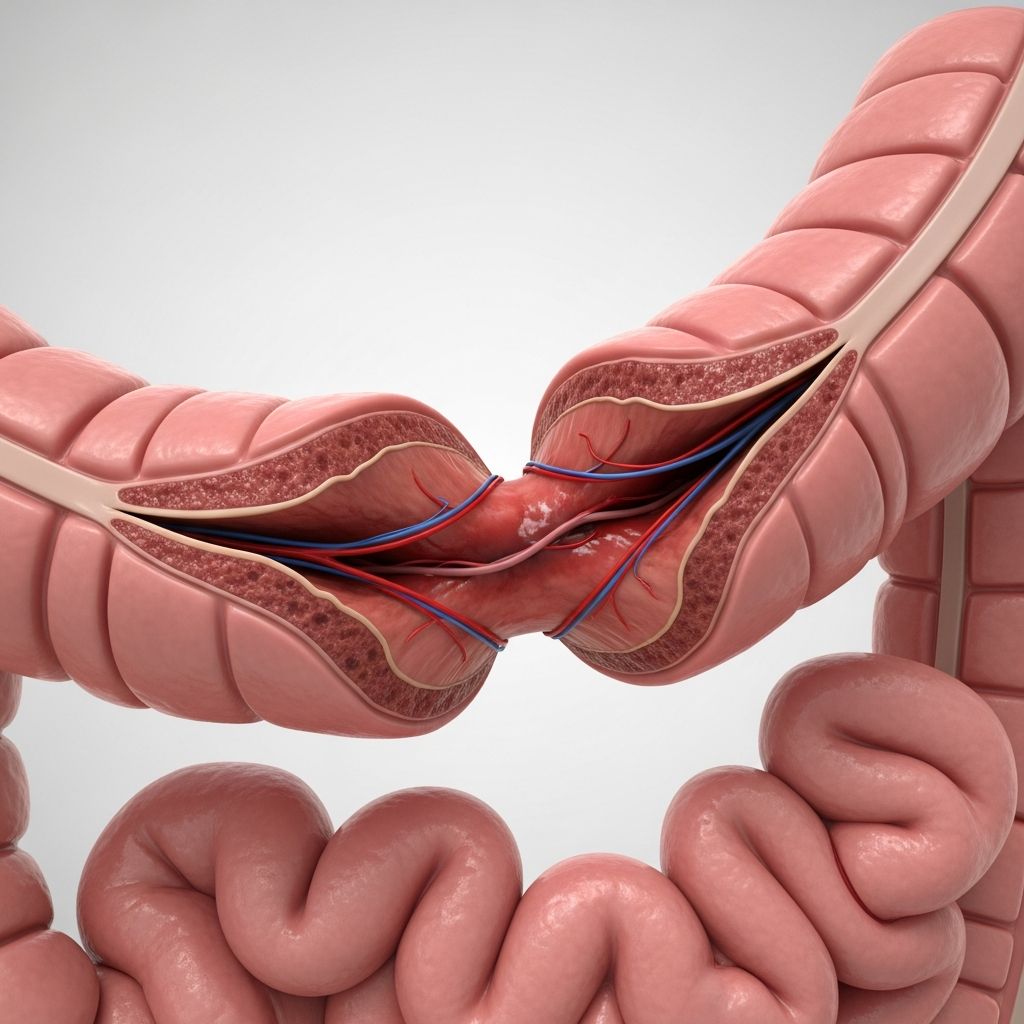
Intussusception is a serious medical emergency and a form of bowel obstruction in which one segment of the intestine telescopes, or folds, inside an adjacent segment of intestine. This condition occurs when the proximal bowel invaginates into the distal bowel, creating a blockage that prevents normal passage of intestinal contents. Although intussusception can affect individuals of any age, it is predominantly found in young children, particularly those between 3 months and 3 years old.
The condition represents the most common cause of bowel obstruction in children under 3 years of age. Approximately 1 in 2,000 babies in the United States develop intussusception during their first year of life. In contrast, only 1% of adult bowel obstructions are related to intussusception, making it a rare condition in the adult population. Despite its relative rarity in older individuals, intussusception in adults requires the same urgent medical attention as in children.
Who Is at Risk?
While intussusception can develop in anyone, certain populations and conditions increase the likelihood of developing this condition. Understanding these risk factors can help parents and caregivers recognize when to seek immediate medical attention.
Risk Factors in Children
Children face several risk factors that increase their susceptibility to intussusception:
– Male gender- Age between 2 and 12 months, with peak incidence between 5 and 9 months- Recent viral infections, particularly those affecting the gastrointestinal tract- First-generation rotavirus vaccination- Family history of intussusception- Enlarged lymph nodes (Peyer patches) in the terminal ileum
Risk Factors in Adults
Adults who develop intussusception typically have an underlying medical condition or anatomical abnormality that serves as a lead point. These include:
– Gastric or intestinal neoplasms (tumors)- Inflammatory bowel disease- Adhesions from previous abdominal surgery- Hiatal hernias- Ascites (fluid accumulation in the abdomen)- Benign intestinal polyps- Meckel’s diverticulum
Recognizing the Symptoms
Early recognition of intussusception symptoms is critical for prompt treatment and prevention of complications. The clinical presentation differs somewhat between children and adults.
Symptoms in Children
Babies and children with intussusception experience characteristic alternating episodes of severe, crampy abdominal pain followed by periods of relief. The pain typically lasts 15 to 20 minutes or longer and may recur every 20 to 30 minutes. Children who cannot verbally communicate their pain may demonstrate physical signs such as drawing their knees up to their chests and crying inconsolably. During pain-free intervals, children may appear completely normal and may even resume playing, creating a false sense of improvement.
Additional symptoms in children include:
– Vomiting- Fever- Lethargy or irritability between pain episodes- Bloody stools, sometimes described as having a “red currant jelly” appearance- Abdominal bloating or distention- Poor feeding or refusal to eat- Palpable abdominal mass (detectable by healthcare provider)- Signs of dehydration
Symptoms in Adults
Adults with intussusception experience abdominal pain, though the pattern may differ from children. The pain may come and go intermittently, similar to children’s experience, or it may remain constant. Adults frequently experience vomiting, bloating, and bloody stools. However, because these symptoms are common across various gastrointestinal conditions, many adults delay seeking medical attention. This delay can be dangerous, as intussusception is just as much of a medical emergency in adults as in children.
Related Stories



How Intussusception Is Diagnosed
Diagnosis of intussusception typically occurs alongside emergency medical treatment. Several imaging tests can confirm the diagnosis and help guide treatment decisions.
Ultrasound
Ultrasound is the primary diagnostic tool for children and can identify intussusception with 100% accuracy. It is the first imaging test providers use to check for intussusception in children due to its accuracy, lack of radiation exposure, and availability in most emergency departments.
CT Scan
A CT (computed tomography) scan is typically used in adults to diagnose intussusception. CT imaging provides detailed cross-sectional images that can identify the telescoped bowel segment and assess for complications such as bowel necrosis or perforation.
Abdominal X-rays
Plain abdominal X-rays may be ordered as an initial screening tool, though they are less specific than ultrasound or CT imaging. X-rays can reveal signs of bowel obstruction but may not definitively identify intussusception.
Air or Contrast Enema
The air or contrast enema serves dual purposes as both a diagnostic and therapeutic procedure. During this test, a healthcare provider inserts air or a liquid solution containing barium (a safe, radiopaque substance) into the rectum through a catheter. The air or liquid creates pressure that helps lengthen the telescoped intestine, allowing one portion to separate from the other. An X-ray records a video of the process, confirming the diagnosis while simultaneously treating the condition in many cases.
Treatment Options
Treatment of intussusception depends on the patient’s age, clinical stability, and whether complications are present. Early intervention significantly improves outcomes.
Non-Surgical Treatment: Air or Contrast Enema
For children and selected adult patients, an air or contrast enema is the primary treatment approach. This radiologic procedure, not a surgical intervention, requires no anesthesia. The procedure works by applying hydraulic pressure through the air or barium solution, which gradually straightens the telescoped intestine. Success rates reach up to 85% in hospitals where providers have experience treating intussusception. The air enema is generally considered more effective and safer than liquid contrast enema.
Surgical Treatment
Surgery becomes necessary when:
– The air or contrast enema is unsuccessful in reducing the intussusception- Peritonitis (inflammation of the abdominal lining) is present- Bowel perforation has occurred- Bowel necrosis (tissue death) is evident- The patient shows signs of shock or clinical instability
During surgery, open reduction is performed in uncomplicated cases to manually straighten the intestine. In cases where bowel tissue has died or perforated, intestinal resection (removal of the affected bowel segment) may be necessary. Additional procedures such as lysis of adhesions or gastroplexy may be performed depending on the underlying cause.
Potential Complications
Untreated intussusception can lead to serious, life-threatening complications that can develop rapidly as the child’s condition worsens. These complications include:
– Bowel perforation- Peritonitis (infection and inflammation of the abdominal cavity)- Bowel necrosis (death of bowel tissue)- Sepsis (life-threatening bloodstream infection)- Hypovolemic shock (shock due to loss of blood volume)- Death
These complications can unfold quickly, which is why seeking emergency care immediately upon noticing symptoms is absolutely critical.
Prognosis and Recovery
The prognosis for intussusception is excellent when treated promptly. An air or contrast enema successfully cures intussusception in most cases. The procedure has proven highly effective and safe when performed by experienced providers.
Recurrence
Intussusception recurs in approximately 10% to 20% of children, with symptoms returning either within the first 48 hours after treatment (less common) or weeks to months later (more common). If intussusception returns, healthcare providers will repeat the diagnostic and treatment steps, which may include performing another enema or proceeding directly to surgery based on clinical presentation.
Long-term Outcomes
Children treated early for intussusception typically recover completely with no long-term complications. You can significantly improve your child’s chances of survival without complications by obtaining emergency diagnosis and treatment as soon as symptoms are noticed. Before leaving the hospital, ask your healthcare provider what signs of recurrence to watch for and what steps to take if symptoms return.
Prevention
Unfortunately, there is no known way to prevent intussusception. However, you can take crucial steps to avoid the worst outcomes by ensuring your child receives emergency treatment immediately upon recognizing symptoms. Time is of the essence with this condition, and prompt medical intervention can mean the difference between a simple enema reduction and emergency surgery with potential complications.
When to Seek Emergency Care
Intussusception is always a medical emergency where time is critical. If your child shows any signs of intussusception, get them to a hospital as soon as possible that same day. Do not wait or attempt home remedies. The combination of severe, alternating abdominal pain, vomiting, and bloody stools warrants immediate emergency evaluation.
Key Takeaways
Intussusception is a serious but treatable bowel obstruction that requires emergency medical attention. Recognizing the symptoms of alternating severe abdominal pain, vomiting, and bloody stools in young children is essential. While the air or contrast enema is successful in treating most cases, untreated intussusception can rapidly progress to life-threatening complications. Early diagnosis and treatment provide excellent outcomes, making prompt medical evaluation essential when symptoms appear.
Frequently Asked Questions
Q: At what age is intussusception most common?
A: Intussusception is most common in children between 3 months and 3 years old, with peak incidence occurring between 5 and 9 months of age. Approximately 1 in 2,000 babies in the U.S. develop intussusception in their first year.
Q: What causes intussusception?
A: In children, intussusception is usually caused by a virus that produces swelling of the intestinal lining, which then prolapses into the downstream intestine. The swollen tissue acts as a lead point, typically an enlarged lymph node (Peyer patch) in the terminal ileum. In adults, intussusception almost always has an identifiable cause, such as a tumor, polyp, or previous abdominal surgery.
Q: Is intussusception common in adults?
A: No, intussusception is rare in adults, representing only 1% of all adult bowel obstructions. However, it requires the same urgent medical treatment as in children.
Q: Can an air enema actually treat intussusception?
A: Yes, an air enema is both a diagnostic and therapeutic procedure. It is successful in reducing intussusception in up to 85% of cases treated in hospitals where providers have experience with this condition. The procedure uses air pressure to straighten the telescoped intestine.
Q: What happens if the air enema doesn’t work?
A: If the air enema is unsuccessful or if complications such as perforation or peritonitis are present, surgery is required. The surgeon may perform open reduction to manually straighten the intestine or intestinal resection if tissue damage has occurred.
Q: Can intussusception come back after treatment?
A: Yes, intussusception recurs in 10% to 20% of children, usually within the first 48 hours or weeks to months after initial treatment. If recurrence occurs, the same diagnostic and treatment steps will be repeated.
Q: What are the warning signs I should watch for?
A: Watch for severe, alternating episodes of abdominal pain lasting 15-20 minutes, followed by pain-free periods. Children may draw their knees to their chest while crying, then appear completely fine minutes later. Vomiting, bloody stools, fever, and lethargy are also concerning signs requiring immediate emergency evaluation.
Q: Is intussusception fatal if untreated?
A: Yes, untreated intussusception can be life-threatening. Complications include bowel perforation, peritonitis, sepsis, shock, and death. This is why immediate emergency care is critical.
References
- Intussusception: What It Is, Symptoms, Diagnosis & Treatment — Cleveland Clinic. 2024. https://my.clevelandclinic.org/health/diseases/10793-intussusception
- Intussusception – Symptoms, Diagnosis and Treatment — BMJ Best Practice. 2024. https://bestpractice.bmj.com/topics/en-us/679
- Gastrogastric intussusception in the setting of a small bowel obstruction — National Institutes of Health (NIH/PMC). 2023. https://pmc.ncbi.nlm.nih.gov/articles/PMC8981875/
Similar Articles








Read full bio of medha deb