Iontophoresis: Comprehensive Guide To Uses, Benefits, And Safety
Non-invasive treatment using mild electrical current to deliver medications through skin or treat excessive sweating effectively.
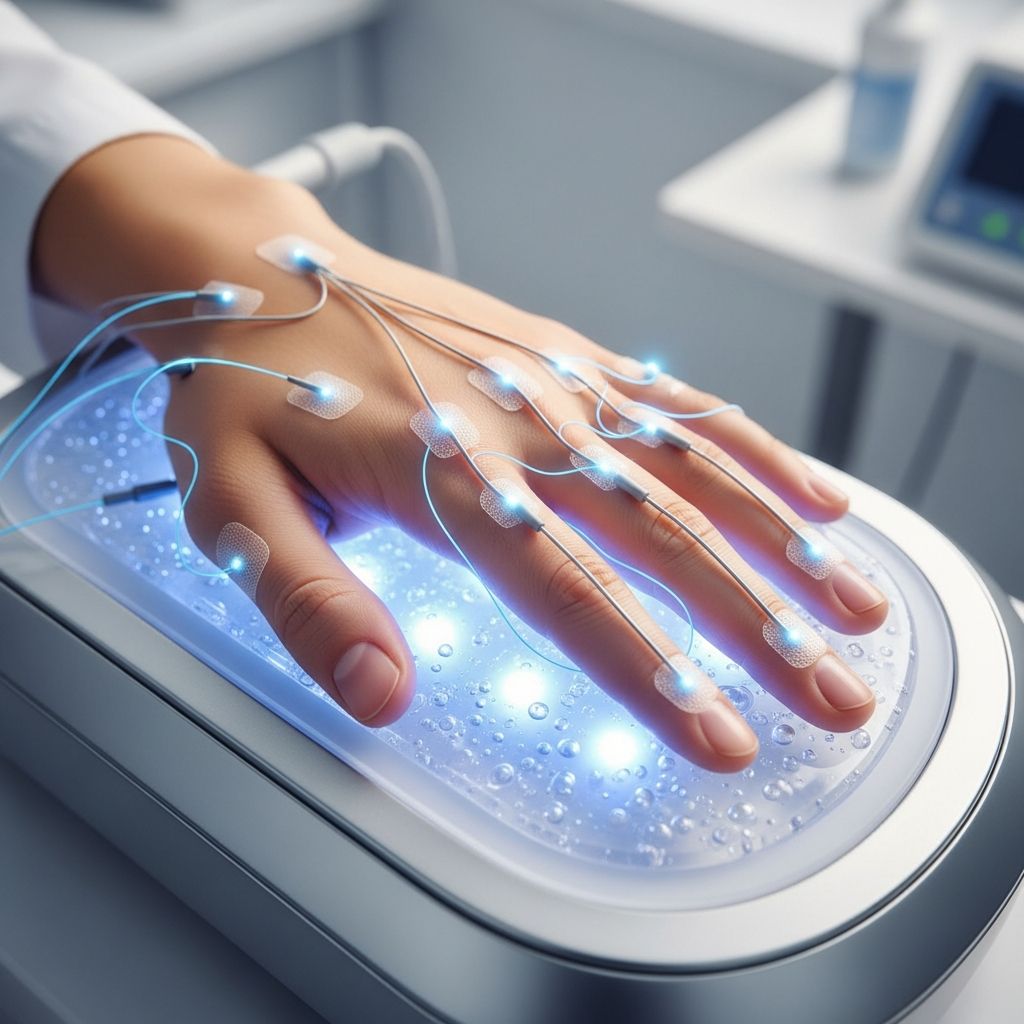
Iontophoresis is a non-invasive therapeutic technique that uses a mild direct electrical current to facilitate the transdermal delivery of ionized medications through intact skin or to temporarily block sweat glands in the treatment of hyperhidrosis. This method enhances drug penetration beyond passive diffusion, targeting specific tissues while minimizing systemic exposure.
What is iontophoresis?
Iontophoresis, derived from Greek terms meaning ‘ion movement,’ involves applying a low-intensity direct current (typically 0.1 6 mA) via electrodes placed on the skin. The positively charged anode and negatively charged cathode create an electromotive force that drives charged drug ions through the skin’s stratum corneum, the primary barrier to absorption. Tap water serves as the conductive medium, often with added electrolytes like sodium bicarbonate for palmar/plantar treatments.
For hyperhidrosis, no medication is needed; the current alone disrupts sweat gland function temporarily. In drug delivery applications, medications such as dexamethasone (anti-inflammatory corticosteroid), lidocaine (local anesthetic), or acetic acid (for calcium deposits) are ionized and propelled into tissues. Sessions last 10 30 minutes, with current gradually increased to patient tolerance.
Who gets iontophoresis?
Primary candidates include patients with primary focal hyperhidrosis affecting palms, soles, axillae, or craniofacial areas unresponsive to antiperspirants or oral therapies. It is also used for musculoskeletal conditions like tendinitis, bursitis, epicondylitis (tennis elbow), plantar fasciitis, and rheumatoid arthritis flares. Athletes and individuals with sports injuries benefit from rapid pain relief and reduced swelling. Contraindications include pregnancy, pacemakers, epilepsy, metal implants at the site, damaged skin, or cardiac arrhythmias.
What are the treatment aims?
The primary goals are to achieve anhidrosis (temporary sweat cessation) in hyperhidrosis cases or localized therapeutic drug concentrations for inflammation reduction, pain alleviation, edema control, and enhanced healing. For hyperhidrosis, maintenance therapy sustains remission; for injuries, it accelerates recovery when combined with physical therapy.
How is iontophoresis performed for hyperhidrosis?
Treatment occurs in clinics or at home with devices like Drionic or Idromed. Patients immerse hands/feet in shallow trays filled with tap water (add baking soda for better conductivity). Axillary treatment uses moistened sponges or self-adhesive pads under arms. Current starts low (0.5 1 mA) and ramps to 10 20 mA over 10 20 minutes daily or every other day until dryness (typically 1 4 weeks). Maintenance: 1 2 sessions weekly. Polarity alternates (hands/axillae on anode first, feet on cathode) to optimize efficacy.
- Palms/soles: Tray method, 20 30 min sessions.
- Axillae: Electrode pads, 15 20 min.
- Craniofacial: Sponge electrodes on forehead/scalp, shorter durations.
Drug iontophoresis
Beyond hyperhidrosis, iontophoresis delivers anti-inflammatory agents like dexamethasone sodium phosphate (DSP, 0.4%) for tendinopathies, bursitis, and arthritis. Lidocaine facilitates painless venipuncture or dermatologic procedures. Acetic acid (2 5%) dissolves calcific deposits in shoulders or heels. Fluorouracil or cisplatin treats superficial skin cancers like basal cell carcinoma, reducing systemic toxicity. Sessions: 10 20 minutes, 3 5 times weekly until improvement.
| Medication | Charge | Electrode | Common Uses |
|---|---|---|---|
| Dexamethasone | Negative | Cathode | Inflammation, pain (tendinitis, epicondylitis) |
| Lidocaine | Positive | Anode | Anesthesia for procedures |
| Acetic acid | Negative | Cathode | Calcific tendinitis |
| 5-Fluorouracil | Neutral (adjusted) | Varies | Skin cancer |
Related Stories



Pre-treatment preparation
Remove lotions, clean skin, and ensure no metal jewelry. For hyperhidrosis, trim nails if needed. Explain sensations (tingling, warmth) and confirm no contraindications. Test small current first.
Post-treatment care
Moisturize dry skin post-session. Avoid antiperspirants immediately. Monitor for irritation. For home use, follow device manuals strictly.
Response to treatment
Hyperhidrosis: 8090% achieve dryness after 6 20 sessions; remission lasts weeks to months, requiring maintenance. Studies show palmoplantar success in 2 3 weeks of daily treatments, with 6.3-month average remission. Drug delivery: Immediate pain relief in epicondylitis (superior to placebo at 48 hours), reduced swelling in fasciitis. Biopsies confirm efficacy in skin cancer cases.
What is the outcome for hyperhidrosis?
High success for palms/soles (91% effective); axillary ~80%. Less consistent for craniofacial. Combination with botox or microwave therapy enhances results. Long-term: Most maintain control with weekly sessions.
Other uses of iontophoresis
- Musculoskeletal: Tendinitis (Achilles, rotator cuff), plantar fasciitis, bursitis, RA knee flares.
- Pain management: Sports injuries, post-op edema.
- Dermatology: Chemotherapy for BCC, SCC; wart treatment.
- Other: Calcium deposit resorption, scar tissue softening.
Benefits of iontophoresis
Non-invasive, targeted delivery reduces systemic side effects. Painless, quick sessions complement rehab. Cost-effective for home use after initial training.
Complications
Common: Tingling, erythema, dryness, minor burns (rare with proper current). Avoid in sensitive patients. No systemic effects reported.
Prevention of complications
Use distilled water if tap causes irritation, limit current, monitor skin, alternate sites.
Alternative treatments for hyperhidrosis
| Treatment | Pros | Cons |
|---|---|---|
| Topical antiperspirants | First-line, cheap | Irritation, incomplete control |
| Botox injections | Long-lasting (6 12 mo) | Costly, painful |
| MiraDry/microwave | Permanent axillary reduction | Expensive, one-time |
| Surgery (ETS) | Permanent | Compensatory sweating |
Frequently asked questions
Is iontophoresis painful?
A mild tingling or buzzing sensation occurs, rarely discomfort. Adjust current if needed.
How many sessions for hyperhidrosis?
Daily for 1 4 weeks initially, then weekly maintenance.
Can I do it at home?
Yes, with FDA-approved devices after professional training.
Does it work for axillary sweating?
Yes, using special pads; efficacy ~80%.
Is it safe during pregnancy?
No, contraindicated.
References
- Iontophoresis: Overview, Usage, and Side Effects 6 Healthline. 2023-05-15. https://www.healthline.com/health/iontophoresis
- Iontophoresis – Medical Clinical Policy Bulletins 6 Aetna. 2025-01-01. https://www.aetna.com/cpb/medical/data/200_299/0229.html
- Iontophoresis – Medical Clinical Policy Bulletins 6 Anthem. 2024-11-20. https://www.anthem.com/medpolicies/abc/active/gl_pw_a053769.html
- Iontophoresis 6 International Hyperhidrosis Society. 2024-06-10. https://www.sweathelp.org/treatments-hcp/iontophoresis.html
- Iontophoresis 6 MedlinePlus, U.S. National Library of Medicine. 2023-08-12. https://medlineplus.gov/ency/article/007293.htm
Similar Articles








Read full bio of medha deb