Ipratropium Nasal Spray: Essential Guide To Uses & Dosage
Effective relief from runny nose (rhinorrhoea) with ipratropium nasal spray like Rinaspray – usage, side effects, and precautions explained.
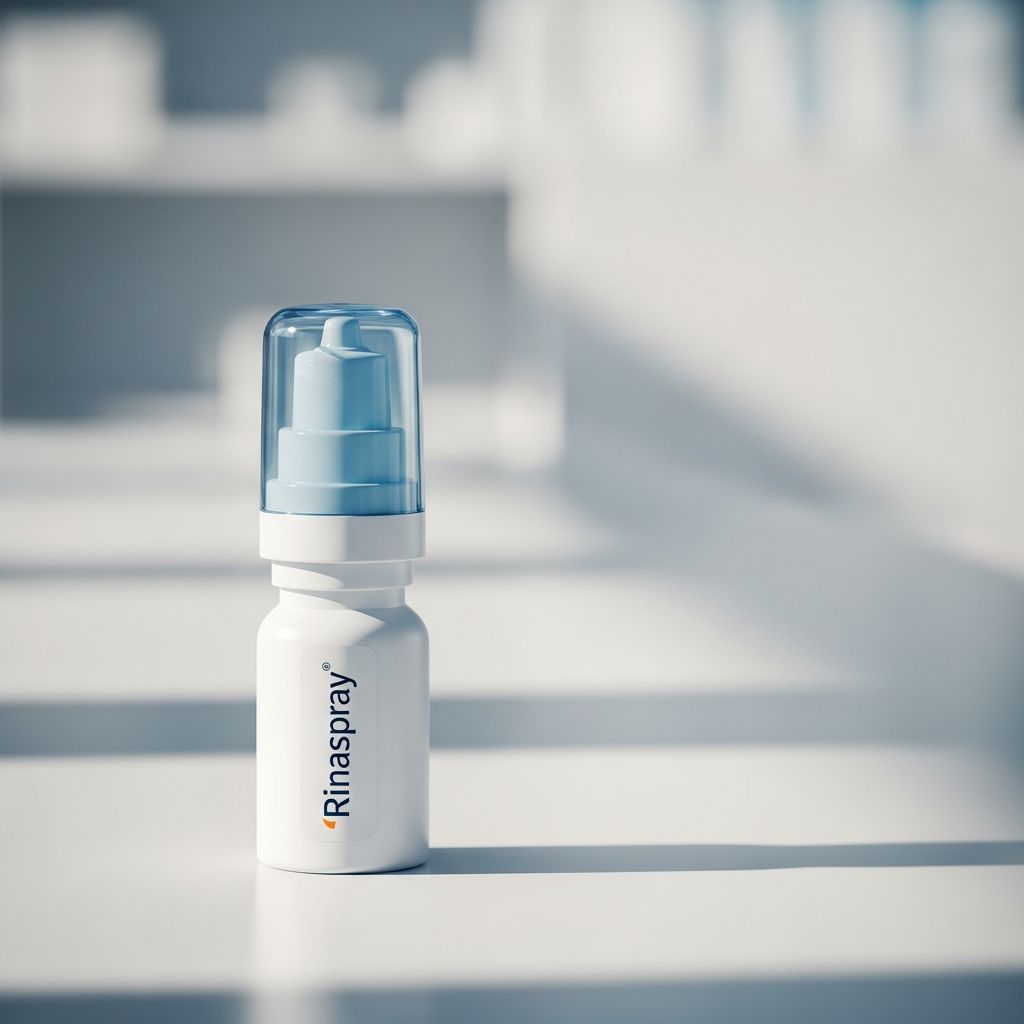
Ipratropium nasal spray, such as Rinaspray, is a targeted treatment for rhinorrhoea – commonly known as a runny nose. It works by blocking mucus-producing glands in the nasal passages, reducing watery discharge effectively.
About ipratropium nasal spray
Ipratropium nasal spray belongs to a class of medicines called antimuscarinics. It is specifically formulated to treat rhinorrhoea, the medical term for a thin, watery mucus discharge from the nose, often called a ‘runny nose’. This condition can arise from allergies, the common cold, perennial rhinitis (year-round allergies or nonallergic triggers), or environmental factors like temperature changes.
The spray acts locally in the nose by inhibiting the action of acetylcholine on muscarinic receptors in the nasal mucosa’s serous and seromucous glands. This antisecretory effect reduces mucus production without significantly affecting systemic functions when used as directed.
| Type of medicine | Used for | Also called | Available as |
|---|---|---|---|
| An antimuscarinic | Rhinorrhoea (runny nose) | Rinaspray® (ipratropium) | Nasal spray |
Available in strengths like 0.03% for perennial rhinitis and 0.06% for common cold-associated rhinorrhoea, ipratropium provides symptomatic relief. Note that ipratropium is also used as an inhaler or nebulizer for respiratory conditions like COPD or asthma, but those are separate from nasal formulations.
Rhinorrhoea disrupts daily life, causing discomfort, frequent nose-blowing, and irritation. Unlike decongestants that shrink blood vessels, ipratropium directly targets glandular secretions, making it ideal for non-congested runny noses.
Before using ipratropium nasal spray
Consult your doctor before starting ipratropium nasal spray to ensure it’s suitable. Inform them if you have:
- Prostate enlargement (benign prostatic hyperplasia) or bladder outflow obstruction, as it may worsen urinary retention.
- Glaucoma, particularly narrow-angle type, due to risk of increased intraocular pressure if spray contacts eyes.
- Kidney problems, which could affect drug clearance.
- Cystic fibrosis, as patients may be more sensitive to bronchospasm or other effects.
- Any difficulty passing urine.
Also disclose all medications, including over-the-counter, herbal remedies, or supplements, as interactions are possible with other anticholinergics. If you’ve had allergic reactions to ipratropium or similar drugs (e.g., atropine, oxybutynin), avoid use.
Pregnant or breastfeeding individuals should discuss risks; limited data exists, but use only if benefits outweigh potential harm.
Children under 5-6 years (depending on strength) should not use it without pediatrician approval. For perennial rhinitis (0.03%), suitable from age 6+; for colds (0.06%), from age 5+.
How to use ipratropium nasal spray
Always follow your doctor’s instructions and read the patient information leaflet (PIL) provided with the pack for full details on usage and side effects.
Standard dosage for adults and children 6+ (0.03% for perennial rhinitis): 2 sprays into each nostril, 2-3 times daily.
For common cold (0.06%): 2 sprays per nostril, 3-4 times daily, but not exceeding 4 days.
Step-by-step administration:
- Prime the pump: For first use or if unused >7 days, spray 7 times into the air until a fine mist appears. Aim away from face/eyes.
- Clear nose: Gently blow nose to clear mucus.
- Prepare: Shake bottle, remove dust cap.
- Position: Tilt head slightly forward, close one nostril with finger, insert nozzle into open nostril (pointing towards back/outer side).
- Spray: Press down firmly while sniffing gently through nose; exhale through mouth. Repeat for second spray.
- Switch nostrils: Repeat steps 4-5 for other nostril.
- Finish: Tilt head back briefly to coat nasal passages, wipe nozzle, replace cap.
Related Stories



Do not shake during use. If multiple sprays needed, wait 5-15 seconds between. Use only as prescribed; do not exceed dose.
Getting the most from your treatment
To maximize benefits and minimize risks:
- Read the PIL thoroughly for priming instructions and side effect lists.
- Personal use only: Never share to prevent infection spread.
- Avoid eyes: Spray precisely; if contact occurs, rinse with warm water immediately and seek medical help if vision changes, pain, or halos appear.
- Continue full course as prescribed, even if symptoms improve.
- Store at room temperature, away from children; discard after labeled sprays or expiry.
- Track usage; if no improvement in 3-4 days, consult doctor.
For best results, combine with saline rinses or avoid triggers like allergens/pollen.
Possible side effects
Most users tolerate ipratropium well, with effects mainly local due to minimal absorption. Common side effects include:
| Side Effect | What to do |
|---|---|
| Mild nosebleeds, dry/irritated nose or throat | Speak to doctor if troublesome |
| Headache | Stay hydrated; use pharmacist-recommended painkiller. Consult if persists |
Rare but serious: eye pain/blurring (glaucoma risk), urinary retention, allergic reactions (rash, swelling, breathing difficulty – seek emergency care).
Monitor for excessive dryness or bleeding; contact healthcare provider promptly. Report any new symptoms.
Frequently Asked Questions (FAQs)
Q: How quickly does ipratropium nasal spray work?
A: Relief often starts within 15 minutes, peaking at 1-4 hours, lasting 6-8 hours.
Q: Can children use Rinaspray?
A: Yes, from age 5-6+ depending on strength and condition; dose per doctor.
Q: Is it safe for long-term use?
A: For perennial rhinitis, up to 3-4 weeks; for colds, max 4 days. Long-term under medical supervision.
Q: What if I get spray in my eyes?
A: Rinse with water; watch for vision issues and contact doctor immediately.
Q: Does it cause drowsiness?
A: No, unlike antihistamines; safe for driving/operating machinery.
Q: Can I use it with other nasal sprays?
A: Yes, e.g., steroids, but space 15 mins apart; consult pharmacist.
References
- Ipratropium nasal spray – Rinaspray — Patient.info. 2023-05-29. https://patient.info/medicine/ipratropium-nasal-spray-rinaspray
- Ipratropium (nasal route) — Mayo Clinic. 2024-01-01. https://www.mayoclinic.org/drugs-supplements/ipratropium-nasal-route/description/drg-20064390
- Ipratropium Nasal Spray 0.06% — MPR. 2024-01-01. https://www.empr.com/drug/ipratropium-nasal-spray-0-06/
- Ipratropium Nasal Spray — MedlinePlus (U.S. National Library of Medicine). 2024-01-01. https://medlineplus.gov/druginfo/meds/a618013.html
- Ipratropium Bromide Nasal Spray 0.03% — Boehringer Ingelheim. 2023-01-01. https://docs.boehringer-ingelheim.com/Prescribing%20Information/PIs/Roxane/Ipratropium%20Bromide/Ipratropium%20Bromide%20Nasal%20Spray%2003.pdf
Similar Articles








Read full bio of medha deb