Iron Deficiency: 3 Stages, Skin Signs, Diagnosis & Treatment
Explore the causes, symptoms, skin manifestations, and comprehensive management of iron deficiency and its related anaemia.

Author: Reviewed by: Dermatologists / Audited by qualified dermatologists, last audit 2025.
Iron deficiency is one of the most common nutritional deficiency disorders worldwide, affecting people of all ages, genders, and ethnicities. It occurs when the body’s iron stores are depleted, impairing haemoglobin synthesis and leading to iron deficiency anaemia (IDA). This condition manifests with characteristic mucocutaneous features that dermatologists frequently encounter. Early recognition and management are crucial to prevent complications.
What is iron deficiency?
Iron is an essential micronutrient required for oxygen transport, energy production, and DNA synthesis. The body maintains iron homeostasis through dietary absorption, recycling from senescent red blood cells, and minimal losses. Iron deficiency develops in three stages:
- Stage 1 (Iron depletion): Reduced bone marrow iron stores without anaemia.
- Stage 2 (Iron-deficient erythropoiesis): Impaired haemoglobin production despite adequate stores for other functions.
- Stage 3 (Iron deficiency anaemia): Microcytic hypochromic anaemia with low serum ferritin, low serum iron, high total iron-binding capacity (TIBC), and low transferrin saturation.
Globally, iron deficiency affects over 2 billion people, with women of reproductive age, pregnant women, and children at highest risk.
Who gets iron deficiency?
Risk factors for iron deficiency include:
- Inadequate dietary intake: Vegetarians, vegans, or diets low in haem iron (red meat).
- Increased requirements: Pregnancy, lactation, growth spurts in infancy/adolescence.
- Chronic blood loss: Heavy menstrual bleeding (menorrhagia), gastrointestinal bleeding (ulcers, polyps, cancer, hookworm), frequent blood donations.
- Malabsorption: Coeliac disease, inflammatory bowel disease, post-gastrectomy, achlorhydria.
- Other: Endurance athletes (foot-strike haemolysis), intranasal cocaine use (epistaxis).
Women are affected 3–5 times more than men due to menstrual losses. Prevalence exceeds 20% in women aged 12–49 years.
What causes iron deficiency?
The underlying causes can be categorised as:
Category Examples Poor intake Poor diet, malnutrition, food faddism Malabsorption Coeliac disease, atrophic gastritis, H. pylori infection, bariatric surgery Increased requirements Pregnancy, lactation, growth Blood loss - GIT: NSAIDs, peptic ulcer, oesophagitis, erosive gastritis, angiodysplasia, Meckel diverticulum, IBD, malignancy, parasites
- GUT: Menorrhagia, fibroids
- Other: Epistaxis, haematuria
Investigate unexplained iron deficiency aggressively, especially in postmenopausal women and men, to exclude malignancy.
What are the clinical features of iron deficiency?
Symptoms of iron deficiency anaemia are nonspecific:
- General: Fatigue, weakness, dyspnoea on exertion, pica (craving non-food items like ice, clay, soil).
- Cardiovascular: Palpitations, tachycardia, angina, heart failure (severe cases).
- Neurological: Headache, vertigo, irritability, poor concentration.
- Pregnancy: Increased risk of preterm delivery, low birth weight.
Skin signs
- Pallor: Best seen in nail beds, palmar creases, conjunctivae, oral mucosa.
- Pruritus: Generalised itch without rash.
- Grey-brown hyperpigmentation: Sun-exposed areas (rare).
- Telogen effluvium: Diffuse non-scarring hair loss.
Mucosal changes
- Angular cheilitis: Cracks at mouth corners.
- Glossitis: Smooth, sore, red tongue with papillary atrophy.
- Oral ulceration: Painful mouth ulcers.
- Brittle nails: Longitudinal ridging, onychoschizia.
- Koilonychia: Concave ‘spoon-shaped’ nails (classic sign).
 Koilonychia
Plummer–Vinson syndrome (PVS)
Triad of:
- Dysphagia (due to oesophageal webs)
- Iron deficiency anaemia
- Atrophic glossitis, koilonychia
Associated with post-cricoid carcinoma and oesophageal cancer (10x risk). Most common in middle-aged women.
Pica
Ingestion of non-nutritive substances:
- Ice (pagophagia): Most common, resolves with iron therapy.
- Clay (geophagia), soil, laundry starch.
How is iron deficiency diagnosed?
First-line tests:
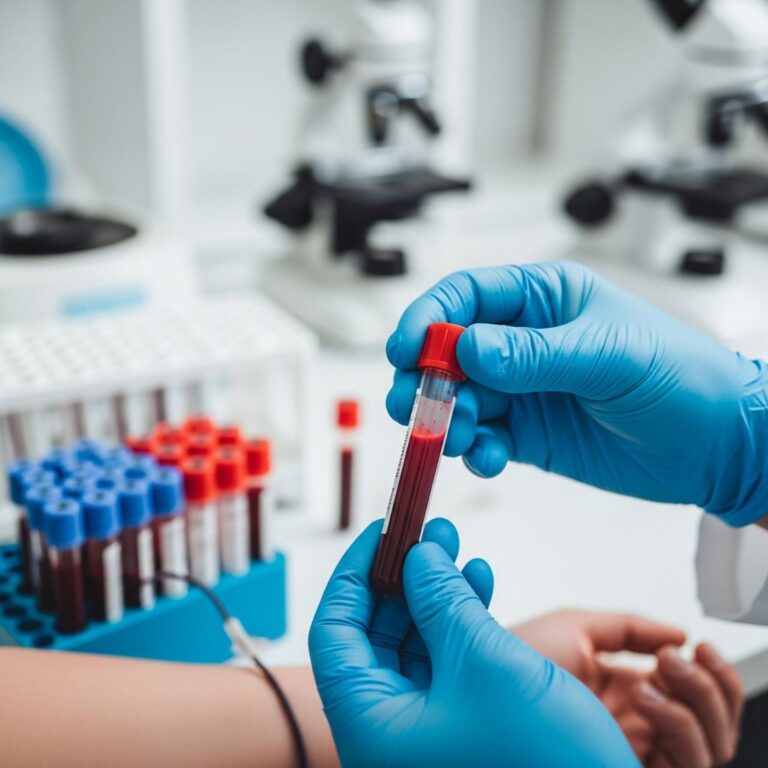
- Full blood count (FBC): Microcytic hypochromic anaemia (low Hb, low MCV, low MCH, low MCHC).
- Ferritin: <30 μg/L diagnostic of iron deficiency (normal 30–300 μg/L men, 15–150 μg/L women). Acute phase reactant so less reliable in inflammation.
- Other indices: Low serum iron, high TIBC, low transferrin saturation (<16%).
Peripheral smear: Microcytes, hypochromia, pencil cells, target cells, thrombocytosis.
Bone marrow: Gold standard – absent haemosiderin in macrophages (rarely performed).
Differentiate from anaemia of chronic disease (normal/high ferritin).
What is the treatment for iron deficiency?
1. Investigate and treat underlying cause
Endoscopy/colonoscopy for postmenopausal women/men; gynaecological evaluation for premenopausal women.
2. Iron replacement
Oral iron (first-line):
- Ferrous sulfate 200 mg (65 mg elemental iron) 1–3x daily.
- Take on empty stomach with vitamin C (enhances absorption).
- Continue 3 months after Hb normalises to replenish stores.
- Response: Reticulocytosis days 4–7, Hb rise 10–20 g/L/week.
Side effects (30%): Nausea, constipation, black stools, abdominal pain. Mitigate with lowest effective dose, take with food (reduces absorption 50%).
Alternatives: Ferrous gluconate/fumarate (gentler), slow-release preparations, H2 blockers/PPI for intolerance.
Intravenous iron: For malabsorption, non-compliance, ongoing losses, post-op, pregnancy (2nd/3rd trimester).
Iron sucrose, ferric carboxymaltose – rapid, fewer reactions than older formulations.Transfusion: Only for severe symptomatic anaemia/haemodynamic instability.
3. Dietary advice
- Haem iron (15–35% absorbed): Red meat, poultry, fish.
- Non-haem iron (2–20% absorbed): Leafy greens, legumes, fortified cereals – enhance with vitamin C.
- Inhibitors: Tea, coffee, calcium, phytates – avoid with meals.
4. Monitoring
- FBC 2–4 weeks: Expect Hb rise.
- Ferritin 3 months post-treatment.
- Refractory? Check compliance, ongoing losses, malabsorption, non-compliance.
Complications of iron deficiency
- Infections: Impaired immunity.
- Cardiac: High-output failure.
- Developmental: Cognitive delays in children.
- Pregnancy: Preterm birth, low birthweight.
- Malignancy risk: PVS-associated cancers.
Prevention of iron deficiency
- High-risk groups: Iron supplements (pregnancy 30–60 mg elemental/day).
- Infants: Iron-fortified formula, cereals from 6 months.
- Adolescents: Menstrual history, supplements if heavy bleeding.
- Public health: Iron fortification of foods, hookworm eradication.
Other iron disorders
- Anaemia of chronic disease: Functional deficiency, normal/high ferritin.
- Sideroblastic anaemia: Ring sideroblasts.
- Thalassaemia: Microcytosis without iron deficiency.
Frequently Asked Questions (FAQs)
Q: What are the first skin signs of iron deficiency?
A: Pallor of nail beds/palmar creases, dry brittle hair/nails, angular cheilitis, glossitis. Koilonychia develops later.
Q: Is koilonychia specific to iron deficiency?
A: No, also seen in trauma, Plummer-Vinson syndrome, Raynaud phenomenon. Always check iron studies.
Q: How long do iron tablets take to work?
A: Reticulocytosis in 4–7 days, Hb rise within 2 weeks. Continue 3 months after normalisation.
Q: Can iron deficiency cause hair loss?
A: Yes, telogen effluvium – diffuse shedding 2–4 months after onset. Resolves with correction.
Q: When is IV iron preferred over oral?
A: Malabsorption, poor tolerance, ongoing blood loss > oral replacement capacity, 2nd/3rd trimester pregnancy.
Q: Does pica always indicate iron deficiency?
A: Pagophagia (ice craving) has strongest association. Other causes include pregnancy, autism, OCD.
References
- Iron Deficiency Anemia – StatPearls — National Center for Biotechnology Information (NCBI). 2023-10-13. https://www.ncbi.nlm.nih.gov/books/NBK448065/
- Iron deficiency – symptoms, causes, treatment & prevention — healthdirect.gov.au (Australian Government). 2024-01-15. https://www.healthdirect.gov.au/iron-deficiency
- Iron deficiency anaemia – NHS — National Health Service (NHS) UK. 2025-03-20. https://www.nhs.uk/conditions/iron-deficiency-anaemia/
- Iron-Deficiency Anemia — American Society of Hematology. 2023-11-05. https://www.hematology.org/education/patients/anemia/iron-deficiency
- Iron-Deficiency Anemia: Symptoms, Causes & Treatment — Cleveland Clinic. 2024-07-12. https://my.clevelandclinic.org/health/diseases/22824-iron-deficiency-anemia
- Iron Deficiency Anemia — Merck Manuals (Merck & Co.). 2024-09-01. https://www.merckmanuals.com/home/blood-disorders/anemia/iron-deficiency-anemia
- Iron deficiency anemia – Diagnosis & treatment — Mayo Clinic. 2025-02-10. https://www.mayoclinic.org/diseases-conditions/iron-deficiency-anemia/diagnosis-treatment/drc-20355040
Similar Articles








Read full bio of medha deb