Irregular Sleep-Wake Rhythm Disorder: 5 Key Symptoms
Understanding symptoms, causes, risk factors, diagnosis, and treatments for irregular sleep-wake rhythm disorder.
Irregular Sleep-Wake Rhythm Disorder
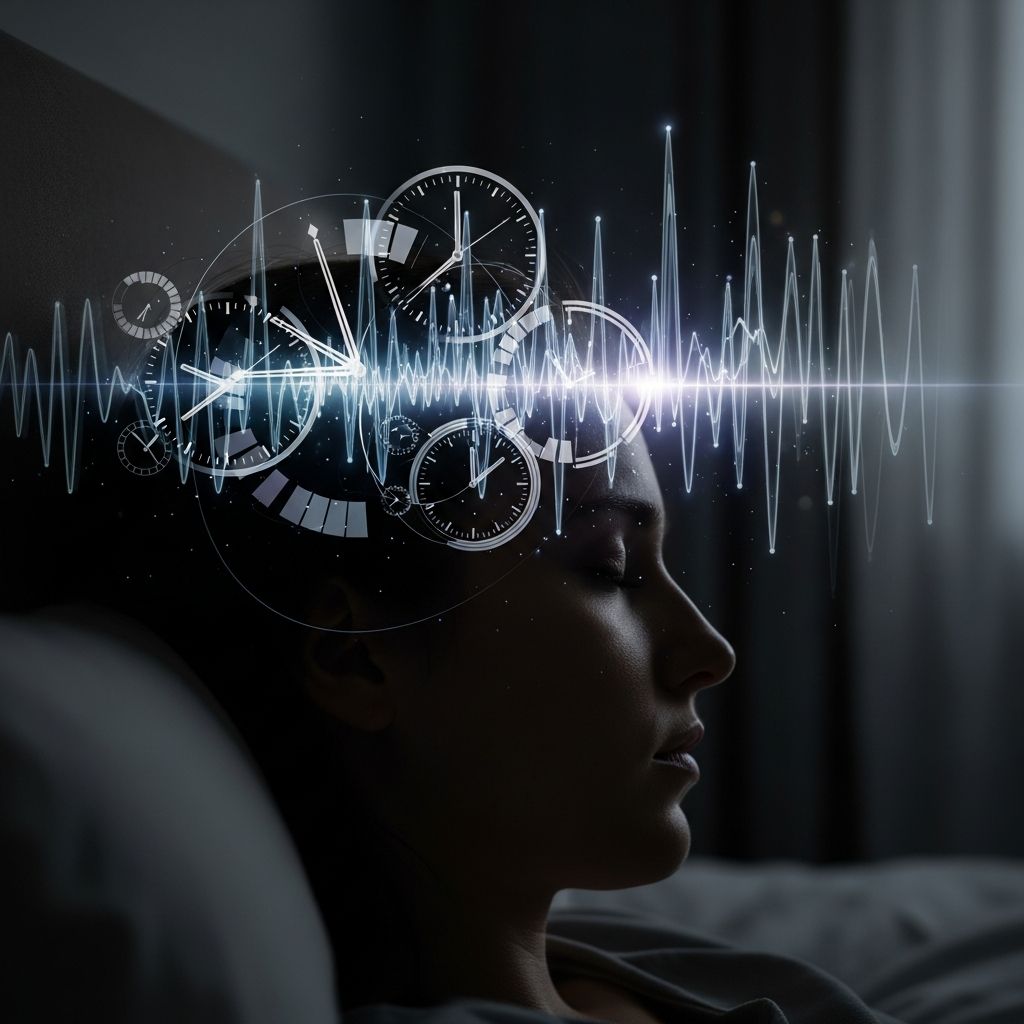
Irregular sleep-wake rhythm disorder (ISWRD) is a rare circadian rhythm sleep disorder characterized by the absence of a clear sleep-wake pattern, resulting in multiple short sleep periods scattered throughout the 24-hour day instead of one consolidated nighttime sleep. People with this condition often nap several times during both day and night, leading to chronic sleep fragmentation, nighttime awakenings, and excessive daytime sleepiness despite adequate total sleep time for their age. This disorder disrupts daily functioning, impairs alertness, and heightens risks for accidents, cognitive decline, and mood disorders due to the body’s failure to synchronize its internal clock with environmental light-dark cycles.
The core issue stems from a weakened or absent central circadian rhythm, primarily regulated by the suprachiasmatic nucleus (SCN) in the brain, compounded by insufficient exposure to zeitgebers like light, social interactions, and physical activity. Unlike other circadian disorders such as non-24-hour sleep-wake disorder, which features a drifting cycle longer than 24 hours, ISWRD shows no discernible rhythm, resembling the polyphasic sleep of infants but persisting into adulthood. Prevalence is low in the general population but rises significantly among those with neurodegenerative diseases, developmental disabilities, or institutional living where structured routines are lacking.
Symptoms of Irregular Sleep-Wake Rhythm Disorder
Symptoms of ISWRD revolve around disorganized sleep timing and poor sleep quality, severely impacting quality of life. Individuals experience no main sleep period at night, instead fragmenting sleep into three or more episodes per 24 hours, often with naps lasting 20 minutes to 2 hours each. Nighttime sleep is particularly fragmented, frequently occurring between 2-6 AM in short bursts, while daytime consists of multiple unplanned naps.
- Difficulty initiating or maintaining sleep at night: Frequent awakenings prevent consolidated rest.
- Multiple naps throughout the day and night: At least three sleep periods in 24 hours, totaling normal duration but poorly timed.
- Excessive daytime sleepiness (EDS): Persistent fatigue despite naps, leading to reduced alertness and performance.
- Non-restorative sleep: Waking unrefreshed, with complaints of insomnia despite adequate total sleep.
- Associated impairments: Difficulty concentrating, memory issues, mood disturbances, increased fall risk, and accident proneness.
These symptoms mimic insomnia or hypersomnia but are distinguished by actigraphy showing irregular patterns rather than phase shifts. In severe cases, social isolation and occupational dysfunction arise as individuals struggle to adhere to conventional schedules.
What Causes Irregular Sleep-Wake Rhythm Disorder?
The etiology of ISWRD is multifactorial, involving intrinsic circadian dysfunction and extrinsic environmental factors. Central to the disorder is impairment in the SCN, the master clock in the hypothalamus that orchestrates ~24-hour rhythms via neuronal oscillators responsive to light. Neurodegeneration, as seen in aging or diseases like Alzheimer’s, leads to SCN neuron loss, weakening rhythm amplitude and stability.
Environmental contributors include reduced zeitgeber exposure: dim indoor lighting, sedentary lifestyles, and social isolation fail to entrain the clock. In institutionalized elderly or disabled individuals, uniform lighting and lack of scheduled activities exacerbate fragmentation. Genetic factors may play a minor role, but evidence is limited; unlike delayed sleep phase disorder, no specific clock gene mutations dominate.
Overall, ISWRD likely results from combined central clock weakness and insufficient synchronizers, creating a low-amplitude, arrhythmic profile.
Risk Factors
Though rare across all ages, ISWRD risk escalates with neurological compromise and lifestyle factors. Key risks include:
- Neurodegenerative diseases: Alzheimer’s, Parkinson’s, Huntington’s—prevalent due to SCN damage.
- Developmental disorders: Autism, intellectual disabilities, childhood syndromes like Smith-Magenis.
- Brain injuries: Traumatic brain injury, tumors disrupting hypothalamic function.
- Chronic conditions: Chronic fatigue syndrome, affecting rhythm regulation.
- Lifestyle/environmental: Institutionalization, limited daylight, inactivity, nocturnal light exposure.
- Aging: Not direct but via comorbid diseases and reduced activity.
Prevalence is highest in dementia patients (up to 40% in advanced Alzheimer’s) and nursing home residents.
Diagnosis
Diagnosing ISWRD requires clinical history, sleep logs, and objective monitoring per ICSD-3 criteria: irregular sleep-wake patterns for ≥3 months causing distress/impairment, with no better explanation (e.g., medications, pain). Actigraphy—wrist-worn devices tracking rest-activity—is gold standard, revealing ≥3 sleep bouts/24h without rhythmicity.
Sleep diaries (2 weeks) document timing; PSG rules out other disorders like sleep apnea. Questionnaires assess EDS (Epworth Scale). Differential includes non-24, advanced sleep phase, or hypersomnias. Neuroimaging may evaluate SCN integrity in neurological cases.
| Method | Purpose | Key Findings in ISWRD |
|---|---|---|
| Sleep Diary | Subjective patterns | Multiple naps, no nocturnal consolidation |
| Actigraphy | Objective 24h monitoring | Fragmented activity, low rhythm amplitude |
| PSG | Rule out comorbidities | Normal total sleep, fragmented architecture |
Treatment
Treatment targets rhythm strengthening via chronotherapy, avoiding pharmacotherapy as first-line due to limited evidence. Core strategies:
- Scheduled activities: Fixed wake times, daytime light (2,000-10,000 lux 1-2h morning), evening dim light; structured meals/exercise/socializing as zeitgebers.
- Light therapy: Morning bright light advances/entrains remnants of rhythm; dusk simulation evenings.
- Melatonin: Low-dose (0.5-3mg) evening to consolidate sleep phase; timed with activity.
- Lifestyle: Avoid naps >20min, caffeine post-noon, screens pre-bed; consistent anchors.
- Advanced: Tasimelteon for non-24 overlap; behavioral interventions for dementia.
Success rates improve with multimodal approaches; elderly/demented patients need caregiver adherence. Monitoring via actigraphy tracks progress.
Irregular Sleep-Wake Rhythm Disorder vs. Other Circadian Rhythm Disorders
| Disorder | Key Feature | Sleep Pattern | Population |
|---|---|---|---|
| ISWRD | No rhythm | Multiple naps 24h | Neurodegenerative, elderly |
| Non-24 | ~25h cycle | Drifting insomnia/EDS | Blind individuals |
| Delayed Phase | Late sleep onset | Shifted to late night/AM | Teens, genetics |
ISWRD uniquely lacks rhythmicity, unlike phase disorders.
Frequently Asked Questions (FAQs)
What is irregular sleep-wake rhythm disorder?
A circadian disorder with fragmented sleep into ≥3 periods/24h, no main nighttime sleep, causing daytime sleepiness.
Who is at risk for ISWRD?
Those with dementia, brain injury, autism, or limited light/activity exposure.
How is ISWRD diagnosed?
Via history, sleep diary, actigraphy showing irregularity.
Can ISWRD be treated?
Yes, with light therapy, melatonin, scheduled routines.
Does ISWRD affect total sleep time?
Total is normal, but fragmented and mistimed.
References
- Irregular Sleep-Wake Rhythm Disorder — Sleep Foundation. 2023. https://www.sleepfoundation.org/circadian-rhythm-sleep-disorders/irregular-sleep-wake-rhythm-disorder
- Irregular Sleep-Wake Syndrome: Causes, Diagnosis & Treatments — Healthline. 2023. https://www.healthline.com/health/irregular-sleep-wake-syndrome
- Circadian Rhythm Sleep-Wake Disorders — Montefiore Einstein. 2024. https://montefioreeinstein.org/neuroscience/neurological-conditions/sleep-wake-disorders/circadian-rhythm-disorders
- Circadian Rhythm Sleep Disorder: Irregular Sleep Wake Rhythm Type — PMC (NCBI). 2009-05-15. https://pmc.ncbi.nlm.nih.gov/articles/PMC2768129/
- Irregular Sleep-Wake Rhythm — Sleep Education (AASM). 2023. https://sleepeducation.org/sleep-disorders/irregular-sleep-wake-rhythm/
Similar Articles








Read full bio of Sneha Tete