Is Actinic Keratosis Skin Cancer? 5-10% Risk
Understand actinic keratosis: a precancerous condition from sun damage that can lead to skin cancer if untreated.
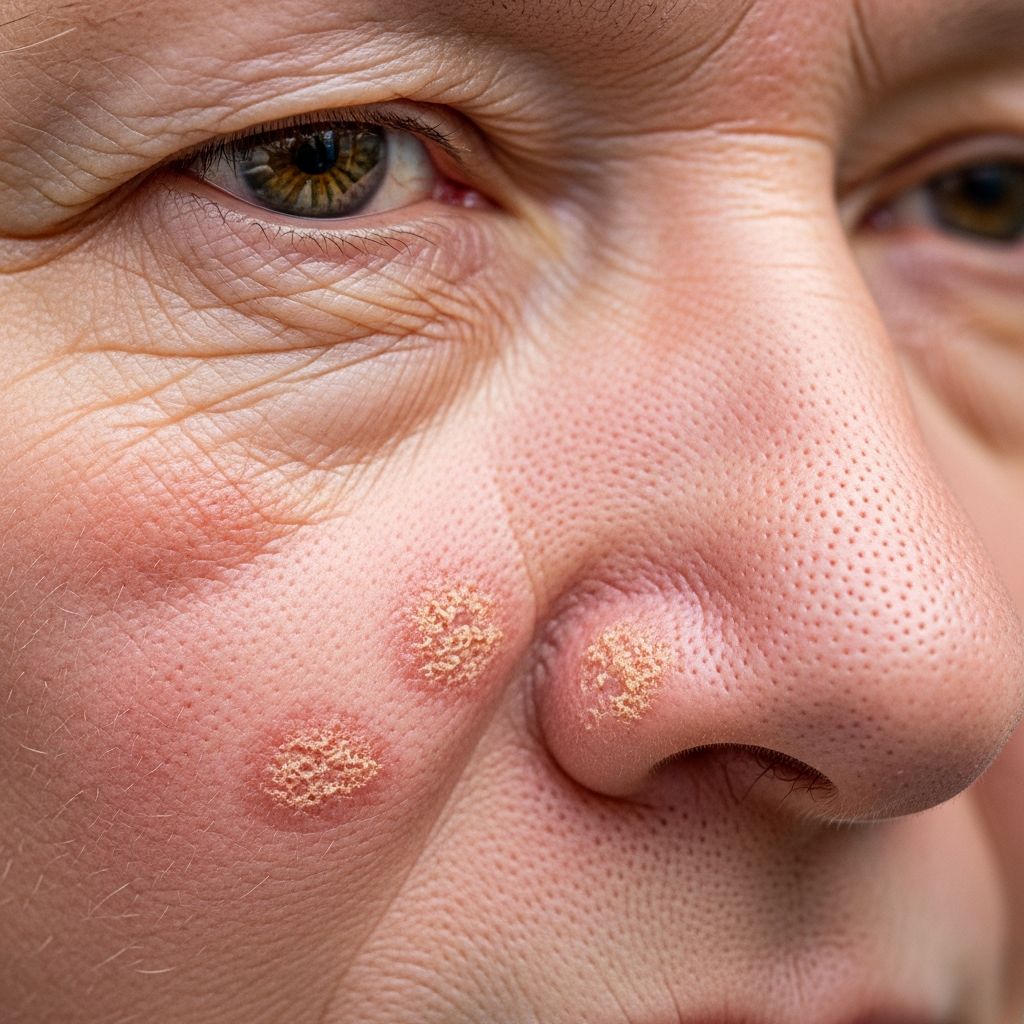
Actinic keratosis (AK), also known as solar keratosis, is a common precancerous skin condition caused by long-term exposure to ultraviolet (UV) radiation from the sun or tanning beds. While not skin cancer itself, AK has the potential to progress to squamous cell carcinoma (SCC), a type of non-melanoma skin cancer, in approximately 5-10% of cases if left untreated. Affecting over 58 million Americans annually, early identification and intervention are crucial to prevent progression. This article explores what AK is, its symptoms, risk factors, diagnosis, treatment options, and prevention strategies, mirroring expert guidance from dermatology authorities.
What Is Actinic Keratosis?
Actinic keratosis appears as rough, scaly patches or spots on skin chronically damaged by UV rays. These lesions develop in the epidermis, the skin’s outermost layer, where damaged cells multiply abnormally but have not yet invaded deeper tissues, distinguishing them from invasive cancers. AKs are most prevalent in fair-skinned individuals over age 40 who have spent significant time in sunny climates or without sun protection.
Histologically, AK represents a continuum of sun-induced dysplasia, ranging from mild (confined to the lower epidermis) to severe (approaching full-thickness atypia, akin to SCC in situ). Though precancerous, most AKs do not progress to cancer; however, their presence signals high risk for future skin cancers, warranting vigilant monitoring and treatment.
Symptoms and How to Spot Actinic Keratoses
AKs are often more easily felt than seen, presenting as dry, rough, sandpaper-like patches that may itch, burn, or feel tender. They vary in appearance but share consistent traits:
- Texture: Flat to slightly raised, scaly, crusty, or rough; sometimes with a horn-shaped bump or persistent sore.
- Color: Red, tan, pink, skin-colored, brown, or silvery; inflamed variants appear red and irritated.
- Size: From tiny spots to 1 inch in diameter, though most are under a quarter-inch.
- Location: Sun-exposed areas like face, lips (actinic cheilitis), ears, scalp, neck, shoulders, backs of hands, and forearms.
Symptoms may include sensitivity, pain, itching, pricking, burning, or bleeding, especially if ulcerated. Some AKs fluctuate, disappearing temporarily then recurring. Multiple lesions often cluster in ‘AK fields’ on heavily sun-damaged skin. Unlike seborrheic keratoses (waxy, ‘stuck-on’ appearance), AKs feel gritty and gritty and are sun-related.
Risk Factors for Actinic Keratosis
Several factors increase AK susceptibility:
- Fair skin (Fitzpatrick types I-II) that burns easily and tans minimally.
- Age over 40, as cumulative UV damage accrues.
- Occupational or recreational sun exposure, tanning bed use.
- Immunosuppression (e.g., organ transplant recipients, who develop AK 65-250 times more frequently).
- Genetic predispositions or prior skin cancers.
Geographic location in high-UV areas (e.g., Australia, southwestern US) amplifies risk.
Is Actinic Keratosis a Sign of Skin Cancer?
No, actinic keratosis is not skin cancer but a precancerous lesion with malignant potential. About 65% of SCCs originate from AKs, though progression is slow (months to years) and unpredictable. Risk escalates with lesion size >1cm, ulceration, rapid growth, or severe dysplasia. Regular skin exams detect changes early, as most SCCs from AK are highly curable if caught before invasion.
Related Stories



When Actinic Keratosis Leads to Skin Cancer
If untreated, AK cells can proliferate invasively, forming SCC in the dermis. SCC from AK is locally aggressive but rarely metastasizes if addressed promptly. Warning signs of progression include tenderness, rapid enlargement, bleeding, or induration. Actinic cheilitis on lips carries higher SCC risk (up to 16%). Biopsy confirms transformation; dermatologists recommend intervention for all symptomatic or high-risk AKs.
Diagnosis of Actinic Keratosis
Dermatologists diagnose AK via clinical exam, using dermoscopy for enhanced visualization of scale, vascular patterns, and borders. Suspicious lesions undergo biopsy: a small sample is excised and examined microscopically to rule out SCC or other mimics (e.g., basal cell carcinoma, amelanotic melanoma). No blood tests or imaging are routine; history of sun exposure guides assessment. Self-exams help, but professional evaluation is essential.
Treatment Options for Actinic Keratosis
Treatment destroys abnormal cells, tailored to lesion number, location, and patient factors. Options include:
- Cryotherapy: Liquid nitrogen freezes lesions; quick for isolated AKs, with 75-99% clearance but hypopigmentation risk.
- Topical Therapies: 5-fluorouracil (5-FU) cream, imiquimod, ingenol mebutate, or diclofenac gel induce inflammation to eliminate AKs; ideal for fields (up to 25cm²).
- Photodynamic Therapy (PDT): Photosensitizer + light activates to kill cells; excellent cosmesis for face/scalp.
- Curettage/Electrodesiccation: Scraping + cautery for thick AKs.
- Laser/Chemical Peels: Resurface damaged skin.
Post-treatment redness/soreness heals in weeks; sun protection is vital. Field therapies address subclinical lesions, reducing recurrence.
Prevention of Actinic Keratosis and Skin Cancer
Prevention targets UV avoidance:
- Seek shade 10am-4pm; wear UPF50+ clothing, broad-brim hats.
- Apply SPF30+ broad-spectrum sunscreen daily, reapply every 2 hours.
- Avoid tanning beds; use self-tanners.
- Perform monthly skin self-exams; annual dermatologist visits for high-risk individuals.
Antioxidants (e.g., nicotinamide) may reduce AK incidence in trials.
Frequently Asked Questions (FAQs)
Can actinic keratosis go away on its own?
Some AKs resolve spontaneously due to inflammation, but most persist or recur without treatment. Monitoring or intervention is advised.
Does actinic keratosis always turn into cancer?
No, only 5-10% progress to SCC; treatment prevents this.
How is actinic keratosis different from skin cancer?
AK is precancerous (epidermal only); SCC invades dermis.
Who is at highest risk for actinic keratosis?
Fair-skinned, older adults with heavy sun exposure or immunosuppression.
Is actinic keratosis contagious?
No, it’s caused by UV damage, not infection.
Key Comparisons: Actinic Keratosis vs. Skin Cancers
| Feature | Actinic Keratosis | Squamous Cell Carcinoma | Basal Cell Carcinoma |
|---|---|---|---|
| Definition | Precancerous | Invasive cancer | Invasive cancer |
| Growth | Slow, epidermal | Can ulcerate/invade | Pearly nodule |
| Treatment Urgency | High (preventive) | Immediate | Immediate |
| Common Sites | Sun-exposed | Sun-exposed | Sun-exposed |
References
- Actinic Keratosis Warning Signs and Images — Skin Cancer Foundation. 2023. https://www.skincancer.org/skin-cancer-information/actinic-keratosis/actinic-keratosis-warning-signs-and-images/
- Actinic Keratosis — Mays Cancer Center, UT Health San Antonio. 2024. https://cancer.uthscsa.edu/cancer-care/conditions/actinic-keratosis
- Identify Actinic Keratosis | Key Signs & Symptoms — Placer Dermatology. 2023. https://placerdermatology.com/how-to-identify-actinic-keratosis-signs-and-symptoms-you-should-know/
- Actinic Keratosis: Symptoms and Treatment — Advanced Dermatology. 2024. https://www.advanceddermnco.com/conditions/actinic-keratosis
- What Are the Signs of Actinic Keratosis? — Dr. Hendi & Associates (Mohs Surgery). 2023. https://www.mohssurgerymd.com/blog/what-are-the-signs-of-actinic-keratosis
- Actinic Keratosis — Loma Linda University Health. 2024. https://lluh.org/conditions/actinic-keratosis
- Actinic Keratosis: What It Is, Symptoms, Causes & Treatment — Cleveland Clinic. 2025-01-15. https://my.clevelandclinic.org/health/diseases/14148-actinic-keratosis
Similar Articles








Read full bio of Sneha Tete